Camden Museum’s Role in Community Identity
The Camden Museum plays an essential role in local community history, telling the Camden story.

This journal article examines the role of the Macarthur region historical societies in telling the story of place. It details the Camden Museum’s foundation and the Camden Historical Society’s role.
Details of the article
‘Stories and Things’ on Gale database
Willis, Ian. “Stories and things: the role of the local historical society, Campbelltown, Camden and the Oaks.” Journal of the Royal Australian Historical Society, vol. 95, no. 1, June 2009, pp. 18+. Gale Academic OneFile, link.gale.com/apps/doc/A202253088/AONE?u=anon~9fc4bb68&sid=googleScholar&xid=62f7804c. Accessed 5 Jan. 2026.
The Collection: some highlights
The Camden Museum has an extensive collection of local objects and artefacts that help tell the Camden story.
1876 Camden Sports Trophy
The Camden Museum has acquired a 149-year-old teapot trophy from a sports day on May 24, 1876, celebrating Queen Victoria’s birthday. It is the oldest trophy in the museum’s collection, reflecting communal festivities and the competitive spirit of the era. The trophy was donated by Alf and Sharon Cantrell.
Online here, The Fascinating History of Camden’s 1876 Sports Day Trophy
The Camden Fleece Globe Light
The Camden Museum showcases the Golden Fleece Globe Light, a plastic ram symbolising Australia’s wool industry and its historical significance. Donated by Milton Ray in 2002, it highlights the Golden Fleece brand’s marketing legacy. The ram, based on a prized merino, represents both local history and broader national heritage.
Online here, Discover the Golden Fleece Globe Light at Camden Museum
The Singer Treadle Sewing Machine
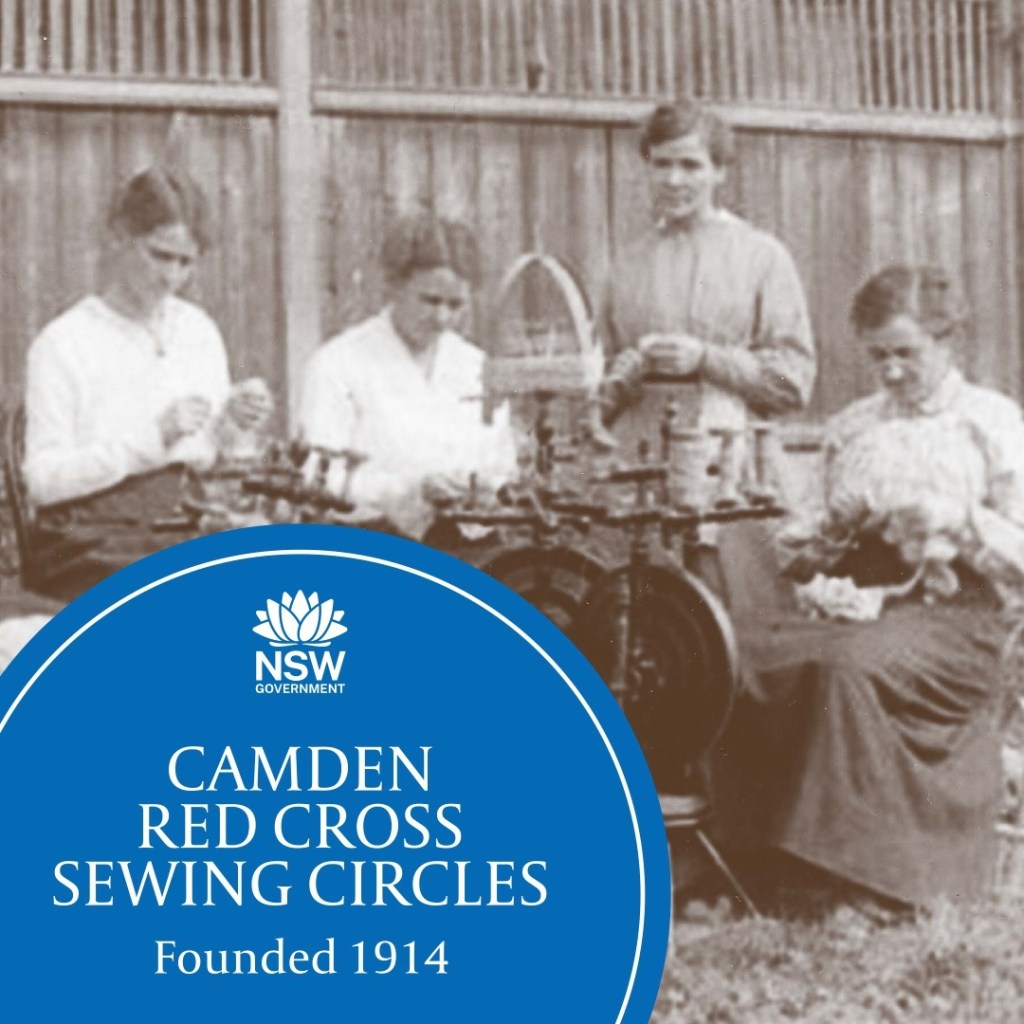
The Camden Museum’s treadle sewing machine symbolises the significant role of sewing in women’s lives from the 19th century onwards. Sewing machines democratised work, enhancing women’s agency by saving time and enabling business opportunities. Women contributed immensely to the war efforts through Red Cross circles, producing thousands of items during both World Wars.
Online here, Camden’s Treadle Sewing Machine: A Revolution in Women’s Agency
Sewing Machine collection
The Camden Museum features a collection of historical sewing machines, highlighting their significance in women’s domestic lives and agency since the 19th century. These machines facilitated garment production and enabled some women to establish dressmaking businesses, showcasing their skills while enhancing independence during times of social change, including both World Wars.
Online here, Historic Sewing Machines from Camden Museum: A Close Look
Camden Show Embroidery Artwork
Elaine Balla, an accomplished embroidery artist, created ‘The Camden Show’ for the 2011 Camden Show’s 125th anniversary, winning a Champion Exhibit Ribbon. Her work, now displayed at the Camden Museum, vividly represents community stories. Balla’s contributions span 60 years, illustrating women’s expression through the art of embroidery, their agency, and the telling of community stories.
Online @ The legacy of embroidery, Elaine Balla’s Camden Show artwork
Exhibitions at the Camden Museum
2013 The Story of the Camden Red Cross in War and Peace
Camden Historical Society hosted the launch of the exhibition ‘The story of the Camden district Red Cross in war and peace’ on Friday evening, 13 August 2013. An enthusiastic crowd of over 125 people enjoyed the evening. The evening launched the exhibition and the book ‘Ministering Angels, The Camden Red Cross, 1914-1945’.
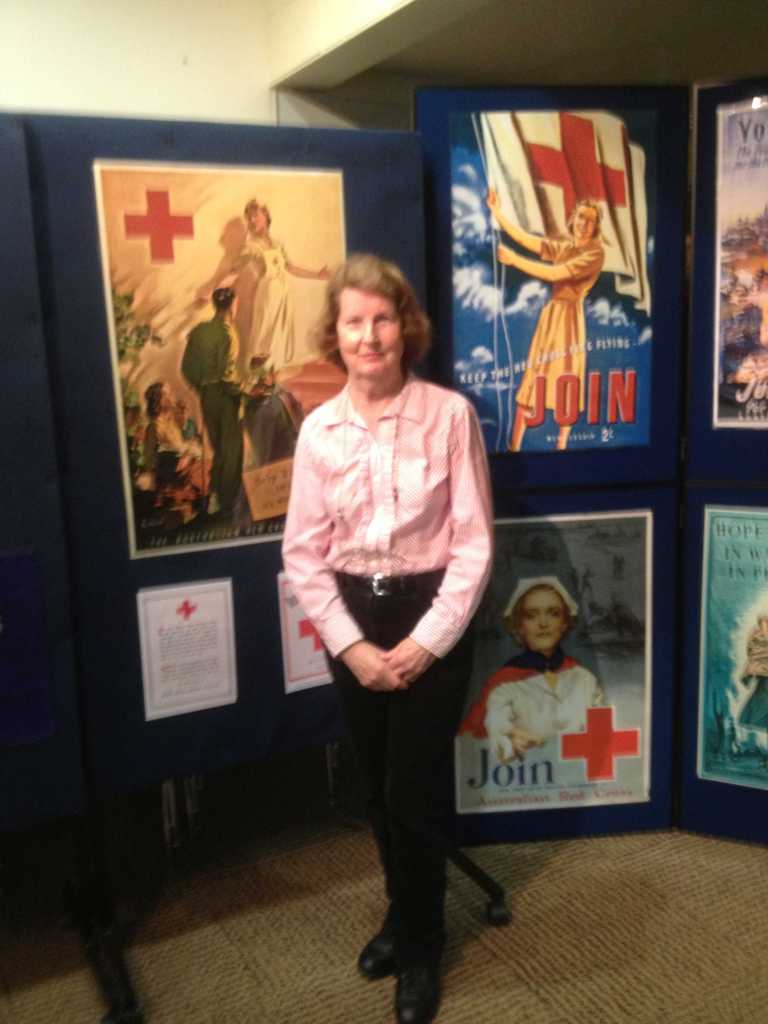
The exhibition and book facilitated the application for a Blue Plaque on the front of the Camden Library Museum complex in 2023.
Volunteering at the Camden Museum
Small museums contribute considerable value to the economy through unpaid, voluntary labour. According to the latest research, the value of unpaid voluntary labour to the Camden Museum is worth around A$580,000 a year. The Camden Museum and the Camden Historical Society are entirely run by volunteers. There are many voluntary community organisations in the local area.
Read about the impact of volunteering at the Camden Museum here Voluntary labour worth thousands of dollars to the Camden Museum
Museum Archive
The Camden Museum archive contains paper records, photographs, and ephemera that help tell the Camden story.
Publications using the Camden Museum Archives
Camden History Journal
The journal is an anthology of stories drawn from the Camden Museum archives and other third-party archives.
The current editor is Dr Ian Willis OAM, the author of this blog.
The journal index and some journals are here https://www.camdenhistory.org.au/chsjournal.html
An example of a singe journal issue (vol23 no6, Sept 2023) can be found here https://works.hcommons.org/records/k626g-e2m28
An anthology has been published and is available here Vol 3 https://www.amazon.com.au/Camden-History-3-Ian-Willis/dp/0648589439 and https://www.booktopia.com.au/camden-history-volume-3-ian-willis/book/9780648589433.html?srsltid=AfmBOooEGHkZLRSv5Xm74T56eS3l0C3GwPjowm0JUryDQ7YsT-6GZeMo
A story about the publication of the anthology is on the South Wales Voice
Newsletter, Camden Historical Society Inc
The newsletter tells the story of the Camden Museum, its activities, and the ongoing management and evolution of the museum within the Camden story.
Online copies of the Newsletters are here https://www.camdenhistory.org.au/chsnewsletter.html
Books
The Camden Historical Society has a strong publication agenda, dating back to the 1980s. Some examples are below.
Willis, I. (2009) The McAleer Story, A History of a Camden Family. Camden NSW: Camden Historical Society Inc, pp. 68. doi: 10.17613/hnt9c-acf91.
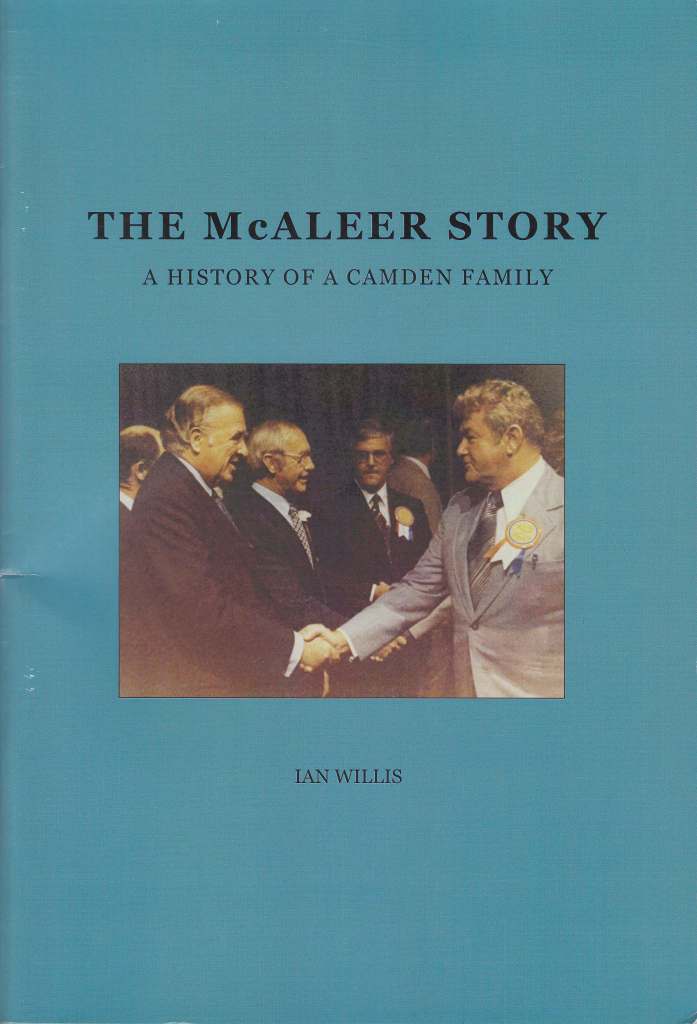
The book ‘The McAleer Story: A History of a Camden Family’ is the story of Geoff and Olive McAleer, a Camden family who ran a local Ford dealership for many years, and it also details their childhood growing up in a country town and their trials and tribulations. The book examines the Australian motor industry through the lens of a country motor dealer which served the Camden community and district for 53 years. By the early 1970s, McAleer Motors Pty Ltd was one of the largest employers in Camden and provided an insightful case study of car retailing in a small community. The McAleer story also outlines the important role of active citizenship in building community in country towns. Both Geoff and Olive were involved in a variety of community voluntary organisations over many years, which are arguably one of the most important aspects of country town life.
Online at https://works.hcommons.org/records/hnt9c-acf91
Willis, I. (2014) Ministering Angels The Camden District Red Cross 1914-1945. Camden Historical Society. doi: 10.17613/1a3x-yy81.
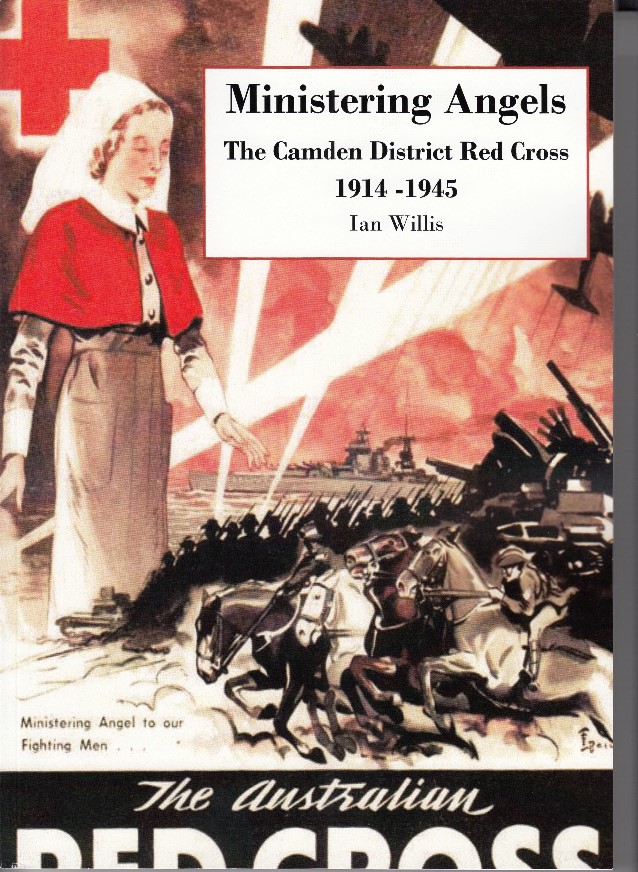
Ministering Angels is a peer-reviewed publication that tells the story of conservative country women doing their patriotic duty in an outpost of the British Empire. From 1914, women in the Camden district joined local Red Cross branches and their affiliates in towns and villages around the Macarthur family’s colonial estate at Camden Park. They sewed, knitted and cooked for God, the King and the Country throughout the First and Second World Wars and the years in between. Using the themes of soldier and civilian welfare, patriotism, duty, sacrifice, motherhood, class, and religion, the narrative explores how the place-based nature of the Red Cross branch network provided the organisation with an opportunity to harness parochialism and localism for national patriotic purposes. The work shows how a local study links the Camden district Red Cross with the broader issues within Australian history and debates involving local history, philanthropy, feminism, conservatism, religion and other areas while at the same time illustrating the multi-layered nature of the issues that shape global, national and regional history that can impact rural volunteering. Ministering Angels is a local Red Cross study of volunteering in war and peace that provides a small window into the national and transnational perspectives of one of the world’s most important humanitarian organisations.
Online at https://works.hcommons.org/records/fyg00-7m485
Willis, Ian. 2015, Pictorial history Camden & district / Ian Willis. Kingsclear Books Alexandria, [New South Wales] ISBN:9780987606792. 139 pages: illustrations, maps, portraits; 21 x 28 cm.
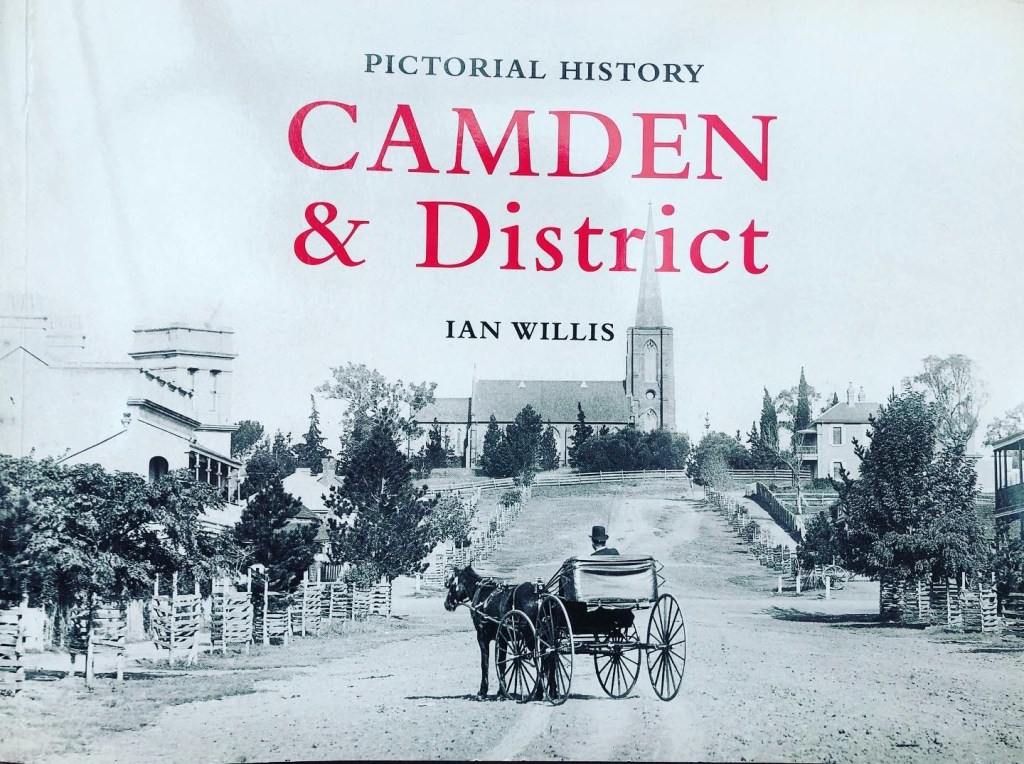
Cattle which strayed from Farm Cove in 1788 led to the European discovery of Camden. Seven years later, in 1795, the Europeans discovered the lost cattle in the Cowpastures. The area had been home to the Dharawal, the Gundungurra and the Dharug, who recorded the arrival of cattle in cave paintings. When the whites met the blacks, it was friendly, but after large land grants were given to the new settlers, the Aborigines struggled to find food. Conflicts arose in the Cowpastures, and in 1816, Governor Macquarie made a declaration of war in which 14 Dharawal were massacred. The Cowpastures were fertile, and the colonial gentry were attracted to this fine cattle country.
It was in 1797 that John Macarthur, with Dutch-Spanish sheep, formed a small stud at Elizabeth Farm, Parramatta. Macarthur was granted 5,000 acres near Mt Taurus to raise pure merino rams and ewes. After the Rum Rebellion, which involved a conflict with Governor Bligh in 1808, Macarthur was exiled to England, and his wife, Elizabeth, and nephew, Hannibal, bred wool at Camden Park. By the late 1830s, the property had grown to 28,000 acres. The township of Camden was surveyed, and allotments were put up for sale. St. John’s was under construction by 1840, and other churches, schools, a post office, and a courthouse followed.
By the 1860s, the population had grown, the town was busy, and the hotels were crowded with travellers. Industry prospered, a council was formed, and Camden was decorated with beautiful buildings. ‘Pansy’, the tram arrived in the 1880s. The Camden district had both a strong working-class rural and aristocratic population, which embraced World War I. The Red Cross was very strong. The inter-war years were marked by peace and prosperity. Burragorang Valley’s coal mines boosted the economy, and Camden Park flourished. Post-WWII, Camden saw the demise of the Camden Park estate and the emergence of Camden township and its surrounding districts.
Today, rural and agricultural land is being swallowed by residential development, defied only by the district’s persistent flooding.
Online at https://www.kingsclearbooks.com.au/camden.html

