

What is it?
Liberalism is a political and moral philosophy centred on the rights of the individual, liberty, and equality before the law.

Liberalism in politics is associated with non-authoritarianism, the rule of law, constitutional government with limited powers, and the guarantee of civil and political liberties. (Freeman, 2017)
The main types of liberalism are classical liberalism and social liberalism.
Origins and development
Liberalism emerges from the philosophical influences of the Enlightenment period and the social, political, and economic changes brought by the Industrial Revolution and urbanisation.
These changes created the conditions in Western Europe that challenged absolute monarchy, hereditary aristocracy, feudalism and the economic system of mercantilism in favour of human reason, individual liberty, and popular sovereignty.
Classical liberalism
Adam Smith’s “The Wealth of Nations” opposed mercantilism and championed free-market capitalism, promoting individual self-interest as a driver of societal prosperity.

Smith’s concept of the invisible hand suggests markets operate efficiently without government interference, leading to natural prosperity. He advocated for limited government roles, including national defence and public works, while endorsing free trade and minimal regulation. Smith’s views highlight the benefits of international trade and competitive advantage over protectionist policies. (Hayes, 2024).
Mercantilism replaced feudalism in Western Europe and held that wealth was fixed and finite. The only way to prosper was to hoard gold and impose tariffs on imports. Mercantilist policies favoured colonies as sources of raw materials, markets for exports, a labour supply, and a means of keeping wealth within a nation’s control. First seen in Europe during the 1500s, mercantilism was a form of economic nationalism. It centred on the interests of merchants and producers (such as England’s East India Company and the Dutch East India Company). (Kenton, 2024).
Capitalism’s free trade offered more affordable goods, while mercantilism limited imports and consumer choices. Smith argued that free trade enabled businesses to specialise in producing the goods that they could manufacture most efficiently. This led to higher productivity and greater economic growth. Kenton, 2024).
Capitalism called for a minimum of government intervention and ownership of capital, trade, and industry by private entities and individuals, while mercantilism involved state control and regulation. Capitalism promoted individual freedom, while mercantilism suppressed it. (Kenton, 2024).
Classical liberals supported the ideas of John Locke, who is often called the “Father of Liberalism.” He developed the theory of natural rights (life, liberty, and property) and the social contract and drew together basic concepts of liberalism around the time of the English Civil War (1642-1651). The Glorious Revolution of 1688 enshrined parliamentary sovereignty and the right of revolution in Britain and was referred to by author Steven Pincus as the “first modern liberal revolution”.
The Glorious Revolution (1688–89) permanently established Parliament as the ruling power of England—and, later, the United Kingdom—representing a shift from an absolute monarchy to a constitutional monarchy. (Britannica Editors 2025)

Thomas Hobbes developed the idea of the social contract in his work Leviathan (1651), arguing that individuals enter into a contract to guarantee their security and, in so doing, form the State, concluding that only an absolute sovereign would be fully able to sustain such security. He also argued that if the monarch became a tyrant and violated the social contract, the people have the right to overthrow a tyrant.
Locke placed the security of life, liberty and property as the supreme value of law and authority and formulated the basis of liberalism based on Hobbes social contract theory. Locke outlined his foundational ideas in his influential Two Treatises (1690).
Locke also originated the concept of the separation of church and state. In his Letters Concerning Toleration (1685-1686) he also formulated a general defence for religious toleration.
Locke argued in A Letter Concerning Toleration that the proper realm of government concerns “civil interests,” or the preservation of peace, order, and the people’s earthly well-being. For Locke, the government’s purview extends only to these civil interests and not to religious affairs. (Munro, 2024).
Locke was influenced by the liberal ideas of John Milton, who was a staunch advocate of freedom in all its forms. In his Areopagitica (1644), Milton provided one of the first arguments for the importance of freedom of speech—”the liberty to know, to utter, and to argue freely according to conscience, above all liberties”.
Most 18th- and 19th-century liberal politicians feared popular sovereignty. One solution was the separation of powers. (Ball 2025)
Baron de Montesquieu advocated for the separation of powers in his work The Spirit of the Laws (1748). He argued that uniting these powers in one person or body leads to despotism, ensuring liberty requires these functions to be distinct and independent.

The Spirit of the Laws is a comparative study of three types of government: republic, monarchy, and despotism. Montesquieu held that governmental powers should be separated and balanced to guarantee individual rights and freedom.
Among the many other topics considered are education of the citizenry, crime and punishment, abuse of power and of liberty, individual rights, taxation, slavery, the role of women, the influence of climate on the temper of a people and their form of government, commerce, religion, and a host of additional subjects. (Amazon Review 2002)
Classical liberalism focused on consent of the governed, rule of law, religious tolerance, and free markets, inspiring revolutions in America (1765–1783) and France (1789-1799) (abolition of feudalism 1789, and under Napoleon, Western Europe and a host of other reforms, eg, the end of the Holy Roman Empire) to establish representative democracy and protect citizens from state overreach. (Wikipedia contributors, 2025).
Criticism of Classical Liberalism
By the end of the 19th century, the principles of classical liberalism came under challenge from social injustice related to economic downturns, poverty, unemployment and ignorance. The ideal of the self-made individual who could make their place in the world through hard work and talent seemed increasingly implausible.
New liberals advocated some state intervention to ensure that every individual would have an equal opportunity for success.
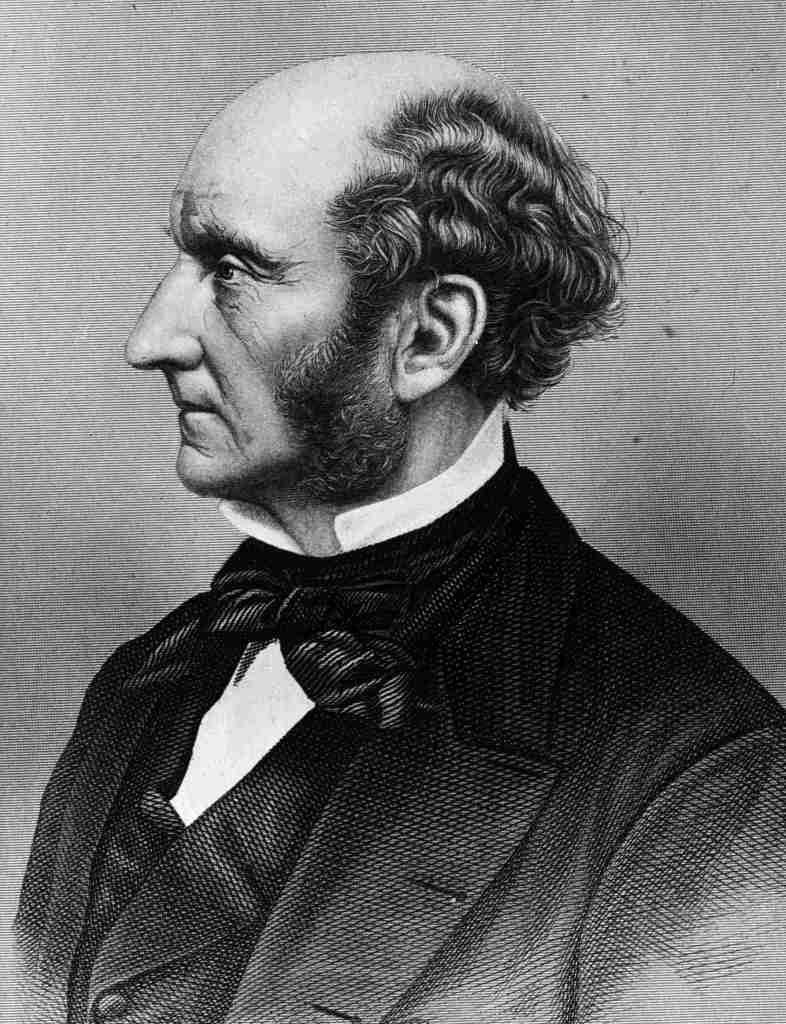
John Stuart Mill’s On Liberty (1859) defended freedom of speech and the “harm principle,” which holds that power should be exercised only to prevent harm to others. Mill defined “social liberty” as protection from “the tyranny of political rulers”. (Wikipedia contributors, 2025).
What emerged around 1900 was the New Liberalism or social liberalism. Social liberalism differed from classical liberalism in two main areas: individual liberty and the role of government in society. (Longley, 2020).
The New Liberals, including intellectuals such as L. T. Hobhouse and John A. Hobson, saw individual liberty as achievable only under favourable social and economic circumstances. (Wikipedia contributors, 2025).
Freedom of the individual could only flourish if poverty, disease, squalor, discrimination and ignorance were decreased through interventionist state policies best done in a mixed economy.
TH Green wrote Prolegomena to Ethics (1884). He rejected the idea that humans were only driven by self-interest and emphasised the evolution of a person’s moral character.
Subject to change
Like other political doctrines, liberalism has been highly sensitive to time and circumstance. Liberalism has differed and changed from generation to generation. (Ball 2025)
References
Ball, Terence, Girvetz, Harry K., Minogue, Kenneth, Dagger, Richard. 2025 “liberalism”. Encyclopedia Britannica, 11 Dec. 2025, https://www.britannica.com/topic/liberalism. Accessed 19 December 2025.
Amazon Review 2002, Charles Montesquieu, The Spirit of Laws, Amazon https://www.amazon.com.au/dp/1573929492 (19 December 2025)
Britannica Editors (2025). Glorious Revolution. Encyclopedia Britannica. https://www.britannica.com/event/Glorious-Revolution
Hayes, A. (2024). Adam Smith and ‘The Wealth Of Nations’. [online] Investopedia. Available at: https://www.investopedia.com/updates/adam-smith-wealth-of-nations/.
Kenton, W. (2024). What is Mercantilism? [online] Investopedia. Available at: https://www.investopedia.com/terms/m/mercantilism.asp.
Longley, R. (2020). What Is Classical Liberalism? Definition and Examples. [online] ThoughtCo. Available at: https://www.thoughtco.com/classical-liberalism-definition-4774941.
Freeman, S. (2017, April 26). Liberalism. Oxford Research Encyclopedia of Politics. Retrieved 19 Dec. 2025, from https://oxfordre.com/politics/view/10.1093/acrefore/9780190228637.001.0001/acrefore-9780190228637-e-236.
Munro, A. (2024, May 3). A Letter Concerning Toleration. Encyclopedia Britannica. https://www.britannica.com/topic/A-Letter-Concerning-Toleration
Wikipedia contributors. (2025, November 30). Liberalism. In Wikipedia, The Free Encyclopedia. Retrieved 05:51, December 19, 2025, from https://en.wikipedia.org/w/index.php?title=Liberalism&oldid=1324944628

Discover more from Camden History Notes
Subscribe to get the latest posts sent to your email.

