
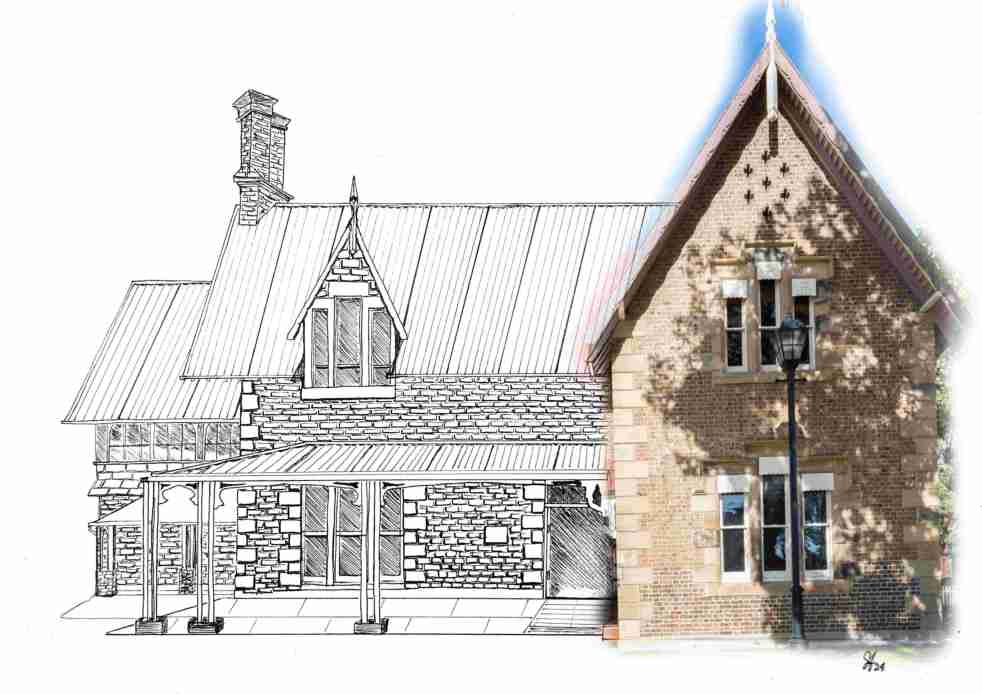
The Camden area has a strong art culture expressed in many ways, from public art to the Camden Art Prize to the Alan Baker Art Gallery.
According to Peninsula Art, art is used to
express our feelings or communicate our thoughts or ideas about life, existence, love, beauty, nature and politics. (https://peninsulaartssociety.org.au/what-is-the-purpose-of-art/)
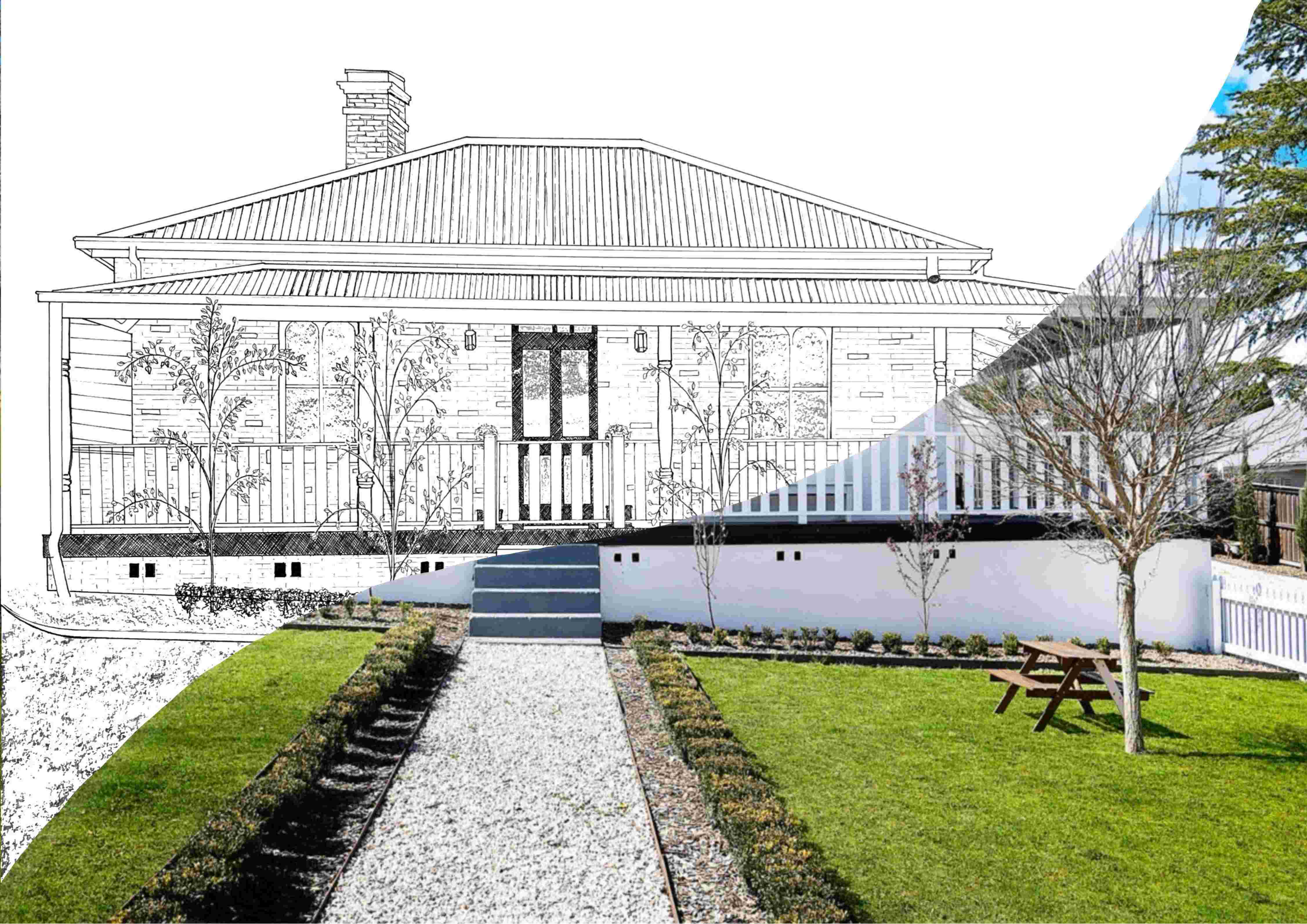
Art is defined as
“the expression or application of human creative skill and imagination, typically in a visual form such as painting or sculpture, producing works to be appreciated primarily for their beauty or emotional power” (Oxford Dictionary)
What can art do for people?
Art can uplift, provoke, soothe, entertain and educate us and is an important part of our lives. At its most profound level, it takes us from the everyday to a place of introspection and contemplation, to see the bigger picture of the human condition. Art also has a diverting or pleasurable purpose, both for the creator and the spectator or listener and can be a comfort in times. (https://peninsulaartssociety.org.au/what-is-the-purpose-of-art/)
The Camden art landscape does many of these things, and Sarah Ashcroft, along with many other local artists, fits in this environment with her art.
Sarah tells her story about how she came to art.
Sarah’s story
Sarah writes:
My name is Sarah Ashcroft. I am a 46 year-old medically retired NSW Police Officer. I live in the Camden area with my wife and two children, aged 11 and 13. I was born and raised in Padstow and spent my life working in South-West Sydney. I was fortunate enough to purchase my first home in the Currans Hill in my late 20’s and now have the privilege of raising my children nearby.
I joined the NSW Police Force as a very naïve 19 year-old and I served the community of NSW for 26 years before succumbing to the accumulative effects of PTSD. This mental illness knocked me for six and sadly I was not able to continue working as a Police Officer. With that I lost a career that I loved and in a sense, my identity.
My grandfather, “Pa” had a painting studio set up in his garage and every Sunday when we would go around there for a roast dinner I would sneak off into the garage and look at all his supplies and whatever painting he was working on at the time. It was a wonderland of oil paints, turps, brushes and lots of mess.
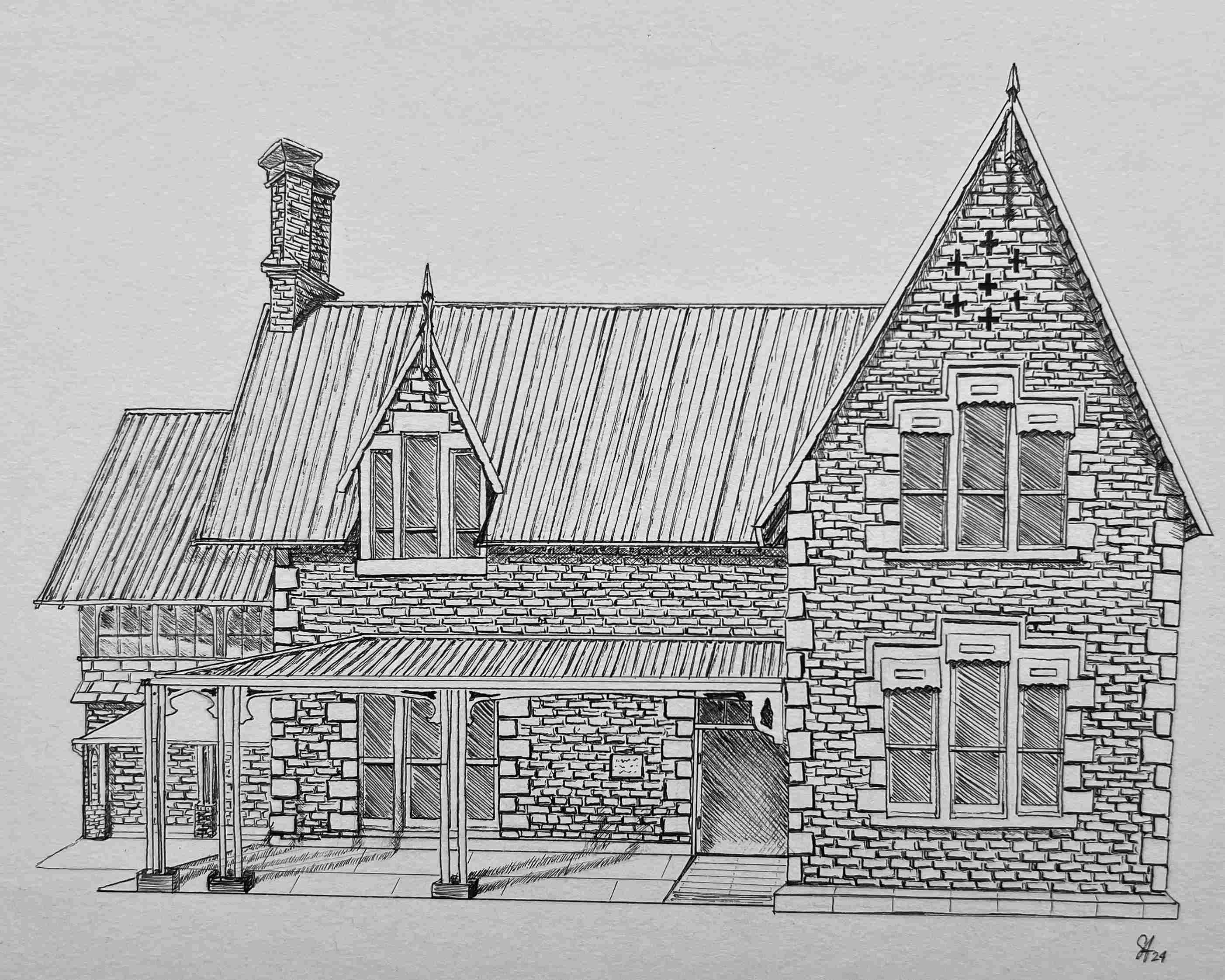
The art bug never hit me until I took up drawing two years ago as a form of mindfulness in my journey towards recovery from my PTSD. I fell in love with it as a form of relaxation and have since tried my hand at Watercolours, markers and most recently, digital art. I find the honesty and rawness of an ink drawing very compelling. There’s nowhere to hide your mistakes, there’s no ‘undo’ button or extra layer of paint you can apply. It is what it is. I’ve had to learn to embrace my mistakes and go with the flow. My favourite part of drawing with ink is in the detail. Every brick, every tile, every leaf on a tree is individually considered and carefully drawn. I recently finished drawing an Oak Tree for friend and I believe I drew over 3500 individual leaves. Now that was some serious mindfulness!
I remember as a young kid, drawing my dream cubby house and lucky for me, my dad was a carpenter so I was lucky enough to see my drawing come to life, albeit a bit more level and with straighter walls. Maybe I should have studied architecture but for now I think I’ll stick to drawing existing buildings. We are so blessed in the Camden area to have the most amazing heritage listed homes, businesses and public buildings and I felt compelled to draw them in my latest drawing, “Old Camden”. I was spoilt for choice and couldn’t fit them all into my A3 drawing!
I am inspired by the architecture of the late 1800’s and early 1900’s. The first building I drew in Camden was ‘Macaria’ and I was delighted to learn the history behind the building. Built as a school but used as a private residence, a business and council chambers, it now houses the Alan Baker Art Gallery. It is a beautiful example of the Picturesque Gothic style and the adaptive reuse of heritage buildings.
I enjoy learning the history behind the buildings I draw just as much as I enjoy drawing them. In my recent drawing “Old Camden” I loved drawing “O.V Coleman’s Palace of Fashion (now, “Billy the Squid”). As it turns out, many of the reference photos I used for that drawing, originally came from that store in the form of postcards. It was reported that “the shop is always replete with the latest styles in men’s and boy’s mercery” and by all accounts it was the best clothing store in town.
I believe that the history of the buildings and the people who occupied them are important to preserve and this is my way of doing just that. In a happy coincidence, they make for some great artwork as well.
As I look towards this new chapter in my life, it is comforting to know that my drawings bring joy to others. I hope that my story will encourage people to give art a try. If I can do it, anyone can. I also hope that my story can help raise awareness and encourage conversations around PTSD and mental health, especially in our emergency service workers.
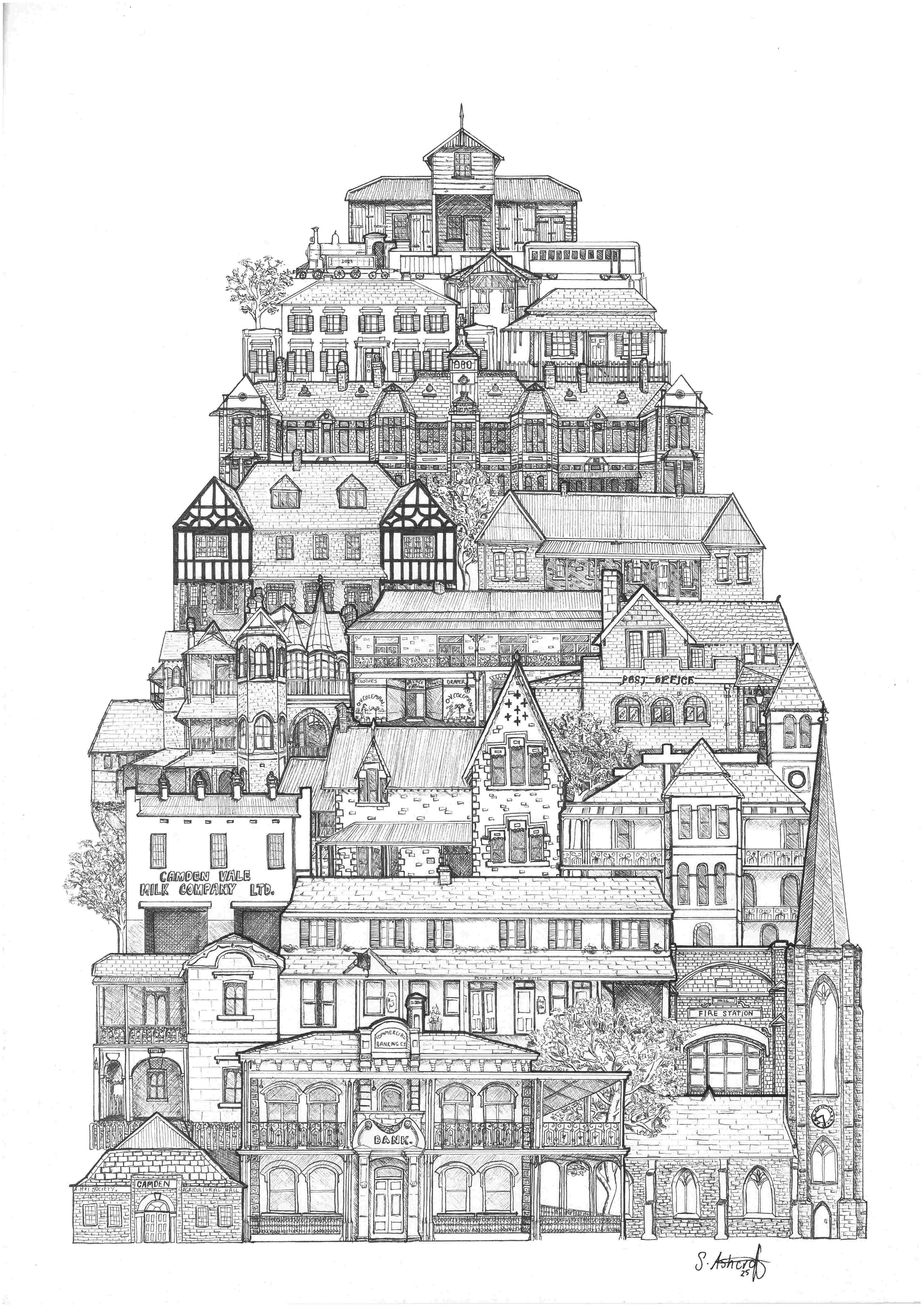
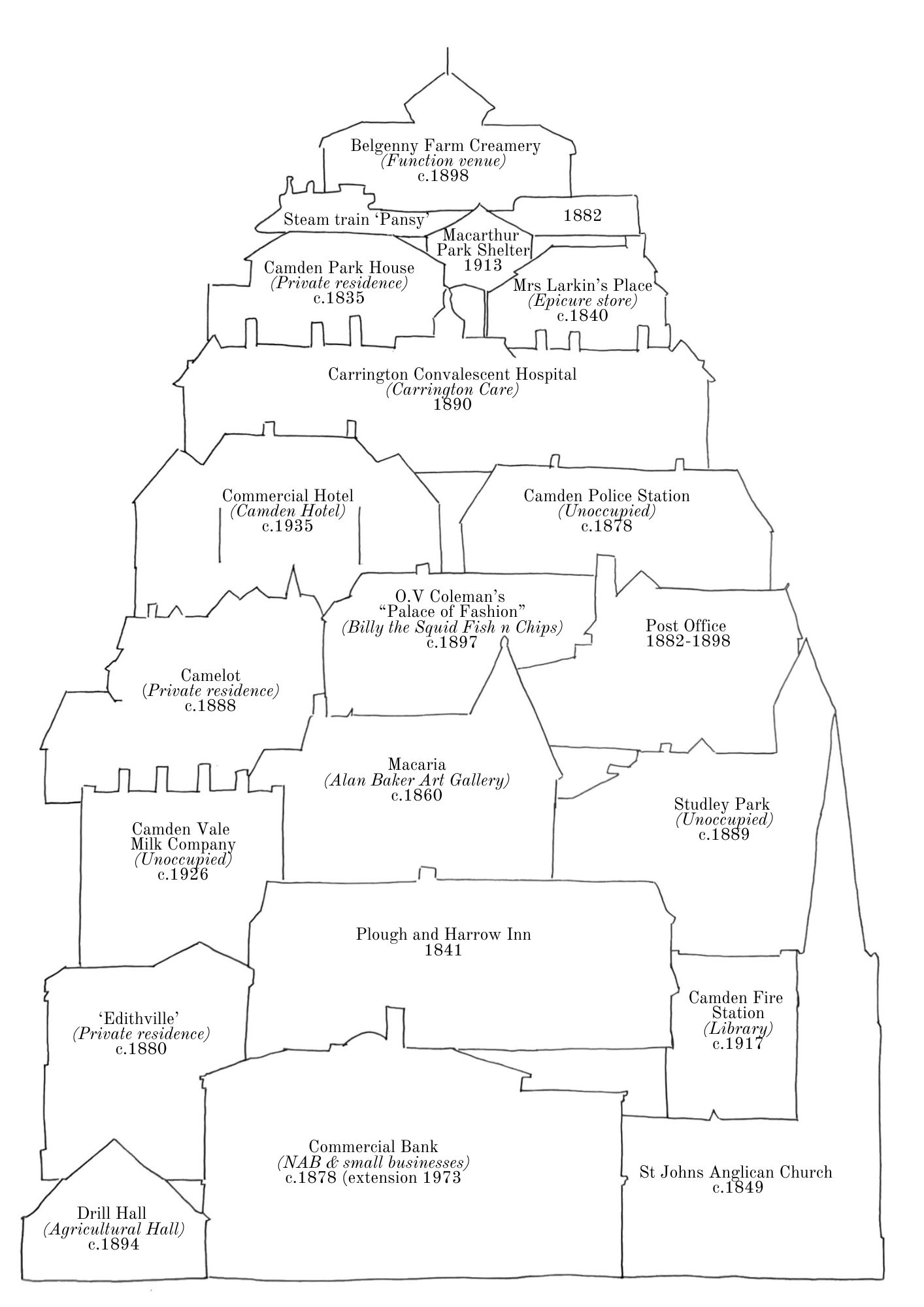
Sarah states that
If you’re interested, you can check out my art work on Instagram @sashcroftart.
Sarah’s style
Sarah describes her art style this way:
I would describe my art as “playful architectural realism”.
I try to find a playful balance between accuracy and creativity by focusing on the character of the building and then using detailed line work to capture the features that are most striking. My work may evoke a sense of nostalgia or reverence for the past, preserving architectural history through art.
The medium I use is ink on paper.
Conclusion
So, in conclusion, art can be crucial in providing personal healing and community connection.
Art can be provided as therapy and aid in recovery from various health issues.
Art therapy can take various forms, including painting, drawing, sculpture, deading, clay modeling, fiction writing, interpretive dancing, photography and other activities.
Art has been shown to aid mental health, interpersonal skills, resilience, mental clarity, and the reduction of anxiety and stress.
Discover more from Camden History Notes
Subscribe to get the latest posts sent to your email.

