Address by Dr Ian Willis at the 60th Anniversary Meeting, 24 July 2017, Camden
Welcome all.
First, I would like to thank the 60th Anniversary Organising Committee for their work in organising this event. Rene, Cathey, Dawn and Lee.
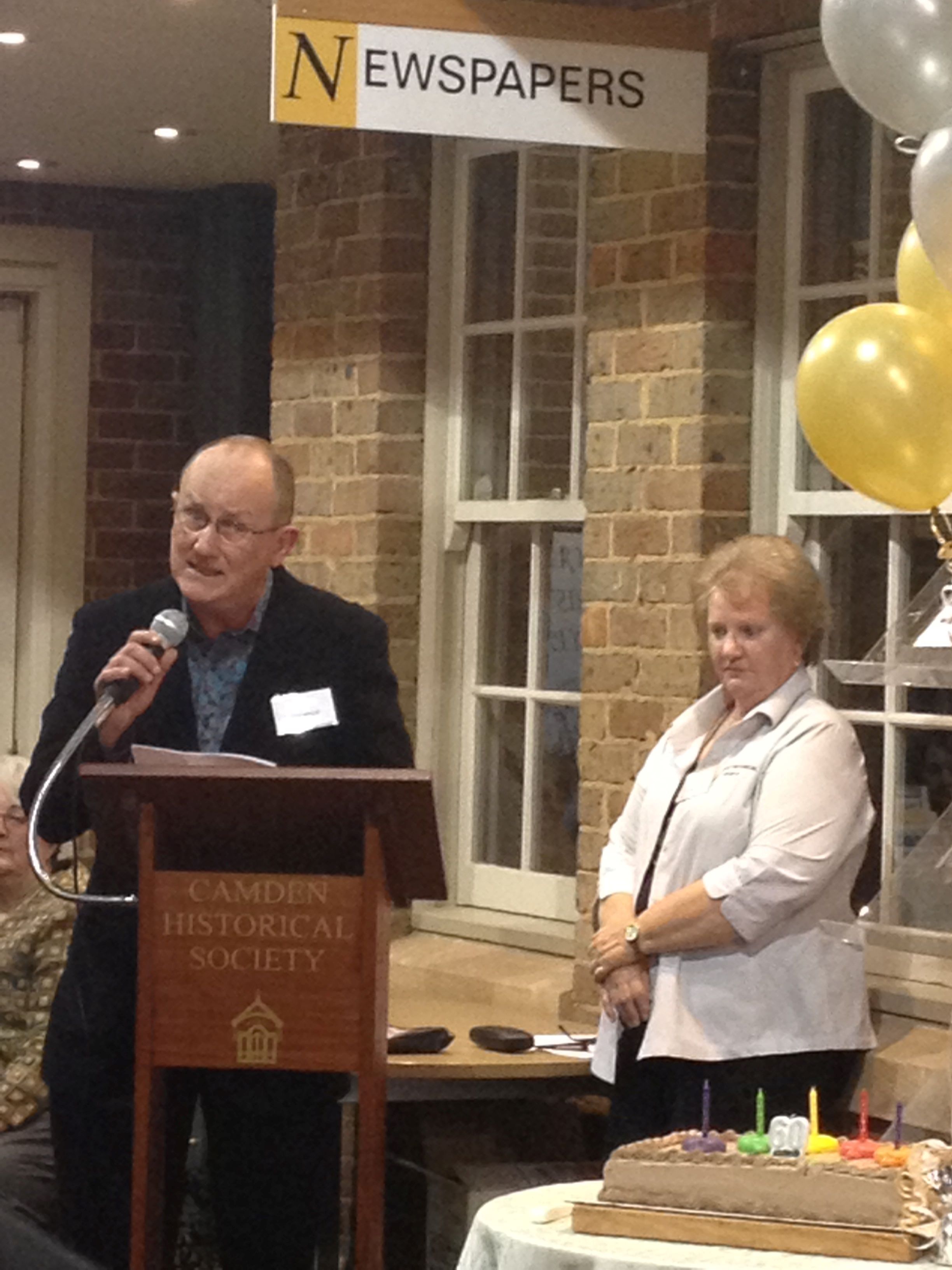
When I was told I was presenting the keynote address at this anniversary meeting, I was told there would be no other speakers. So what to say?
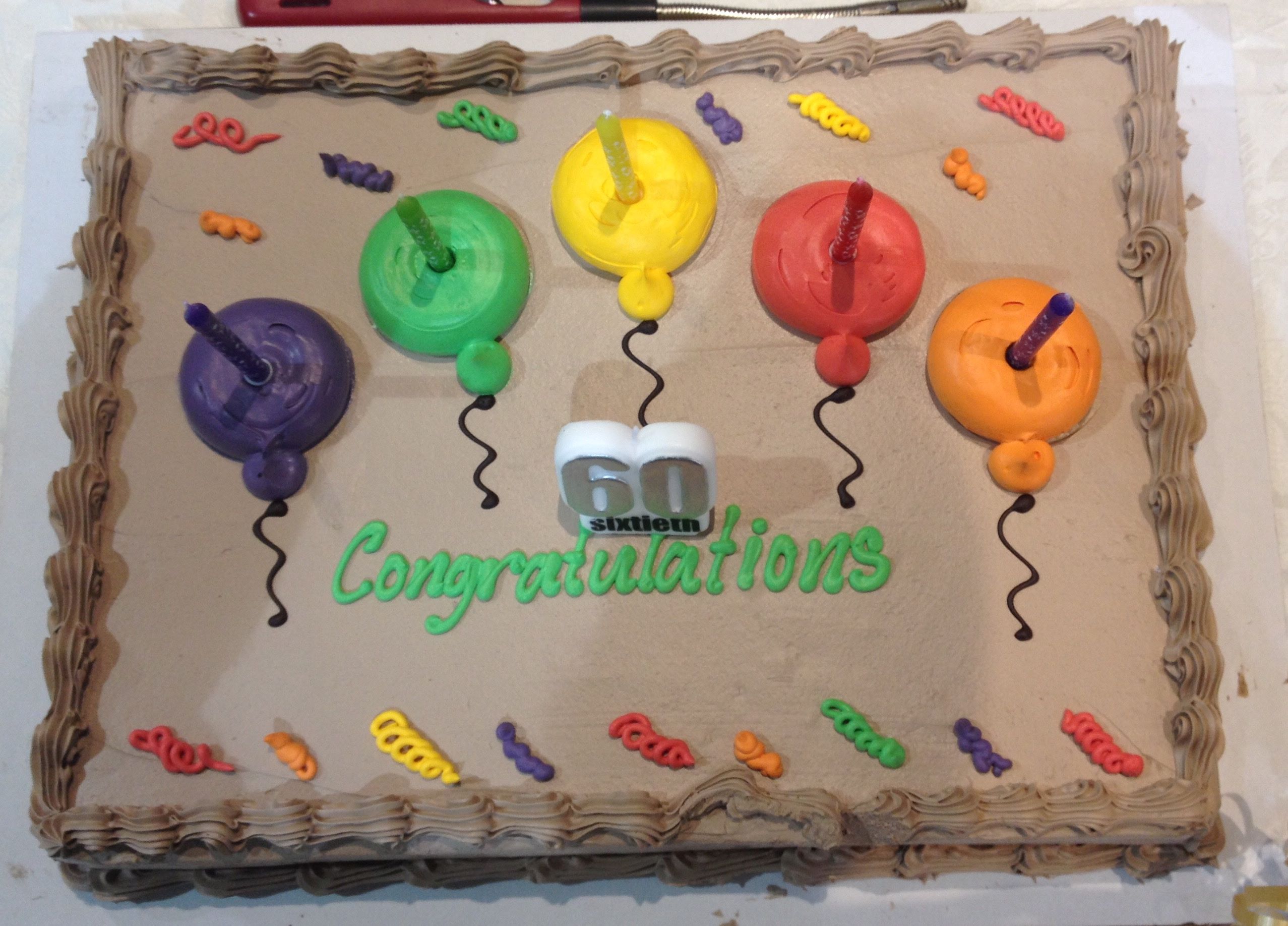
The society has had 60 wonderful years since its foundation in 1957.
I want to drill into those 60 years and ask the question: What is the business of the society? What is our mission statement?
I maintain that role of the Camden History Society is to tell the Camden story.
Stories are an integral part of place-making and the creation of community identity. They are full of meaning by allowing the past to inform the present. They help those in the present to understand why things are like they are. Stories are about context and help explain where we fit in the big picture.
And telling the Camden story explains why our community is how it is today.
Telling the Camden story has led to several firsts for the society.
Camden History Journal
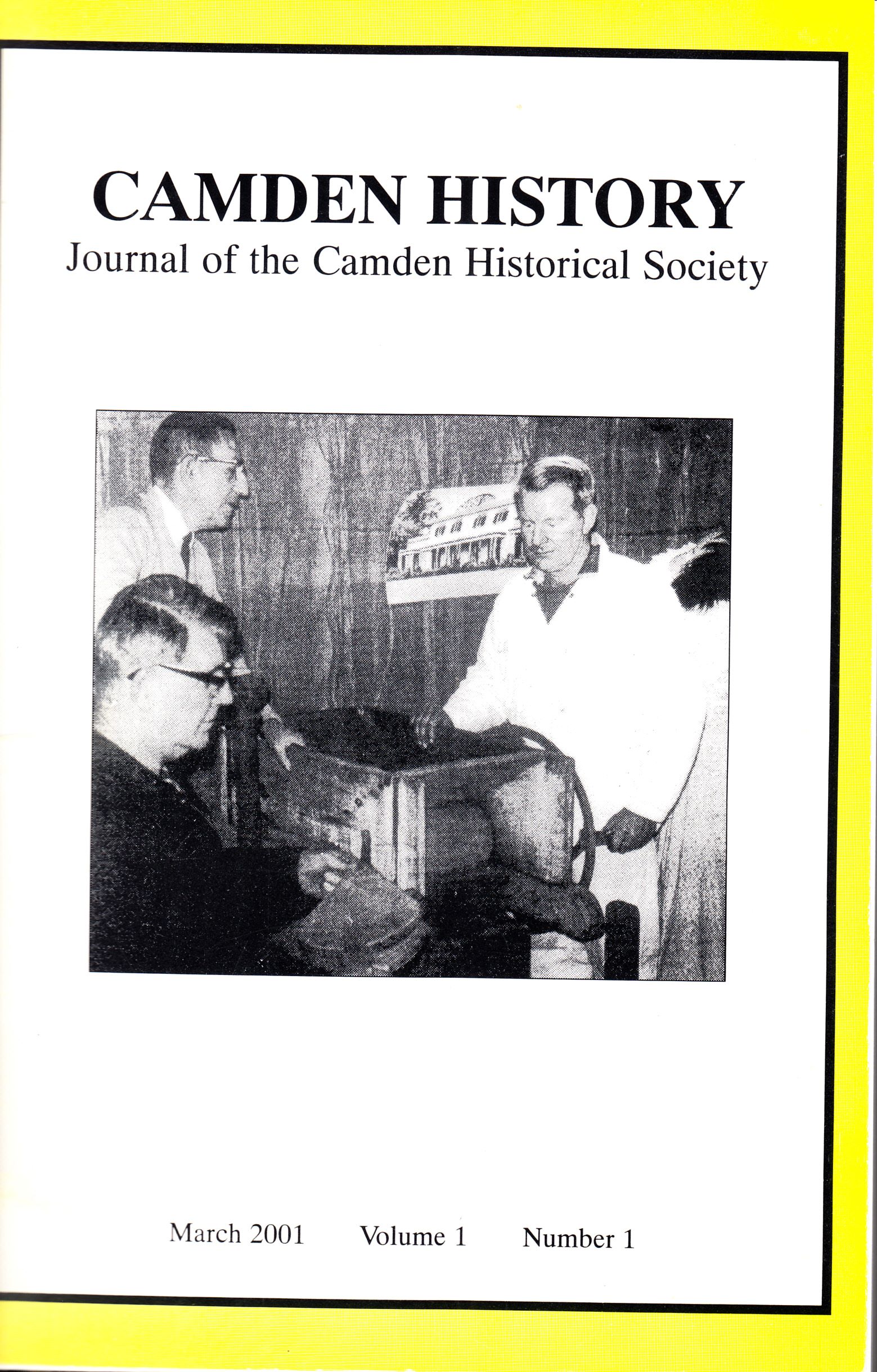
The first history of the society was written by Peter Mylrea in the first journal published by the society, Camden History, in 2001. The upcoming issue of the journal will be part of volume 4.
The first public lecture was presented at the first ordinary meeting of the society meeting in August 1957 by the society’s first vice-president Harold Lowe. The talk was called the ‘History of Camden Park’. Harold was an interesting local identity, a farmer from Elderslie and a good cyclist who competed in the Goulburn-Sydney cycle races. He was an alderman on Camden Municipal Council for many years. In 1925, Toby Taplin rescued undertaker Percy Peters and his driver George Thurn when their hearse was washed off the Cowpastures Bridge in the flood.
Lobbying
The first lobbying of the Camden Council by the society occurred in 1957. The society was concerned about the location of John Oxley’s anchor that the Council had been given in 1929. The British Admiralty had given Australia three commemorative anchors to serve as a memorial of the death of John Oxley.
The other two are in Wellington and Harrington, NSW. The Camden anchor was from the Destroyer Tomahawk. Oxley was a naval officer and the first colonial Surveyor General in NSW and had been assigned the grants of Kirkham and Elderslie. The anchor languished in the council yard for over 25 years, all but forgotten. The society lobbied the council for six years, and in 1963 the anchor was unveiled in Kirkham Lane. The society has recently lobbied the council again, and in 2015 the anchor was moved to Curry Reserve, along with a sculpture of Oxley’s profile.
Community Partnership
The first community partnership was with Camden High School on the foundation of the society in 1957. The first meeting was held at the school and chaired by the Camden High School P&C Society president. The first president Bill McCulloch was the deputy principal of Camden High School, whom John Brownie, the school principal, followed. Society meetings were held at the school for 42 years.
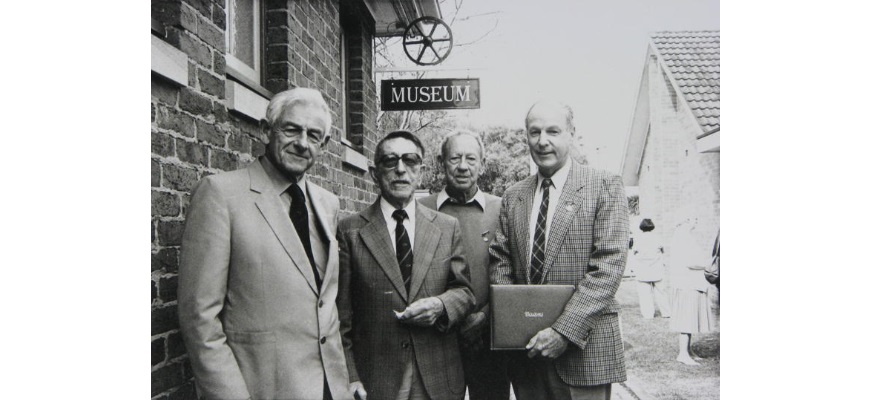
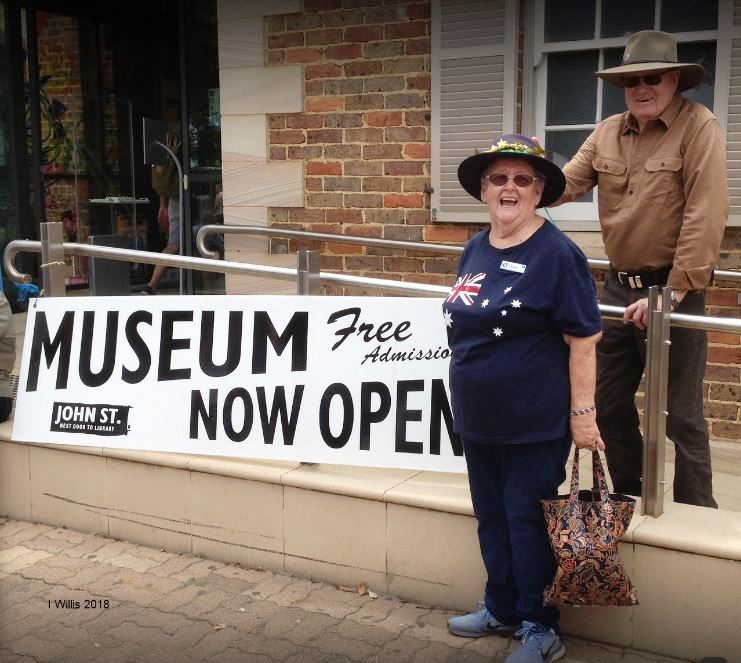
There have been a host of other community partnerships, and two of the largest have been with Camden Rotary in the foundation of the museum in 1970, and currently with Camden Council Library and Camden Area Family History Society. Other organisations collaborating with the historical society have included Camden Lions, Camden Quota, Camden Show Society, Camden Red Cross, Camden Council, and our affiliation with the Royal Australian Historical Society.
Many firsts
Some other firsts for the society include:
- The first society excursion was a day trip to Yerranderie in March 1958 before the Burragorang Valley was flooded, with the first overnight trip to Canberra in 1964.
- The first time the society acted as a tour guide was on a visit to the Catholic Historical Society in September 1958.
- The community speakers were provided at the Festival of the Golden Fleece in August 1960,
- The first newsletter was put together in 1970, with a short rebirth in 1985-86 as the Camden Historian, and most recently, from November 2005.
- The first radio broadcast was Dick Nixon’s ‘Know Your Camden’ for community radio 2CR in 1978,
- The first society publication was John Wrigley’s, ‘A History of Camden’ in 1979.
- The state government’s first grant to fund society activities was $150 in 1979.
- The first website for the society appeared in 1997, sponsored by Christine and Steve Robinson, and in 2006 the society launched its website, <camdenhistory.org.au>
- And in 2015, the society launched into the social media space with its Facebook page.
Camden Museum
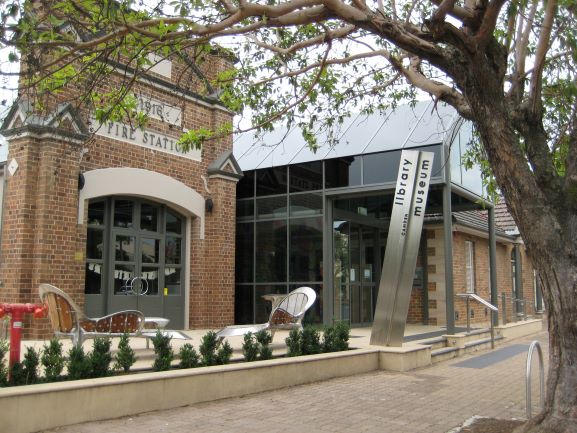
The most important first for the society was the establishment of the museum.
In 1967, a children’s book, EL Konigsburg’s From the Mixed-Up Files of Mrs Basil E Frankweiler was published in the USA. The book tells the story of two kids, 12-year-old Claudia and her 9-year-old brother Jamie, who ran away from home to live in New York’s Metropolitan Art Museum.
Claudia and Jamie have an exciting adventure living in a museum coming face-to-face with the thrilling mysteries of art history. They immerse themselves in the adventures of learning about everything. The book won numerous awards and is used extensively in schools in the US.
Now, the Camden Museum is not the New York Met.
I hope visitors to our museum want to learn about everything about Camden.
Hopefully, a visit to the Camden Museum will allow folk to immerse themselves in the mysteries of the past. And be a learning adventure on the way.
A yearning for the past is not new. For some people, the past provides security and safety. The Camden Museum provides a safe zone where visitors can immerse themselves in their memories. Nostalgia.
Nostalgia is a yearning for a sentimental rose-coloured view of the past. Recent research has shown that nostalgia can be a positive thing. But it was not always so. In the past, nostalgia was a medical disease and a psychiatric disorder. Hopefully, a visit to our museum does not affect visitors this way.
Local museums tell local truths and are trusted sources of local stories and histories. They are honest and straightforward. What you see is what you get. They are not fake news.
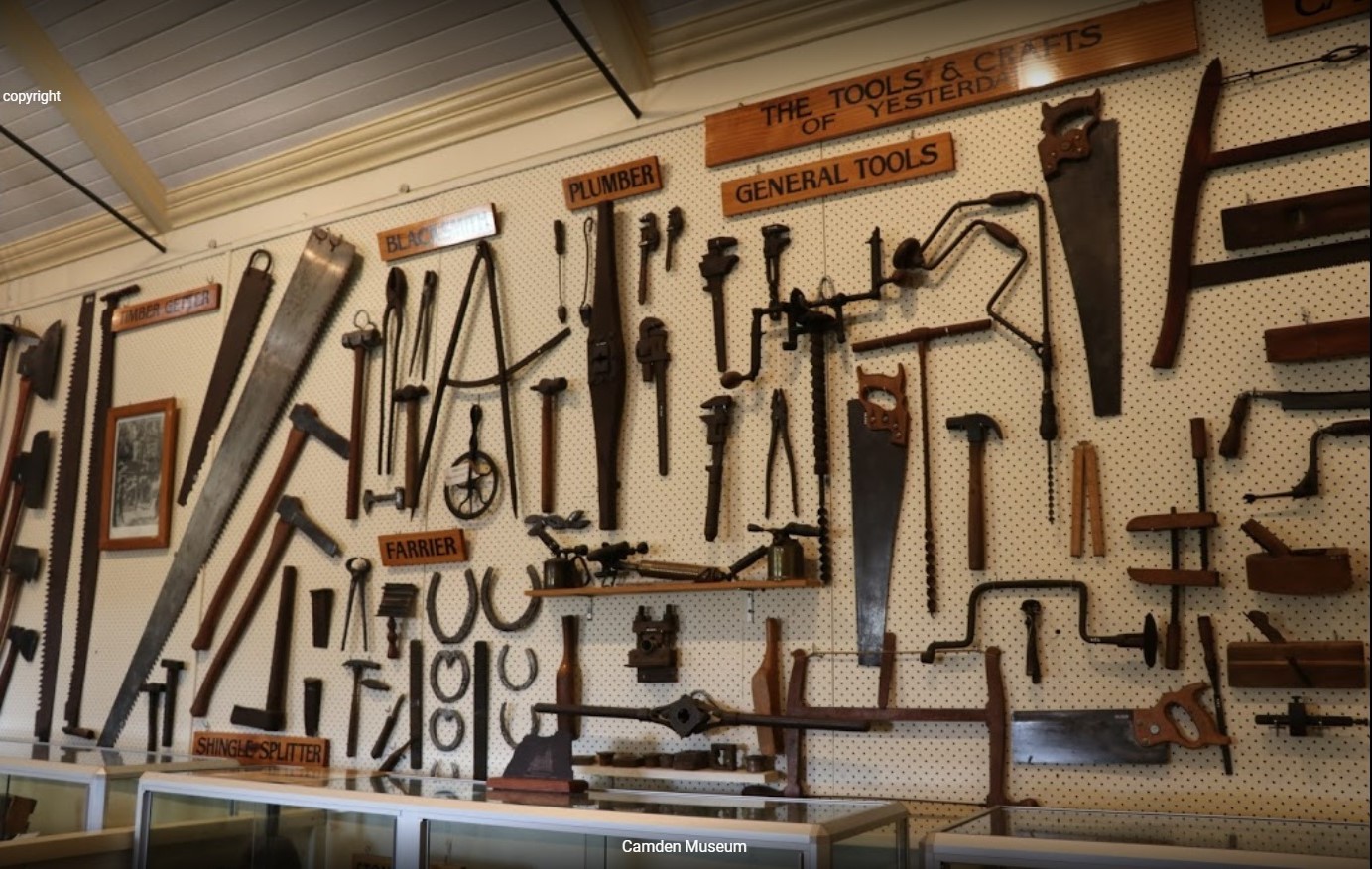
The Camden Museum is a mirror to the community where visitors can reflect on their past in the present. The museum displays, collection and archives represent the Camden community to itself. The museum is the custodian of these stories.
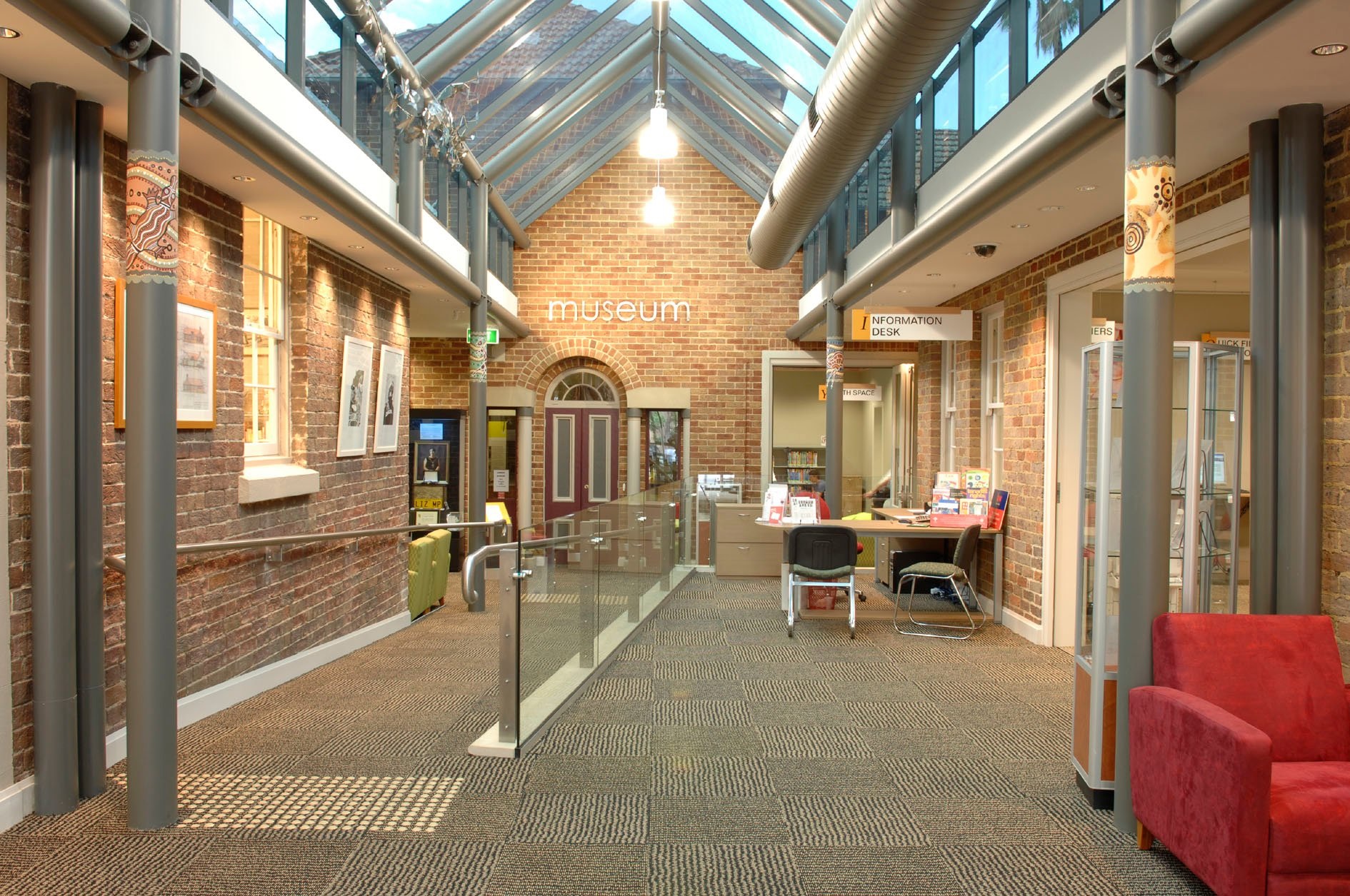
The Camden Museum can also provide challenges for visitors who take their time to look for the nuances in our stories. If you drill into the stories of museum objects, they touch on deeper social and cultural characteristics of the country town of the past. Some of these elements include class, rural conservatism, gender, intimacy, race, religion, parochialism, localism, rural ideology, city/country divide, and many other things.
I would argue that the Camden Museum has a critical role in the construction of resilient communities of the present. The museum acts as a site for place-making. The continued growth and expansion of the Camden Local Government Area demands sites that contribute to creating social connections and facilitate community networks.
The museum provides a space for creating social capital through volunteering and philanthropy. Museum volunteers provide a successful model as a centre of active citizenship and volunteering which contributes to the social glue of the community.
The museum helps create a healthy society characterised by trust, reciprocity, support networks and social norms. The museum provides an opportunity for volunteers to actively participate in the social, political, and economic life of the Camden LGA. The museum is a local tourism centre and can play a role in job creation.
So, while the Camden Museum may not be the New York Metropolitan Art Museum, it does provide a meaningful window into our past.
Like the story of Claudia and Jamie, the Camden Museum can provide a learning adventure into the thrilling mysteries of our past. Something that we can draw on in the present.
Legacy
The legacy that we are currently leaving will ensure that the Camden Historical Society and the Camden Museum continue to tell the Camden story for another 60 years and beyond.
Discover more from Camden History Notes
Subscribe to get the latest posts sent to your email.

