Exhibition opening
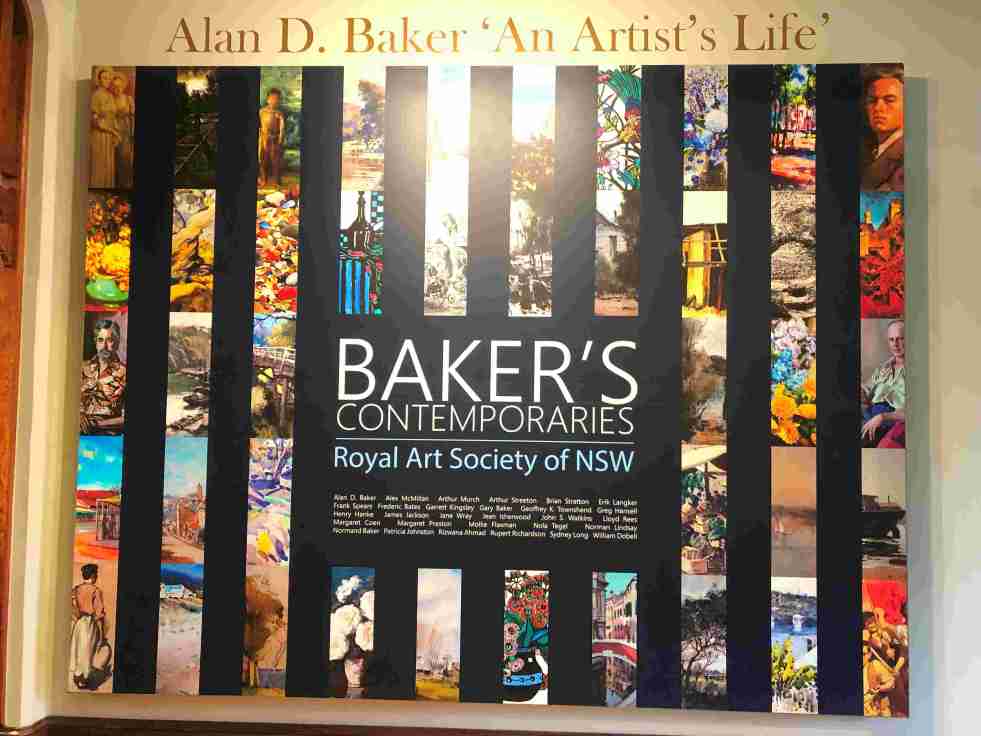
The Alan Baker Art Gallery hosted a new exhibition in early December called ‘Baker’s Contemporaries Royal Art Society of NSW’.
The exhibition was opened on Friday, 6 December, in the main gallery room as thunderstorms threatened outside with dark skies.
Curator Roger Percy opened the formal part of the proceedings, briefly explaining the exhibition and the Macaria building built by HP Thompson, who never lived in the house and his 16 children.
Mayor Ashleigh Cagney introduced the exhibition and welcomed several well-known local artists, some of whose works are hung in it.
Greg Hansell, president of the Royal Art Society of NSW, reminisced about Baker and some of his students, who have become notable local artists and were in the audience.
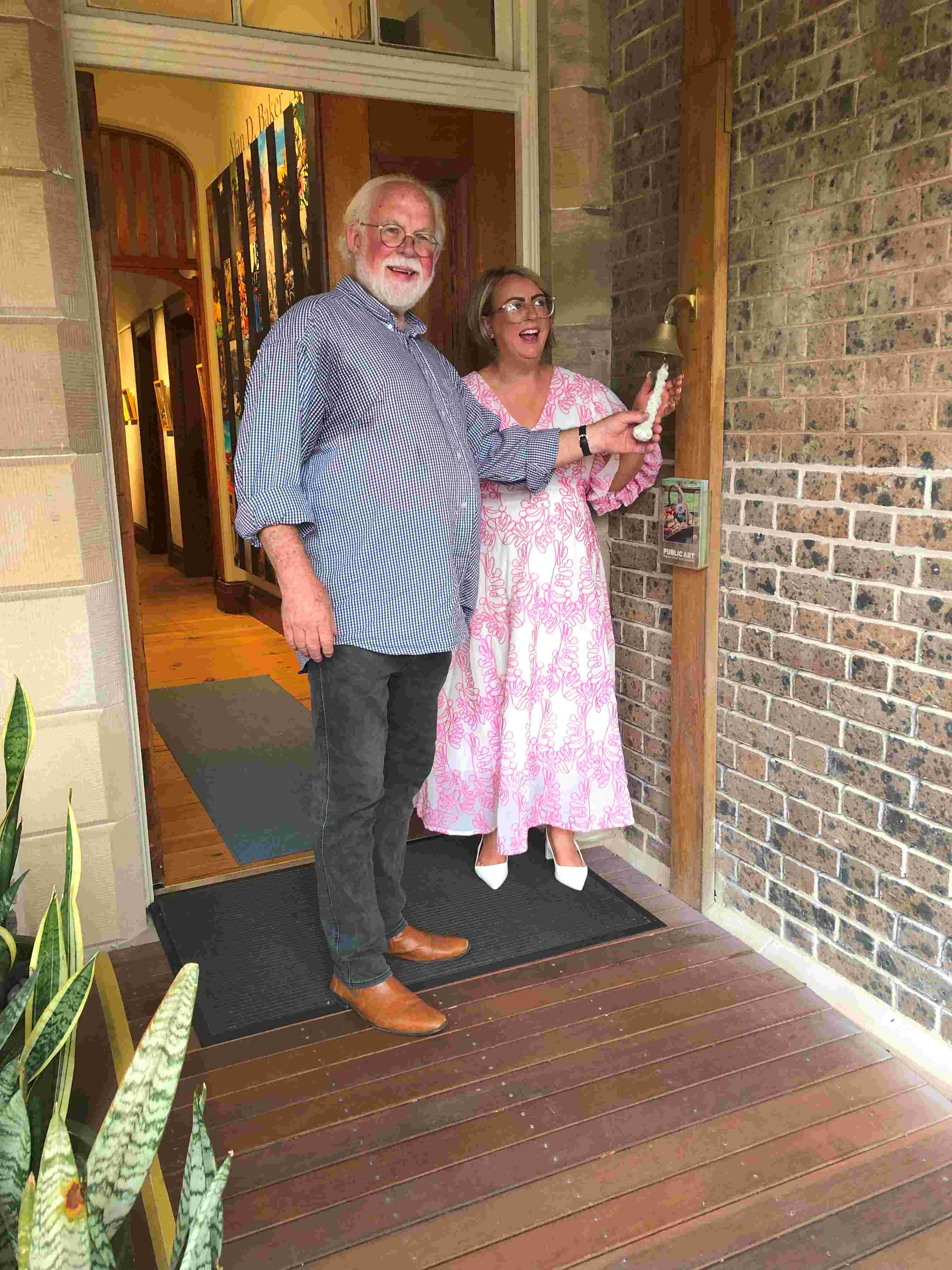
Mayor Cagney and Greg Hansell officially rang the exhibition open with the ringing of the gallery bell.
The gallery provided supper, and a young local singer, Apriljean from April’s Entertainment, provided entertainment.
Exhibition notes
The notes in the exhibition catalogue state
The exhibition showcases the significant impact of the Royal Art Society of New South Wales on Australia art history while highlighting the diverse range of art produced in 20th century Australia. It features impressive artworks by current and former RAS members, alongside works from artists affiliated with its breakaway collective, the Society of Artists (SOA).
The Alan Baker Art Gallery invites visitors to engage with an exceptional display of Australia art from some of the country’s most celebrated artists.
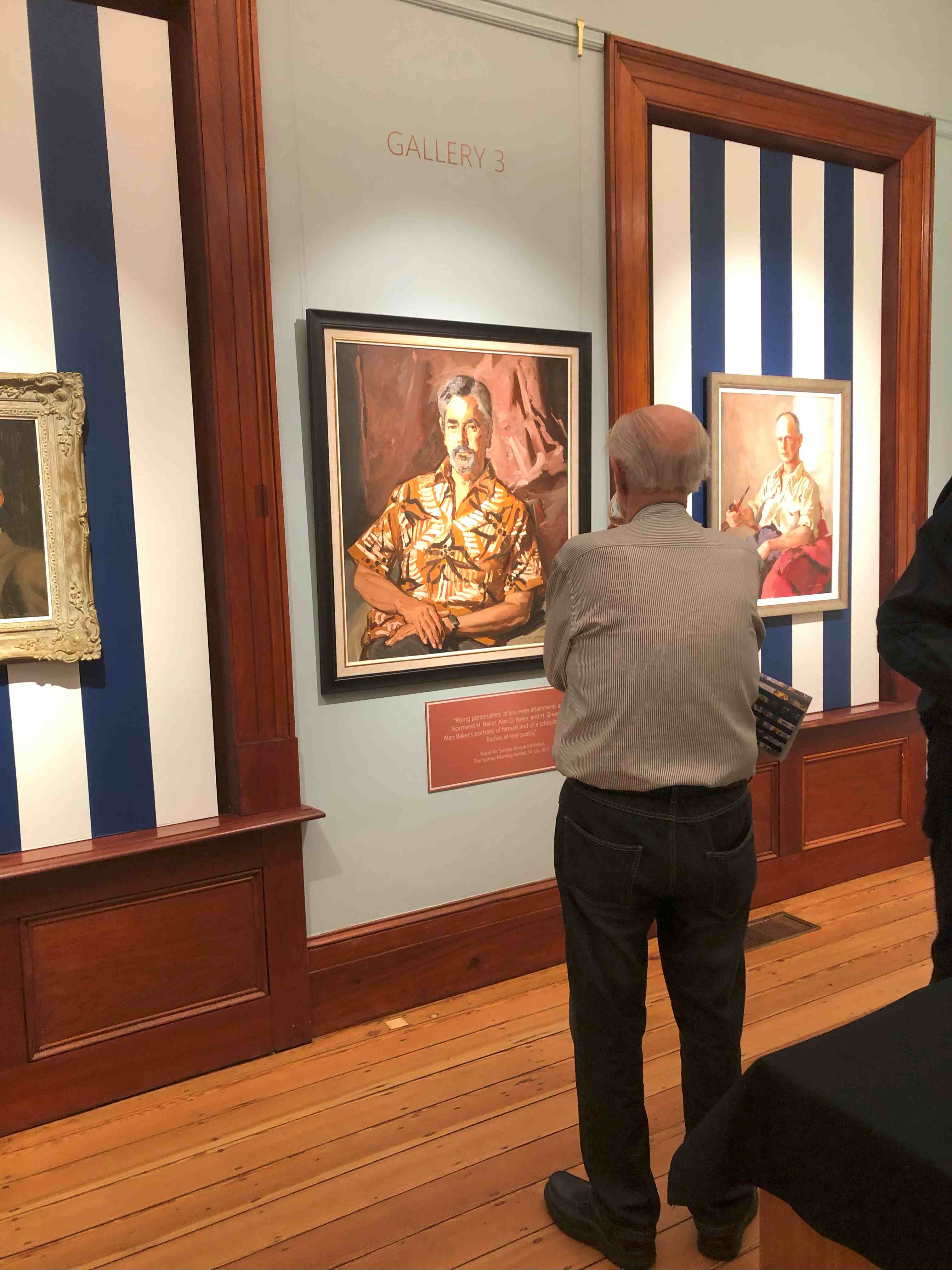
The list of artists hung in the exhibition is a veritable list of who’s who in Australian art, including Margaret Preston, Arthur Streeton, William Dobell, Norman Lindsay, Sydney Long, Henry Hanke, Lloyd Rees and others. Local notables include Brian Stratton, Patricia Johnston, Nola Tegel, Rizwana Ahmad, Jane Wray and Alan Baker.
Local scene in an exhibition painting
One painting depicts a local scene that many will know.
The work is a watercolour called The Silo, Camden by Mollie Flaxman.
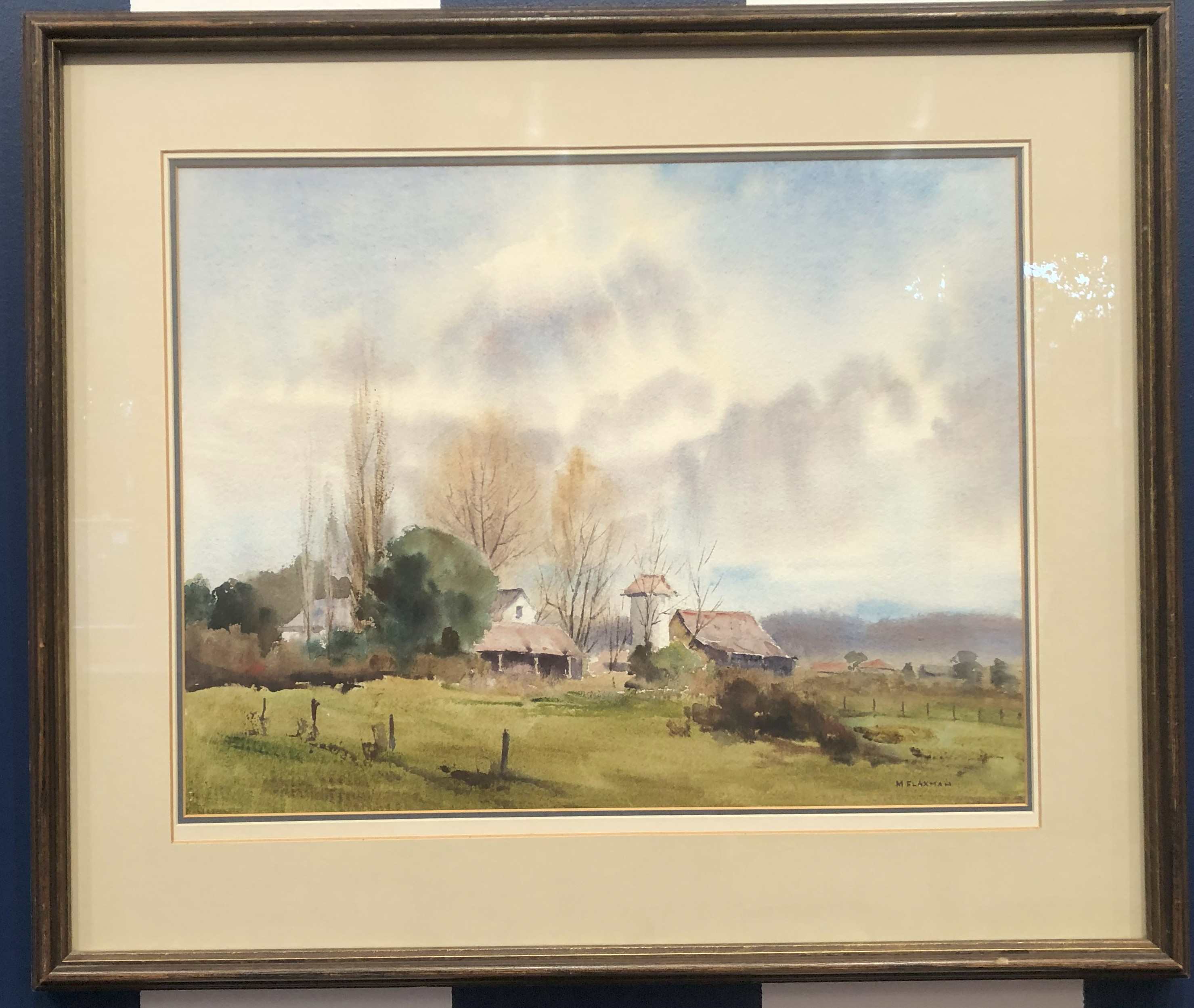
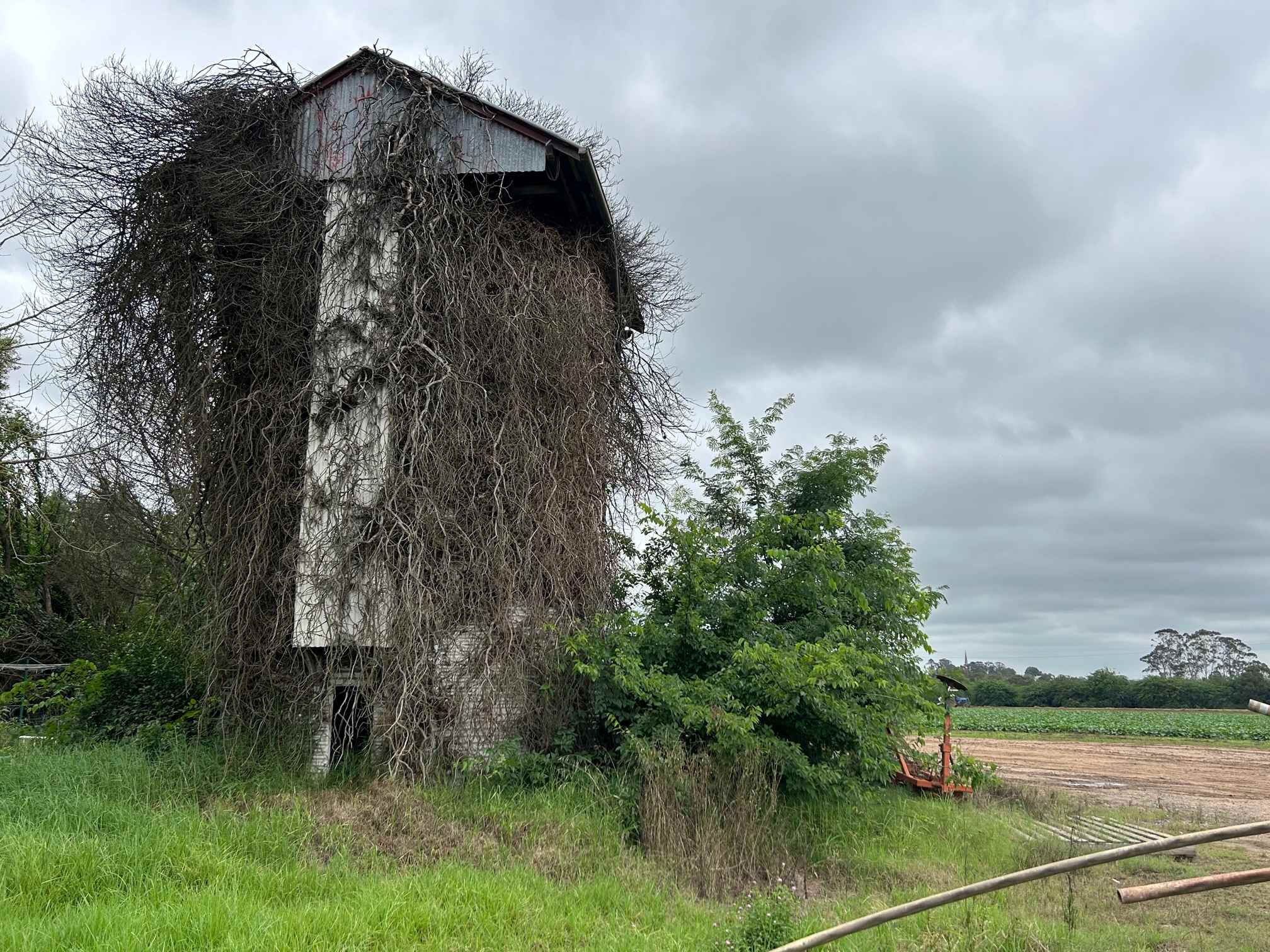
The farm is on the Nepean River floodplain north of Camden township at Elderslie and is currently used for intensive horticulture.
The silo is constructed of corrugated concrete walls with a timber and iron roof, where the silo is overgrown with vines.
Mollie Flaxman (1912-2004) was a watercolourist and a Fellow of the Royal Art Society of New South Wales. Her works have hung in exhibitions in New York (1976), New Zealand (1975), and Cheltenham, UK (1977-78).
A history of the gallery building
The exhibition is displayed in the Alan Baker Art Gallery Macaria. The history of the Macaria building is fascinating, with twists and turns.
Macaria was originally built by Sydney Congregationalist businessman Henry Thompson, who came to Camden with his brother Samuel in the early 1840s. They established a general store and a steam flour mill. Thompson was part of a Sydney-based retailing family which set up a chain of stores, including Yass and Camden.
The land Macaria was built on was originally purchased in 1846 by Sarah Tiffin, a housekeeper for the Macarthur family of Camden Park. Henry Thompson purchased the land from the estate of Sarah Tiffin in 1854. Tiffin constructed a small Georgian brick cottage in the 1840s, now 39 John Street.
Henry Thompson, who had several school-age sons, became a patron of William Gordon’s Classical and Commercial Academy in 1857. Thompson built Gordon ‘a very handsome house of elegant design’ as a schoolhouse known as Macaria. In 1861, Gordon moved his school to Macquarie Grove, which had been vacated by the Hassalls, where he took a seven-year lease. The school closed before the end of the lease. (Atkinson, Camden: 188-189)
Macaria was a substantial town residence and was stated by Thompson to demonstrate his status and importance as a local businessman. Henry Thompson’s large family of sixteen children lived in Macaria until 1870. Henry died in 1871 after falling from his horse.
Macaria was a residence for the Milford family, after which the house was leased by Dr George Goode in 1875, an outspoken Irishman of ill temper. GB Crabbe leased the house in 1886 and converted it to the Camden Grammar School for young boys. The school closed in 1894.
Dr FW West used the house as the surgery for his medical practice and a home for his family from 1901 to 1932, when Francis West died. A series of medical practitioners occupied the house: LB Heath (1932-1938); RE & JT Jefferis (1938-1955); GF Lumley (1955-1975).
Macaria was purchased by Camden Municipal Council from Dr Lumley, and the building was used as the Camden Library, then the Camden mayor’s offices and then converted to an art gallery.
Exhibition details
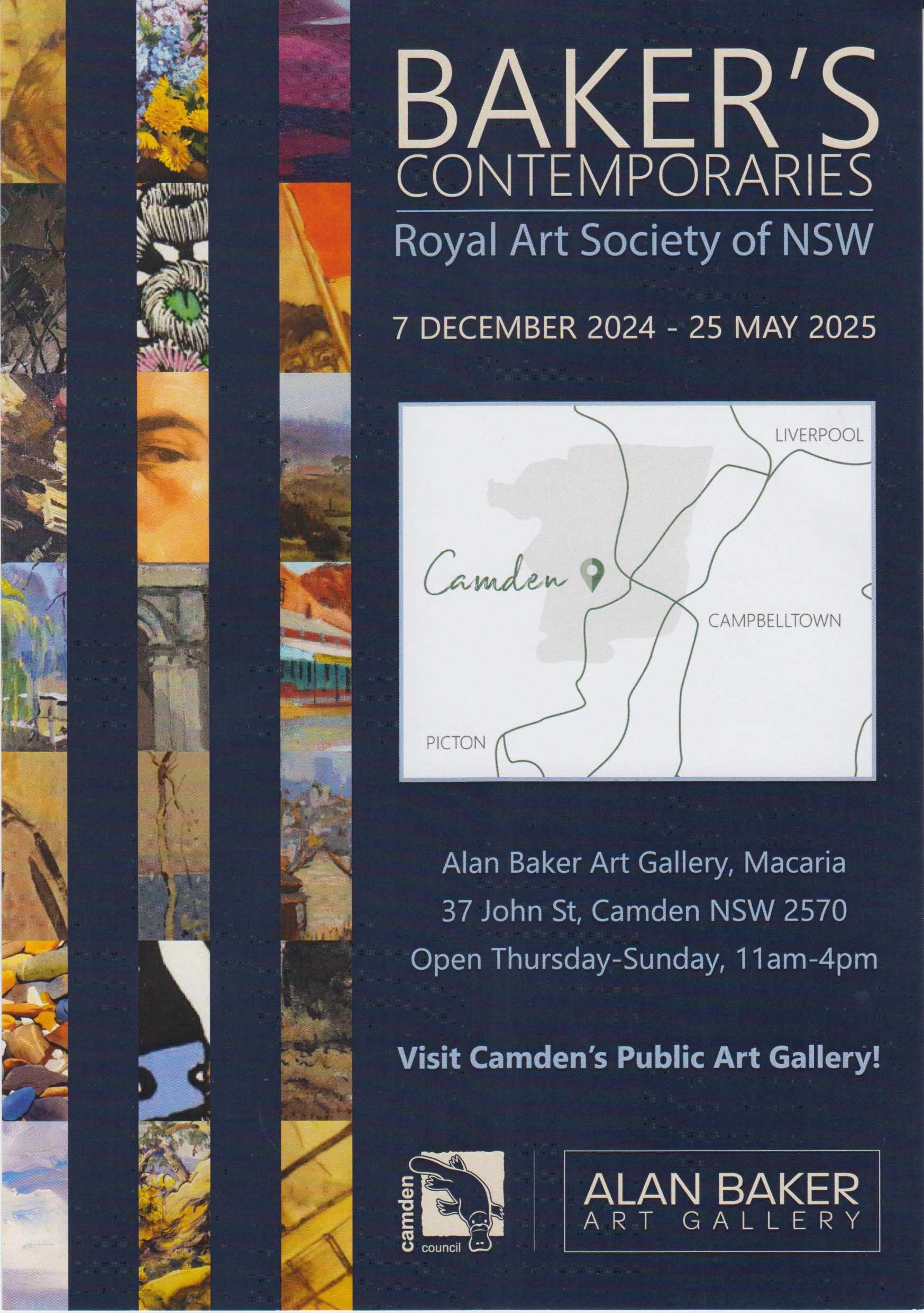
The exhibition Baker’s Contemporaries Royal Art Society of NSW is on at the Alan Baker Art Gallery, Macaria, 37 John Street, Camden, from 7 December to 25 May 2025. Entry cost is free.
References
Roger Percy, Baker’s Contemporaries Royal Art Society of NSW, Exhibition Notes, Alan Baker Art Gallery, Camden 2024.
Atkinson, Alan. (1992). Camden: farm and village life in early New South Wales Melbourne: Oxford University Press
Discover more from Camden History Notes
Subscribe to get the latest posts sent to your email.

