

Does AI endanger historians?
Are historians an endangered species? Will historians disappear with AI?
A recent study by Microsoft put historians second on the list of jobs most likely to be affected by AI. The study found that jobs linked to knowledge work and those involving the provision and communication of information would be the most affected by AI. The most common work activity for these jobs was ‘gathering information and writing’. (Tomlinson, K., Jaffe, S., Wang, W., Counts, S. and Suri, S. (2025).
Gathering and collecting information from the past can be a tedious job, and AI can assist in that process. AI scrapes data from existing primary and secondary sources. Some of these sources were written by historians, and historians used others.

The collection of historical facts from the past prioritises the gathering of dates, events, names of people and places from the past. Rosen has argued that the approach AI Chatbots take to history reminded him of university colleagues from technical, medical, and scientific areas who view history as a list of dates and names from the past. (Rosen, L. (2025)
Historical realism
This is a narrow interpretation of history, representing a form of historical realism. Historical realism has been defined as
a literary and artistic approach that presents past events or periods with a high degree of accuracy and attention to detail, aiming to capture the authentic experience of people from that time, including their specific values, beliefs, and everyday lives (https://en.wikipedia.org/wiki/Literary_realism)
The history of dates and events is a narrow view of the past. Yet there is so much more to see in the past. Let’s use built heritage as an example. Here, the architect and builder are important, as is the date of construction and the location of a building. Take one example, the Camden CBC bank building.
Historical realism and built heritage
The Camden CBC bank building is situated at the corner of Argyle and John Streets in Camden, the main intersection in the central business district. The building was built in 1877-78, designed by G.A. Mansfield, and constructed by Camden builder Charles Furner. A one-storey extension added in 1972-73 by architects Laurie and Heath.
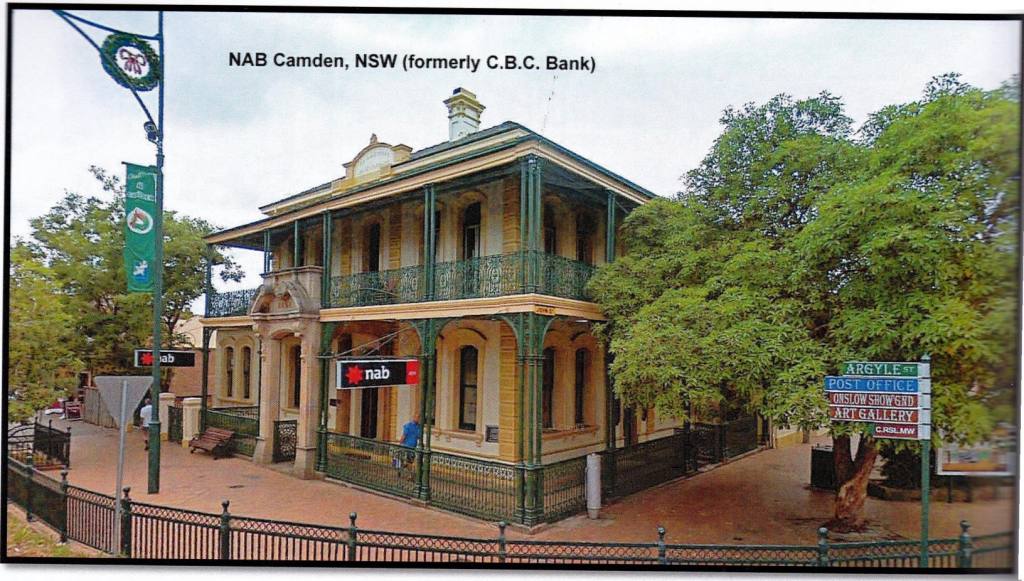
These facts are important; however, this approach limits our understanding of the building. Other questions could be: Why was that architect chosen? Why that design? Why that location? And lots of different questions.
The answers to these ‘why’ questions provide additional layers of meaning to the building, beyond the historical realist approach, which is just a series of facts. Using additional information, it is possible to create a narrative or story about the building. You now have a collection of facts with meaning – a story.
Storytelling and historians
Historians are storytellers. All communities have storytellers. People are drawn to communities and stories about individuals.
A story is seldom seen in binary terms, as black & white. Storytelling is the weaving of a narrative through a group of disparate events or facts, making sense of a collection of facts and giving them meaning to allow the ordinary person to understand them.
Storytelling is like gossiping over the back fence, chatting around the water cooler, and talking over coffee. Stories are fundamental to the human condition.

Storytelling by a historian involves making sense of the past in the present, using the past to understand the present, demonstrating how the past is alive and relevant in the present, and showing how the past shapes the present, as well as answering why questions about the present by referencing the past.
Commercial Bank Company Camden
A further question could be: why is it important to keep the CBC Bank building in Camden? Some would say that is self-evident. Well, no, it is not. Why keep the building? The bank building is at the most prominent location in Camden. Why not sell the site and build a modern, multi-story building? There would be a higher return per square metre and a higher return on capital to the owner. Why not?
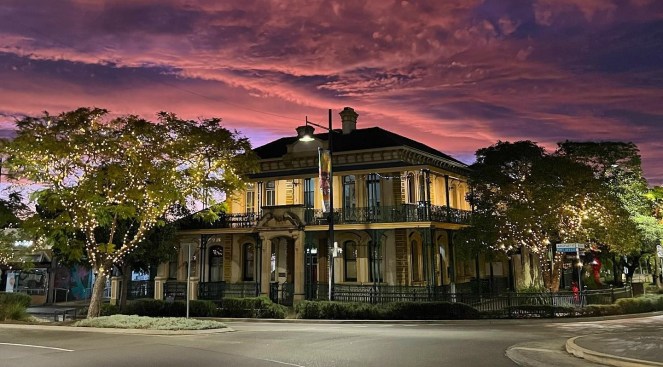
The answer to that question is wrapped up in stories about what the bank means to the present-day Camden – its heritage significance. The answer to this lies in the community’s identity and a sense of place. It is what the building represents to the Camden community. This is a complex question with no easy answer. The meaning is multi-layered and multifaceted, with numerous interconnected parts.
The NSW State Heritage Inventory states that the bank building is
An important and noticeable building in a key position on the corner of Camden’s two main streets. It continues to be used for its original purpose and well kept over the years. The building is representative of a Victorian Italianate building. It is part of the John Street Group. (SHI) The bank retains good integrity and intactness. (State Heritage Inventory)
Historians write these types of stories. Rosen argues that
What historians do is construct detailed narratives of the past about how societies, cultures and events have evolved. They analyse past events to understand their significance. (Rosen, L. (2025)
AI Chatbot and historical realism
A historical realist approach, adopted by using an AI Chatbot, therefore, fails to answer the simple question, ‘Why?’
‘Why?’ as a historical question is full of nuance and subtleties that do not lend themselves to the absolute truth provided by an AI Chatbot. AI Chatbots work with definitive answers, not shades of grey, a type of absolute truth.

Are historians going to disappear?
So, to answer the original question posed at the beginning of the post, Google AI was asked, ‘Are historians going to disappear with AI?’ This is what it answered:
Historians provide interpretation, critical analysis, empathy, and original argumentation that AI cannot, particularly concerning un-digitised archives, nuanced context, human emotions, and the fundamentally creative act of constructing new historical narratives and posing meaningful questions. While AI can identify patterns and summarise existing information, it lacks the deep contextual understanding, creative insight, and subjective judgment necessary for true historical scholarship and the development of novel arguments. (Google AI)
The Microsoft study concluded that AI Chatbots could assist historians, but not replace them. (Tomlinson, K., Jaffe, S., Wang, W., Counts, S. and Suri, S. (2025).
Interpreting the past
AI Chatbots are not capable of interpreting the past, considering the ethical and philosophical implications of the past, or framing a historical question. AI chatbots cannot address the simple questions of ‘Why?’
AI Chatbots are not capable of critical analysis, evaluating evidence, empathetic and emotional understanding, understanding causality, and a host of other factors that require an understanding of the nuances and subtleties of the past.
Vast amounts of data
AI Chatbots are good at gathering, collecting, sifting and summarising vast amounts of data which can provide vital assistance to historians. These types of repetitive tasks are boring for historians and their colleagues, and errors can creep into these processes. Historians excel at tasks that are creative, philosophical, and empathetic, enabling people to understand and interpret past events.
The role of the historian is unlikely to disappear with AI Chatbots. The historian will be needed in the future, so hopefully, we will not repeat the mistakes of the past.

Resources
Tomlinson, K., Jaffe, S., Wang, W., Counts, S. and Suri, S. (2025). Working with AI: Measuring the Occupational Implications of Generative AI. [online] Microsoft Research. Available at: https://www.microsoft.com/en-us/research/publication/working-with-ai-measuring-the-occupational-implications-of-generative-ai/.
Rosen, L. (2025). Will Artificial Intelligence Threaten Historians? [online] 21st Century Tech Blog. Available at: https://www.21stcentech.com/artificial-intelligence-threaten-historians/ [Accessed 1 Oct. 2025].
Declaration
Google AI was utilised in compiling the summary lists of information for this post.
Featured image AI Generated: ‘Chatting over the fence with Australian houses in background’.

Discover more from Camden History Notes
Subscribe to get the latest posts sent to your email.

