
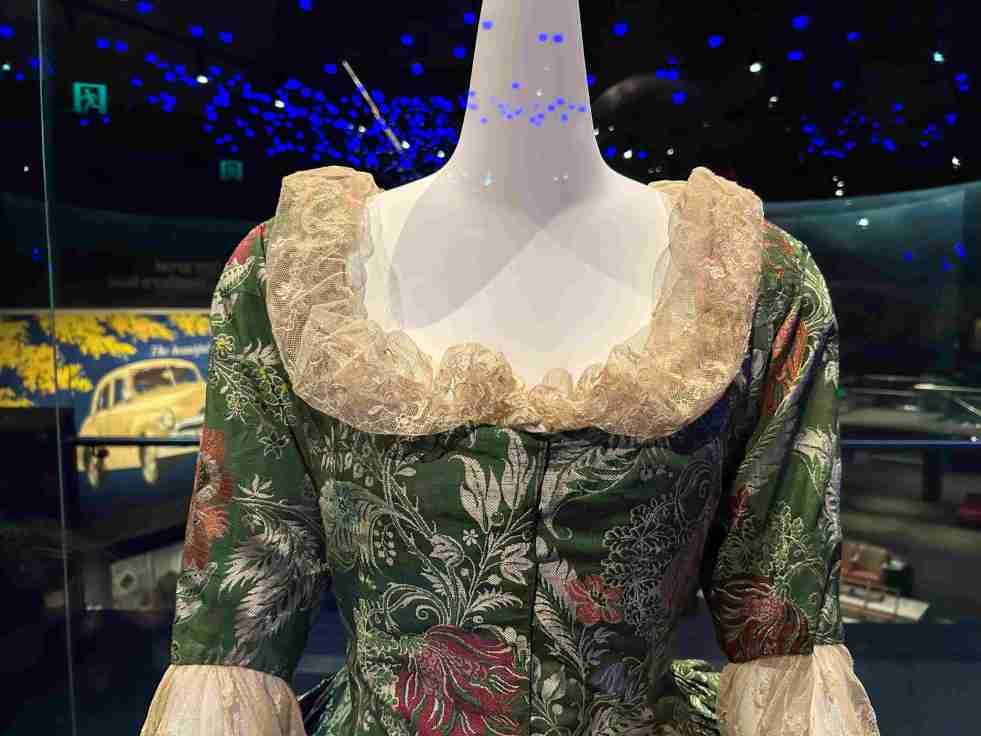
Camden dress history acts as a visual mirror of societal changes, reflecting shifts in technology, politics, economics, and social roles. Clothing is rarely just about aesthetics; it directly responds to the world in which it is made. This is reflected at a local level in Camden as much as it is at a transnational level.
- Technological and Industrial Shifts: The Industrial Revolution replaced hand-sewing with mass production, making fashionable clothing accessible to the masses. Similarly, the invention of synthetic fibres like nylon in the 20th century mirrored wartime shortages and the rise of fast, affordable consumer goods.
- Political and Economic Climate: Periods of crisis alter what people wear. During World War II, fabric rationing led to utilitarian, minimalist designs with shorter hemlines. Conversely, the economic boom of the 1950s was reflected in Christian Dior’s “New Look,” which used extravagant amounts of fabric to signal a return to prosperity.
- Gender and Social Liberation: As women’s roles shifted, so did their silhouettes. The 1920s flapper dress rejected restrictive corsets, mirroring women gaining the right to vote and entering the workforce. Later, the 1970s pantsuit symbolised women fighting for executive power and workplace equality.
- Class and Status: Historically, strict sumptuary laws regulated dress to maintain rigid class divides, dictating who could wear luxury materials like purple silk. Today, the shift toward casual wear reflects a more democratised, less formal social hierarchy.
By analysing garments, Camden historians can track the evolution of human values, global trade routes, and civil rights movements over time, and these processes at a local level.
(Generative AI was used here to assist in answering the question: ‘How does dress history reflect wider historical trends and patterns?’)

