
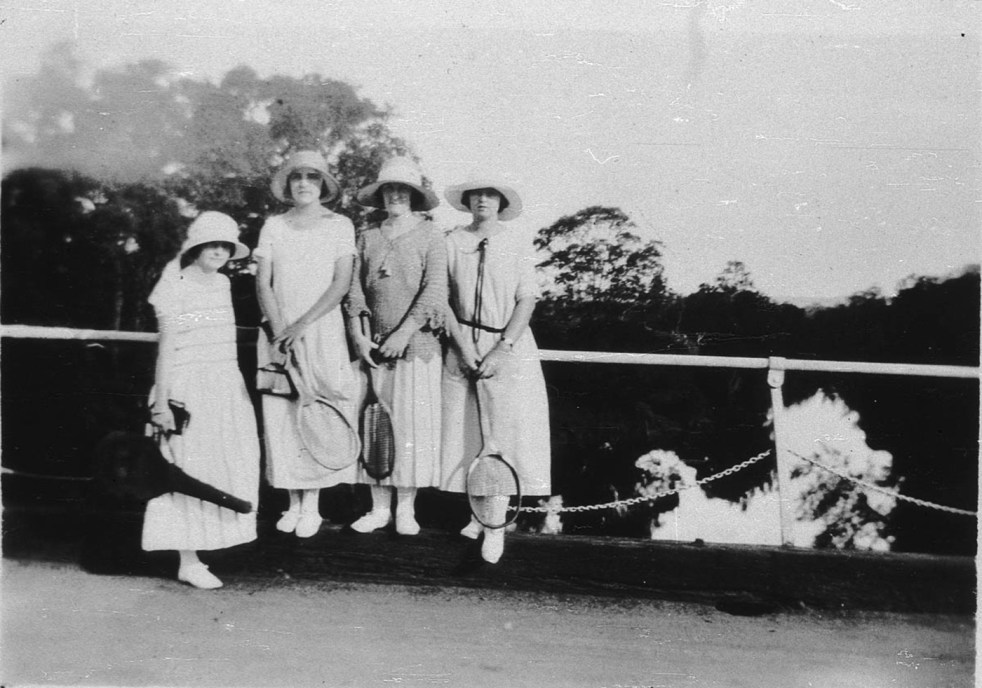
Effrontery and the ‘flapper’
‘Flappers of the 1920s were young women known for their energetic freedom, embracing a lifestyle viewed by many at the time as outrageous, immoral or downright dangerous’, says the History.com website.
If you read the pages of the Camden News you might have agreed.
In 1920 the Camden News reported ‘flappers’ were ‘running wild’ on the streets of Sydney, or so it seemed to the casual reader. The press report stated:
A straggling procession of boisterous, well dressed young fellows, with pipe or cigarette in hand, and headed by a number of bold looking females of the ‘flapper’ type, paraded George and Pitt streets on Thursday (last week). (Camden News, 25 November 1920)
Sydney’s Daily Telegraph and Sydney Morning Herald reported the same event with less colourful language. Apparently there had been a lunchtime march of office workers along George Street numbering around 3000, with ‘200 ladies’, supporting the basic wage case in Melbourne. (Daily Telegraph (Sydney), Friday 12 November 1920) (Sydney Morning Herald, Friday 12 November 1920)
The news story that appeared in the Camden News had originally been run in the Crookwell Gazette. (Crookwell Gazette, 17 November 1920) and then re-published by the News the following week. The News and the Gazette were the only New South Wales newspapers that ran this particular account of the Sydney march, where female office workers were called ‘flappers’.
The correspondent for the Gazette and News was offended by the effrontery of young female office workers being part of an industrial campaign march. In the years before 1920, workers had taken a number of controversial industrial campaigns across New South Wales and the Camden News had opposed them all.
The editorial position of the Camden News was that these young women should fit the conservative stereotype of women represented by the Mothers’ Union. Here women were socialised in Victorian notions of service, ideals of dependence, and the ideology of motherhood where mothering was seen as a national imperative. (Willis, Ministering Angels:20-21)
The modern girl
The Sydney ‘flappers’ were modern girls who participated in paid-work, dressed in the latest fashions, cut their hair short, watched the latest movies, bought the latest magazines and used the latest cosmetics.
Just like modern girls in Camden.
Country women wanted to be modern in the 1920s.
As early as 1907, the term ‘flapper’ was applied to a young fashionable 20 year-old women ‘in short skirts’ in Australia in the Bulletin magazine. (The Bulletin, 14 February 1907)
Australian women were considered modern because they had the vote, and they were represented in literature as a young and athletic stereotype, as opposed to the colourless and uninspiring English girl. (Crozier-De Rosa, 2010)
The flapper
The ‘flapper’ is one representation of young women from the 1920s that appeared worldwide, and Camden was not remote from these international forces.
American author F. Scott Fitzgerald is credited with creating the flapper and published his Flappers and Philosophers in 1920. (History.com) Other female equivalents were Japan’s moga, Germany’s neue Frauen, France’s garçonnes, or China’s modeng xiaojie (摩登⼩姐). (Eve Weinbaum, et. al. 2008)
The term flapper linked Camden to international trends concerned with fashion, consumerism, cosmetics, cinema – primarily visual media.
The modern girl in Camden
The ‘modern girl’ in Camden appeared in the early 1920s and was shaped by fashion, movies, cosmetics and magazines.
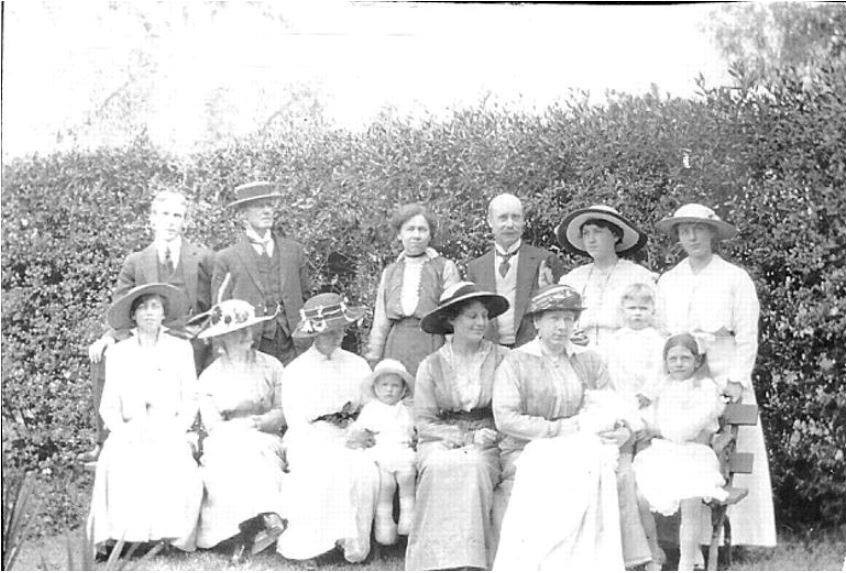
These two photographs illustrate that young women in Camden were modern.
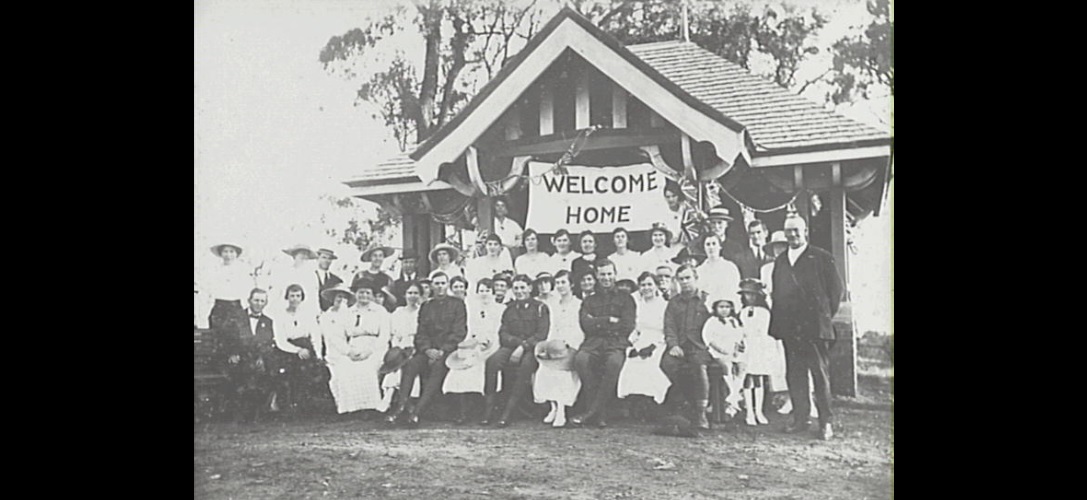
The young women in this 1919 pic have short hair sitting next to local returned men from the war.
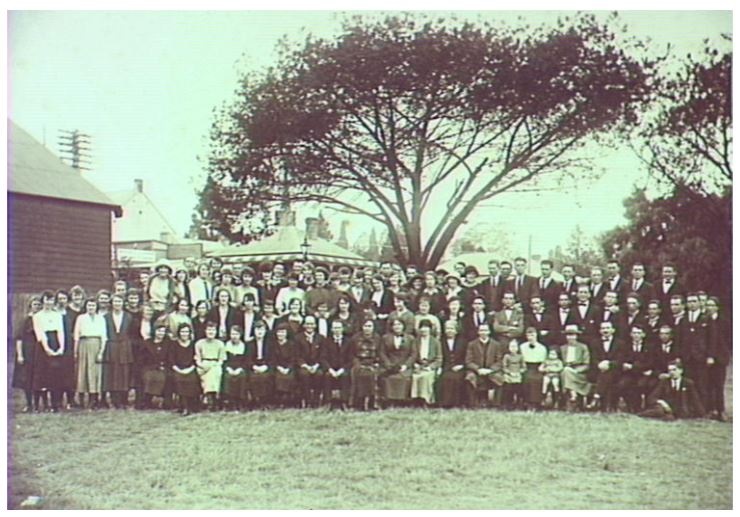
Another group of young modern women appeared in Camden in the 1920s. Trainee teachers are shown in the photograph taken by local Camden photographer Roy Dowle. The group of 49 young single women from Sydney stayed at the Camden Showground Hall in 1921 along with 15 men. In the following years, hundreds of young female teachers stayed at the Camden showground and did their practical training at local schools. (Willis 2024)
The flapper at the movies
The most common place to find the ‘flapper’ in Camden was at the movies – the weekly picture show at the Forrester’s Hall on Camden’s main street. The world on the big screen.
The movies were a visual medium, just like fashion, cosmetics, advertising, and magazines, that allowed Camden women to embrace the commodity culture in the Interwar period.
The Camden News used the language of latest fashions and styles when it reported these events or ran advertisements for the local picture show.
One example was the advertisement for the ‘Selznick Masterpiece’, ‘One Week of Love’ in 1923. The first time that the term ‘flapper’ appeared in a Camden movie promotion, and it was announced it announced to the world this way:
‘Every man, woman, flapper, bride-to-be and eligible youth in Australia is crazy-to-see its stupendous wreck scene, thrilling aeroplane crash, strong dramatic appeal, lifting humour, intoxicating love scenes, bewildering beauty, lavishness, gripping suspense, heart-toughing pathos, which all combing to make it the biggest picture of the year’. (Camden News, 9 August 1923)
According to country press reports the movie was the ‘passion play of 1923’ and showed at PJ Fox’s Star Pictures located in the Foresters’ Hall, which had opened in 1914. Starring silent film beauty Elaine Hammerstein and female heart-throb Conway Tearle the movie had enjoyed ‘a sensational long-run season’ at Sydney’s Piccadilly Theatre. (Kiama Reporter and Illawarra Journal, 7 March 1923)
Foreign movies blew all sorts of ideas, trends and fashions into the Camden district, including notions about flappers.
Young Camden women were influenced by images and trends generated by modernism at the pictures, in magazines, in advertising, in cosmetics, and in fashion.
While Camden could be a small, closed community, it was not isolated from the rest of the world.
References
Crozier-De Rosa, Sharon (2010). The new woman at home and abroad: Fiction, female identity and the British Empire. University of Wollongong. Conference contribution. https://hdl.handle.net/10779/uow.27794115.v1
Willis, Ian 2024. Camden Trainee Teachers Camp 1924: Unveiling a Mysterious Journey Camden History Notes. 15 July. Online at https://camdenhistorynotes.com/2024/07/15/trainee-teacher-camp-camden-in-the-1920s/
Edited by
Eve Weinbaum, Alys, Thomas, Lynn M., Ramamurthy, Priti, Poiger, Uta G., Dong, Madeleine Yue, & Tani E. Barlow, 2008. The Modern Girl Around the World: Consumption, Modernity, and Globalization. Duke University Press, Durham, NC. https://doi.org/10.1215/9780822389194
AI Disclaimer
AI was used to help auto-correct grammar.
Updated 24 September 2026. Originally posted on 11 December 2020.
Discover more from Camden History Notes
Subscribe to get the latest posts sent to your email.


One thought on “The Camden News affronted by Sydney ‘flappers’ and the appearance of the modern girl”
Comments are closed.