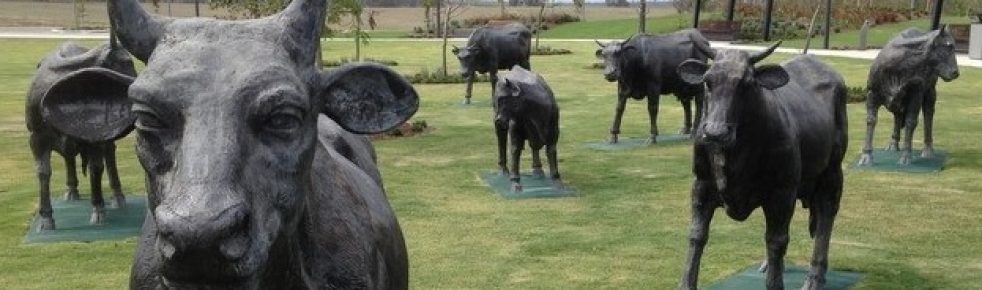
Dairying in the Camden area
Over the last 180 years, the Camden economy has been reshaped several times and transitioned through a number of stages. As the First World War approached, dairying came to dominate the Camden economy as the importance of Yerranderie silver mining faded. By mid-century, the Burragorang coalfields had in turn overtaken dairying as the source of wealth.
Around the end of the 19th century, the Camden dairy industry had two sectors, smallholder dairymen, who numbered around 700, and large properties that included Camden Park Estate, Denbigh, Brownlow Hill, Maryland, Kelvin, Raby, Glenlee and others.
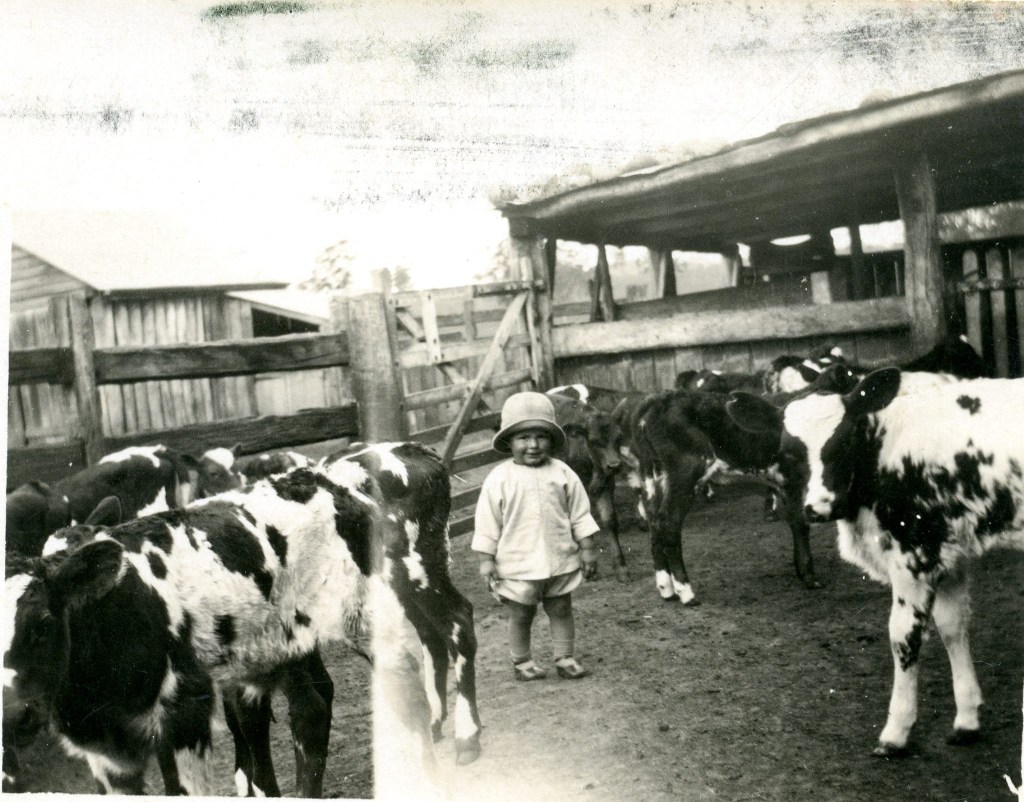
Vertically integrated dairying conglomerate
Camden Park Estate was the largest player in the Camden dairy economy, and by the Interwar period it was the largest dairy property in New South Wales, rivalled only by Kameruka Estate in the Bega Valley on the Far South Coast near Candelo.
From the 1890s, Camden Park Estate increasingly became a vertically integrated farming conglomerate, controlling production, processing, distribution, and marketing, and dominating the economy by the 1940s.
Camden Park’s success was firmly established in the 1890s when Elizabeth Macarthur Onslow re-organised the estate, corporatised it and paid off debt, in the second phase of the dairying operation. The first phase began in the early 1820s with the production of milk and butter from operations near the Regency mansion house. (CPH 2026)
Dairy revolution in the late 19th century
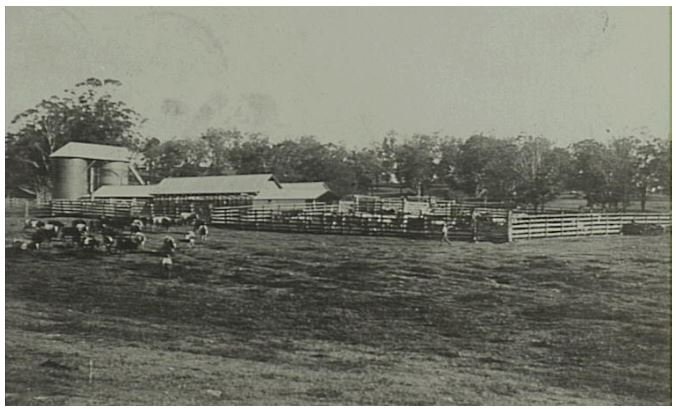
Camden Park’s second dairying phase was driven by improvements from the dairy revolution at the end of the 19th century. This was as much an evolution as a revolution, characterised by innovations and inventions that improved productivity, hygiene, transport, and breeding across the state.
Innovations included the introduction of the centrifugal cream separator (c1886) that quickly allowed the separation of cream from milk, the establishment of dairy cooperatives that increased the bargaining power of the dairyman, the introduction of mechanical refrigeration (1880s), the Babcock Test that measured the butterfat in milk (1890s), the use of railways for transporting bulk milk, testing herds for disease and pathogens and improving the hygiene in milk bays.
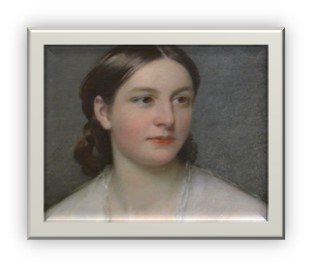
According to Chris Betteridge, in addition to these improvements, John Macarthur’s granddaughter, Elizabeth Macarthur Onslow, introduced share farming after studying dairying in southern England and the metayage share farming system in Italy. She re-organised Camden Park on her return in 1890 from a family trip to Europe in 1887.
Share farming in Europe
Sharecropping was common throughout Europe and post-Civil War USA. In England, sharecropping or farm-by-halves was common from the 16th century, although it declined as the Industrial Revolution took hold. A more common system that survived into the 20th century was the Dorset system, which leased cows on a share-farming arrangement. (Turner 2010)
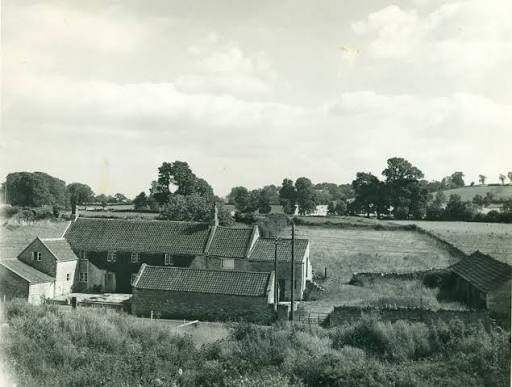
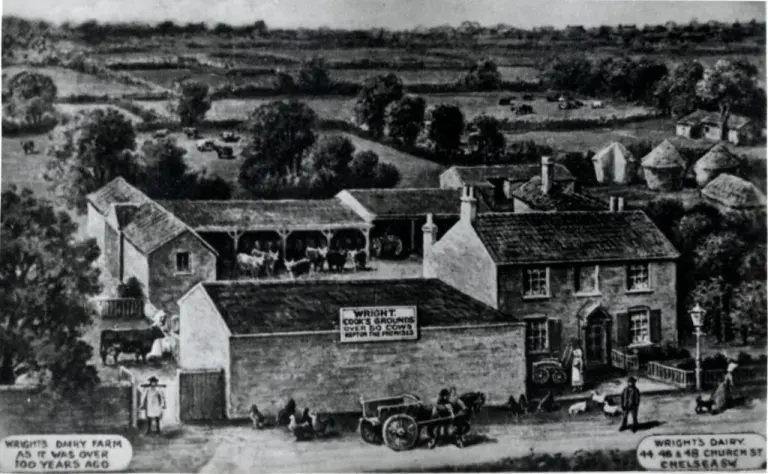
The Dorset system was a 19th-century English dairy practice where farm owners rented their milking cows to specialised caretakers called “dairymen”. Under this system, the landowner provided the land, machinery, and herd, while the dairyman managed the daily labour and paid a fixed annual rent per cow from the dairy produce. Dairy farmers in Dorset increasingly supplied liquid milk to London and other centres, including seaside towns. (VCH 2025)
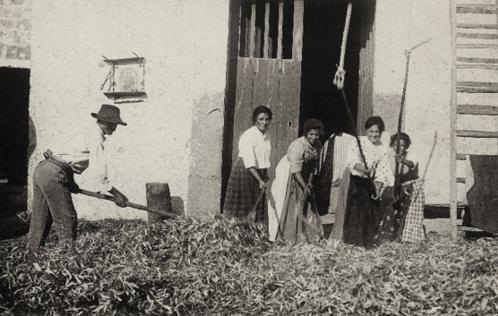
In central and northern Italy, the metayage system, also known as mezzadria, was a traditional sharecropping system dating back to the Middle Ages, in which the tenant farmer, the mezzadro, worked a plot of land owned by a proprietor, and the harvest and profits were split 50/50. This feudal structure featured characteristic crops, livestock, olive oil, and wine. The landowner provided the capital, and the farming family provided the labour and some basic tools, with the landowner having the ultimate say over all matters. Multiple generations lived on the farm, and families lived a subsistence lifestyle. The system was legally phased out from the 1950s to modernise farming and improve farm workers’ rights. (Regan 2019)
Re-organisation and innovation
In 1892, using the insights gained overseas, Elizabeth established an innovative dairying complex at Camden Park under the management of her cousin, Captain Astley John Onslow Thompson. (BF 2026)
By 1895, creameries had been built on the estate at Camden and Menangle, and 12 cooperative dairy farms had been established, along with 40 leased farms. The dairy herd were Ayrshire with some Jersey. Under the Camden Park cooperative share-farming system, the estate supplied, according to AJ Onslow Thompson, ‘house, farm, cows and horses, tools, everything that is necessary’. Some farmers supplied their own ‘things’. He said
We supply each farmer on an average with about sixty cows in full milk. All dry stock are kept by ourselves, and as the cows come in they are apportioned to the various farms. Of course considerable oversight is needed, but our people see that the whole arrangement is a mutual one, and the results are fairly divided. (Betteridge 2012:59)
The first share-farms were established in 1892, and by 1894 this had increased to 14 in 1895. (Walsh 2016:26) Camden Park management called this farming system ‘cooperative dairy farms’.
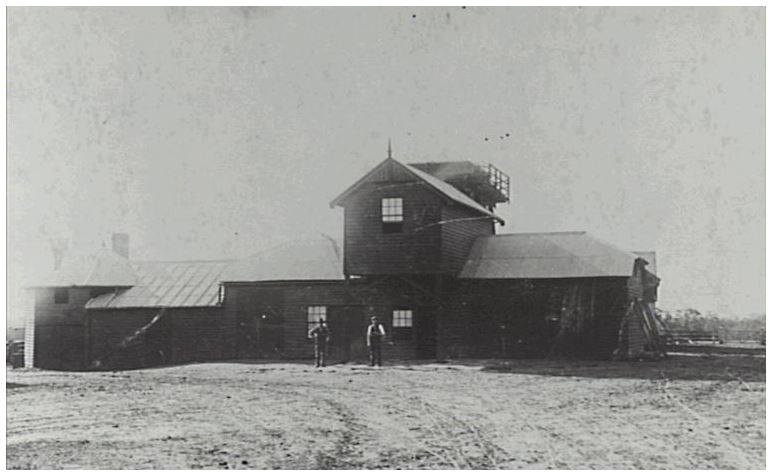
The dairy herd in 1894 was between 900 and 1000 cows in full milk, which, according to Walsh, was a 10-fold increase from the 1880s. The number of share farmers peaked in mid-1899 at 20; by the end of the year, it dropped to 17, with a dairy herd of 2205 cows, including heifers and dry cows. In addition to share farmers, there were 40 tenants. (Walsh 2016:26-27)
According to Walsh, share farming allowed people to enter the industry without buying land, with labour supplied by the dairyman and his family. Regan argues that under the Italian share-farming system, families lived a subsistence standard of living. (Walsh 2016:27; Regan 2019) Walsh makes no conclusion on this matter at Camden Park.
According to Walsh, under Onslow Thompson’s management, the business model was centred around the four estate creameries at Menangle (1892), Cawdor (1895), Belgenny (1898), and the purchase of Westbook at Mount Hunter (1896).
Competition in the Bega Valley
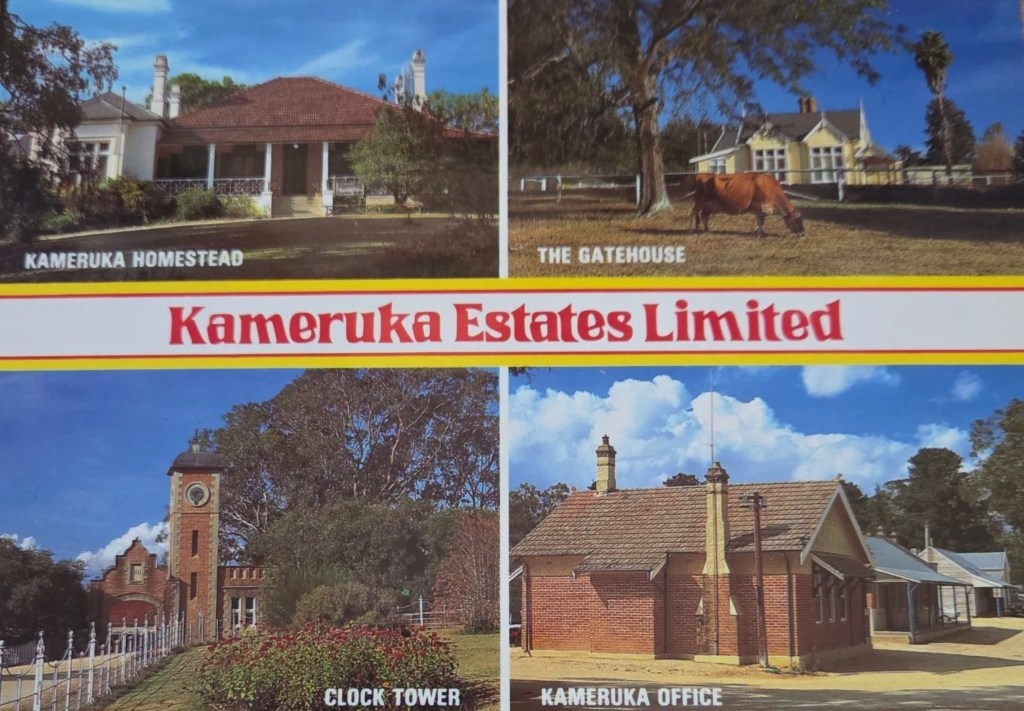
The only other dairy property in New South Wales of equivalent size was the 1400 hectare Kameruka Estate on the South Coast of New South Wales near Candelo, which operated multiple share-farms. By 1885, the estate was milking over 1000 cows, which rose to 1400 by 1914, supplying milk for butter and cheese making. (SCHS 2026, Dairying)
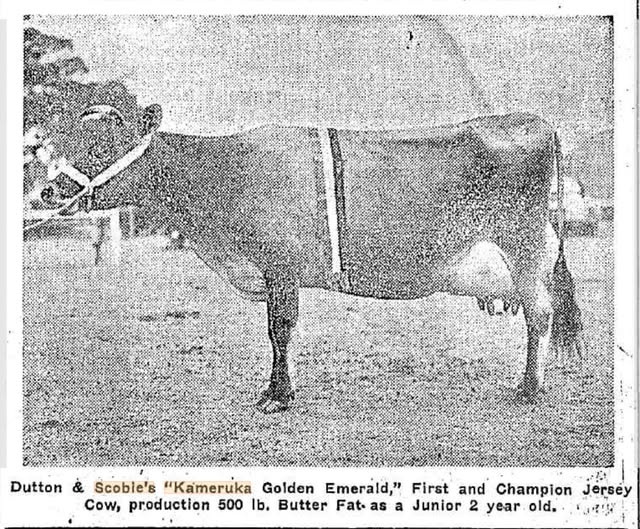
Robert Lucas Lucas-Tooth, of Tooth’s Brewery fame, purchased Kameruka in 1864 and following his own
humanitarian social ideals and become a “transplanted segment of the English countryside; a largely self-contained community based on the English agricultural estate system. [Tooth provided ]his tenant farmers with six-roomed cottages, a school, a church, a meeting hall, store and post office. Each family was supplied with 100 cows and paid 1d per gallon. At its peak there were 15 share farms. (SCHS 2026. Kameruka )
Scientific farming
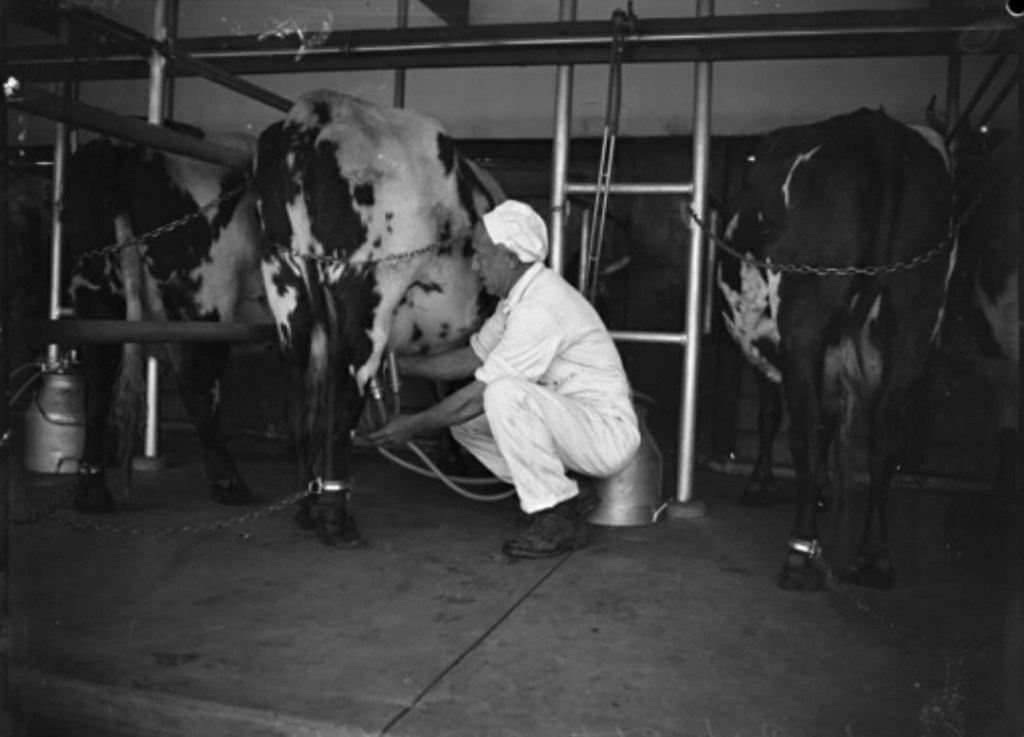
Throughout the early 1900s, Camden Park and associated entities and co-operatives played a key role in supplying milk to the Sydney market. Central to the success in the milk business was the commitment to milk quality and herd hygiene.
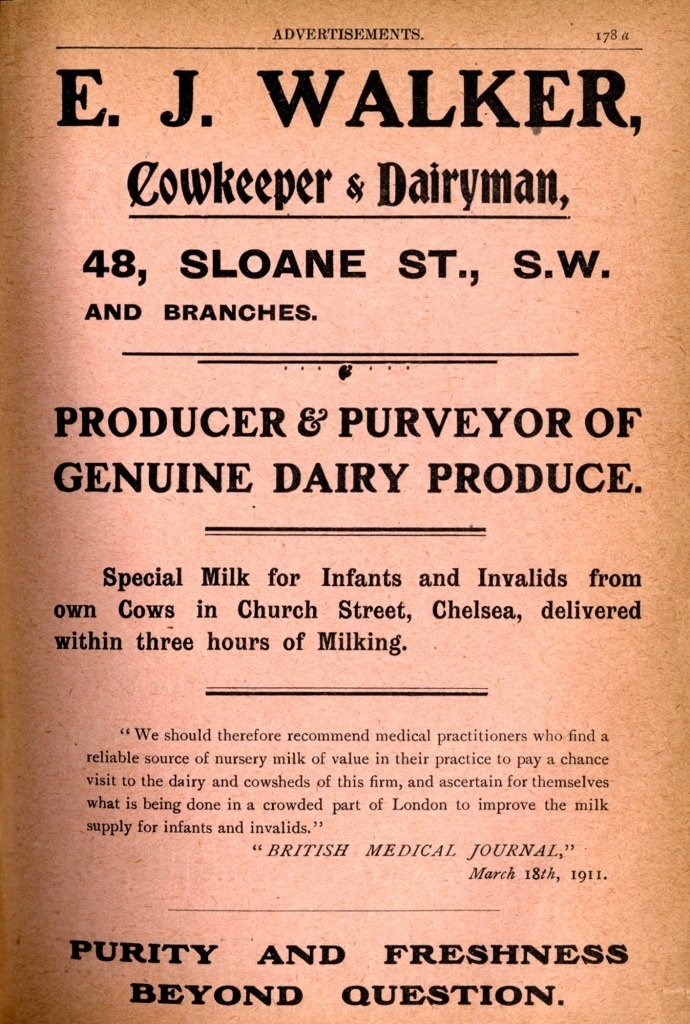
From the mid-1920s, Camden Park opened a series of “Model Dairies”, the term reflecting the commitment to quality and best practice. In 1924, Camden Park’s dairy herds became the first herd in NSW to be certified tuberculosis-free.
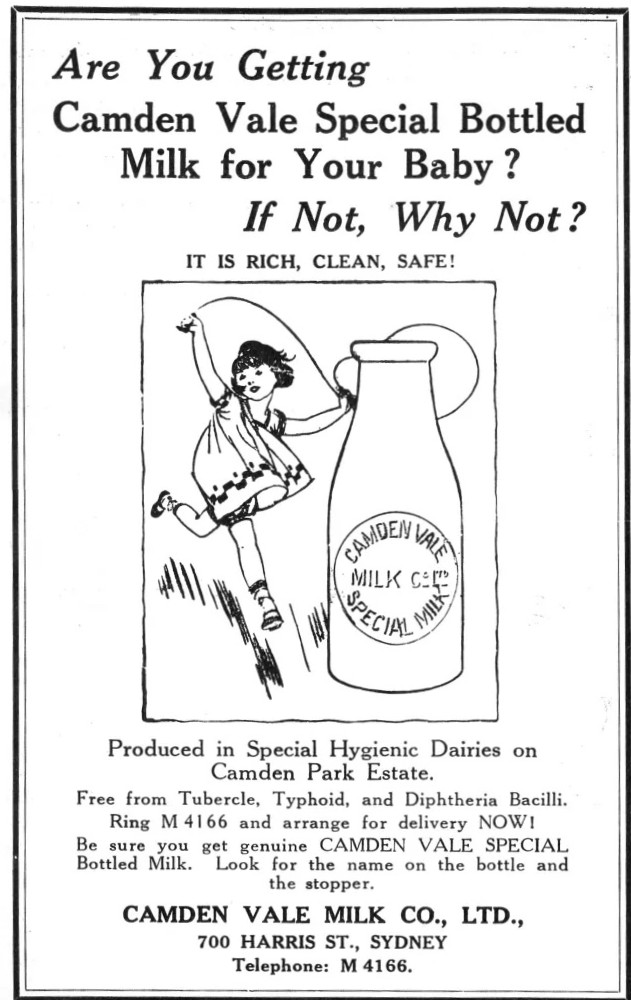
Camden Park continued to lead dairy innovation in Australia by introducing artificial insemination in the 1940s.
Conclusion
Dairying was one phase of the Camden economy, slotted between Yerranderie silver mining and later Burragorang coalmining. As one surged, another declined until coalmining declined at the end of the 20th century and Sydney’s urban growth overran the area.
Camden Park Estate dominated the dairy phase by becoming a vertically integrated dairy enterprise. Under Elizabeth Macarthur Onslow’s leadership, share farming was introduced, boosting productivity and setting quality standards that shaped the industry.
The success of dairying at Camden Park Estate rested on dairy innovations and inventions that drove a revolution in the 1890s, including the mechanical separator, refrigeration, disease prevention, and farming practices, as well as corporatisation, transportation, vertical integration, and debt reduction. (CPH 2026),
Elizabeth Macarthur Onslow’s restructuring of the farming systems on Camden Park increased production, productivity and profits, and central to this reorganisation was a European-style share farming system
By the 1930s, large single herds were also becoming common. For example, some large dairy farms in the Sydney metropolitan area (such as the suburbs of Waterloo and Zetland) were keeping single herds of up to 140 to 250 cows.
By the end of the Interwar period, the largest dairy operations in New South Wales were massive estates that operated multiple share-farms. Prominent examples include the Kameruka Estate in the Bega Valley and Camden Park Estate in Sydney’s southwest.
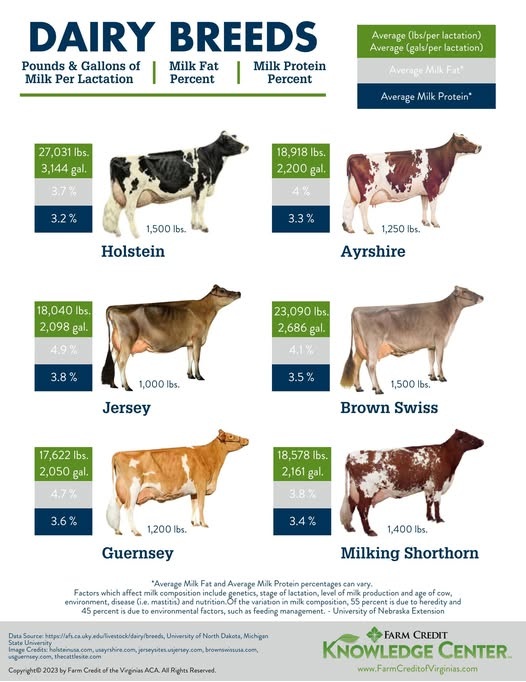
By the 1970s, high-yielding Holstein-Friesians (Friesians) were the dominant dairy breed in NSW. The industry transitioned from butter and cream production with Jersey and British dairy breeds, Guernsey and Ayrshire, to whole-milk production and legislative quotas. Industry rationalisation consolidated the industry, dominated by larger herds for whole-milk production.
In 1973 the Macarthur family sold Camden Park Pastoral Company to British development company Talga after years of poor returns.
References
Betteridge, Chris 2012. Menangle Landscape Conservation Area Assessment Of Significance & Proposed Boundaries, A Report prepared by Chris Betteridge, MUSEcape Pty Ltd for Wollondilly Shire Council. MUSEcape Pty Ltd, Randwick.
BF 2026. Elizabeth Macarthur Onslow. Belgenny Farm, Camden. Online at https://www.belgennyfarm.com.au/history/site-history/the-macarthur-family-dynasty/elizabeth-macarthur-onslow Accessed 21/7/26
CPH 2026, Dairying. Camden Park House Menangle. Online at https://www.camdenparkhouse.com.au/dairying Accessed 20/7/26
Regan, Madeleine 2019. The Mezzadria System. Veneto Market Gardeners 1927 blog.15 September. Online at https://venetimarketgardeners1927.net/the-mezzadria-system/ Accessed 20/7/26
SCHS 2026. Dairying, South Coast NSW History Story. South Coast History Society Inc, Quaama NSW. Online at https://www.southcoasthistory.org.au/history-stories-nsw-south-coast/dairying Accessed 21/7/26
SCHS 2026. Kameruka Estate. South Coast NSW History Story. South Coast History Society Inc, Quaama NSW. Online at https://www.southcoasthistory.org.au/history-stories-nsw-south-coast/kameruka-estate Accessed 21/7/26
Turner, Michael 2010. Book Review: Elizabeth Griffiths and Mark Overton, Farming to halves: the hidden history of sharefarming in England from medieval to modern times (Palgrave MacMillan, NY, 2009). Economic History Review, 63, 3 (2010), pp. 805–847.
VCH 2025. Agriculture, A History of Dorset. Victorian County History, Rootsweb. Online at https://sites.rootsweb.com/~pbtyc/VCH/Dorset_Farming/Dorset_Farm_P07.htm Accessed 21/7/26
Walsh, Brian 2016. Milk and the Macarthurs, the dairy history of Camden Park. Belgenny Farm Trust, Camden.
AI Disclaimer
AI was used to help auto-correct grammar.
Discover more from Camden History Notes
Subscribe to get the latest posts sent to your email.

