
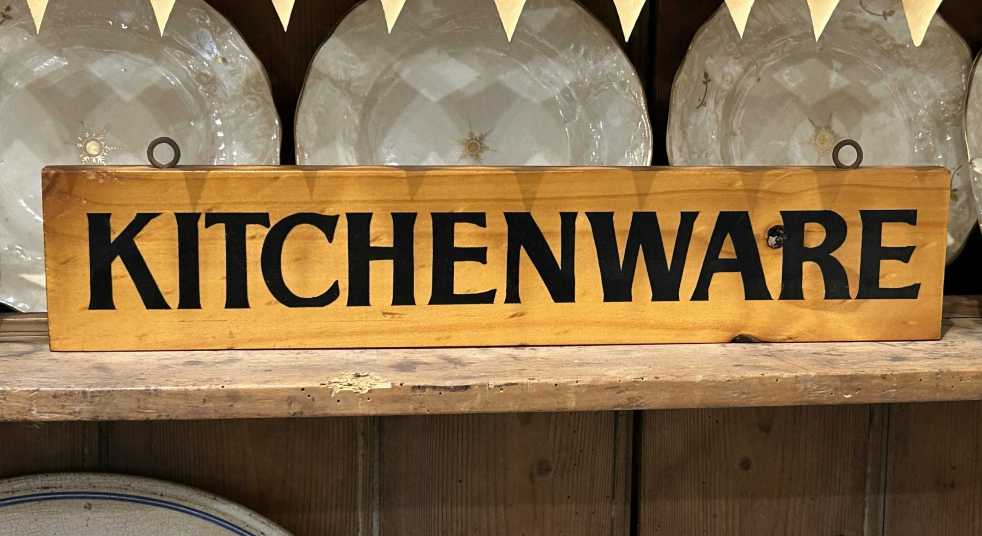
Kitchen objects as storytellers
Kitchen objects tell stories of daily human survival, technological innovation, and shifting social traditions before modern automation and electricity entered the home. Kitchenware is a tangible link to a community’s past, women’s daily lives, and their shared heritage within the family and home as mothers and housewives. Kitchen objects can act as physical “time travellers,” helping museum visitors connect with the evolution of the domestic past and previous generations through cultural heritage and social rituals linked to families and the community.
Architecturally, the kitchen was a separate space in the home that physically confined women to domestic routines and separated them from public life within the private sphere. Kitchen work was unpaid reproductive labour, yet many women used their creativity and agency in the kitchen space to express their artistic production, preserve their culture, and gain kudos and prestige.
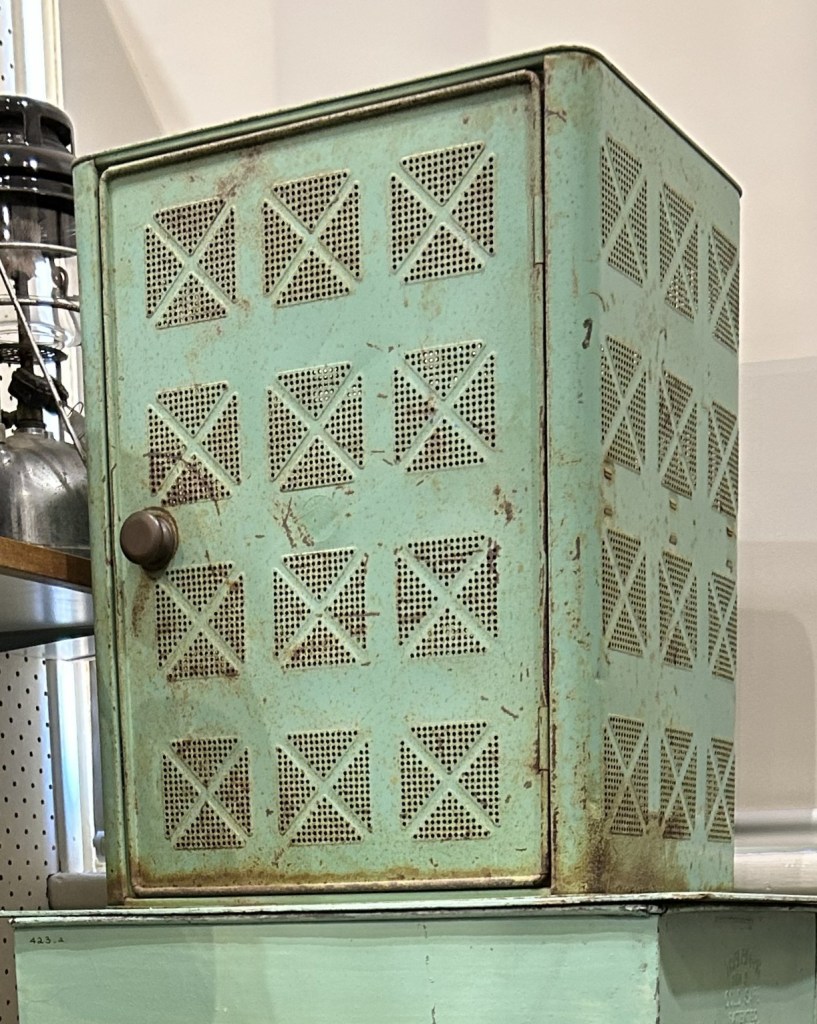
Willow-brand hanging meat safe
Australians used the meat safe before electricity reached the family home to protect perishable meat from flies, insects, and spoilage during hot summer months in the 19th and early 20th century. They were often hung on verandahs or in the shade of a tree to maximise cooling and keep the meat away from ants and cockroaches. This was just one way Australian housewives tried to stop food from going bad. Electricity and refrigeration arrived in Camden homes in 1929. (Simpson 2015)
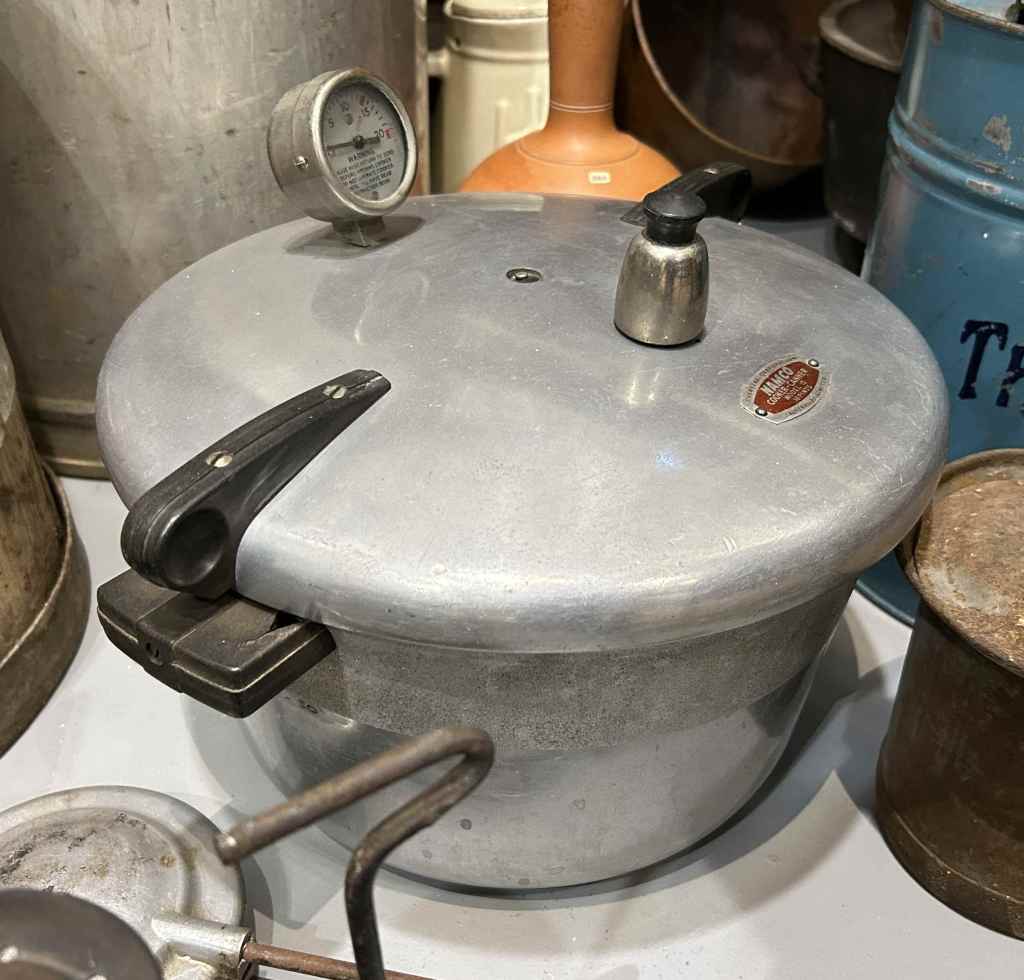
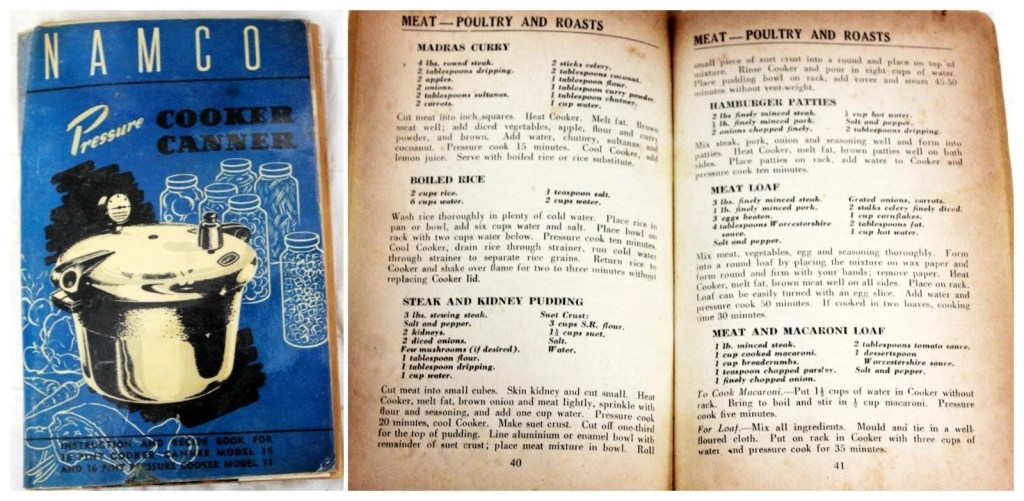
Namco Aluminium 16-pint Pressure Cooker-Canner model 15.
The aluminium pressure cooker-canner was a versatile kitchen appliance that first appeared in Australia in the postwar years. Wartime aluminium-casting technologies enabled Australia to manufacture this type of kitchen equipment. Postwar aluminium pressure cookers were cast or stamped, often using surplus wartime machinery. (Museum Victoria 2026)
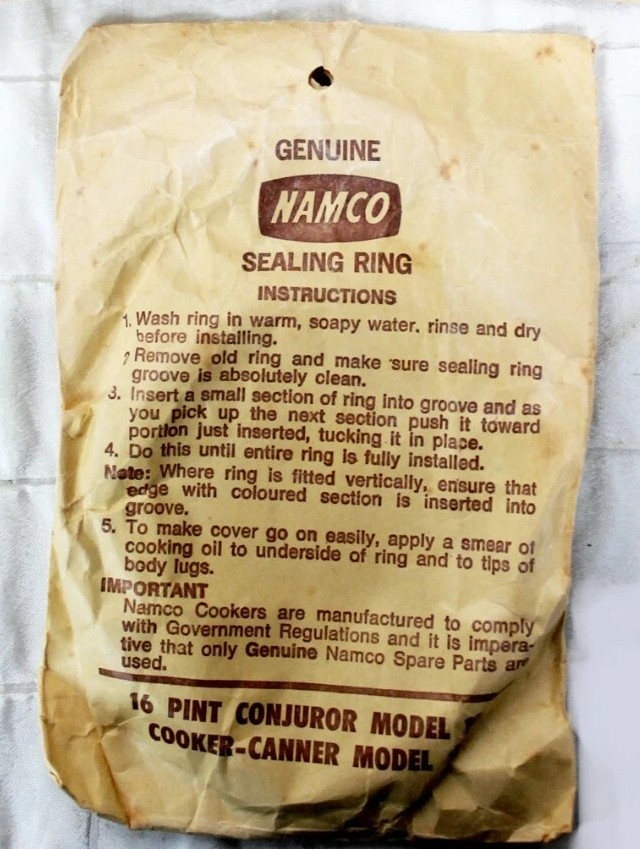
The instruction-recipe booklet that came with the cooker-canner said the pressure cooker was meant to bring ‘relief’ to the housewife. It was claimed that the pressure cooker ‘was the most dramatic development in modern times’. The cooker saved ‘time’ and ‘money’ in the ‘cooking of meals’ with ‘extra vitamins’ retained in the food. The cooker could replace ‘numerous pots and pans’ and save the ‘housewife endless time and money’. ‘It is the answer of science to woman’s eternal cry: ‘Save me from endless drudgery in the kitchen’.
The booklet claimed that the Australian housewife ‘lagged far behind other countries in providing aid to housewives’. By using the cooker, the housewife was a ‘woman of intelligence and discernment’ who stayed up to date in the kitchen. She became more productive and efficient in the kitchen, just like ‘a factory technician’. (Namco 1950)
The Powerhouse Museum website states that in the post-war years the Commonwealth Aircraft Factory (CAC) in Melbourne, established in 1936, manufactured a range of aluminium products including pressure cookers. Before and during the war CAC built aircraft at its Fisherman’s Bend facilities. (Powerhouse Museum 2026)
Making aluminium pressure cooker-canners in the postwar years was essential for the economic viability of businesses like the Commonwealth Aircraft Factory, when wartime order ceased. To stay operational and maintain their workforce, these businesses switched to consumer goods. The transition leveraged advanced aerospace casting and technologies developed during wartime. (Museum Victoria 2026)
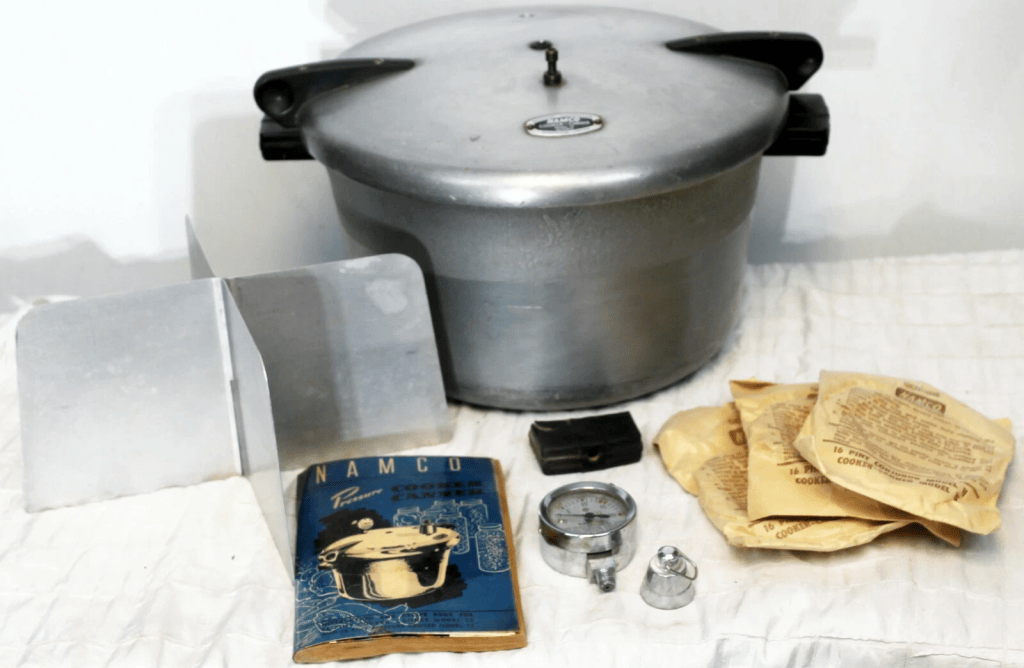
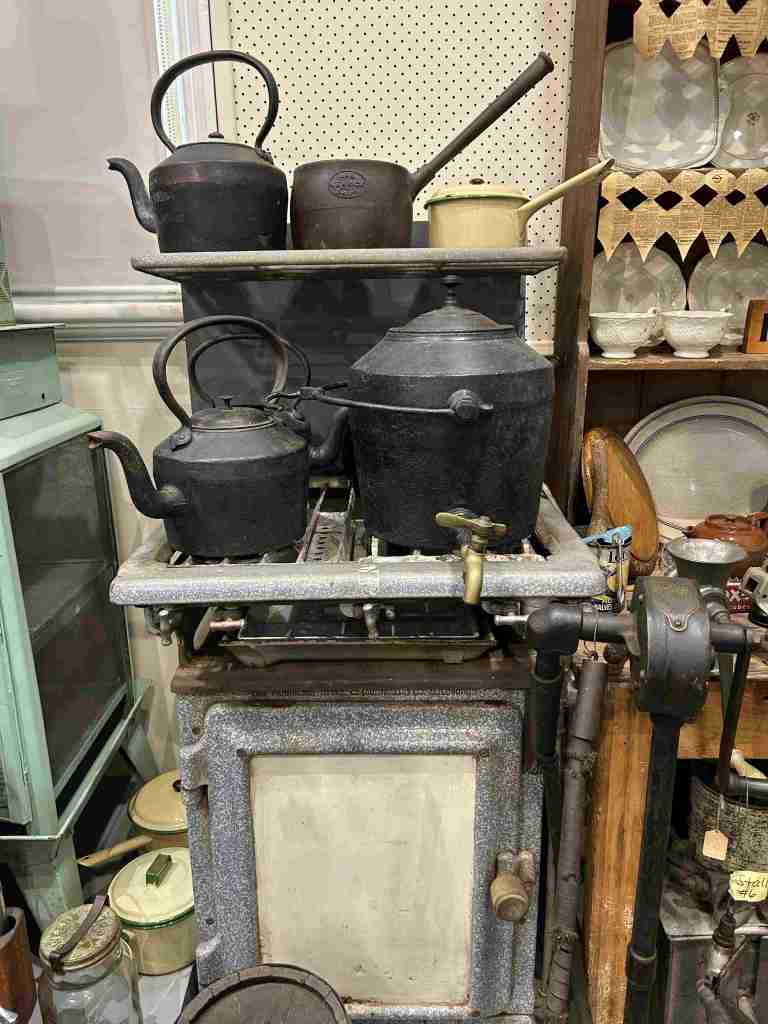
The pressure-cooker canner was a stove-top device for a range of cookers that, in the Camden area, included gas stoves, electric stoves, and wood-burning combustion stoves. Domestic gas was supplied to households in Camden from 1912.
Parkinson gas up-right stove cooker
The gas cooker was a woman’s space in the family home, where she cooked family meals and cakes for the Red Cross stall in wartime Camden. Local women gained considerable kudos for their cooking, and many entered the domestic cooking competition at the annual Camden Show. Winners gained considerable notoriety and prestige from their efforts.
Conclusion
Kitchen objects tell stories of women’s roles, cultural heritage, and domestic life. They represent historical survival and innovation in a gender-defined space, showcasing creativity amidst confinement. Artefacts like pressure cookers and gas stoves illustrate the evolution of cooking and community engagement, reflecting women’s agency in the domestic sphere.
The kitchen was a female space where gender expectations confined women to the domestic private sphere away from public activities. Often, the private sphere restricted women, yet others used their agency and domestic skills to gain kudos and prestige within the Camden community.
Camden women put their cooking skills on public display at wartime Red Cross fundraisers, community events, and the Camden Show, where they won cooking prizes each year.
Camden women negotiated all of these issues at a time when there was no electricity, no refrigeration and no appliances. Domestic life for Camden women was hard, with little relief, large families, and the tribulations of rearing children, caring for their husbands, and meeting community expectations at the local church.
The objects in the Camden Museum hint at these stories, but the objects on display have yet to fully explore them.
References
Beebeejaun, Y. (2026). Diasporic Spaces of Conviviality and Domesticity: On the Political Significance of Kitchens in Post-War Britain. Space and Culture, 29(2), 260–277. https://doi.org/10.1177/12063312251386620 Online at https://journals.sagepub.com/doi/10.1177/12063312251386620 Accessed 5/10/25
Fiore, J. (2020). Reclaiming the Kitchen | Magazine | MoMA. The Museum of Modern Art. February 14. https://www.moma.org/magazine/articles/240 Online at https://www.moma.org/magazine/articles/240 Accessed 5/10/26
Museum Victoria 2026. Pressure Cooker – Commonwealth Aircraft Corporation, circa 1947, Museums Victoria Collections https://collections.museumsvictoria.com.au/items/2098646 Accessed 7/10/26
Namco 1950. Pressure-cooker canner, instruction and recipe book, 8 quart, model 15. Melbourne, Overseas Corporation (Australia) Ltd. Online at https://nla.gov.au:443/tarkine/nla.obj-52857458 Accessed 5/10/26
Powerhouse Museum 2026. ‘Model 9’ pressure cooker. Powerhouse Collection. Online at https://collection.powerhouse.com.au/object/263435 Accessed 5/10/26.
Simpson, Margaret 2015. Hanging meat safe, c 1910-1920s. Powerhouse Museum, Sydney. Online at https://collection.powerhouse.com.au/object/263148 Accessed 7/10/26
Willis, I 2021. Mundane objects tell an interesting story. Camden History Notes. October 26. Online at https://camdenhistorynotes.com/2021/10/26/utility-covers-mundane-objects-tell-an-interesting-stories/ Accessed 5/10/26
Discover more from Camden History Notes
Subscribe to get the latest posts sent to your email.

