‘Trafalgar’ Drip Cool Safe
Before electricity arrived in Camden in 1929, homes struggled to keep meat, dairy, and other foodstuffs. A cool drip safe was one way of keeping meat and food from spoiling in the summer heat. Domestic kerosene refrigeration was expensive.
The Camden Museum has one of these items in the Kitchenware display in the picture below.
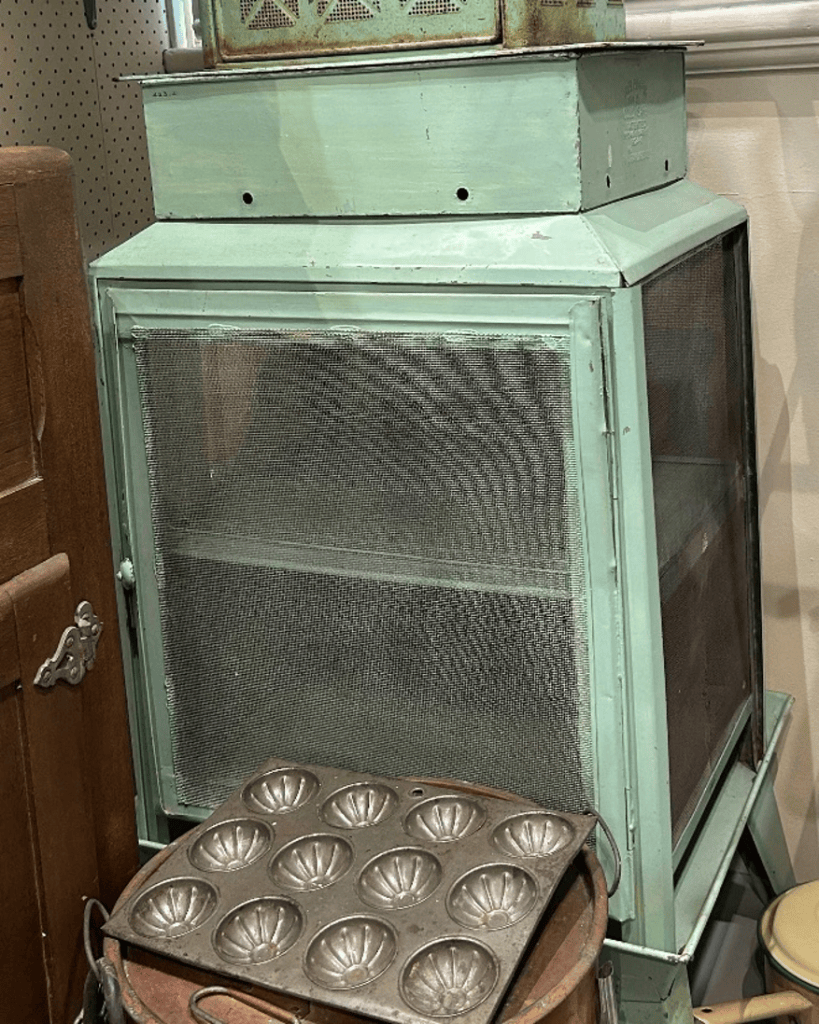
This is a JW Rawlings Trafalgar Drip Cool Safe. It is a rectangular green-painted metal food safe with metal mesh screens on all sides. It has a hinged front door, two shelves, and stands on four legs. The top of the safe is a tray that once had 6 taps, 2 on each side and 2 on one end. It operated best with hessian cloth or flannel strips draped over the sides. To deter ants from reaching the food, the feet sat in water dishes.
JW Rawling manufactured the safe in South Australia around the c. 1920s. There is an impressed inscription on the end of the top water tray: ‘TRAFALGAR/ SIZE/ COLD SAFE/ PATENTED/ Nos 3410-11 15433-15/ 9624-18/ No/ W. J. RAWLING. S AUS’
Fixed to the underside of the top tray are printed directions for assembling ‘The ‘Trafalgar’ Cold Safe and using same’ – PATENT NOs 3410/11, 15436/15, 9624/18, and Directions for Use:
‘Place safe where there is a current of air, or in the open, if possible. Fill top TANK with water, damp the screens well, and then regulate the taps to a slow drip, not more than forty a minute – as it is by only damping the cloth you will obtain the best results. To ensure satisfactory results, the top TANK must be kept well supplied with water, and placed as level as possible. By keeping the water in top tank clean the cloth will be saved. Should the taps clog at any time, slip the plugs out and wash them. In case of taps getting out of order, a piece of flannel hung over the sides will answer the purpose. When new cloth or screens are required, refer to size of Safe before ordering.’
Museum Victoria Collections calls this type of cool safe manufactured by JW Rawling a Coolgardie safe. (MVC 2026) Rawlings commercialised and standardised the Coolgardie safe under the Trafalgar brand.
The cooling mechanism features a water reservoir tray on top with small drip taps designed to keep the mesh or hanging fabric damp, using evaporation to cool food before the widespread use of electric refrigerators. As water evaporated, it drew heat out of the cabinet and lowered the internal temperature enough to preserve meat, dairy products, and fresh produce.
The cool safe shares its history with the Coolgardie safe from WA.
By the 1920s, urban homes began transitioning to insulated iceboxes as commercial ice delivery expanded. However, in rural Australia, electricity was scarce and newly invented kerosene refrigerators remained an expensive luxury. Edward Hallstrom manufactured Australia’s first kerosene refrigerator in 1923. It was the first commercially produced refrigerator not to use ice.
Consequently, well-built mechanical drip safes like the Trafalgar remained the primary, dependable choice for rural food preservation well into the mid-20th century. (Athanasiou 2024)
The cool safe preceded modern household refrigeration.
References
AFT 2026. 1923 First Australian domestic refrigerator. Australian Food Timeline. Online at https://australianfoodtimeline.com.au/first-domestic-refrigerator/ Accessed 9/10/26
Athanasiou, J. 2024, History of meatsafes in Australia. Vintage Upcycle. August 17. Online at https://www.vintageupcycle.com.au/blogs/news/history-of-meatsafes-in-australia. Accessed 9/10/26
MVC 2026. Coolgardie Safe – W. J. Rawling, Trafalgar, circa 1915. Museums Victoria Collections https://collections.museumsvictoria.com.au/items/400957
Accessed 09 October 2026
Port Macquarie Museum 2026. ‘Trafalgar’ Drip Cool Safe; W J Rawling; c1920; 66.87. eHive. Online at https://ehive.com/collections/3977/objects/832048/trafalgar-drip-cool-safe Accessed 9/10/26
AI Disclaimer
WordPress auto-corrected this post during proofing.
Discover more from Camden History Notes
Subscribe to get the latest posts sent to your email.

