American interest in Camden Airfield
Little is known in Camden about the US Air Force’s interest in Camden Airfield in November 1942 and again in February 1944.
On both occasions, the 5th US Air Force completed secret reports, now declassified and held by the National Archives of Australia, on Camden Airfield’s readiness to accommodate US aircraft and personnel. (NAA:A9716, 231)
US 5th Air Force
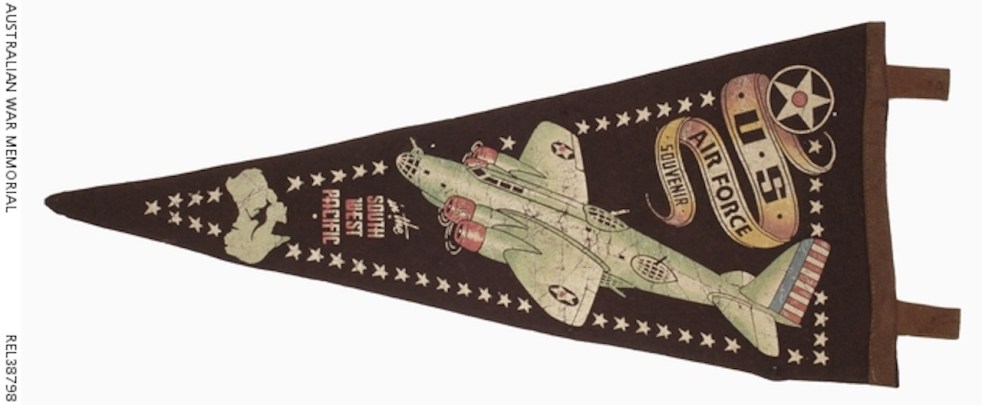
The US 5th Air Force, part of the US Army Air Force, provided the aerial spearhead for General Douglas MacArthur’s island hopping campaign in 1942 and 1943. It provided an air umbrella for MacArthur and was an integral part of the successful campaign to retake New Guinea, the Philippines and eventually Okinawa.
The US 5th Air Force was originally part of the Far East Air Force, which was largely destroyed in December 1941 when Japanese forces attacked the Philippines, hours after attacking Pearl Harbour. The unit retreated to Australia’s Top End in December 1941 (Darwin), was re-designated as the US 5th Air Force, and was headquartered in Brisbane for a time (September 1942).
The initial Camden Airfield report was conducted by the US Army Services of Supply and the 5th Air Force in 1942 when the unit was based in Brisbane. The reports summarised the airfield’s readiness to accommodate aircraft and personnel.
Condition of Camden Airfield in 1942
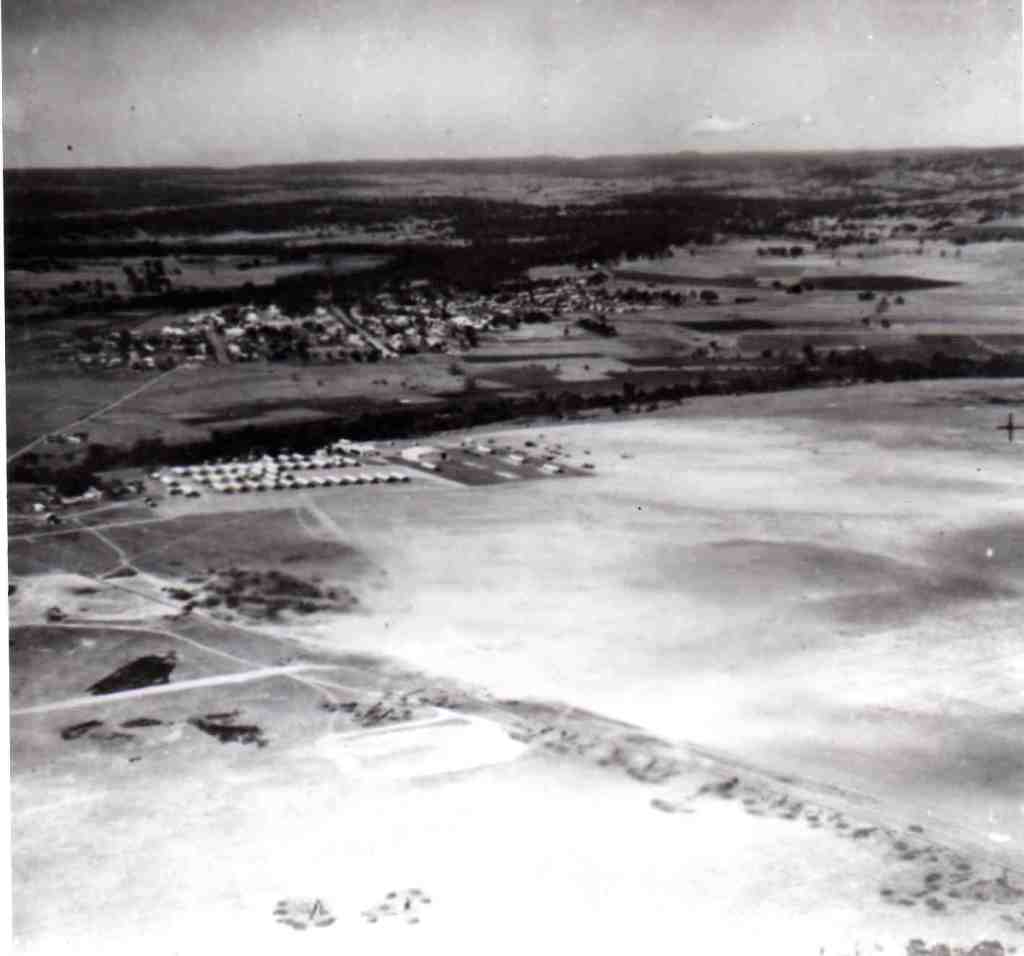
In 1942, Camden Airfield was considered only a minor installation, with limited capacity and several aircraft hazards. The airfield’s main runway was 5,400 feet long and 150 feet wide, while the remainder of the field was grass, had natural drainage and became boggy in the wet.
The airfield was located in a basin surrounded by hills up to one mile away, ranging from 100 to 200 feet high. The field was equipped to only handle occasional night landings with ‘obstruction’ warning lighting on the hangars, camp buildings and the St John’s church spire, which was 450 feet high.
There were seven Bellman hangars and one smaller hangar, and the only maintenance provisions were for Lockheed Hudson aircraft. There were two underground fuel tanks: one of 10,000 gallons, one of 18,000 gallons, and one of 13,000 gallons.
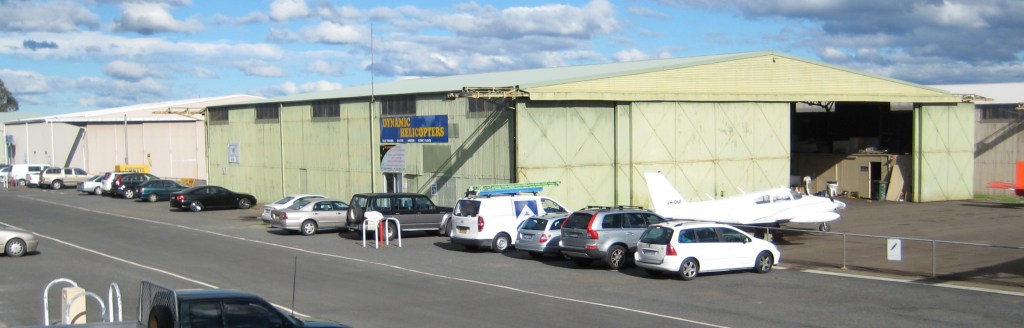
Communications at the airfield were limited to one telephone line and a telegraph line linked to headquarters in Sydney. The airfield was manned from 0600 hours to 2000 hours with no prior notice needed to call up the airfield. The airfield was contacted by telegraph under the call sign VNCD. The field had no weather station and relied on information from Richmond. The climatic conditions noted that the field was subject to daily fogs in July, up to 10 days per year.
Airfield access by an all-weather road to Camden and a bridge over the Nepean River, at Macquarie Grove, at the entrance to the airfield ‘capable of carrying heavy loads’.
The 1942 report stated that there were provisions for eleven dispersal bays in the northern part of the field and five bays at the southern end. The field was considered suitable for fighters, and could be upgraded for heavier aircraft. At the time of the 1942 assessment, one General Reconnaissance Flying Boat Squadron occupied the field.
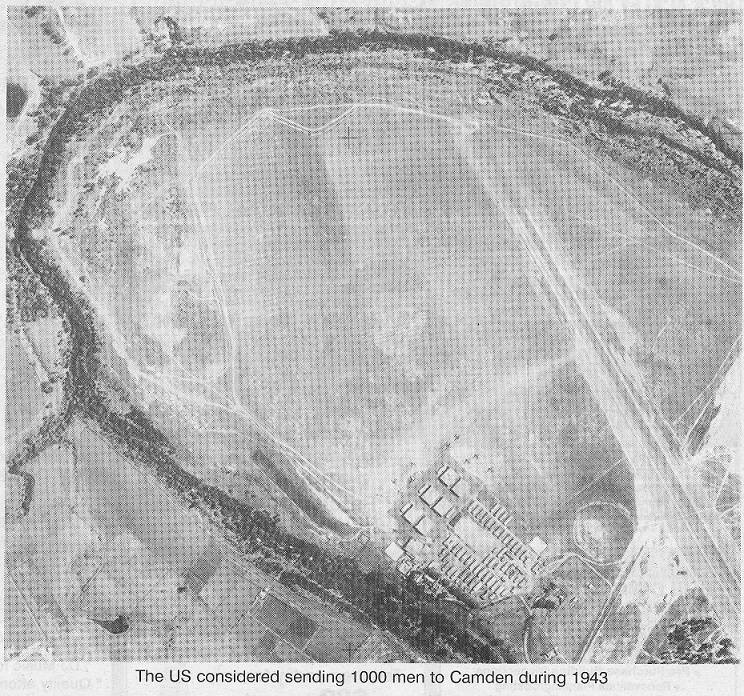
The 1942 report concluded that there was sufficient accommodation for 1000 service personnel in the Camden area, with 800 men garrisoned at the airfield, with another 200 men to be accommodated in Camden’s ‘modern hotels’.
Camden Airfield improvements
The American authorities reassessed the airfield in 1944 and found major improvements that had cost $184,000. They reclassified the installation as a major airfield.
The E-W runway was extended beyond the airfield boundary, the runways became all-weather with gravel taxiways, and the base now had a 24-hour weather service.
The airfield had an improved capacity to service a variety of aircraft while still only doing minor repairs; St John’s spire had been floodlit, and the accommodation now included a sick quarters of 15 beds.
Yet the Americans found the airfield deficient with no anti-aircraft defensive installations.
If the US Air Force had decided to occupy Camden airfield under National Security Regulations, the Americans had the right to do anything they felt was ‘necessary in relation to the airfield for military purposes’.
While completing two reports in 1942 and 1944, the 5th US Air Force was never based at Camden Airfield, which was probably a blessing in disguise.
A lucky escape
Given the impact of American forces elsewhere in Australia, Camden probably had a lucky escape not hosting ‘the Yanks’. The presence of over 1000 American servicemen at the airfield would have changed Camden from a sleepy little rural village into a garrison town.
Many Camden locals, particularly local businesses, would have welcomed an American presence. The creation of the American garrison town of Camden would have had significant negative effects, given what happened in other localities such as Brisbane and Townsville.
Camden was a smaller garrison town for the Royal Australian Air Force and the British Royal Air Force between 1940 and 1946. Army installations included Narellan Military Camp and the Eastern Command Training School at Studley Park.
The army was never encouraged into the town, and was largely regarded as an air force town. As the war played out, the Camden community had very cordial relations with RAAF and RAF personnel stationed at the airfield.
The town was never overwhelmed by the presence of 1000s troops. Community engagement with the military extended to dances, afternoon tea parties, invitations to local homes, dates with local girls, and many other interactions with defence personnel, including a number of marriages to local girls.
If the Yanks had come to town, it would have been an unforgettable experience.
References
National Archives of Australia: A9716, 231, RAAF Directorate of Works and Buildings – Engineer Intelligence Section – No.13 Operational Base, Camden, NSW, 1939-1945.
AI Disclaimer
AI was used to assist in auto-correcting grammar.
Updated 27 August 2026. Originally posted on 19 April 2015 as ‘The Yanks at Camden Airfield in 1942’.
Discover more from Camden History Notes
Subscribe to get the latest posts sent to your email.


One thought on “US 5th Air Force and Camden Airfield’s Untold Story from World War Two”