
Market failure in traditional trades
The latest issue of Australian Garden History published an article by Yolanda Cool outlining a reported crisis in heritage skills training and accreditation in Australia in 2025.
The Heritage Skills Association of WA (HSA) maintains that
The current vocational education system has failed to produce young tradespeople with the knowledge and skills required to undertake works on heritage properties. This can cause irreparable damage to our historic structures, due to the use of incompatible modern materials and the economic burden of rectifying such damage. (Cool 2025)

10858NAT Certificate III in Heritage Trade Skills
The HSA makes the point that
Currently in Australia there is almost no formal training and accreditation in heritage skills at the professional or university level, and only one Certificate III in Heritage Skills, run in South Australia. (Cool 2025)
The course is 10858NAT Certificate III in Heritage Trade Skills and the overview states
The purpose of the course is to provide learners with a range of skills to work on built heritage structures. It aims to provide skilled labour to address the critical shortage of heritage trade specialist. It covers a range of traditional trades and is based on the majority of training happening at heritage sites. Both traditional and contemporary conservation techniques are trained. Heritage sites are those sites that are listed on the World, National, Commonwealth, State or Local Government heritage listings. (Training.gov.au, 2025)
The course aims to develop skills to
- Develop advanced skills in heritage techniques in (a) Stonemasonry (b) Bricklaying (c) Plastering (d) Carpentry
- apply the principles of restoration and conservation to practical projects, adhering to the principle to ‘do as much as necessary but as little as possible’
- understand contemporary and innovative conservation practices, with a focus on retaining as much of the original fabric of a structure as possible.
- And other skills (Training.gov.au, 2025)
Shortages not new
The problem of a shortage of traditional trades is not new, and it is not isolated to Australia.
In 2003, Cassar identified heritage skills training as a problem in Europe. (Cassar 2003)
In 2011, Willis identified that this was a problem in Australia, where he identified a ‘market failure in skills and training in built heritage for professional, craft, and trades areas’. He made the point at the time that vocational course providers had been dogged by failure and malaise. Many industrial trades have, in many cases, moved to the museum sector or evolved into crafts. (Willis 2011a; Willis 2011b)
On a more hopeful note, in 2020, the Getty Conservation Institute and Docomomo International commissioned a global report on education and training for the conservation of twentieth-century built heritage. There were 261 respondents to the survey, and 220 institutions in 71 countries reported that they had run courses on education or training related to the conservation of twentieth-century built heritage or had offered them in the past two years. Amongst those surveyed, there were 193 academic and 27 non-academic institutions that provided education or training. (Pedroni et al., 2020)
Even the terminology in this area has posed problems of usage, which adds to confusion and does not do the cause any good. According to Wain, Stein and Cleghorn, manual trades have often been referred to as lost, dying or forgotten, and this has created a perception that these trades were unimportant. The authors make the point that many of these trades are still important and promote ‘well-being and self-empowerment’. They propose that more positive labels include rare, vital, heritage and maker trades. Their paper also explores effective and practical teaching. (Wain et al, 2023)
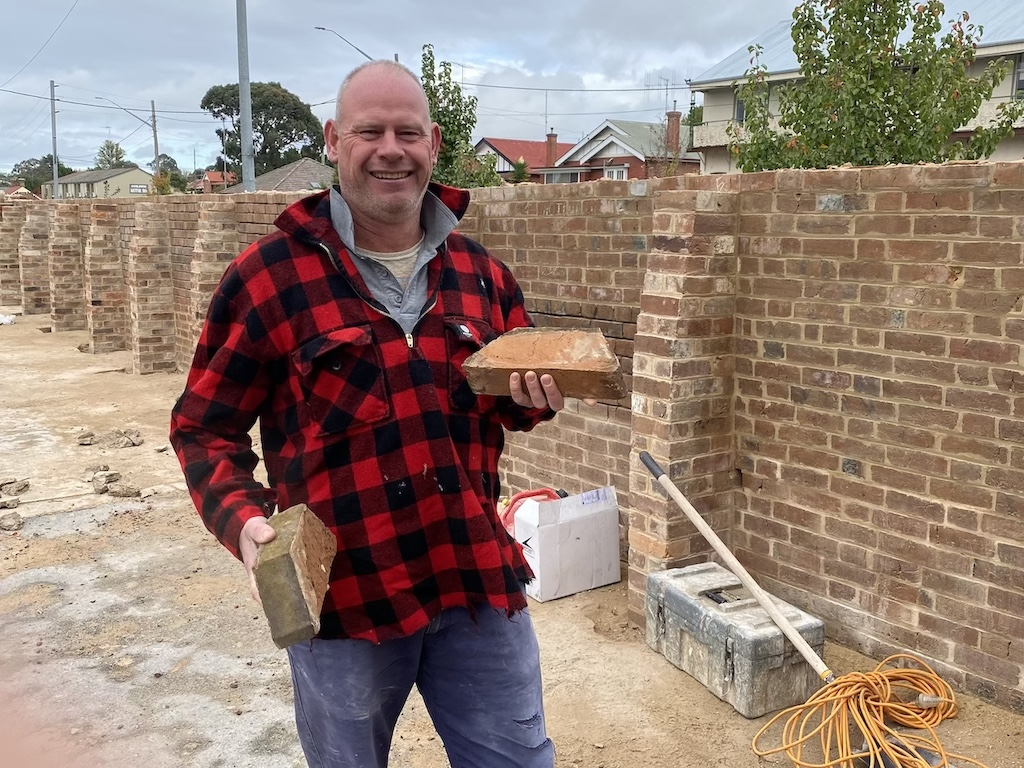
Impressed with the wall’s “Sussex bond’’ pattern, the buttresses and extra effort evident in the work, the prolific sketch artist introduced himself to Goulburn bricklayer Matthew Chamberlain, who was happy to talk about the repair job. Fearing that the 230-mm (one brick wide) structural pier recommended by engineers to reinforce the wall was inadequate, Matthew has instead built two-and-a-half-brick-wide buttresses. “I thought we would try and keep it within the Gothic architecture; I thought I would splay the tops and have them look more like buttresses,” he said. (About Regional, 10 May 2024) (Thistleton 2024)
Current shortages
The draft New South Wales Heritage Strategy makes the point that
The shortage of skilled heritage tradespeople is particularly acute in regional areas and contributes to the costs of owning heritage [buildings]. (NSW Heritage Strategy, 2025)
The strategy proposes solutions in the form of
- hosting an annual forum for heritage professionals to connect and share information and best practice
- investigating ways to regenerate heritage trade skills.
- offering tailored regulatory approaches for some maintenance and repair works
- providing specialised heritage support, advice and guidance to agencies to build capacity and promote exemplary heritage management (NSW Heritage Strategy, 2025)
According to the Housing Industry Association, there is a continuing crisis in the shortage of trades across Australia, and traditional trades are part of that ongoing problem. (Devitt and Reardon, 2024)
HSA (WA) Intergenerational Learning Project
To help solve this crisis, the HSA has initiated an intergenerational project-based learning process that will help turn every day into an enduring legacy of records.
The association aims to
bring people together to gain and share insights into the traditions of both tangible and intangible heritage. (Cool 2025)
To achieve this goal, the association is organising a program of workshops, talks, show-and-share sessions, and how-to sessions.
In Perth, the association is running the Winter Warmer Talks Series in conjunction with the WA Department of Planning, Lands and Heritage and the Heritage Council. The series aim to
showcase a range of local heritage professionals shining the spotlight on WA heritage places, projects, current challenge. (HSA 2025)
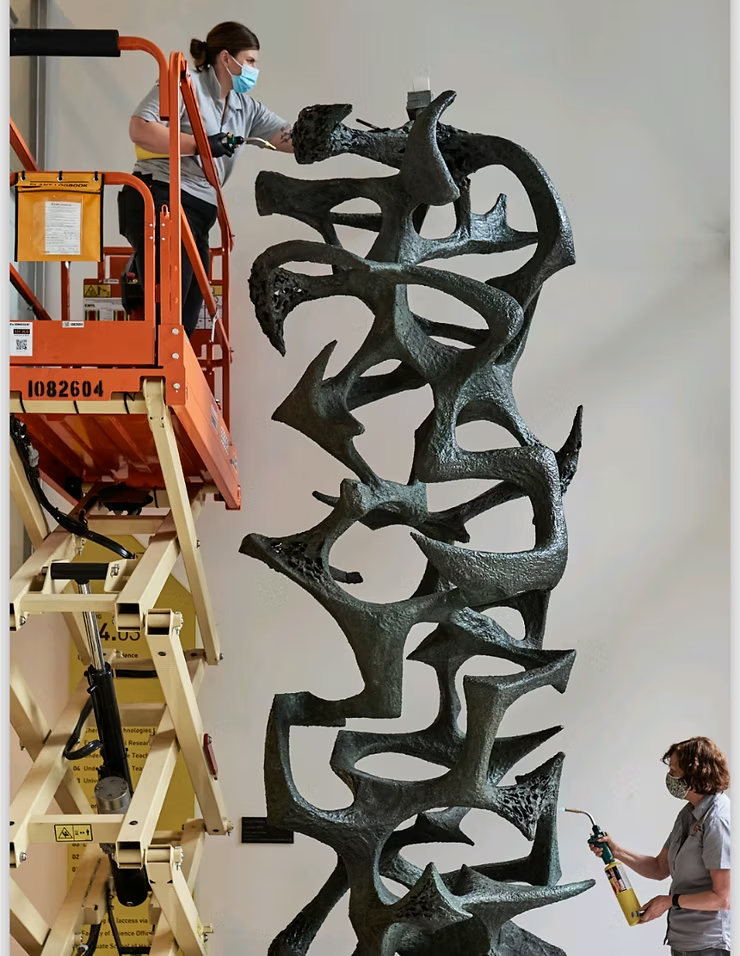
For example, in June, the association ran a talk by cultural materials conservator Claire Rowson from International Conservation Services, the State Manager, called ‘Conservators at Large – Preserving Cultural Material in Unexpected Contexts’.
Conclusion
There needs to be more efforts in the not-for-profit sector, such as the course offered by the HSA. These efforts require encouragement from the government, business, and the community. In the past, they have failed for a host of reasons.
There has been a reliance on encouraging those with these skills to migrate to Australia from overseas.
There needs to be greater effort by government to address the market failure in the shortage of traditional trades. In the past government efforts have been ad hoc and short-sighted, with little or no long-term planning.
This needs to change to protect Australia’s stock of heritage items, including built heritage.
More reading
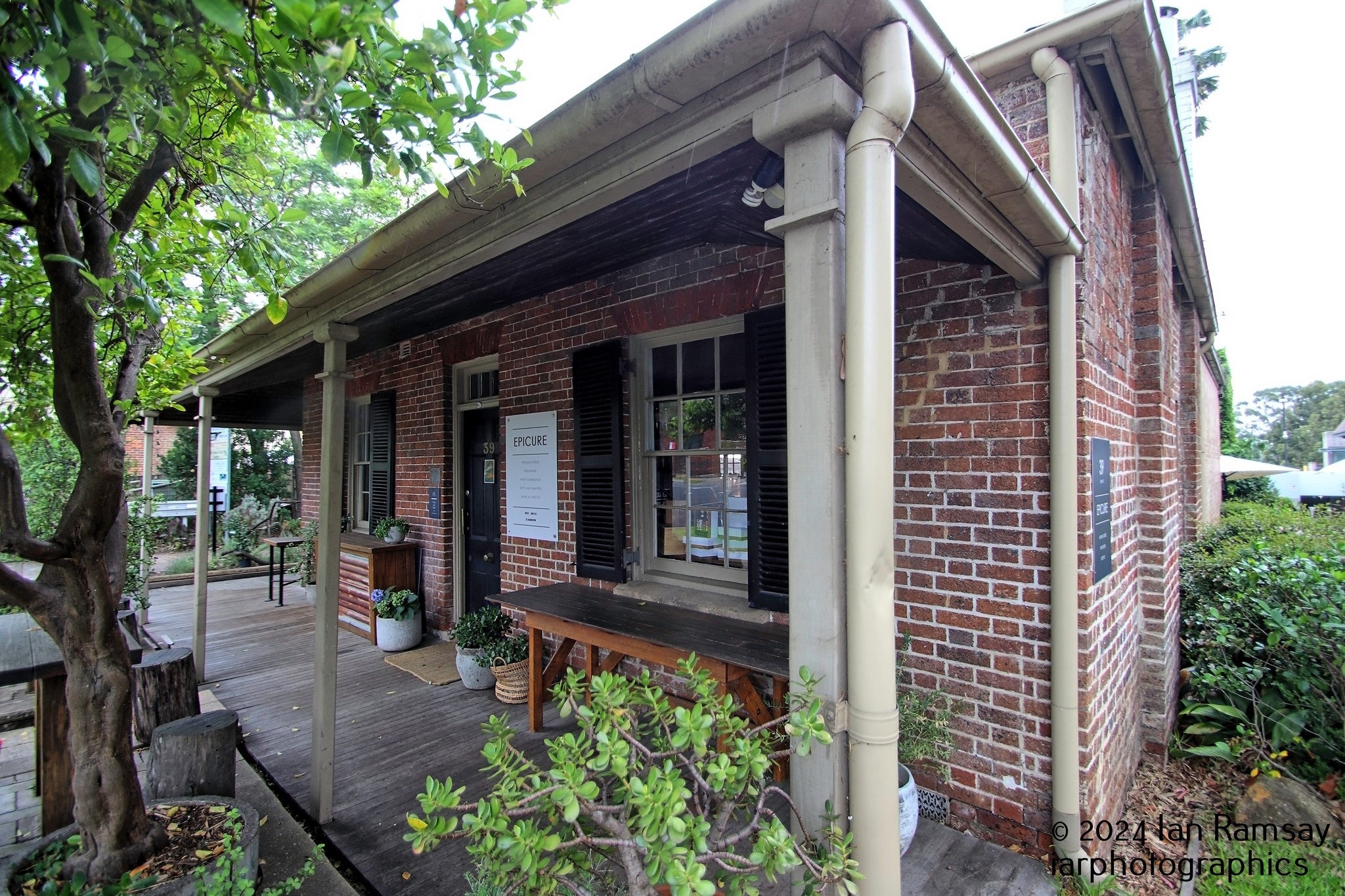
Traditional trades, the legacy of Camden’s carpenters
References
Cassar, May 2003, Education and training needs for the conservation and protection of cultural heritage: Is it a case of ‘one size fits all’? Online at https://discovery.ucl.ac.uk/18787/1/18787.pdf
Cool, Yolanda 2025, Heritage Skills: Cultivating Tradition, nurturing the future’. Australian Garden History. vol. 37, no. 1, July 2025, pp 36-37. Online https://www.gardenhistorysociety.org.au/journal/
Devitt, T. and Reardon, T. (2024). Skilled trades shortage set to worsen without policy changes. [online] Hia.com.au. Available at: https://hia.com.au/our-industry/newsroom/economic-research-and-forecasting/2025/02/skilled-trades-shortage-set-to-worsen-without-policy-changes
HSA 2025, ‘Clarie Rowson: Conservators at Large – Preserving Cultural Material in Unexpected Contexts’. HSA. Online https://www.trybooking.com/events/landing/1393575 (Accessed 6/7/25)
NSW Heritage Strategy Sustaining the past for the future -Draft for public exhibition. (2025). Available at: https://hdp-au-prod-app-nsw-haveyoursay-files.s3.ap-southeast-2.amazonaws.com/4617/4726/2532/draft-nsw-heritage-strategy-250159.pdf [Accessed 6 Jul. 2025].
Pedroni, M., Bargues Ballester, C., Canziani, A., De Jonge, W. and Mccoy, C. (2020). A Global Survey on Education and Training for the Conservation of Twentieth-Century Built Heritage. [online] Los Angeles: Paul Getty Trust and Docomomo International. Available at: https://www.getty.edu/conservation/publications_resources/pdf_publications/pdf/conserving_twentieth_century_built_heritage_worldwide_survey.pdf [Accessed 6 Jul. 2025].
Thistleton, J. (2024). Historic brick wall leads to questions about new builds | About Regional. [online] About Regional. Available at: https://aboutregional.com.au/historic-brick-wall-leads-to-questions-about-new-builds/450630/ [Accessed 8 Jul. 2025].
Training.gov.au. (2025). 10858NAT Certificate III in Heritage Trade Skills. [online] Available at: https://training.gov.au/Training/Details/10858NAT/summary [Accessed 8 Jul. 2025].
Wain, A., Stein, J. A., & Cleghorn, M. (2023). “Rare and vital”: positive terminology, contemporary relevance and robust teaching options for heritage maker trades. Conservar Património, 44, 132–142. https://doi.org/10.14568/cp31208
Willis, Ian 2011a, ‘Cultural Heritage and conservation: issues of education and training’, Islands of History, Proceedings of the 25th Anniversary Conference, Professional Historians Association (NSW), Norfolk Island, July 2010, Spit Junction, NSW: Anchor Books Australia.
Willis, Ian 2011b, ‘Traditional Trades Training, A Story of Failure and Success’. The Australian TAFE Teacher, Vol 45/3, Spring 2011, pp. 10-12. Online at https://search.informit.org/doi/epdf/10.3316/aeipt.188956
Discover more from Camden History Notes
Subscribe to get the latest posts sent to your email.

