Blue & Gold Ball at the Ambassador Cabaret
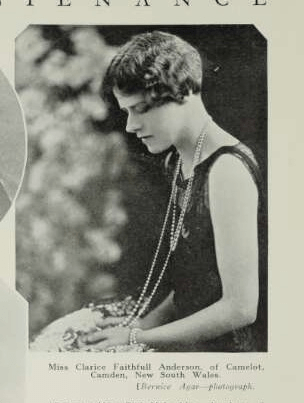
In 1929, Camden identity Clarice Faithfull Anderson attended a swish fundraising event called the CWA Blue & Gold Ball at Sydney’s Ambassador Cabaret Nightclub. The Sydney press described the ball as the ‘blue ribbon event of Easter’ that year and allowed those in town from the country for the Royal Easter Show (March 27 to April 6) to attend.
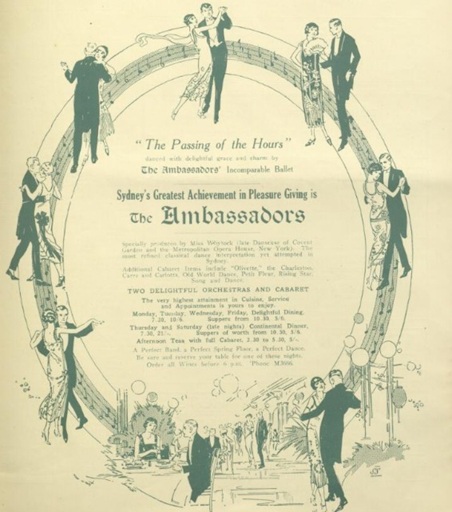
The 1929 Blue and Gold Ball was a major fundraising event for the CWA, first held at the Ambassador Cabaret in 1928. The Ambassador was one of Sydney’s top nightspots in the 1920s, opening in 1923 at 191 Pitt Street, adjacent to the Strand Arcade, and described at the time as a restaurant and cabaret venue. The venue was compared to similar ‘cabarets’ in London, Paris, Los Angeles and Monte Carlo and the striking entrance and interiors were designed by Sydney architects Robertson and Marks. With a capacity of 800, it was populated by the Sydney elite, making all other Sydney nighttime venues look very ordinary. (Bogle, 2025)
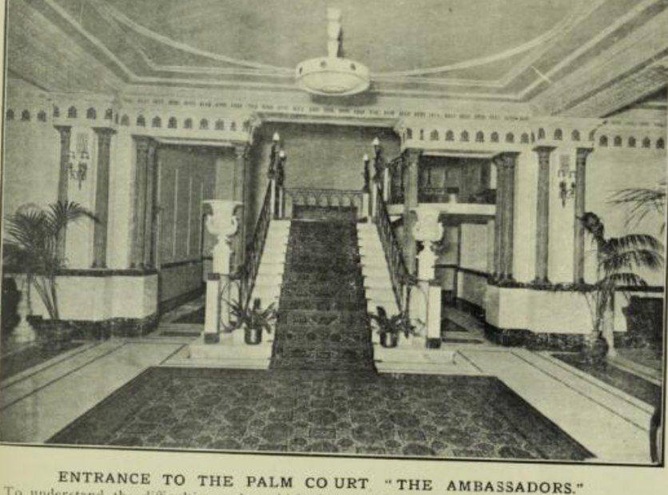
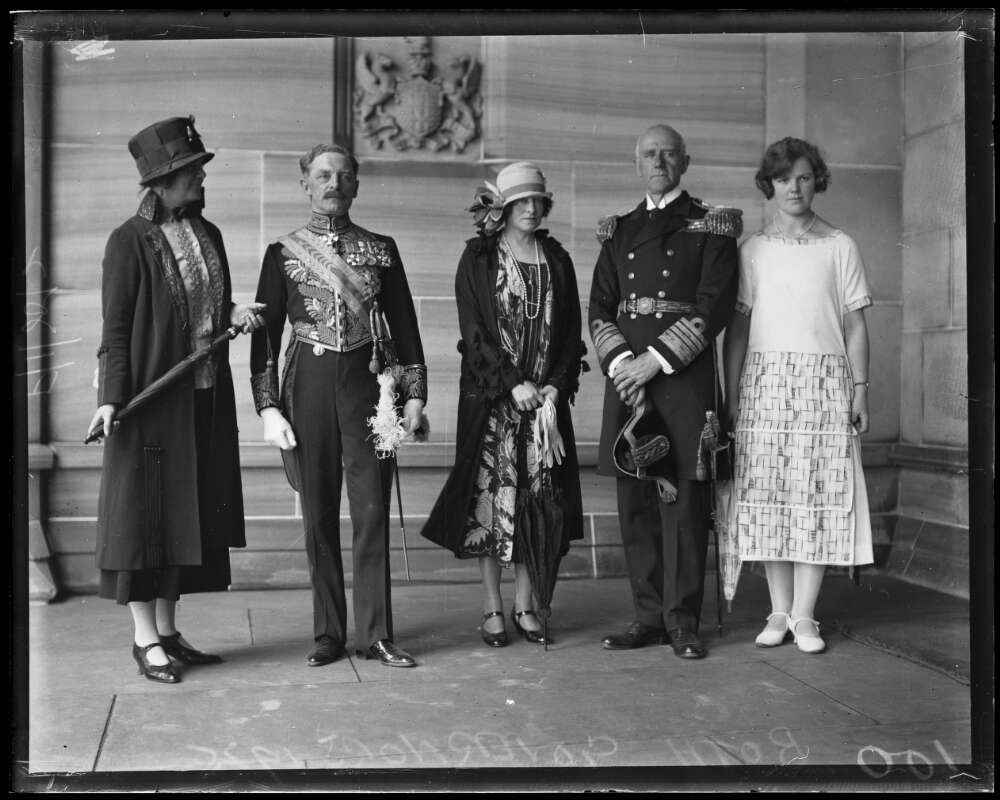
The 1929 ball was attended by a host of dignitaries, including the Governor General, Lord and Lady Stonehaven and his wife, and the Governor of NSW and his wife, Sir Dudley de Chair and Lady Enid de Chair.
The major attraction of the evening at the 1929 ball was a series of ‘living pictures’ tableaux in which well-known society girls of both city and country took part. (SMH, 5 April 1929) There had been hints for weeks in the social pages of the Sydney press about what the country girls would wear to the ‘pictures’. (Evening News, 25 March 1929)
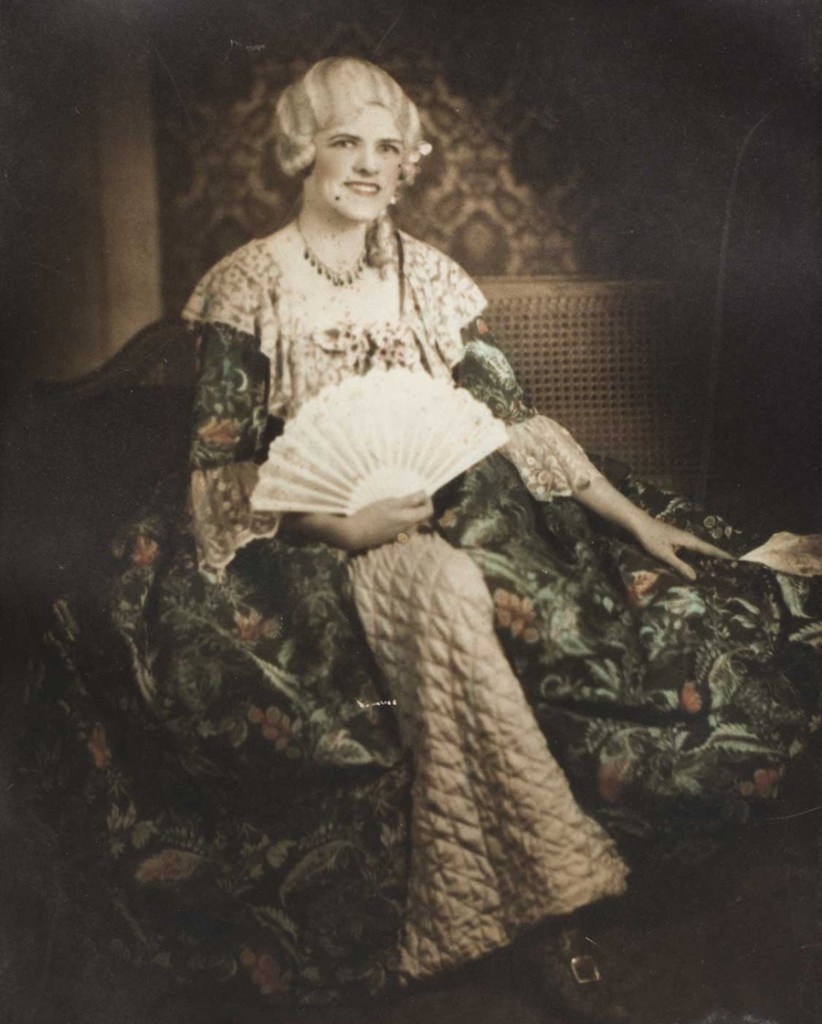
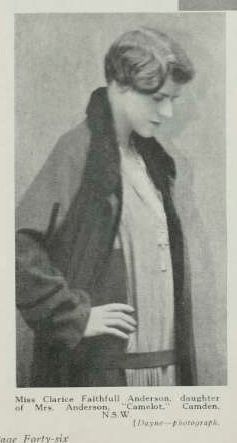
One ‘society girl’ was the Camden character, Clarice Faithfull Anderson, of Camelot at Kirkham. The Sydney press reports stated that the 28-year-old Clarice Faithfull Anderson dressed as ‘a Lady of the 18th Century’. Clarice was the only daughter of Lillian Faithfull and William Anderson, who married at Goulburn in 1898 and subsequently moved into Camelot, which the Faithfull family purchased for them.
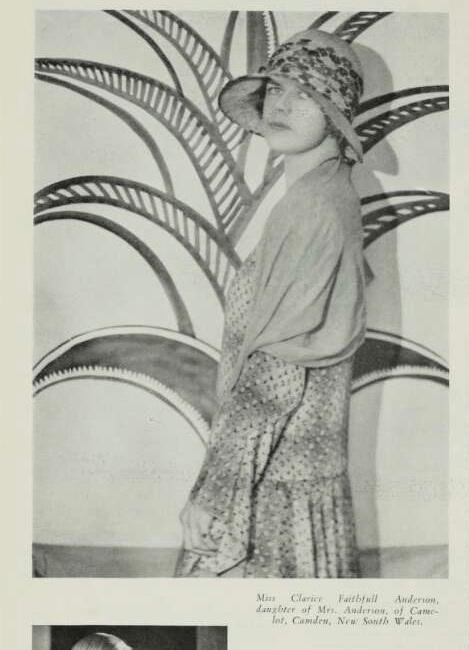
Clarice’s 1929 ball gown
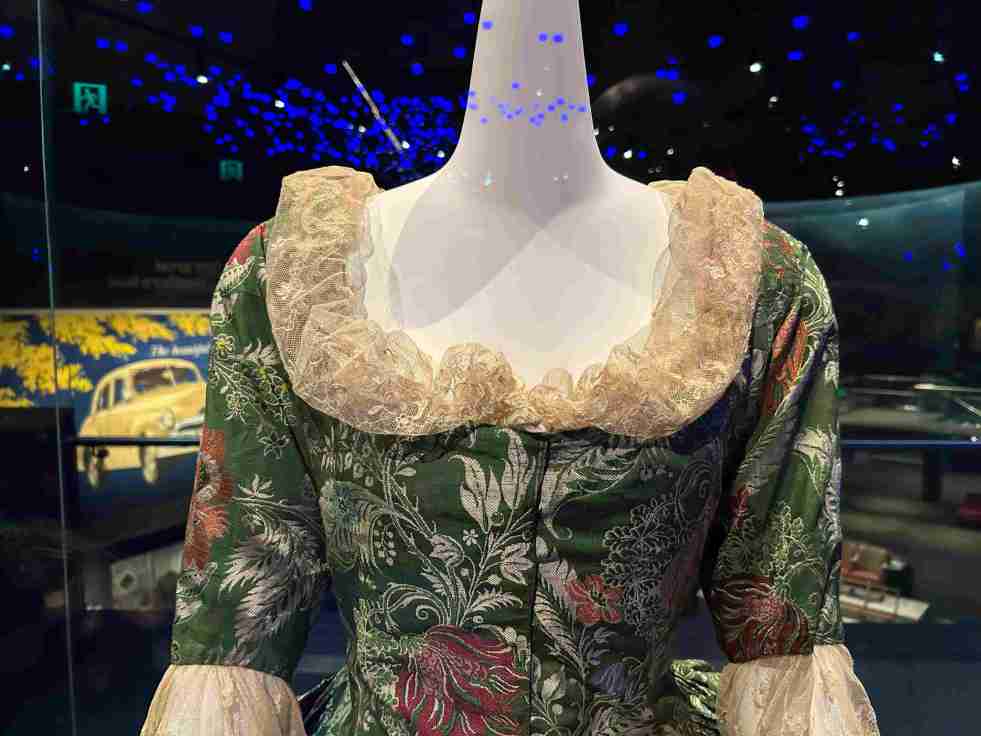
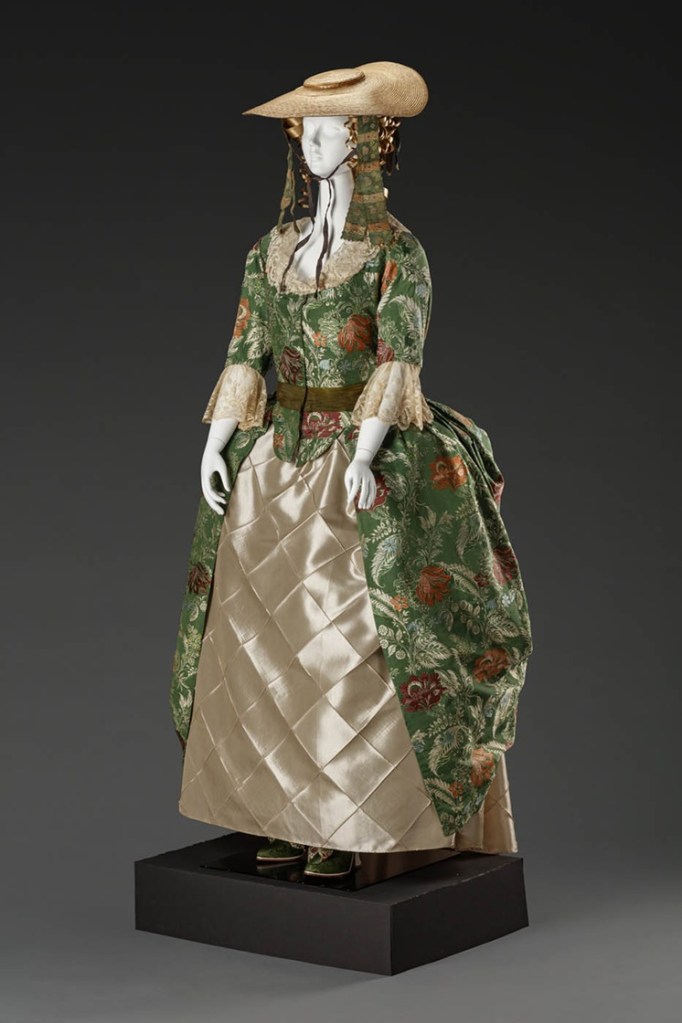
Clarice’s 1929 CWA ball gown was no ordinary dress and is part of the textile collection of the National Museum of Australia, and has been the subject of a series of articles about the Faithfull family. (https://www.nma.gov.au/explore/features/springfield-faithfull)
The dress was originally brought to Australia by English schoolteacher Mary Deane, who later married grazier WP Faithfull, whose 1827 grant of 1280 acres at Cooranganennoe on the Goulburn Plains was later called Springfield. Faithfull established the Springfield merino stud in 1838 by purchasing 10 merino rams from Camden Park’s William Macarthur.
Clarice’s dress, according to the National Museum, was likely made for Mary’s great-grandmother in the mid-1700s, altered in the 1870s and then again in the 1920s. (NMA 2019)
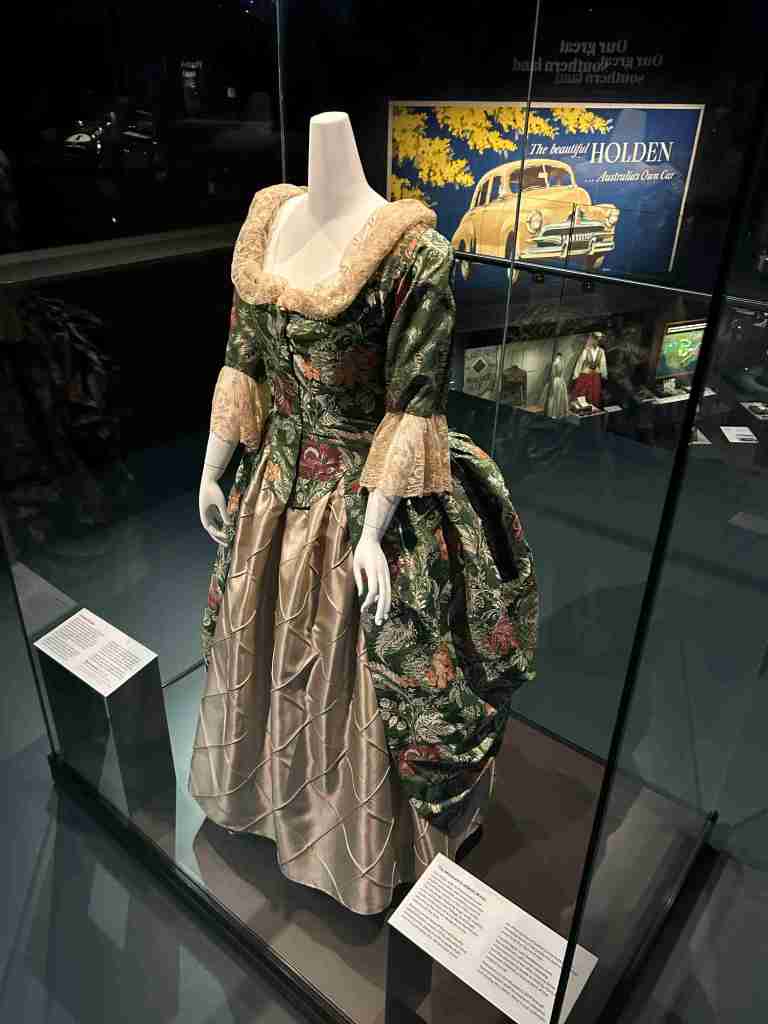
The museum curators believe the botanical designs on the green and floral silk brocade may be attributed to the English designer Anna Maria Garthwaite, a rare breed for her day. (NMA 2019) Garthwaite was acknowledged as one of the premier designers of her day, and many of her Spitalfield silks were exported to post-Revolutionary America, including to Martha Washington, the wife of George Washington. (https://en.wikipedia.org/wiki/Anna_Maria_Garthwaite)
The costly 18th-century green-and-floral silk brocade dress became a family heirloom passed down through the generations of women, and according to the National Museum, was treasured by members of the the Faithfull family for nearly 300 years.
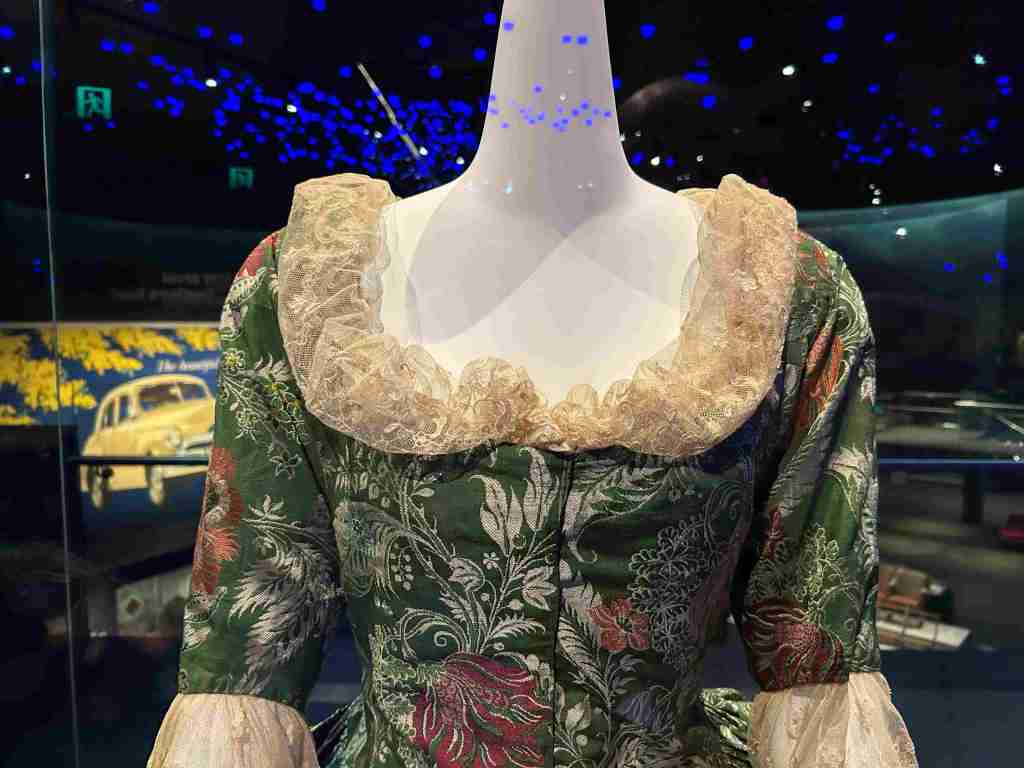
The dress is described as an ‘open-front style of dress with its fitted bodice and voluminous skirt known as an English gown’. The open skirt would have ‘revealed a matching or contrasting petticoat’. (NMA 2019) The skirt’s open silhouette was achieved with panniers, or side hoops, which gave it shape and allowed a full display of the ‘woven patterns, elaborate decorations and rich embroidery’ of Clarice’s floral brocade. (https://en.wikipedia.org/wiki/Pannier_(clothing)
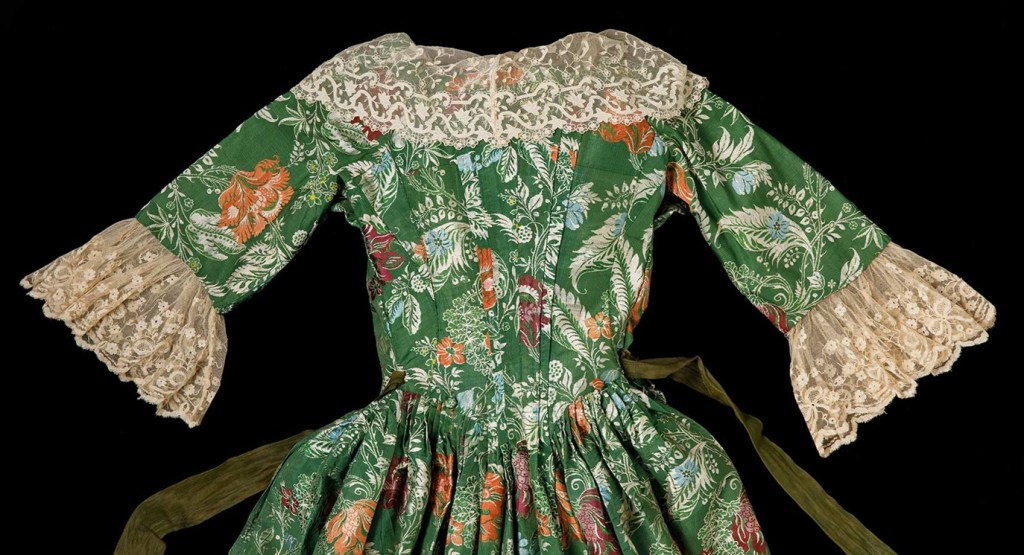
The curators at the National Museum maintain that the dress was altered for the CWA Ball to fit Clarice. The museum website states
The size and length of the dress were reduced with alterations to side seams, the bodice and skirt front. Lace was added to the neckline and sleeves and a set of metal hip panniers were stitched to the waist to add volume and shape to the skirt, mimicking the original 18th century style. (NMA 2019)
1929 CWA Ball tableaux and gowns
Clarice was one of over 15 women who participated in the CWA Ball tableaux, who dressed as a variety of historical figures. They ranged from the fictional 15th-century figure Katherine of Vaucelles, from Justin Huntly McCarthy’s 1901 romantic novel and play If I Were King, to Mrs Lachlan Macquarie, and included Shakespeare’s Romeo and Juliet and the 15th-century French heroine Joan of Arc. (SMH, 5 April 1929)
The tableaux attracted another Camden personality, Miss Faith Macarthur Onslow. She was the 19-year-old only daughter of GM Macarthur Onslow and his wife Violet, and she dressed ‘as one of her ancestors, Mrs James Macarthur’. (SMH, 5 April 1929)
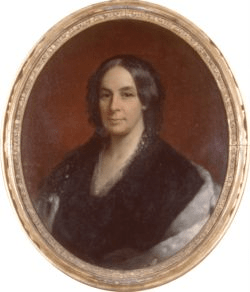
Sydney press reports described the prominent women’s gowns at the ball in great detail. Lady Enid de Chair wore
a gown of dove grey taffeta, made with a long-waisted, tightly-fitted bodice, and full skirt reaching to the ground at the back. Motifs of dlamante and silver studded the skirt. (SMH, 5 April 1929)
CWA Blue and Gold Balls
CWA blue-and-gold balls were not new, and one of the earliest was held by the Inverell CWA branch in 1924. The ball was themed around the NSW CWA colours, with streamers bedecking the Inverell School of Arts. (Inverell Times, 19 September 1924)
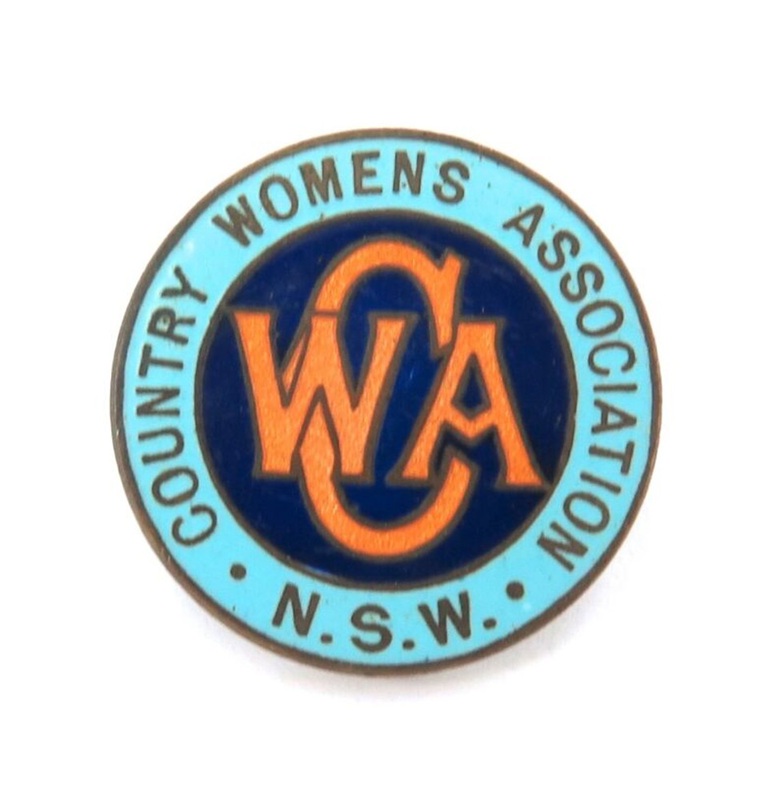
In recent times, the centenary celebrations of the CWA prompted branches to relive the association’s past. In 2019 the Holbrook CWA held a blue and gold ball to mark the 90th anniversary of the foundation of the branch (The Border Mail, 5 December 2019) and The Yass Tribune reported that the centenary of the CWA was celebrated with a blue and gold ball at The Barn at Roslyn (Yass Tribune, 12 April 2022) while in July 2022 the Kyogle Evening Branch of the CWA held a blue and gold ball at the Kyogle Bowling Club. (Kyogle friendly town and village Facebook group, 8 June 2022)
Summing up
Balls and other social functions of the interwar years were a popular fundraiser for the Country Women’s Association, one of the most powerful women’s organisations in Australia.
The CWA has a fantastic record of advocating for the agency of country women and their welfare, while also undertaking considerable charity work.
The tradition of the blue and gold ball still resonates with current CWA members and serves as an appropriate vehicle for fundraising.
References
NMA 2019, 18th century silk brocade dress | National Museum of Australia. (2019). Nma.gov.au. [online] doi: https://www.nma.gov.au/explore/features/springfield-faithfull/highlights/silk-brocade-dress
Bogle, Michael 2025. The Ambassador Cabaret, Sydney (1922-1929). Online at http://academia.edu/126989667/THE_AMBASSADORS_CABARET_SYDNEY_1922_1929_
Updated on 16 November 2025. Originally posted on 28 October 2025 as ‘Tradition and elegance in Sydney, Clarice Faithfull Anderson and her historic gown at the 1929 CWA Blue and Gold Ball’.
Discover more from Camden History Notes
Subscribe to get the latest posts sent to your email.

