

Penrith Museum of Printing
The CHN blogger enjoyed an informative and interesting visit to a small museum as part of History Week 2018, conducted by the History Council of New South Wales.
The museum in question was the Penrith Museum of Printing, located in the Penrith Showground.
The museum has a collection of fully operational letterpress printing presses and equipment from the 1860s to the 1970s. It is part of the living history movement that is so popular with tourists in North America, Europe and increasingly Australia.
The printing equipment includes linotype machines, flat-bed printing presses of various types and platen presses. There is also a substantial collection of hand-set type.
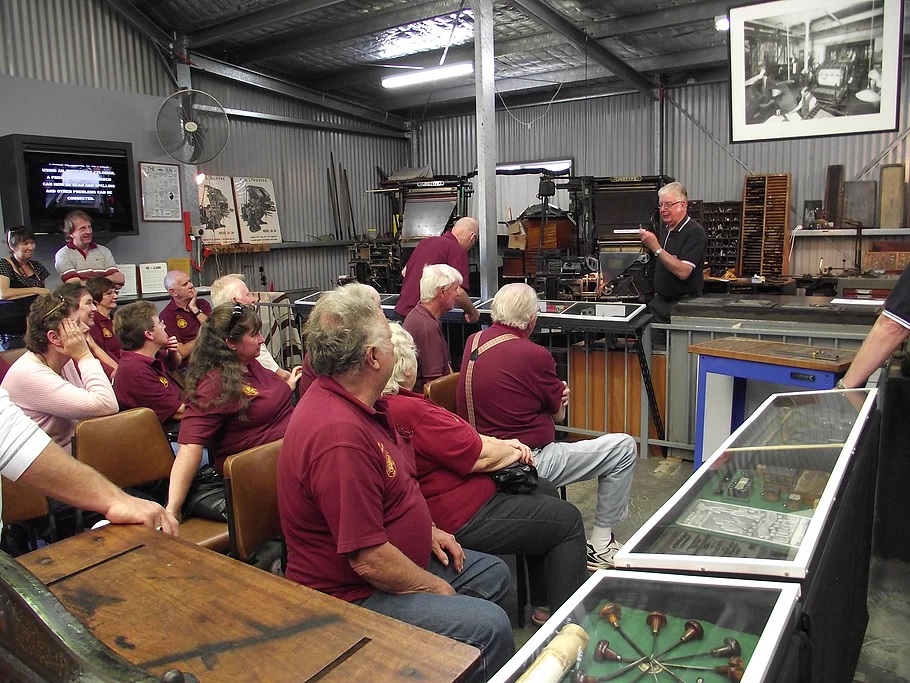
During the History Week, the operation of the different presses was explained by retired tradesmen who had been printers and compositors. They kick-started the presses and linotype machines and demonstrated their capabilities.
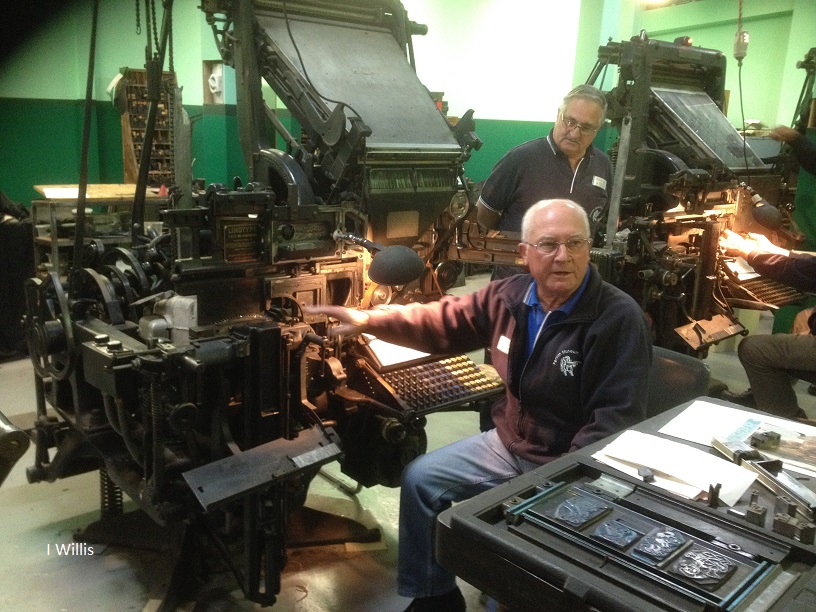
The museum is set up like a 1940s printing shop, and visitors experience the noise of presses and linotype machines and the smell of ink. It is the authentic real deal.
Linotype machines were introduced to replace hand-composing pages for printing. Hand setting was very slow. What would take a compositor hours to set in a page would take minutes with a linotype machine.
The printing museum is also a site for demonstrating the traditional trades of the printer and compositor.
The printing museum provides a real demonstration of how local newspapers in the Macarthur region were produced before the current era of offset printing. Printing the local paper remained labour-intensive despite the introduction of these pieces of equipment.
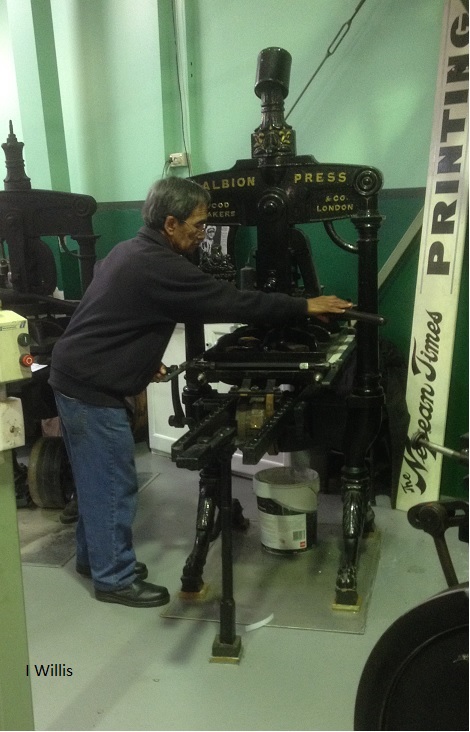
This type of equipment had a profound influence on the production of local newspapers worldwide.
It is interesting how much of the terminology used in computer word processing derives from the smell and noise of the print shop and the lives of the printers and compositors.
The Macarthur region newspaper printeries
The Sidmans in the early 20th century introduced the latest equipment at the principal printery located in the building that houses the Camden News office and printery at 145 Argyle Street, Camden.
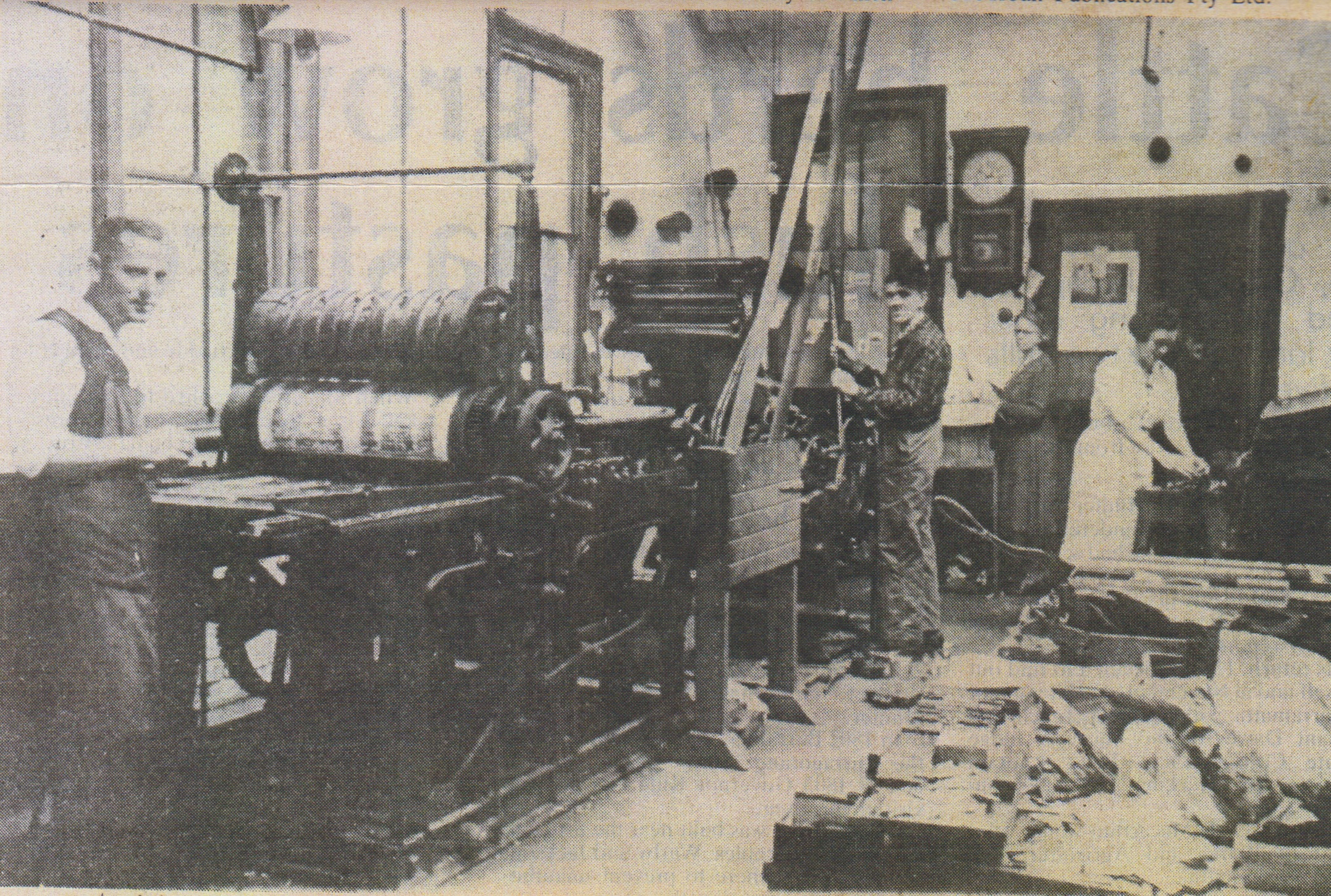
The Richardsons had the latest equipment at their headquarters and printery at 315 Queen Street, Campbelltown, for the Macarthur Advertiser and other newspapers.
History of Penrith Museum of Printing
The Penrith Museum of Printing website outlines the museum’s short history. It states:
The story of the Museum begins with Alan Connell, the founder of the museum who had a desire back in 1987 to develop a “working museum” of letterpress printing machinery and equipment.
As the story goes, many years had to pass before Alan’s dream could be fully realised through a Commonwealth Government Federation Fund Grant. The Penrith Museum of Printing was officially opened on 2 June 2001 by Ms Jackie Kelly, M.P. for Lindsay, the then Minister for Sport and Tourism.
A large proportion of the machinery and equipment on display originally started its working life in the Nepean Times Newspaper in Penrith, NSW, Australia, while many other items have been donated by present and or past printing establishments.
To experience the smell and noise of the local newspaper printery a visit is a must to the Penrith Museum of Printing.
For contact details, visit the Penrith Museum of Printing website.
Updated 8 January 2026. First posted on 7 September 2018 as ‘A taste of ink and type in a country printery’.
Discover more from Camden History Notes
Subscribe to get the latest posts sent to your email.

