

The Camden story represents a rich tapestry of community history, emphasising narratives from marginalised voices. It highlights how cultural memory, shaped through oral traditions and historical artefacts, fosters shared identity.
Essential sites like museums and monuments facilitate the transmission of collective memories, preserving the community’s past and influencing its identity.
The Camden community illustrates this through symbols, traditions, and stories that connect residents to their past, forming a shared identity as they navigate the complexities of inclusion and exclusion.
The Camden story: community history and memory
The Camden story, its creation, telling and promotion, is the realm of community history, which is popular history outside the university sector. A broad area, community history, includes genealogy, women’s history, local history, oral history, social history, immigrant history, Indigenous history, labour history, environmental history and others.
Historian Alison Twells argues that community history arose from ‘people’s history’ in the 1960s and 1970s, through the activities of local historical societies. It is ‘history from below’ and was inspired by EP Thomson’s important work The Making of the English Working Class (1963). Community history focused on the stories of those traditionally excluded from histories of nations, politics, religion, and important men and events, who were presented as heroes and pioneers. That is, the voices of the ordinary, the marginalised and disenfranchised.
Written sources are at the centre of the archival world for community history and the research and writing in creating Camden stories. Oral history is a historical tool used by historical sleuths, incorporating personal recollections that evoke emotions and preserve local voices. It can provide invaluable insights into the daily lives of the Camden community, adding colour and movement not found in written sources.
Oral history gives the interviewee, generally a colourful local character, agency and empowers them to tell their story in a forum they may have been denied in other contexts through memory and testimony. According to Oral History Australia, memories are living histories. (OHA 2026)
Memory is constructed through biological processes, in which a person recalls an experience by combining elements of different experiences. (Laine Perfas 2025).
Individual memories can be pooled in a group setting, creating a body of shared memories, knowledge, and information. This pool is called collective memory and can be constructed, shared, and passed on by large and small groups, such as nations, generations, families, and communities.
Unlike history, which encompasses a variety of perspectives, collective memory reflects only a group’s perspective and, in turn, shapes identity through selective remembrance of the past. Collective forgetting is the parallel, often intentional, process of discarding or silencing memories that do not fit the dominant narrative, acting as a crucial tool for constructing social cohesion, national myths, and, at times, political control. (Minarova-Banjac 2018).
Collective memory is a contested concept, often politicised around issues of inclusion and exclusion. There has been extensive research on how different social groups form their own representations of history and how these representations can influence values, ideas, and biases in a host of areas. One of these areas is school history textbooks, where they are seen ‘as psychological tools that shape collective memory, social representations, and identity’ rather than simply telling facts and stories about the past. (Sakki 2025)
Collective memory is often categorised into communicative memory (informal, lived, intergenerational), cultural memory (formalised, fixed, symbolic), commemorative memory (ceremonies, holidays and rituals), collected memory (individual fragments of memory) and others.
Cultural memory is the constructed understanding of the past, passed from one generation to the next through texts, oral traditions, monuments, rites, and other symbols. (NGS 2023)
Cultural memory encompasses how a community like Camden constructs its understanding of the past through symbols, traditions, and histories passed down through generations that are part of the Camden story. Cultural memory shapes community identity, allowing members to connect with shared values and experiences. Unlike history and heritage, cultural memory plays a crucial role in shaping community narratives, and many of these are embedded in the Camden story.
The Camden story: symbols, traditions and histories
There is a host of cultural symbols, traditions and stories that make up the Camden story that help define community identity and a sense of place.
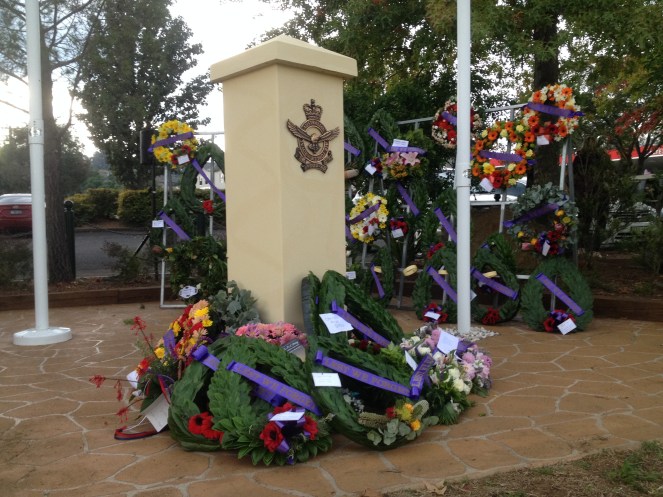
Some of the cultural symbols and traditions could include:
- Text, photographs, interviews, music – books; photographs; newspapers; websites; social media; radio stations;
- Traditions – Anzac Day; Camden Show; Christmas Day; Easter; New Year; Diwali; Ramadan;
- Celebrations – Weddings, Birthdays, Births, Anniversaries, Funerals
- Commemorations – Anzac Day; Remembrance Day; Bastille Day;
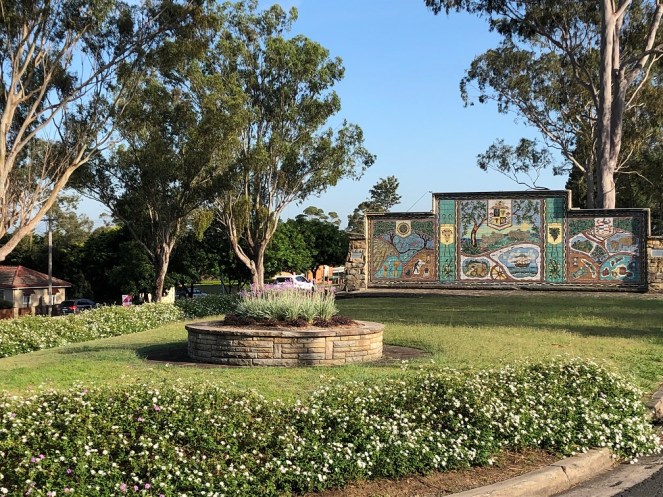
- Monuments – Camden Rotary Pioneer Mural; Fountains; Water troughs; statues; public art;
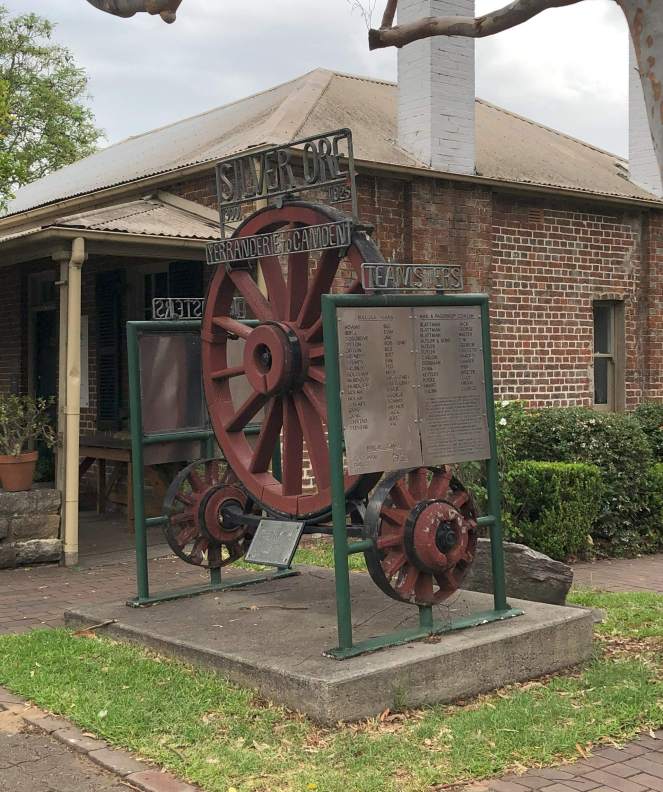
- Memorial – Teamsters Memorial; Camden Cenotaph; Rotunda Macarthur Park; Memorial Gates at Macarthur Park; Onslow Park; Camden Swimming Pool;
- Rites – getting a driver’s license; learn to swim; starting school; getting HSC; first job; getting married;
- Stories – Camden Museum; Alan Baker Art Gallery; marketing; websites;
- Exhibitions – Camden Museum, Alan Baker Art Gallery;
- Art – Alan Baker Art Gallery; Camden Art Prize; public art;
- Roads – John Street; Elizabeth Street; Edward Street; Mitchell Street; Oxley Street;
- Objects, artefacts and ephemera – Camden Museum; churches; Camden RSL; Camden Show;
- Language – English; jargon;
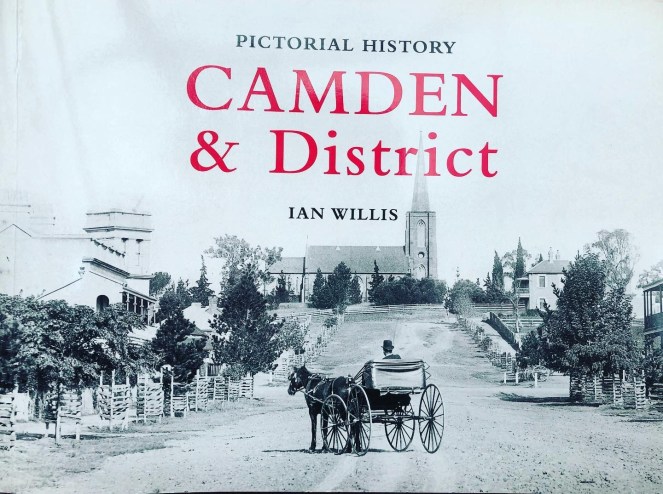
Cultural memory is one way of telling the Camden story and is passed on through formal education, oral traditions, rituals, monuments, and media.
The cultural memory within the Camden story is transmitted by museums and archives through accessible educational programs and the digitisation of historical materials for use in community-based learning initiatives. (Cousins and Zalewski 2025a.)
The Camden story: important sites for its transmission
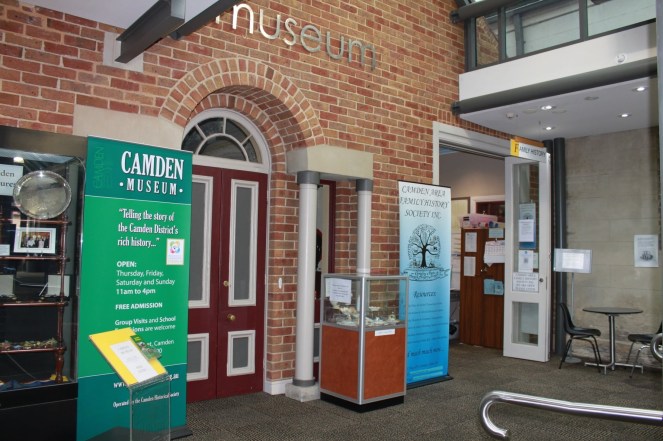
1. The Camden Museum
At the Camden Museum, these are the exhibits visitors see upon entering, featuring stories researched and written by members of the Camden Historical Society about objects, artefacts, and ephemera drawn from written, oral, visual and other sources.
Each object or artefact has a story. What is that story? Who is telling it? Who created the story? Why are they telling it? What is the context? What values do they represent? Are they significant? What is the basis for that significance? What do they mean to the community? What do they mean to the nation?
The members of the society construct stories of the past about artefacts and objects in the museum. These stories are researched and written from a variety of types of evidence. These stories are told to the Camden community through exhibitions, lectures, guided walks, and talks that use the museum’s symbols.
The Camdem Museum provides a constructed understanding of the past that can be passed from one generation to the next through texts, oral traditions, monuments, rites, and other symbols, that is, cultural memory. The members of the Camden Historical Society are the custodians and gatekeepers of Camden’s cultural memory at the Camden Museum.
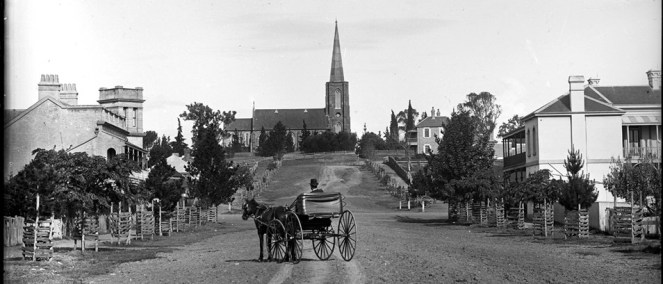
2. John Street, Camden
The material culture of John Street includes churches, schools, houses, galleries, built heritage, businesses, memorials, and farmland.
It provides opportunities to construct an understanding of the past that can be passed from one generation to the next through texts, oral traditions, monuments, rites, and other symbols, creating John Street’s cultural memory.
3. The Cowpastures
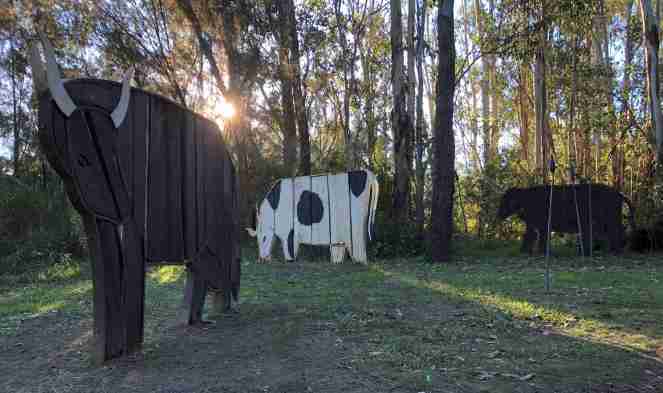
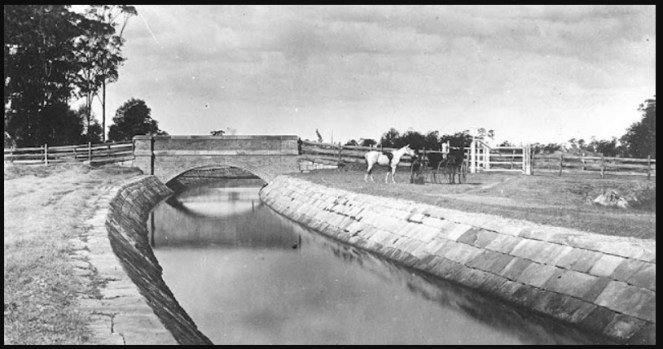
The representations of the material culture of the Cowpastures provide opportunities to construct an understanding of the past that can be passed from one generation to the next through texts, oral traditions, monuments, rites, and other symbols, creating the Cowpastures’ cultural memory. Representations of material culture include public art, memorials, statues, murals, historic sites, roads, bridges, and conferences.
The Camden story: what are the functions of cultural memory?
Cultural memory can serve several functions in the Camden story. It can assist us
- Crystallises shared experiences of the community
- Allow us to understand the past, and the values and norms of the community
- Create a form of shared identity for the community
- Transmits shared identity to new members of the community
- Can bring about a spirit of survival or resistance among marginalised groups of people, especially those with past trauma (NGS 2023)
Telling the Camden story serves all of these functions.
The Camden story: the meaning of history and heritage
History is the study of the past, especially people and events. People do this by interpreting and understanding the past from different perspectives and by examining change and continuity.
History is not to be confused with the past. The past is fixed and cannot be changed. It is concrete and unchangeable. History is subject to constant re-evaluation and reinterpretation. Historians may approach history from different perspectives. The study of how history changes is called historiography. (Llewellyn & Thompson, 2025)
The Camden story could be written from different perspectives, eg, community leaders, events, farming or businesses. Others might look at the town through a thematic lens, examining the factors and forces that produced crucial historical change, such as urban growth, wars, or economic booms and busts.
Heritage is what we have inherited from the past to value and enjoy in the present, and to preserve and pass on to future generations. Types of heritage consist of natural and cultural (man-made) heritage, as well as tangible and intangible heritage. (The Heritage Council, 2025)
Heritage is not to be confused with history. History tells us what happened in the past; Heritage describes surviving materials of the past – evidence that exists now – in the present. There is a tension between what different generations consider important from the past. (Halstead 21st Century Group 2025)
The Camden story: a reflection
The Camden story has many layers of meaning throughout its creation, construction, telling, and distribution by its participants and advocates, conveyed through symbols, traditions, and tales across a host of sites, including museums, monuments, public art, memorials, objects, and other institutions, including the family, the church and community organisations.
There are a variety of historical tools that are used in this process, and the most important are archival research and the recording of memories through oral testimony. Memory is simply recollections from the past and enables people to learn from past experiences and apply that knowledge in present circumstances. It is critical to identity, which is how a person or a community defines themselves, or how others define them.
Community history encompasses diverse areas of popular history focused on narratives from marginalised voices, which are important to the construction of the Camden story. Community history emphasises collective memory and cultural identity, shaped through oral traditions and historical artefacts. The Camden story illustrates how symbols, traditions, and stories connect local folk to their past, forming a shared identity as they navigate the complexities of inclusion and exclusion.
The Camden story encompasses collective and cultural memory, and answers questions like: Who are we? Where did we come from? Who are our ancestors? What is important to us from the past? What are the stories that are told about our community? Who tells these stories? Why are these stories told? What stories are not told? Why not? What does this say about our community? What is forgotten? What is hidden? What is left out? What are the silences? Why are there silences?
Camden’s shared values, traditions, and stories are embedded in cultural memory and the Camden story, contributing to a collective sense of place and community identity.
Addendum
Academic and researcher at Southern Cross University, Justine Poplin, argues in a recent article on The Conversation that ‘museums curate memory, define heritage and stage visions of the future’. Similar to cultural memory at the Camden Museum.
Poplin argues in the article that
The growth in China’s museum sector signals a nation investing heavily in how it sees itself and how it wishes to be seen. (Poplin 2026)
The Chinese museum sector is using collective memory to reshape the national narrative about its past and future.
Dr Poplin says, ‘China’s museum boom reflects a coordinated national strategy that links heritage, urban development, the creative industries and soft power.’ A new museum has opened in China every 1.5 days since 2022, according to Poplin. (Poplin 2026)
There is little room for ‘dissenting voices’ says researcher for the Australian Institute for International Affairs Guang Yang, in this national storytelling project.(Poplin 2026)
Collective and cultural memory are powerful tools for shaping national stories where a national government wants to shape domestic identity and global perception.
References
Cousins, L.M. and Zalewski, P.P. 2025b, Community Identity. Lifestyle Sustainability Directory. Online https://lifestyle.sustainability-directory.com/area/community-identity-and-belonging/ (viewed 8/2/26)
Halstead 21st Century Group 2025. History or Heritage – and what’s the difference anyway? Halstead 21st Century Group Blog. https://www.halstead21stcentury.org.uk/blog/70/history-or-heritage—and-what’s-the-difference-anyway (Viewed 30/12/25)
Laine Perfas, Stephanie. (2025). How memory works (and doesn’t). [online] Harvard Gazette. Available at: https://news.harvard.edu/gazette/story/2025/12/how-memory-works-and-doesnt/ [Accessed 16 Mar. 2026].
Llewellyn, Jennifer & Steve Thompson 2025. ‘What is history?’ Alpha History. Online https://alphahistory.com/what-is-history/ (Viewed 30/12/25)
Minarova-Banjac, Cindy 2018. Collective Memory and Forgetting: A Theoretical Discussion. Thesis, Faculty of Society & Design, Bond University. Online at https://research.bond.edu.au/en/publications/collective-memory-and-forgetting-a-theoretical-discussion/ (Accessed 16 March 2026)
NGS 2023. Cultural Memory. [online] education.nationalgeographic.org. Available at: https://education.nationalgeographic.org/resource/cultural-memory/. (Viewed 30/12/25)
OHA (2026). What is oral history? [online] Oral History Australia. Available at: https://oralhistoryaustralia.org.au/guidance/what-is-oral-history/ [Accessed 16 Mar. 2026].
Popline, Justine 2026. ‘A new museum every 1.5 days: what’s driving China’s massive cultural expansion.’ The Conversation, 18 March. DOI: https://doi.org/10.64628/AA.4ktpwhhjm Online at https://theconversation.com/a-new-museum-every-1-5-days-whats-driving-chinas-massive-cultural-expansion-277380 (Accessed 20/3/26)
Sakki, Inari. (2025). Collective memory and history textbooks. Current Opinion in Psychology, [online] 65, p.102073. doi:https://doi.org/10.1016/j.copsyc.2025.102073.

(An aerial view of Camden township in 1940, taken by a plane that took off at Camden airfield. St John’s Church is at the centre of the picture. Camden Images)
Discover more from Camden History Notes
Subscribe to get the latest posts sent to your email.

