Camden Motorcycle Club
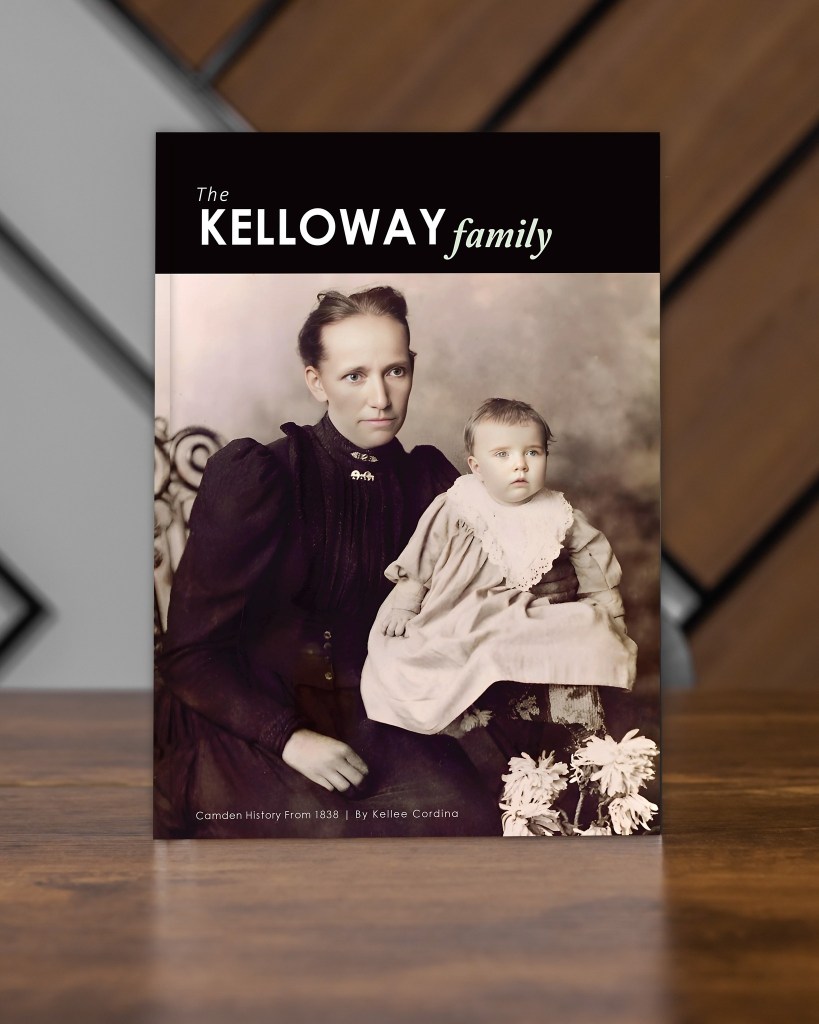
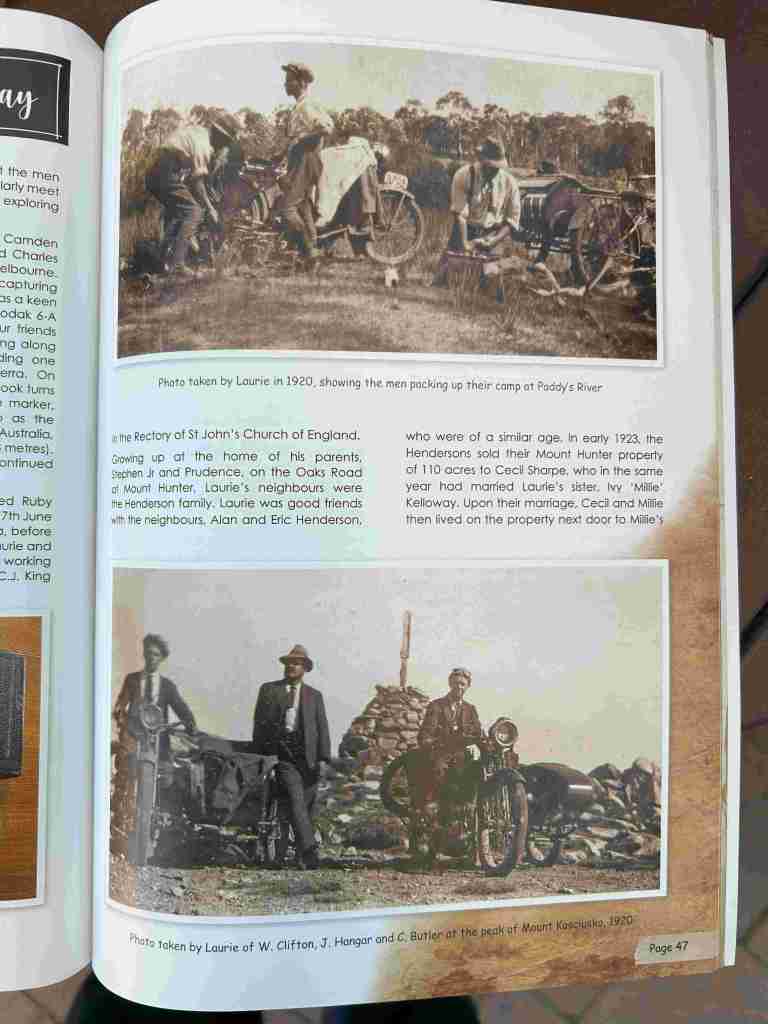
I was reading Kellee Cordina’s new book, The Kelloway Family, and on page 47 are two wonderful photographs of Laurie Kelloway, his mates, and their motorcycles.
Laurie Kelloway was an interesting character. He rode motorcycles and took photographs, which in the 1920s were two technologies that reflected modernity and progress.
Laurie joined the Camden Motorcycle Club in the early 1920s, which was led by its president, Dr Francis W. West. West was the club president from its founding in 1919 until he died in 1932. The club disappears after his death. (Camden News, 7 June 1933)
Author John Wrigley writes, ‘Nurse Taplin was often seen both day and night travelling with Dr Francis West in the sidecar of his motorcycle on some medical emergency.’ (Wrigley, 1990)
Overlanders
Laurie and his motorcycle mates, Wes Clifton, Jack Hanger, and Charles Butler, were what author Laina Hall called overlanders. She said that an overlander was someone who travelled to parts of Australia by motorcycle with no particular place in mind. (Hall 2023)
Hall writes that overlanders were out to see the ‘real Australia’ and were early adopters of this type of transport (Hall 2023)
In 2020, the Overland Journal defined overlanding as self-reliant adventure travel to remote destinations where the journey is the primary goal. The trip is about exploration using mechanised transport and camping. Travel is the goal itself. (Overland Journal (2015).
As overlanders in the early 20th century, Laurie Kelloway and his mates were part of the enthusiasm for the new forms of mechanised transport and the ‘open road’, seeking adventure and achievement.
Writer Rosemary Ker argues that the notion of the ‘open road’ in the early 20th century replaced the 19th-century frontier, which, in Australia, extolled Hirst’s ‘pioneer legend’ with its emphasis on bravery, conquering the land, battling the elements, and celebrating explorers, pastoralists, and farmers. The open road was the ‘new frontier’, a zone of opportunity and the edge of exciting possibilities, serving as a metaphor for ‘promise, progress and ingenuity’. (Ker 2013)
Kelloway came from a Camden pioneering farming family that was part of the new settler society of New South Wales. They arrived in the Camden area in the late 1830s, taking on a clearing lease from the Macarthurs at Spring Creek, then part of Camden Park Estate. (Cordina, 2025)
Overland run to Mount Kosciusko
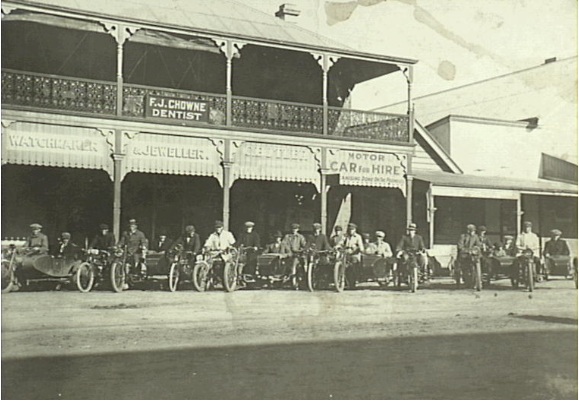
One of Kelloway’s photographs shows a motorcycle touring party, of which he was a part, at Mount Kosciusko in the summer of 1920. While not identified as a tour organised by the Camden Motorcycle Club, there were Camden press reports of a similar club tour to Mount Kosciusko in 1922.
In January 1922, the Camden press reported that the club organised an eight-day run to Mount Kosciusko from Camden, a total of 1,033 miles. There was a party of four motorcycles, three Harley-Davidsons and one Indian, with passengers in sidecars. Members of the excursion included: riders – M Peat, J Hutchinson, W Davis and CW Butler; passengers – J Peat, W Seymour, E Henderson, and A Haydon. (Camden News, 26 January 1922)
The highlight of the run was when the touring party made the climb to Mount Kosciusko on day four, after leaving Berridale ‘first thing’. The report stated that there was a lot of fog, with visibility limited to about 100 metres, and the motorcycles travelled in low gear. For some, it was the first sight of snow, and the party made it to Mount Kosciusko at 3pm, staying for an hour. The party returned to Berridale at 7.30pm, covering 94 miles for the day. (Camden News, 26 January 1922)
In the first four days of the tour, the riders covered a significant distance. They had initially left Camden on Monday, January 9 1922, before stopping for breakfast at Fitzroy Falls. They then took in the view from Cambewarra Mountain, ‘one of the finest views in the state’, and the party arrived in Nowra at 2.30pm, where they took on petrol and provisions. Just out of town, they ‘boiled the billy’ for lunch and travelled south, making Milton at 7:15 pm, Ulladulla at 7:30 pm, and then travelled a further 1½ miles out of town to set up camp for the night, a total of 123 miles. (Camden News, 26 January 1922)
Day Two had an early start at 4:15 a.m., and the tour party moved at 6 a.m. They left Ulladulla and arrived at Wapengo, a total of 122 miles away. Day Three, the party climbed ‘Big Jack’, made Cooma, and overnighted at Berridale, and then headed onto Mount Kosciusko on Day Four. From there, the riders returned to Cooma, then Queanbeyan, Yass, Crookwell, Bathurst, Jenolan Caves and then returned to Camden on the following Tuesday. The touring party camped out in the elements next to their motorcycles. (Camden News, 26 January 1922)
The press report stressed the adventure and endurance of the ride, the distances covered each day, the towns visited on the way and what they saw. The Kelloway’s photograph of the 1920 Mount Kosciusko run hints at the experiences of the journey. One rider had a spare wheel strapped to his motorcycle for a quick change in case of a puncture. The images portray a no-nonsense group of fellows, salt-of-the-earth types. These fellows just got on with the ride with no airs and graces, coping with the elements and breakdowns.
Hall argues that the overlander experienced a sense of achievement, as encountering the unfamiliar and overcoming hardship were integral to the narrative. The motorcycle allowed a more immediate experience of the landscape, and there was a sense of adventure and challenge. (Hall 2023)
Apart from the Mount Kosciusko tours, the Camden Motorcycle Club organised other tours to Canberra, Melbourne, and Jenolan Caves.
The Camden press reports of tours and outings rarely mention the terrible road conditions in the local area in the early 20th century. One exception was a ride from Melbourne to Sydney in 1913, which motorcyclist Fortis reported in the Australasian newspaper. He wrote that the Sydney road over the Razorback Mountain was ‘horribly rough’, stopping the rider from attaining any speed and ‘rendering the mere act of riding most difficult’ with several hasty ‘dismounts’. The downhill run had a better surface, improving at the bottom. After passing through Camden, he described the ‘Cow-Pastures’ road as ‘indescribably rough, rutted, and dusty for miles’ until he reached the ‘Cross-Roads’. (Australasian (Melb), 5 April 1913)
Camden motorcyclists
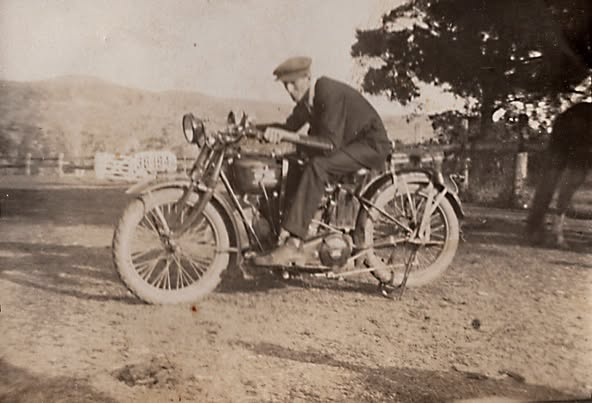
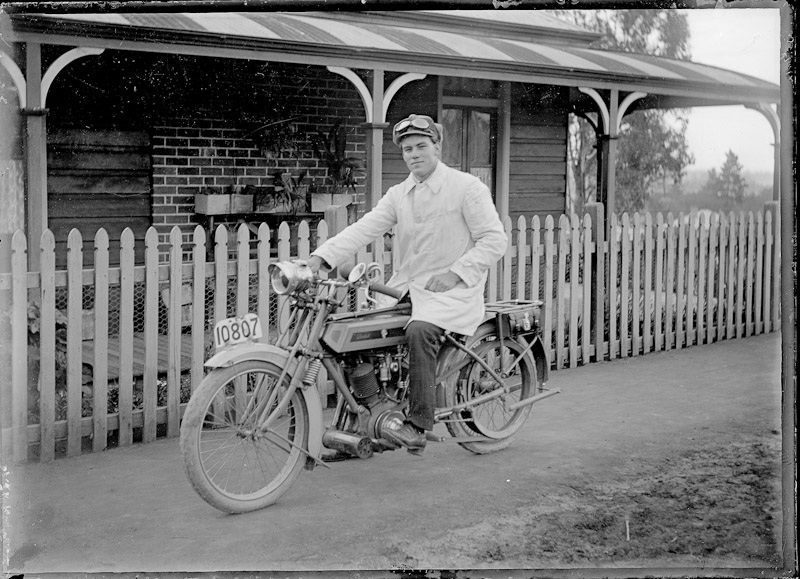
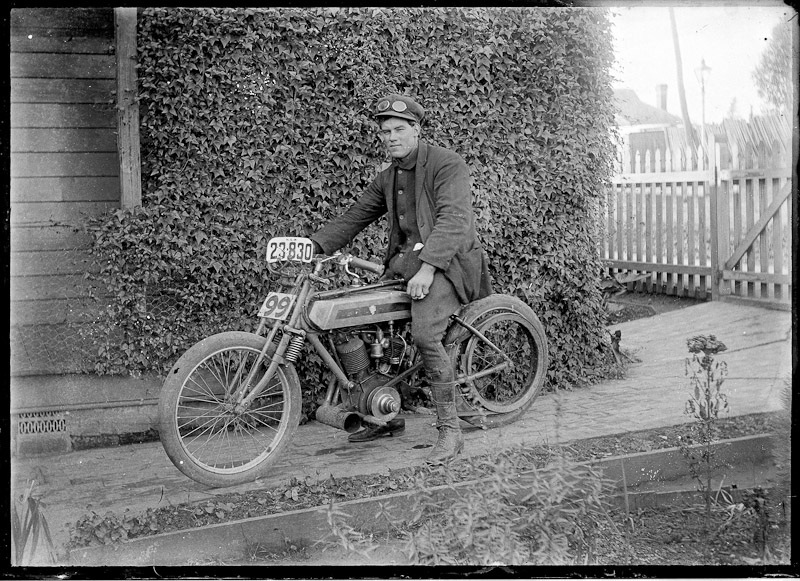
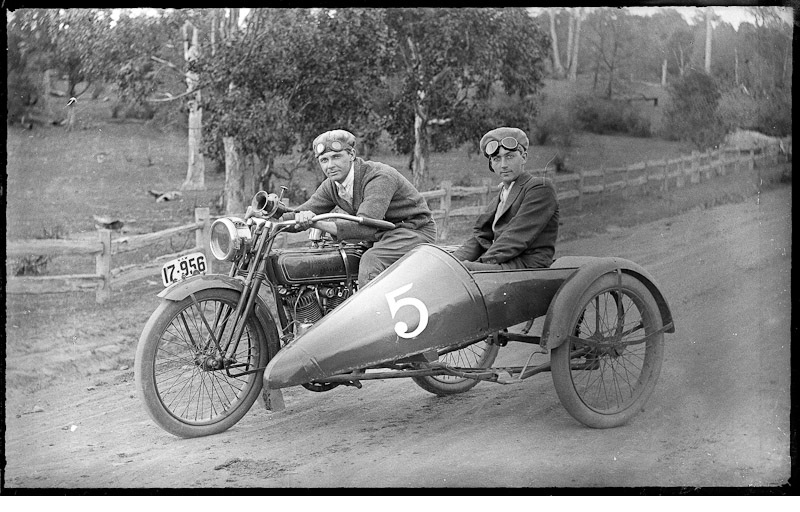
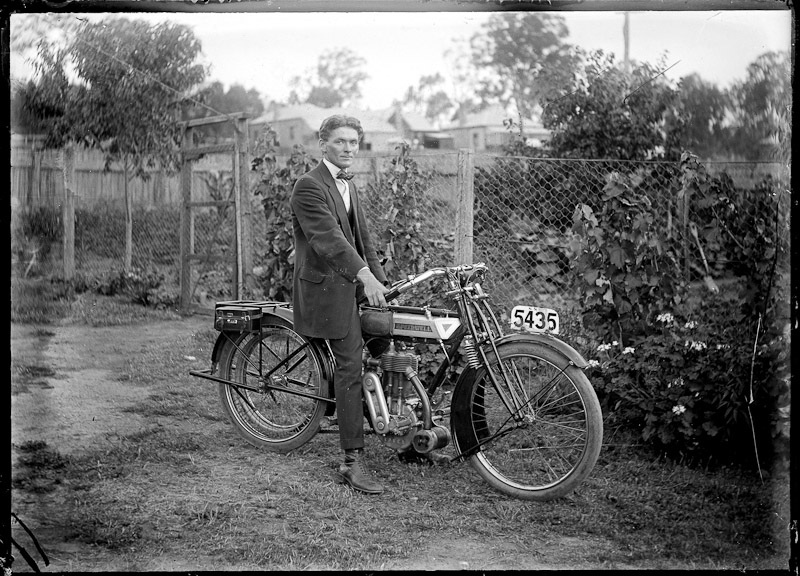
These images are part of the Dowle collection held by The Oaks Historical Society. The people in these photographs have not been identified. Given that Roy Dowle took these photographs in the early 1920s, the men were probably members of the Camden Motorcycle Club. The men and their motorcycles need to be identified. Can anyone help?
Other club activities
Apart from runs and tours, the club had an active program of events from its foundation, including speed trials, reliability trials, hill climbs, and sports days, where points were allocated for performance. Club members participated in novelty events at the Narellan Sports Day to aid fundraising for Camden District Hospital. (Camden News, 11 August 1921)
A Camden press report in late 1920 detailed a 32-mile reliability trial from Camden via The Oaks and Picton back to Camden. The trial was a dead heat for first between SH Wright and GF Copeland, who lost no points, with Dr FW West in third place with one point lost, fourth place went to H Perkins with four lost points, W Davis and CC Butler. (Camden News, 11 November 1920)
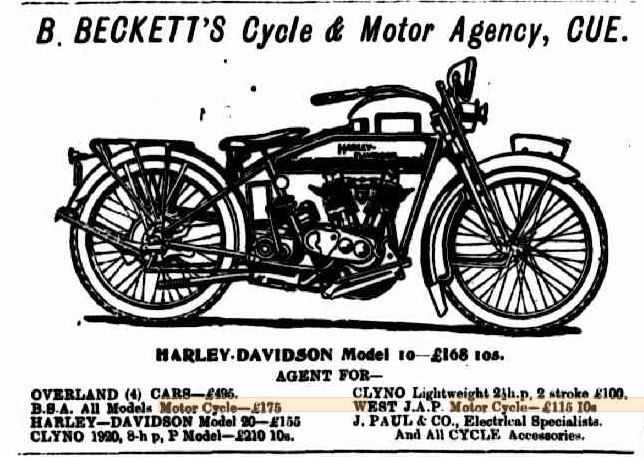
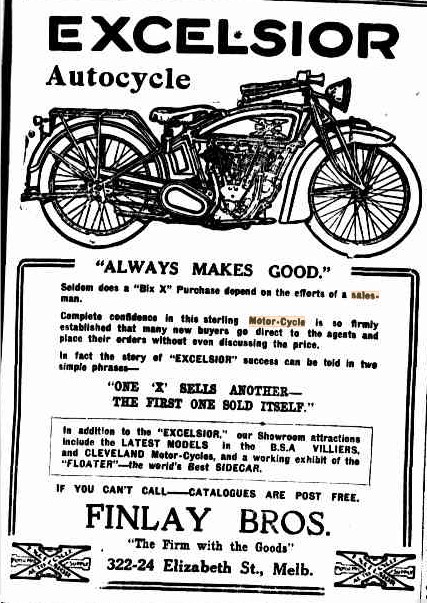
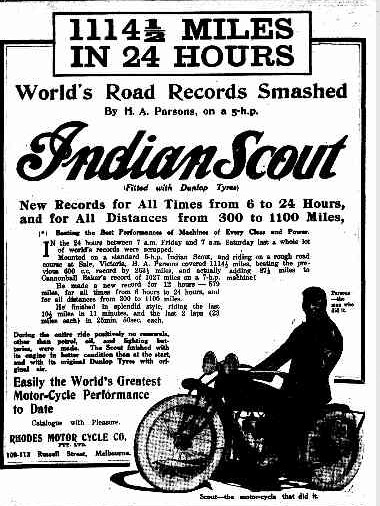
The Camden press reports did not usually detail the type of machine the men rode. One exception was a reliability trial in July 1920 over the Camden-Bringelly course. The members rode: M Peat, 7hp, Harley; H Perkins, 6hp, MAG; W Davis, 7 hp Harley; R Asimus, 7hp, Harley, C Wheeler, 7hp, Indian. M Peat won the trial. (Camden News, 4 August 1921)
Another was the 770-yard acceleration trial held at Rossmore, organised by the club in August 1920, when speed was king for a day. These events were great fun, providing excitement and exhilaration. Local speed trials reach incredible speeds for the day, with little thought of the danger. The winner of the day was SH Wright, riding a 7hp Harley, who beat CW Butler on a 3½hp Rover. The scratch time was 44⅗ seconds, reaching a dead flat speed or terminal velocity at 770yds of 70.63mph. Some of the other participants rode: SH Harley, 7hp Harley; C Stevens, 2¾hp VTS. (Camden News, 12 August 1920)
Interestingly, the club members favoured the American motorcycles over the British types.
Private Cecil Wheeler
Immediately following the war, the Camden Motorcycle Club was part of a community effort to purchase a motorcycle and sidecar for Private Cecil Wheeler. The fund was organised by Camden mayor GF Furner and assisted by several community organisations.
Wheeler was Camden’s only totally incapacitated soldier at the end of the First World War. He was a permanent resident at the Red Cross’s Convalescent Home for Soldiers, Scarborough House at Dolls Point, Sandringham, overlooking Botany Bay. Wheeler, a labourer, had enlisted in 1915 and embarked for Egypt on the HMAT Warilda as a member of the 4th Infantry Battalion. He saw action in France and was wounded by shrapnel at Ypres, which resulted in a fractured spine. He returned to Australia in February 1918 aboard HMAT Kanowna. (NAA: B2455, Wheeler, CC.) The Camden Red Cross donated £50 towards the Cecil Wheeler Motorcycle Fund.
Wheeler visited his parents, Mr and Mrs Walter Wheeler, in May 1918. He came out to Camden by car with nurses and orderlies from Randwick Military Hospital, and many of his friends came around to say hello. Stan Kelloway and Camden mayor, GF Furner, took up a recommendation by the hospital matron to purchase Wheeler a motorcycle and sidecar. They organised a local appeal and raised £206. On his return to Camden, he married Rose Cain but never regained full health. In 1927, the Camden Red Cross gave a donation of £15 towards the cost of Cecil Wheeler’s medical expenses due to his ill health, but unfortunately, he died later in the year. (The Camden News, 18 December 1919, 27 December 1919, 8 January 1920, 15 January 1920, 19 February 1920, 22 April 1920)
Motorcycle clubs across NSW
Motorcycle clubs travelled to the local area as part of reliability trials in 1928. The Douglas Motor Cycle Club started an 8-hour reliability trial in 1928 at Darlinghurst, travelling through Richmond, Penrith, Wallacia, The Oaks, Camden, Narellan, Cowpastures, Denham Court and return. (Daily Telegraph, 24 March 1928)
At a state level, there were a variety of individual clubs and the Motorcycle Club of NSW.
Conclusion
The Camden Motorcycle Club contributed to the local community by supporting a local veteran, notably raising funds for a motorcycle and sidecar for Private Cecil Wheeler, a soldier incapacitated during World War I. The community’s efforts highlighted the club’s commitment to social responsibility and camaraderie among its members.
The cultural impact of the club contributed to the broader narrative of motorcycle culture in Australia, emphasising exploration, adventure, and the spirit of the open road during a transformative period in the nation’s history.
The Camden Motorcycle Club illustrated that young men in the town had a strong sense of adventure and a pioneering spirit. The speed of the motorcycle captured the excitement, exhilaration and enthusiasm of the open road, all under the leadership of the local doctor, FW West.
References
Charlton, C. (2020). Brisbane-born: The Spencer motorcycle story – QAGOMA Stories. [online] Queensland Art Gallery | Gallery of Modern Art. Available at: https://www.qagoma.qld.gov.au/stories/brisbane-born-the-spencer-motorcycle-story-the-motorcycle-design-art-desire-australia/ [Accessed 28 Aug. 2025].
Cordina, K 2025, The Kelloway Family, Camden History from 1838. Self published, Camden.
Hall, Laina. (2013). ‘My wanderlust is not yet appeased’: Ellis Bankin and motorcycle touring in 1930s Australia. Studies in Travel Writing, 17(4), 368–383. doi:10.1080/13645145.2013.857134
Kerr, R. (2013). Through the rear view mirror: landscapes, legends and literature on the Australian road. Studies in Travel Writing, 17(2), 188–206. https://doi.org/10.1080/13645145.2013.783960
Overland Journal (2020). what is overlanding? [online] Overland Journal. Available at: https://overlandjournal.com/en-au/pages/what-is-overlanding [Accessed 29 Aug. 2025].
Wrigley, John, 1990, Camden Characters. Camden Historical Society, Camden.
Discover more from Camden History Notes
Subscribe to get the latest posts sent to your email.

