Goulburn’s Interwar Modernism
Hidden in plain sight in Auburn Street, Goulburn’s main street, several Interwar buildings are amongst this imposing Victorian grandeur.
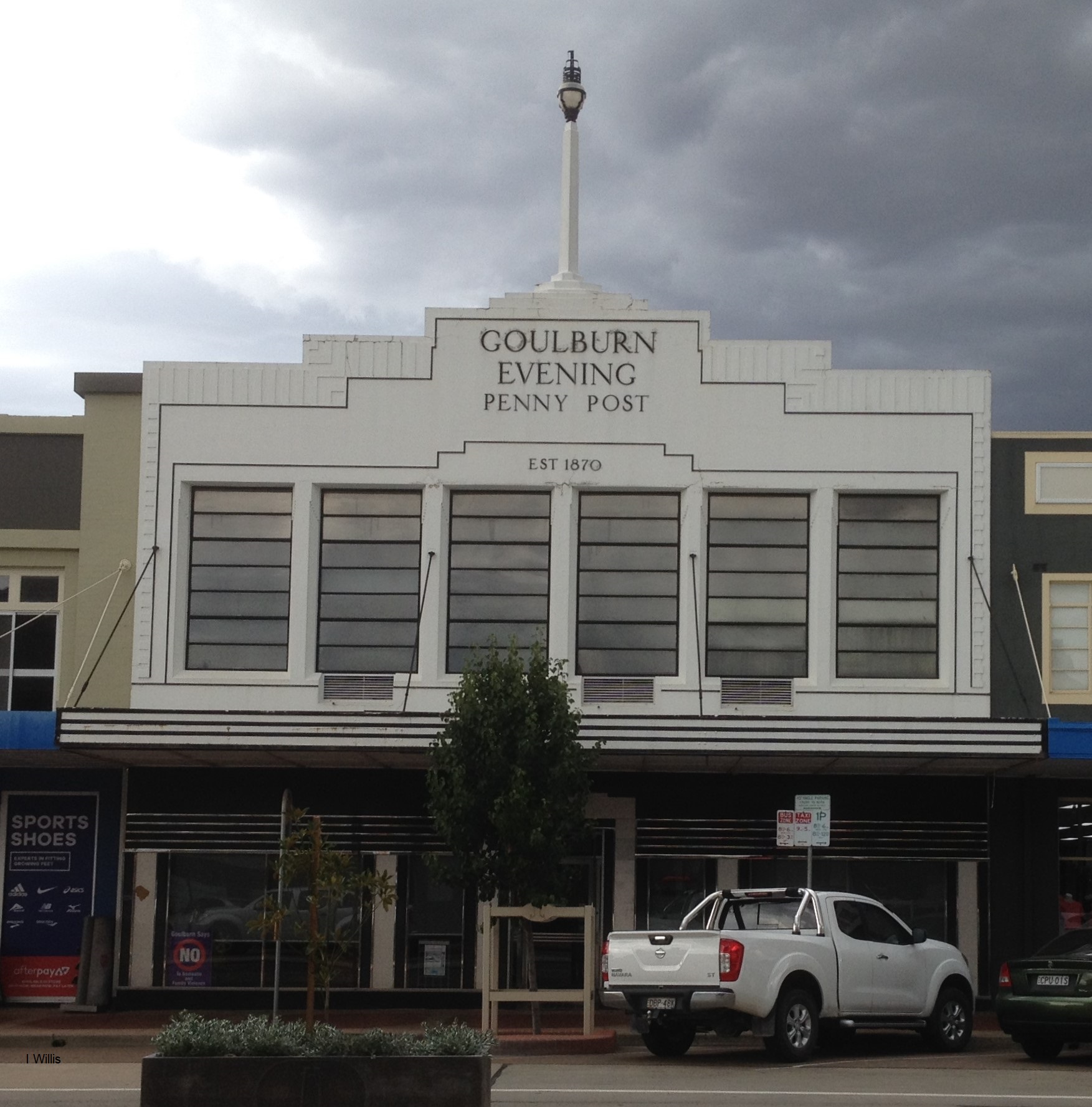
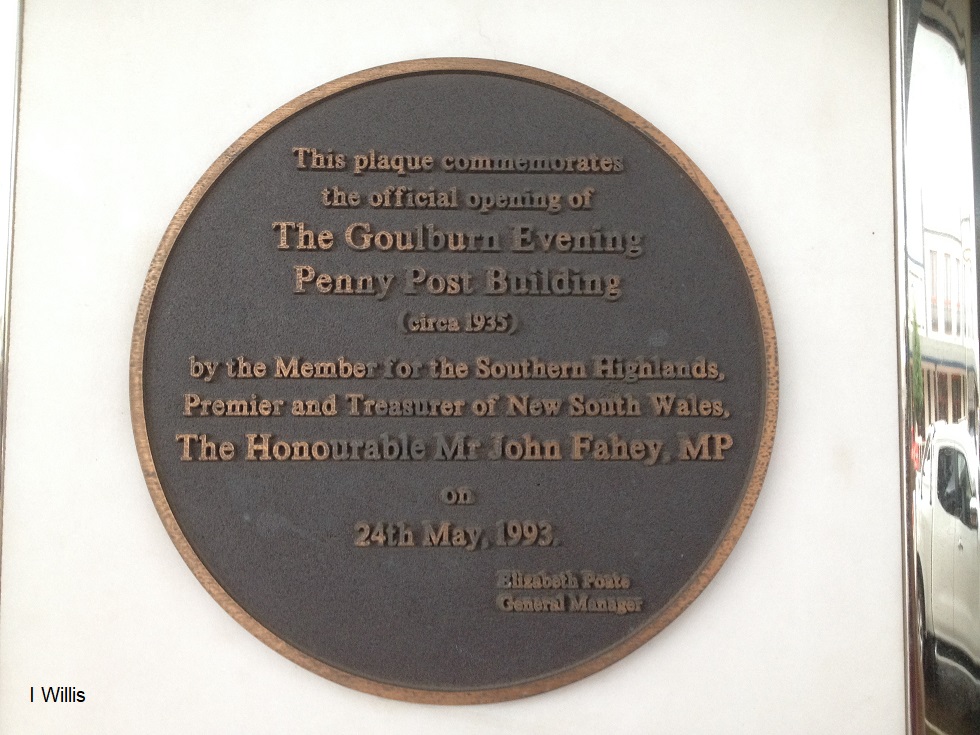
One of these buildings in the office and printer of The Goulburn Evening Penny Post at 199 Auburn Street Goulburn was built in 1935.
The newspaper office reflected confidence in the future of Goulburn. A statement about the town.
Country newspaper barons
The Daniels family, who owned the Penny Post, were part of the country press barons who ruled their rural media empires with an iron fist.
Families liked the Sommerlads of New England, the Sidmans of the Macarthur region, the Shakespeare family of the mid-west, the Robinsons in the Hunter, the Parkers of the mid-west, the Musgraves of Wollongong, the Motts of Albury and a host of others.
The newspaper landscape in Goulburn
Goulburn was a vibrant colonial newspaper landscape reflecting a prosperous colonial pastoral economy. While the Goulburn had a literate population, it was still a frontier town. Publishers were self-made men and editors as well. Colonial New South Wales was a rugged and robust publishing environment – a boom and bust cycle.
The first newspaper in the town was the Goulburn Herald in 1848. By the 1920s, 21 separate newspaper mastheads had come and gone in Goulburn.
The Interwar period appears to have been a prosperous time for the New South Wales country press. According to Rod Kirkpatrick’s Country Conscience, 238 titles were published in 1920, only slightly reduced to 221 in 1930.
The first issue of the Penny Post in 1870 was produced under the cumbersome masthead of the Goulburn Evening Penny Post and Southern Counties General Advertiser as a short tabloid (11 x 14 inches) of 4pp. By 1930 the Goulburn Evening Penny Post was the last standing.
Goulburn society was driven by its religious zeal; the city even had 3 publications. They were: The Goulburn Banner (1848 – Presbyterian), the Monthly Paper (1893 – Church of England) and Our Cathedral Chimes (1920s – Roman Catholic).
A special edition celebrates the new newspaper office building
The December 1935 edition of the Goulburn Evening Penny Post celebrated the opening of the new office building. The edition was 36pp, with most of the editorial space taken over by recounting the history of the Goulburn township and area.
At the time, the Post was a daily, Monday to Friday, incorporating The Goulburn Daily Herald with a cover price of one penny.
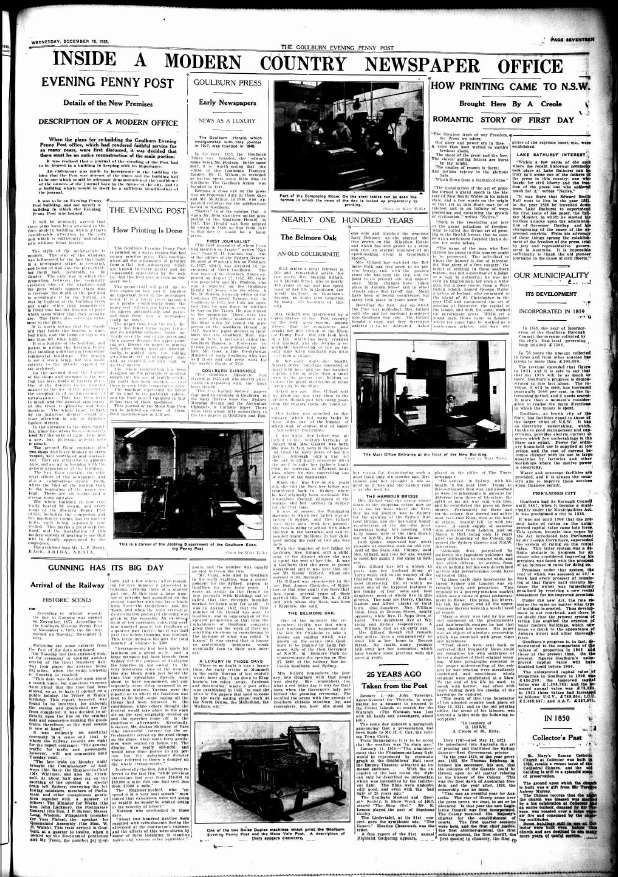
Staff photographs
![Goulburn Evening Post Staff 1935 GEP[2]](https://camdenhistorynotes.com/wp-content/uploads/2018/02/goulburn-evening-post-staff-1935-gep2.jpg)
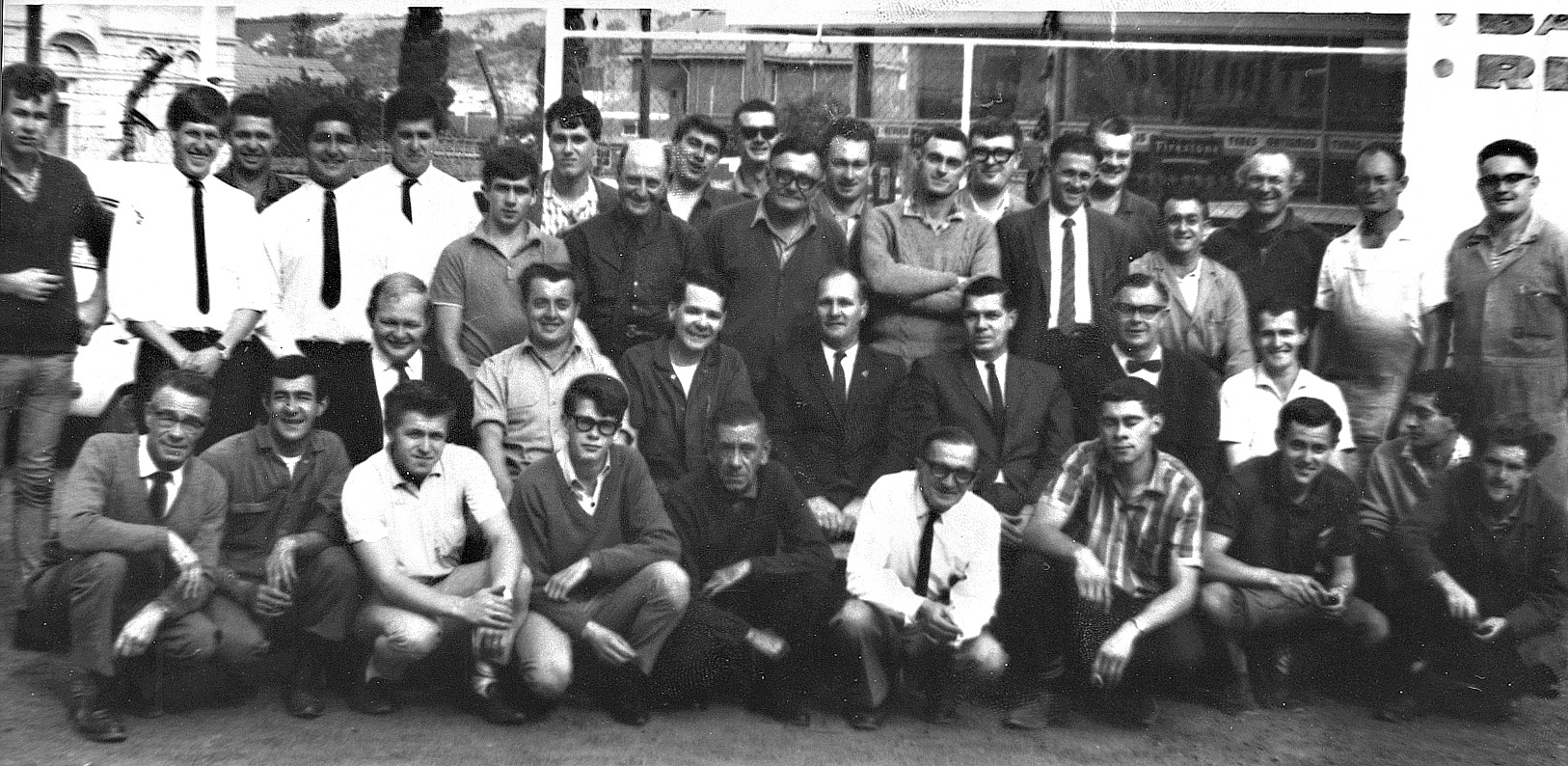
Architect LP Burns
The anniversary edition ran an article titled ‘Inside A Modern Country Newspaper Office’. The Sydney architect LP Burns designed an office building described as a ‘fine, modern building’ of ‘distinction’ in a ‘modern’ style.
Burns also designed Goulburn’s Elmslea Chambers at 17 Montague Street in 1934. It is described as one of the first buildings in Australia to use coloured polychrome terracotta in its façade, which features a fine relief of birds, flowers, leaves and typical Art Deco sunbursts under the windows.
The building was designed for wealthy pastoralist FG Leahy.
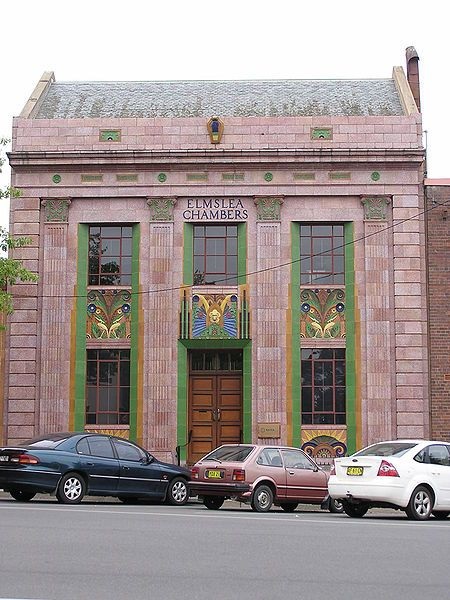
The front of Goulburn’s Elmslea Chambers was Wunderlich terra cotta polychrome panels. The Building Magazine claimed that ‘Goulburn [had] never before seen a block of offices of such a lavish and commodious nature’.
The building interior had Silky Oak panelling with Tasmanian Oak inlay, chromium light fittings, and frosted green glass. The builders were Armstrong and Stidwell.
The newspaper building design
The new Goulburn Evening Penny Post building was an example of sleek Art-Deco styling. A stripped-back minimalism of the realities of the commercial world – a no-nonsense, business-like, functional and matter-of-fact. Just like the owners and editors.
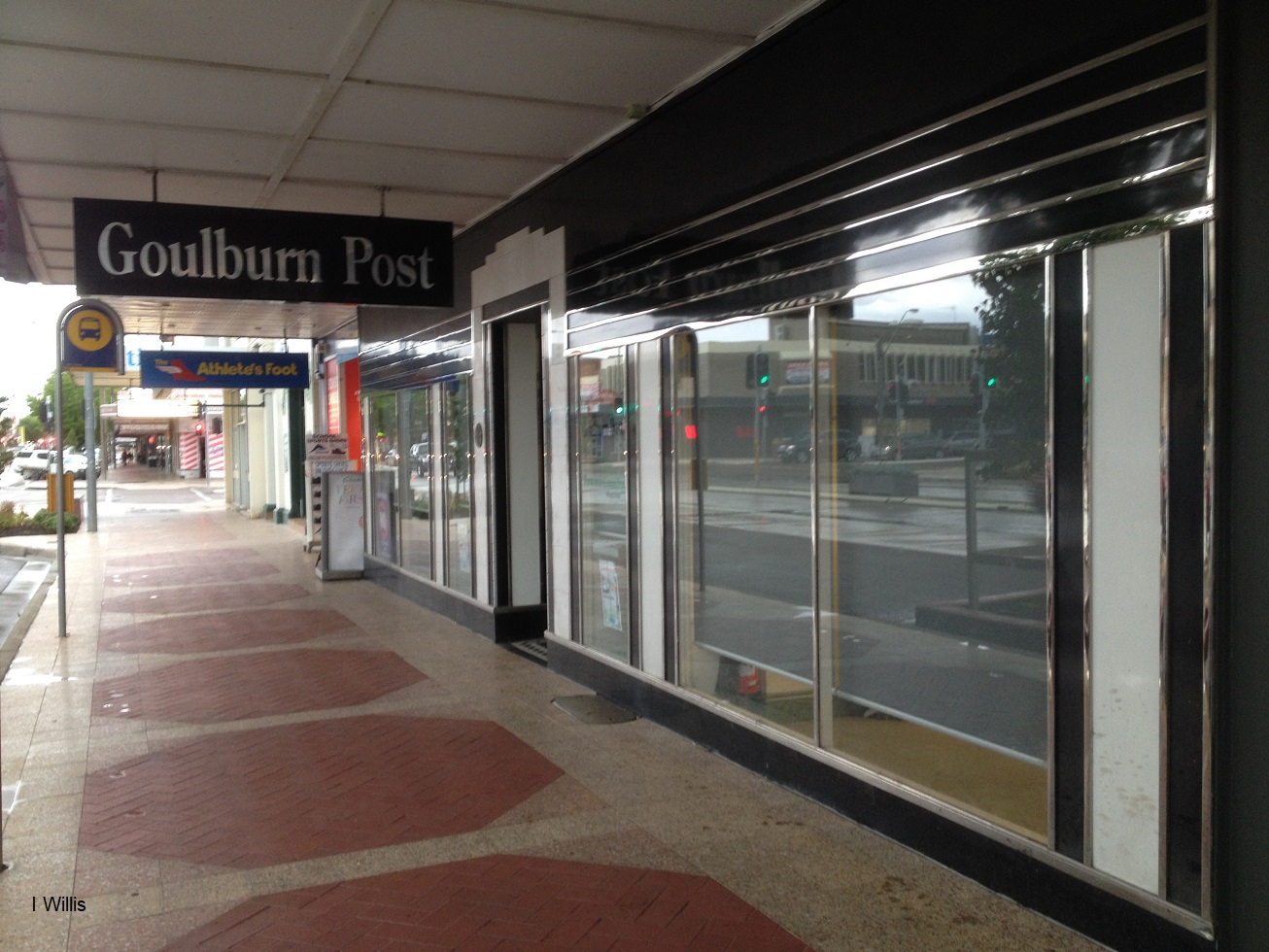
Art-deco styling was an expression of modernism – sleek, fast, stripped back, not frilly like the Victorian frippery, not tizzy – reminiscent of the world of the railways, movies, motor cars, ocean liners, aeroplanes, consumerism, fashions, and wireless. The influences coming down the Hume Highway to Goulburn. The building conveys a powerful statement about the Interwar period in Goulburn.
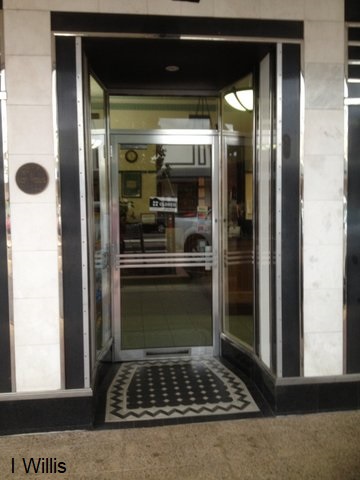
The Penny Post article on the newspaper office mentioned the beacon with the lamp on top, which made it different from other commercial buildings and with the shopfront Carrara glass. The journalist writing the story was keen to assure the readers that the Carrara glass front was ‘pleasing and harmonious’ and emphasised that this type of glass could give a ‘creeping appearance of extravagance’.
Carrara Glass was developed in the USA. It was a high-strength coloured glass used globally in Art Deco and Streamline Moderne buildings. Carrara glass was usually white or blue-grey, which resembled the high-quality Carrara marble from Tuscany in Italy. The pigmented glass was an acceptable low-cost alternative building material.
![Goulburn Post newspaper Office 1935 shopinterior lowres[3]](https://camdenhistorynotes.com/wp-content/uploads/2018/02/goulburn-post-newspaper-office-1935-shopinterior-lowres3.jpg)
According to the 1935 press reports, the building frontage was marked by its ‘judicious display’ and ‘would attract attention in any of Sydney’s busiest streets’. The first floor of the building contained the newspaper’s editorial offices and a large, strong room where the newspaper archives were kept.
The report continued stating that the building was centrally heated by steam, including the composing and machinery rooms. This would, it was maintained, be greatly appreciated by the newspaper’s employees.
The printing presses were at the rear of the building and the newsroom in the centre, while the retail shopfront area dealt with advertisers and local folk buying the newspaper.
There was a staff of over 20 journalists, compositors, printers, editors, clerical and retail support. These staff were witnesses to the town’s daily life as it passed through the doors of the newspaper office.
History in plain sight
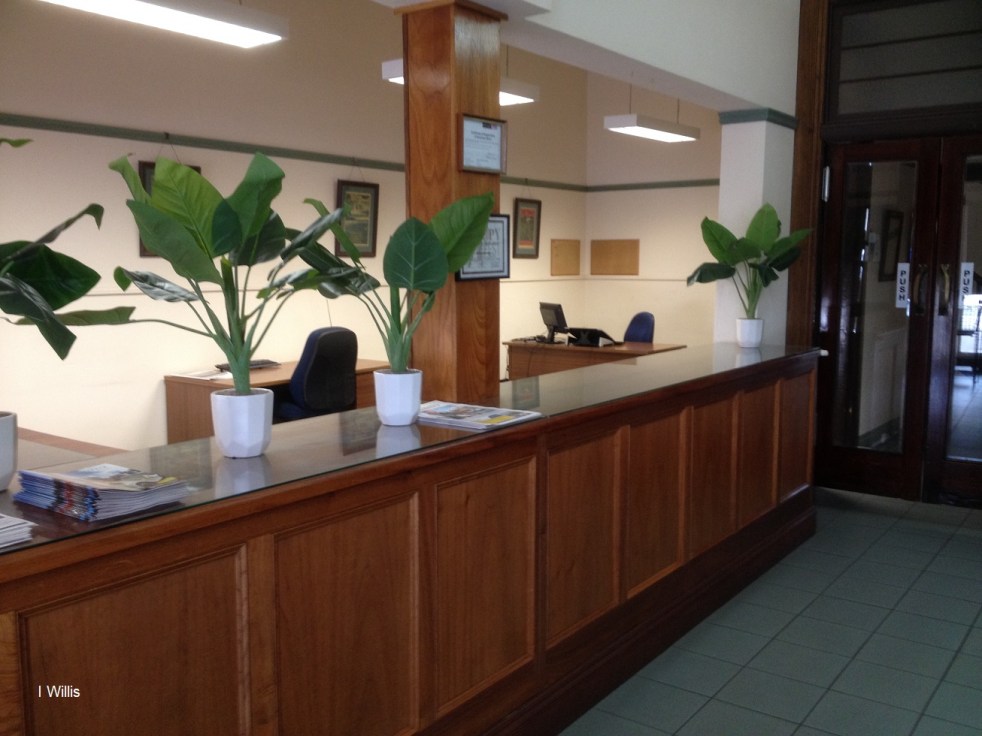
Today the Goulburn Post building is evocative of a time when print media was king. Walking into the 1935 Penny Post office is like stepping back into the past. Into a world that has disappeared, best illustrated currently by the US movie The Post.
The movie explores the buzz of the newsroom at the Washington Post and the publishing of the Pentagon Papers during the heyday of the Vietnam War. When print was king.
While the Goulburn Evening Penny Post was not a large metro daily, it is easy to visualize the hive of activity in the newsroom and printing shop. The approaching print deadlines and the smoke-filled rooms amongst the evocative timber-panelled rooms throughout the building.
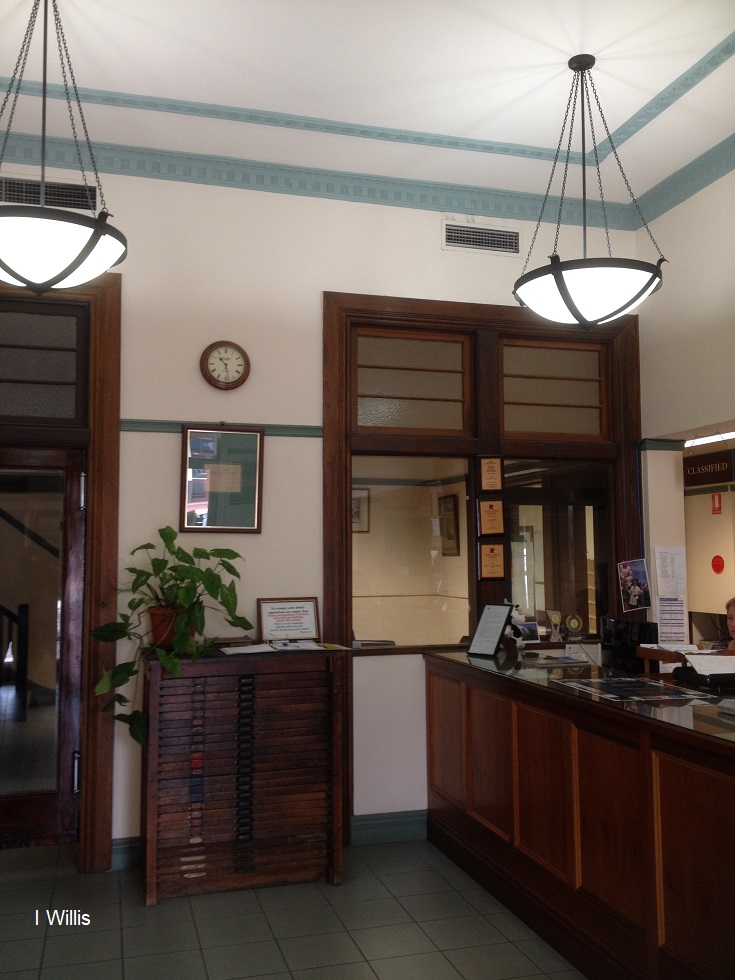
The fabric of the building is still largely intact and retains its integrity, charm and character. The building reveals the layers of history to those who care to take a look. The building has escaped any major renovations, and the structure is as it was in 1935. If these walls could talk, they would tell many great yarns of hard-bitten country press barons, editors and journos.
It is easy to imagine the smell of the printers’ ink; the whir of the printing presses; the buzz of the newsroom; the clacking of typewriters; and the babble of conversations at the front desk with advertisers, stock and station agents, and wool merchants. The newspaper was the town’s heartbeat, and the ink and newsprint flowed through the arteries and veins of the community.
Today’s newspaper
The current Goulburn Post, the offspring of the Goulburn Evening Penny Post, is still in the 1935 building. It is the hub for 10 mastheads within Fairfax Media. Goulburn Post editor Ainsleigh Sheridan says the newspaper is about creating community history.
She would concur with the former president and publisher of the Washington Post, Phillip Graham, who is credited with saying that ‘journalism is the first rough draft of history’ in 1997.
The Goulburn Post is a tri-weekly masthead and is just one of the Fairfax Media group that is produced in the building. The Post is coordinated in the Auburn Street office and sent online to Canberra for printing. In the past, printing was done on-site in the back of the Auburn Street building.
The current building has issues with fire regulations that did not exist in 1935, and the upstairs area is not currently in use.
Walking the ground
There is nothing quite like experiencing history in the field to gather a feel for a place. Walking the ground provides a perspective for historians that cannot be gained by staying in the archive. Such is my experience of Goulburn.
![Goulburn Auburn St 2018[2] lowres](https://camdenhistorynotes.com/wp-content/uploads/2018/02/goulburn-auburn-st-20182-lowres.jpg)
The inland city of Goulburn was one of the most important rural centres in 19th-century New South Wales.
Modernism and a country newspaper office
Modernism in the 20th century is represented by the CML building and the small office of the local newspaper, Goulburn Evening Penny Post.
The world seems to have passed the town by with its eclectic collection of building styles – Victorian, Edwardian, Interwar and post-war.
Tucked around every corner is a new surprise – Catholic and Anglican Cathedrals, the imposing railway station, a grand Victorian post office and an imposing courthouse that would have made a statement about law and order in 19th-century Goulburn.
Another world away from the present.
Updated 3 July 2023. Originally posted on 5 February 2018 as ‘Modernism and a country newspaper office’.
Discover more from Camden History Notes
Subscribe to get the latest posts sent to your email.


Hi – As a 16 year old just out of school,I commenced a 6 year apprenticeship – (hand and machine compositor) in 1960 at The Evening Post. After 25 years at The Post, together with Family, re-located to Perth WA. I have in my possession the original Photo of Staff, Management and owners with the 1935 details of all printed underneath. I rescued from the incinerator at the rear of the premises when renovations were in progress. Sad…sad…that this piece of history was destined to the incinerator along with discarded rubbish!! Until my retirement some 7 years ago, I was employed by Community Newspaper Group in Perth – having worked 25 years in the pre-press area. My work span in the Newspaper industry was with only 2 companies and was in excess of 50 years. If you would like a copy of the 1935 Photo, you are most welcome to add to your current article of the Goulburn Evening Penny Post, Goulburn.
Regards,
Paul Titheradge
Hi Paul. I’d love a copy of the 1935 photo of the *Goulburn Evening Penny Post* staff. I publish the *Australian Newspaper History Group Newsletter* five times a year. Issue no. 118 is the one I’m working on now. Rod Kirkpatrick (rkhistory3@bigpond.com)