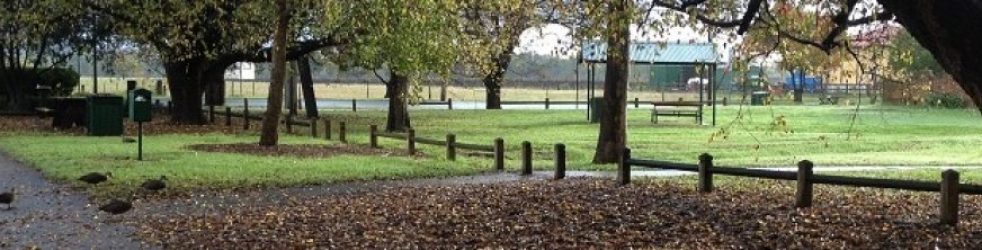
The village of Menangle is one of the Camden district’s examples of an English-style private estate village. It evolved as a closed estate village over the last 150 years within the limits of the Macarthur family’s Camden Park estate.
The English-style aesthetics of the Camden Park countryside have only reinforced the cultural mythology developed around the village and its hinterland.
The Menangle village parallels the ups and downs of the private estate villages of early 19th-century England. Today, these English villages have turned into picture-postcard rural villages that tourists love to visit.
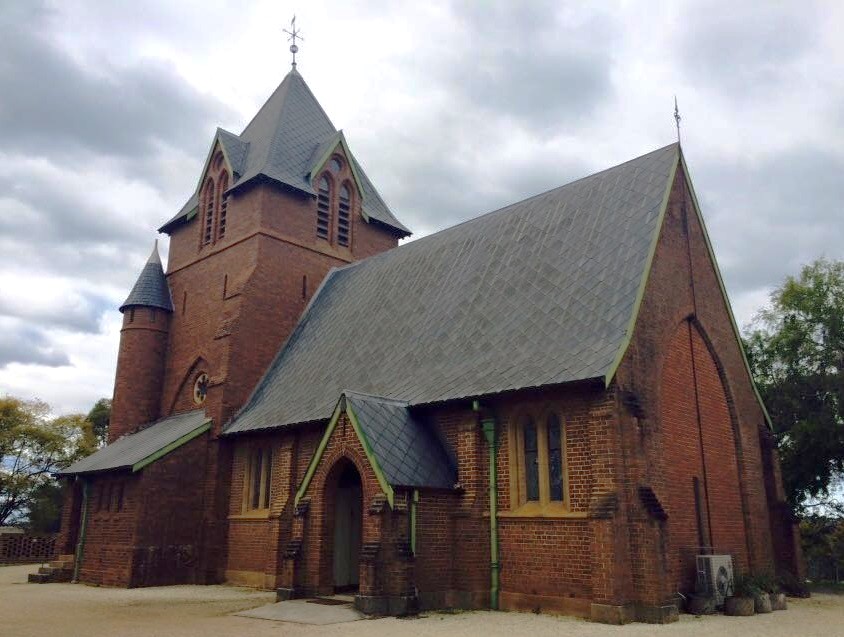
Menangle still retains the essence of its rural Englishness, with the Anglican church on the hill and the common and general store. However, it is also experiencing rural decline typical of English villages, as it comes under pressure from city-based developers.
The village’s story is the story of Camden Park estate itself. Both are intimately tied together. The village is situated on the Walter Davidson 1805 2000-acre land grant ‘Belmont’ near a crossing on the Nepean River.
The Macarthur family worked the Belmont grant after Davidson left the colony in 1809. James and William Macarthur purchased Davidson’s grant of Belmont for £4000 acres in 1837.
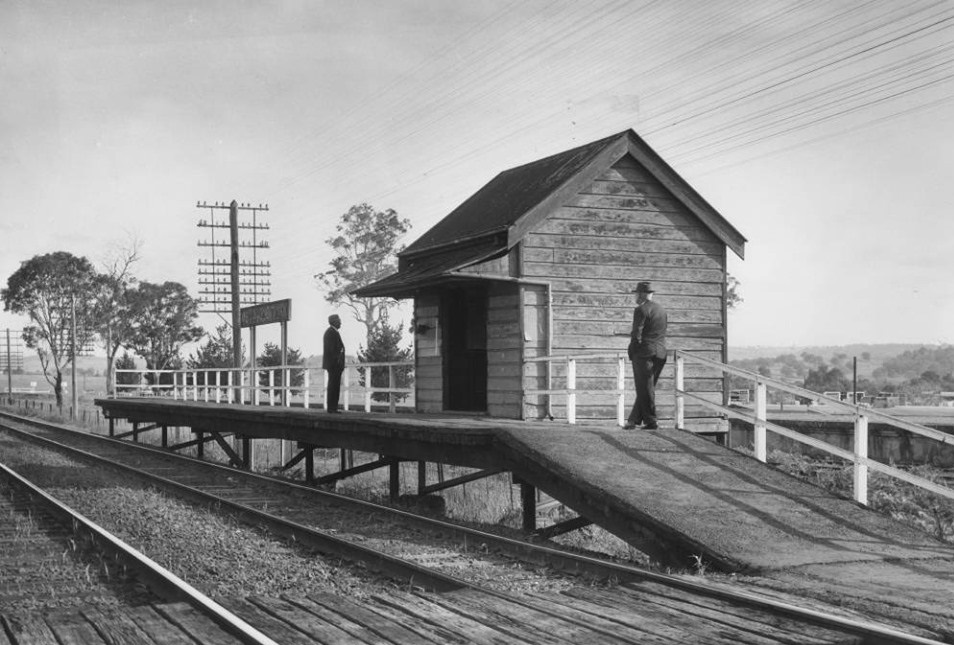
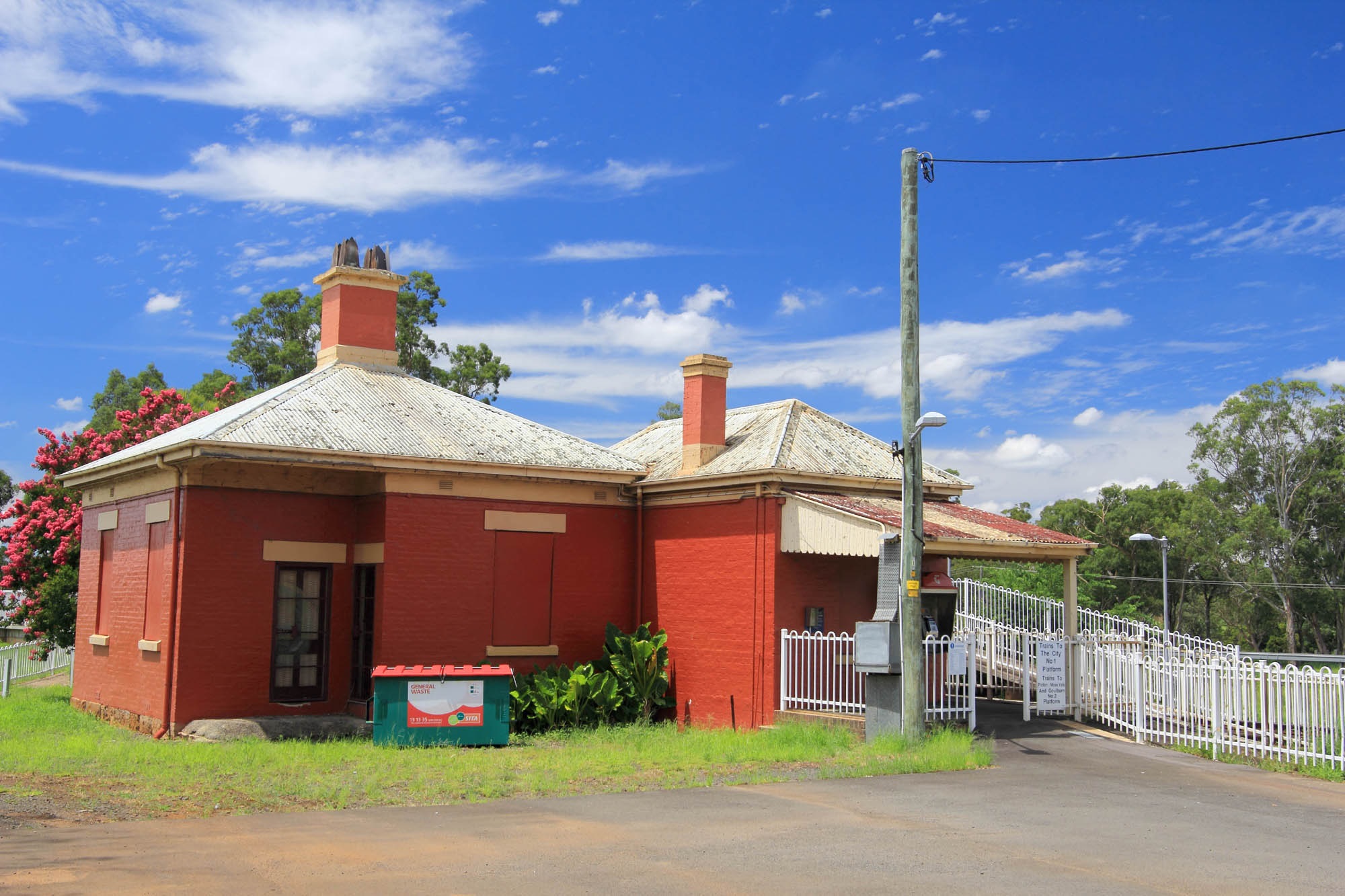
The influence of the Macarthur squattocracy of James and William was consolidated after the railway arrived in 1863. The rail bridge was extended over the Nepean River, bringing world markets to the village’s doorstep. The railway provided cheap and reliable transport to the Sydney market for the first time.
It gave Camden Park estate overnight milk delivery to the Sydney market, a shot in the arm for its dairy production. The railway hurried the village’s growth and increased its importance within the infrastructure of the Camden Park estate. Heritage consultant Graham Brooks (2009) reports that the estate headquarters was moved to the village after the arrival of the railway.
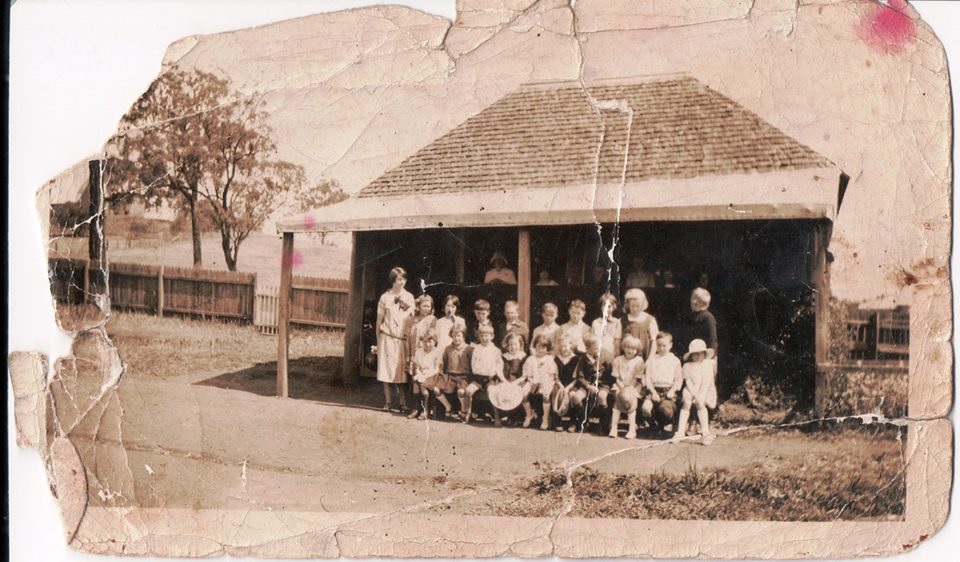
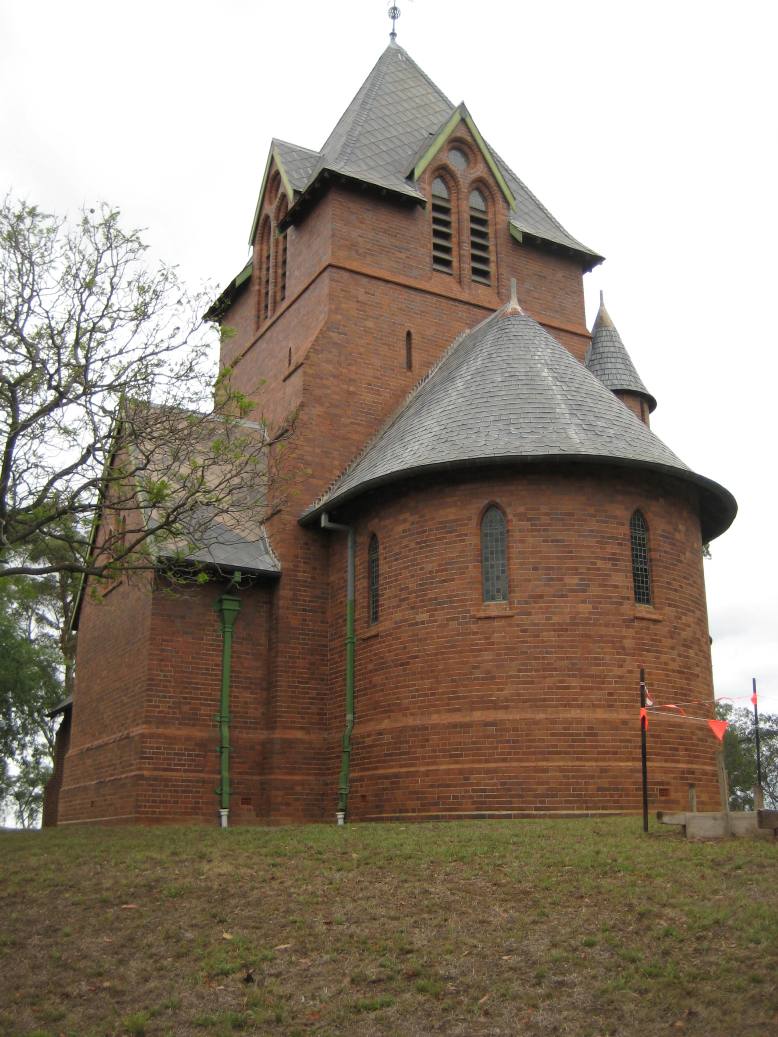
Camden Park estate provided land for a village school (opened in 1867), the Anglican and Catholic churches and assisted the construction of St James Anglican church. The foundation of St James Anglican Church was laid in 1876 and built to the design of architect John Horbury Hunt, while a lecturn was added in 1878.
The bells were not installed in the church tower until 2005. The local Catholic community was served by St Patrick’s Catholic Church, built in 1895 to a design by RT Dennehy of Sydney, and a small school run by the Josephite nuns. For James and William Macarthur, these institutions provided moral order and stability within the village, and the village acted as a focal point of economic activity within the confines of Camden Park.
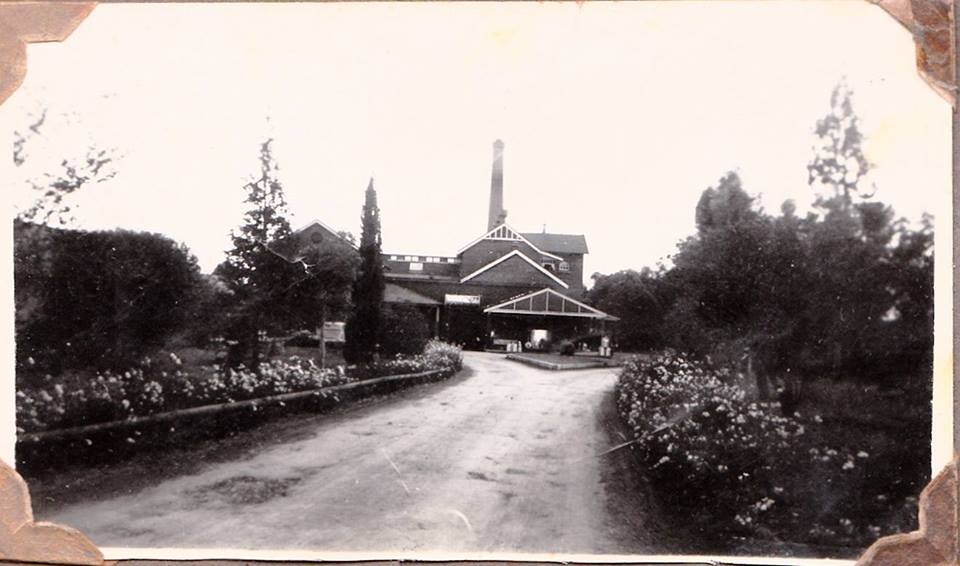
Industrialisation arrived in the village under the influence of the combination of the dairy revolution of the 1890s, the rail link, and Elizabeth Macarthur Onslow’s reorganisation of the dairy activities of Camden Park estate.
The estate constructed a central creamery adjacent to the railway line where cream was separated and processed to supply the Sydney market. An article in Beautiful Sydney (1895-1896) commented on the modern facilities at the Menangle Creamery, with steam and water reticulated throughout the factory. It stated milk was supplied by over 1,000 Ayrshire and Jersey dairy cows daily across Camden Park, working on a share-farming system.
The dairying period was a time of prosperity for the village. The Arts and Crafts was constructed styled Gilbulla, designed by Sulman & Power and built by James W Macarthur Onslow in 1899. This was followed by the construction of the Menangle Store, also designed by Sulman & Power in a similar style in 1904.
There were additions to Central Creamery in 1920, and the Camden Park dairy herd was the only one tested for tuberculosis in 1924. By the late 1920s, the Menangle factory was the receiving depot for several dairies in the area, and whole milk was despatched by rail to Dairy Farmers Co-operative Milk Co in Sydney.
Camden Park estate supplied the expanding workforce with housing within the village. The estate’s dominance within the village was evident even as late as 1950. The estate owned 23 of the 35 cottages within the village limits.
The modernization of milk production occurred in 1952 under the stewardship of Edward Macarthur Onslow. He was responsible for building the Rotolactor adjacent to the Creamery based on a design he saw in the USA.
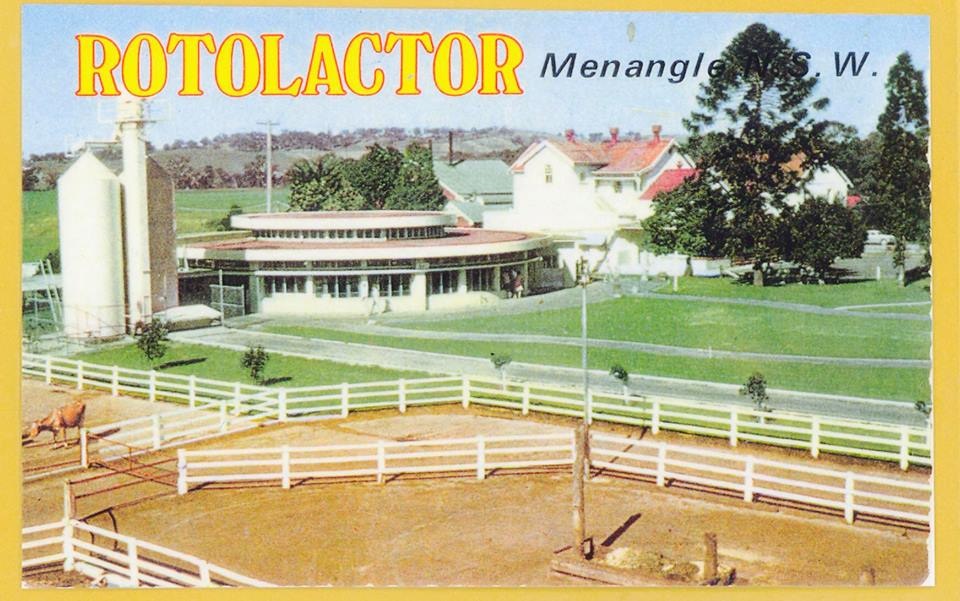
Heritage consultant Chris Betteridge (2012) states that the Rotolactor was part of an integrated system of cattle breeding, feed, fodder production, and manure collection. In its heyday during the 1960s, it was a huge tourist attraction for the village, with up to 2000 visitors a week. It was operated with nine staff and milk up to 300 cows an hour.
The sale of Camden Park Estate Pty Ltd in 1973 ended Menangle’s period as a closed estate village. It marked the surrender of the Macarthur family and the end of Camden Park estate’s economic, social, and cultural dominance. The village was pushed out into the cold against the winds of change from Sydney’s urban growth.
Updated 20 August 2024. Originally posted on 16 February 2014 as ‘Menangle, estate village’.
Discover more from Camden History Notes
Subscribe to get the latest posts sent to your email.


Reblogged this on Camden History Notes.