Hidden in plain sight
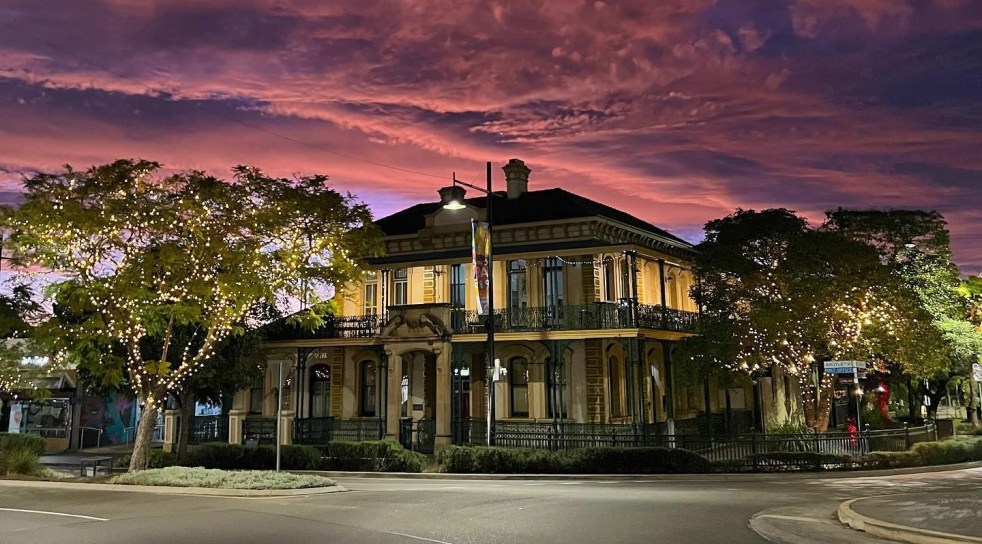
Hidden in the depths of an old bank building in Camden is a local secret hiding in plain sight in an old bank strongroom.
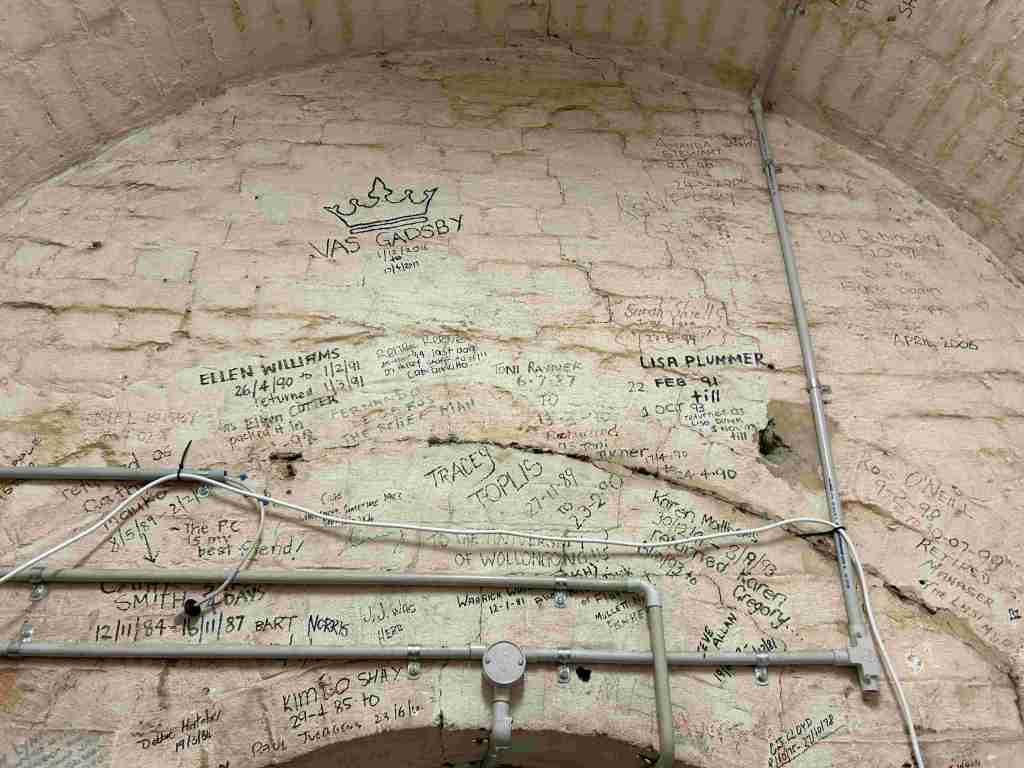
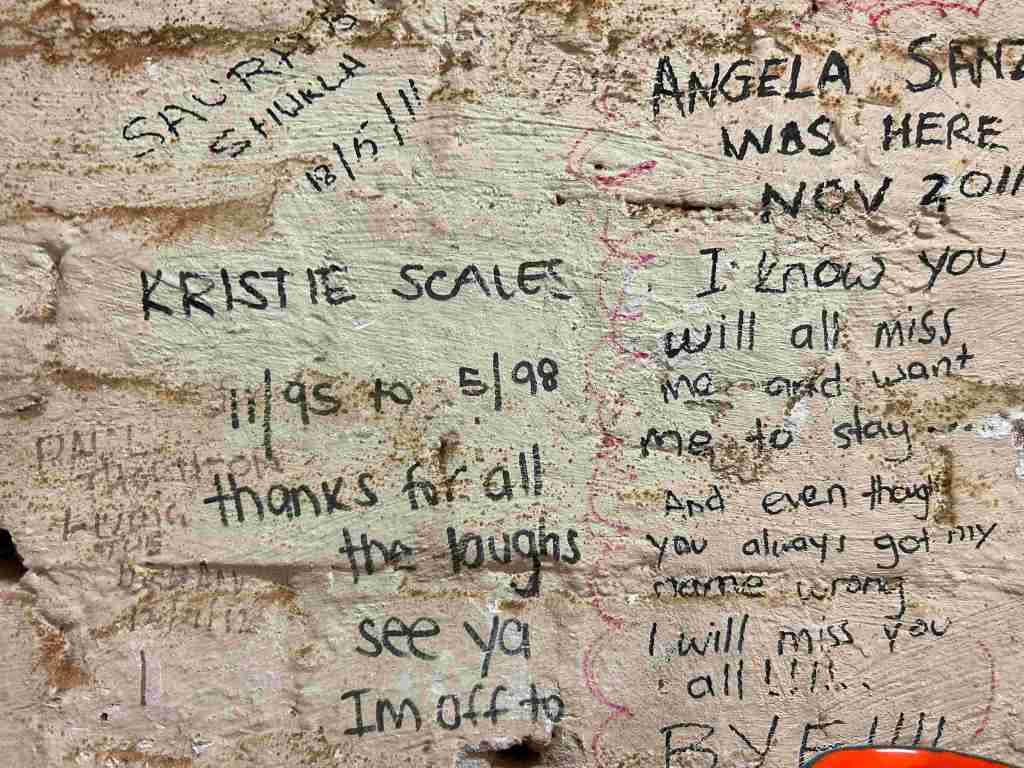
The strong room is hidden at the back of the shop of Camden Markets Collective, past all the arts and crafts for sale. Up and down the walls are a host of signatures, or tags if you like, of former bank workers.
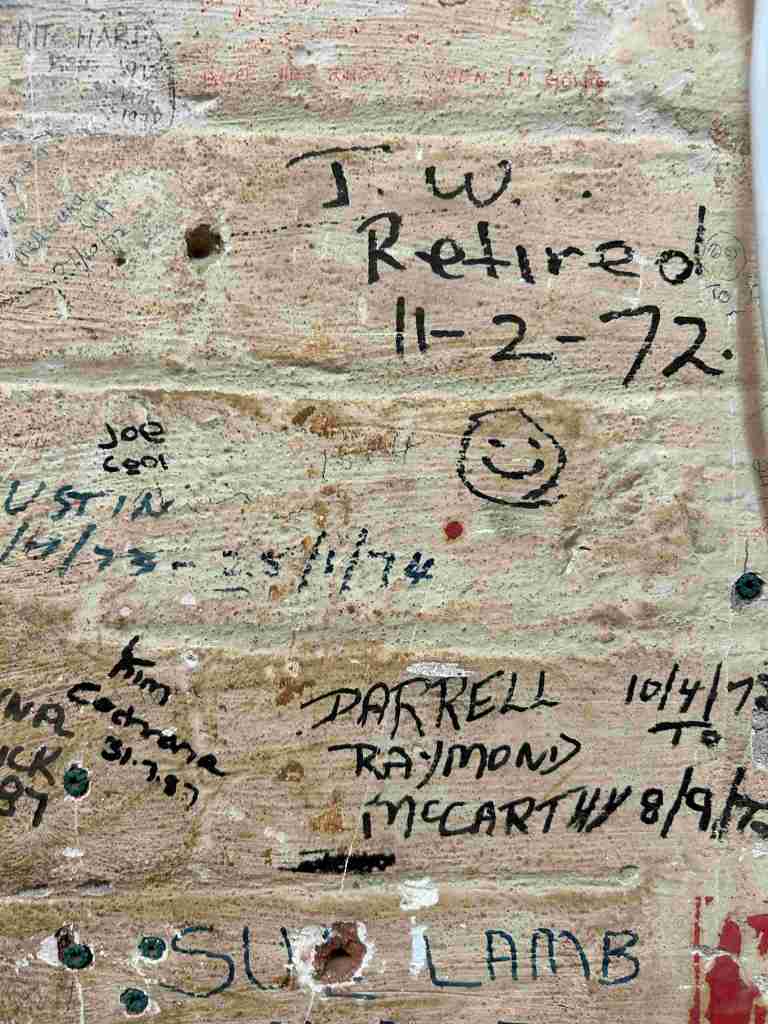
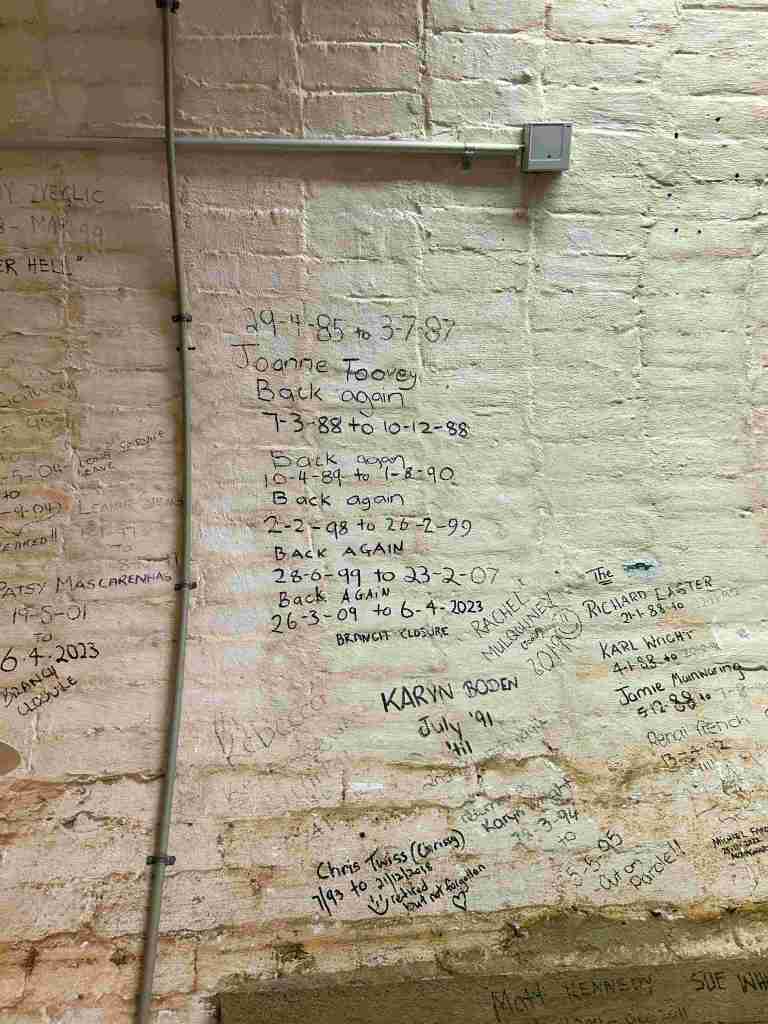
Each signature has a story to tell. Who was this person? What was their job in the bank? How long did they work at the bank? Names, dates, and short messages are scattered up the walls and across the ceiling of the former Commercial Bank building.
Former Commercial Bank building
Built in 1877-78 to the design of G.A. Mansfield, who did much of the CBC’s architectural work at that time. The contractor was C. Furner of Camden. A one-storey extension added in 1972-73 by Architects Laurie and Heath, sympathetically following the style and detail of the original building. (State Heritage Inventory 2025)
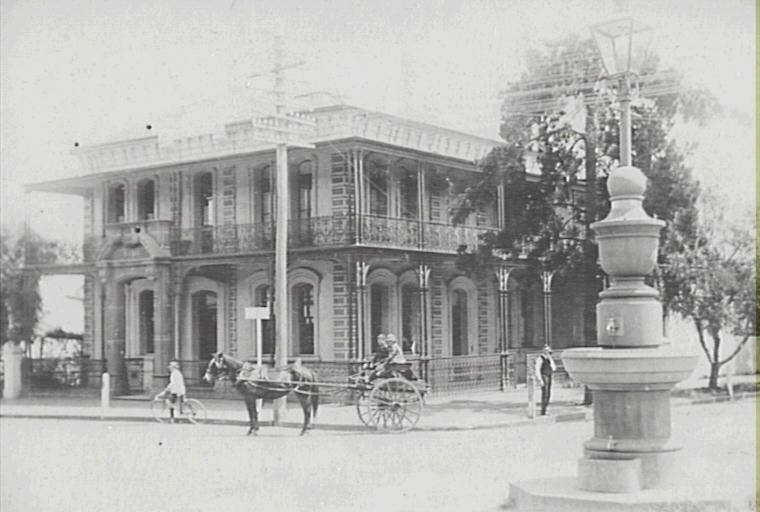
A fine example of the late Victorian Bank buildings can be found in the country towns of New South Wales. It is in an Italianate style with a fine stone entrance porch to the main elevation and a cast-iron balustraded verandah and balcony to its two storeys. The wisteria vine, which climbs over the verandah, is considered part of the Bank’s aesthetic contribution. (State Heritage Inventory 2025)
Current custodian of the signature art
The current custodian of the signature art is the owner of the Camden Markets Collective, who has occupied the former NAB bank building since 2024 after the bank moved out in 2023. (Grasso 2025a)
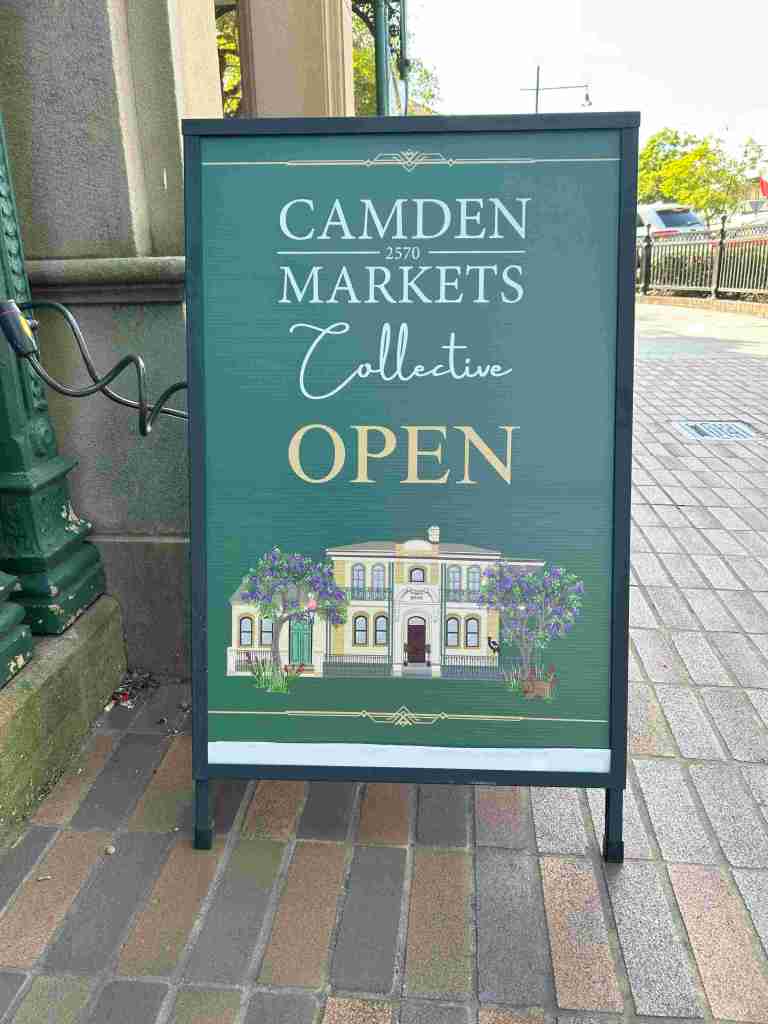
The Camden Markets Collective is a shopfront for 55 local small businesses. The former bank building is a platform to showcase the work of local creative artisans, some of whom work within the business by staffing the store.
Local artisans and makers offer workshops to those interested in arts and crafts, as well as a range of other activities.
The stated goal of the collective is to provide
an affordable retail opportunity for local artisans — particularly small family-run businesses — without the pressure of high costs. Profit is not our motive; supporting local talent and sharing their stories is at the heart of everything we do. (Grasso 2025a)
Camden Markets Collective owner Kelly Grasso is concerned that the landlord of the bank building is not as keen as she is to preserve the signature art.
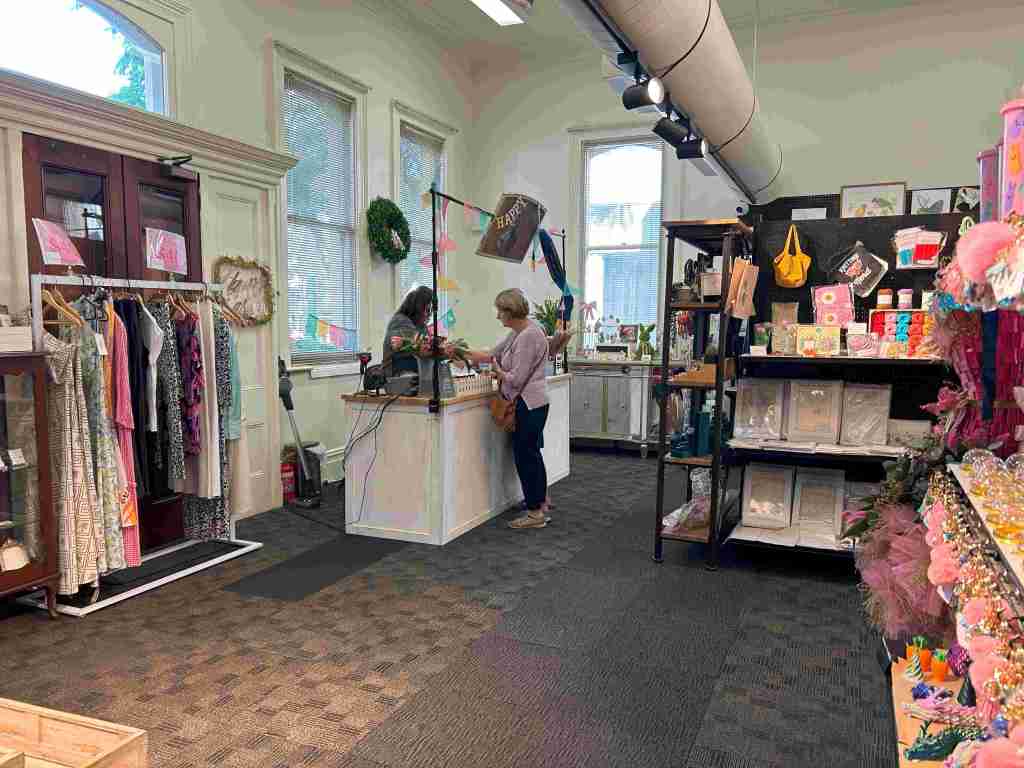
Inspection by the historical society
Kelly Grasso spoke about her concerns at a recent meeting of the Camden Historical Society and invited society members to inspect the strongroom and the signatures.
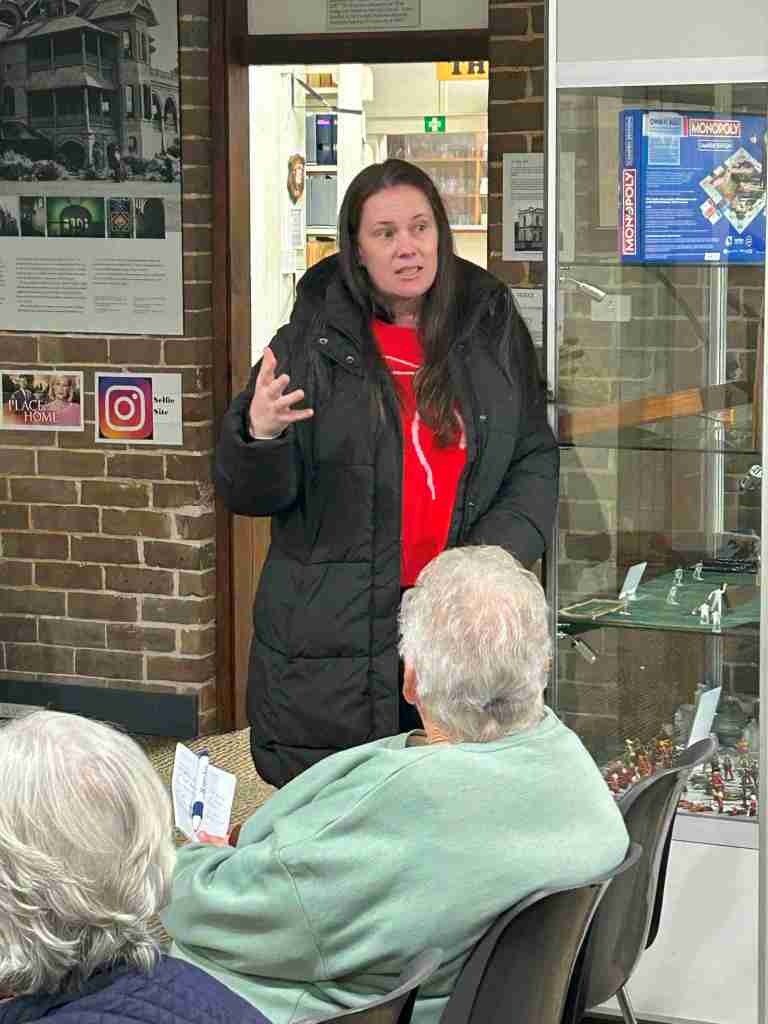
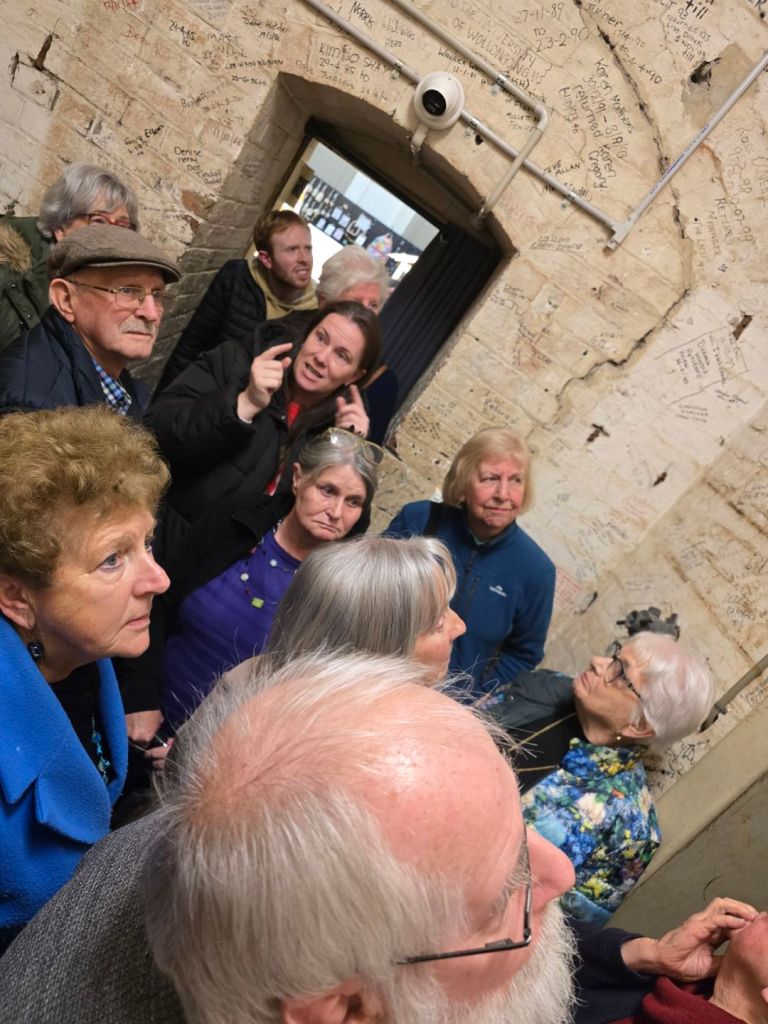
At the end of the meeting, the crowd followed Kelly across John Street, into the former bank building and the strongroom.
There were lots of oohs and aahs and a great deal of interest by society members. The consensus was that this graffiti art was worth keeping if at all possible. (Grasso 2025b)
Strongroom signatures as graffiti art.
These scrawled names on the vault walls are a form of graffiti art.
The word ‘graffiti’ stems from the Italian graffiato, meaning ‘scratched’.
Graffiti has given archaeologists so much insight into ancient life that they have their word for it, e.g., Pompeii.
Graffiti art is inherent in all cultures.
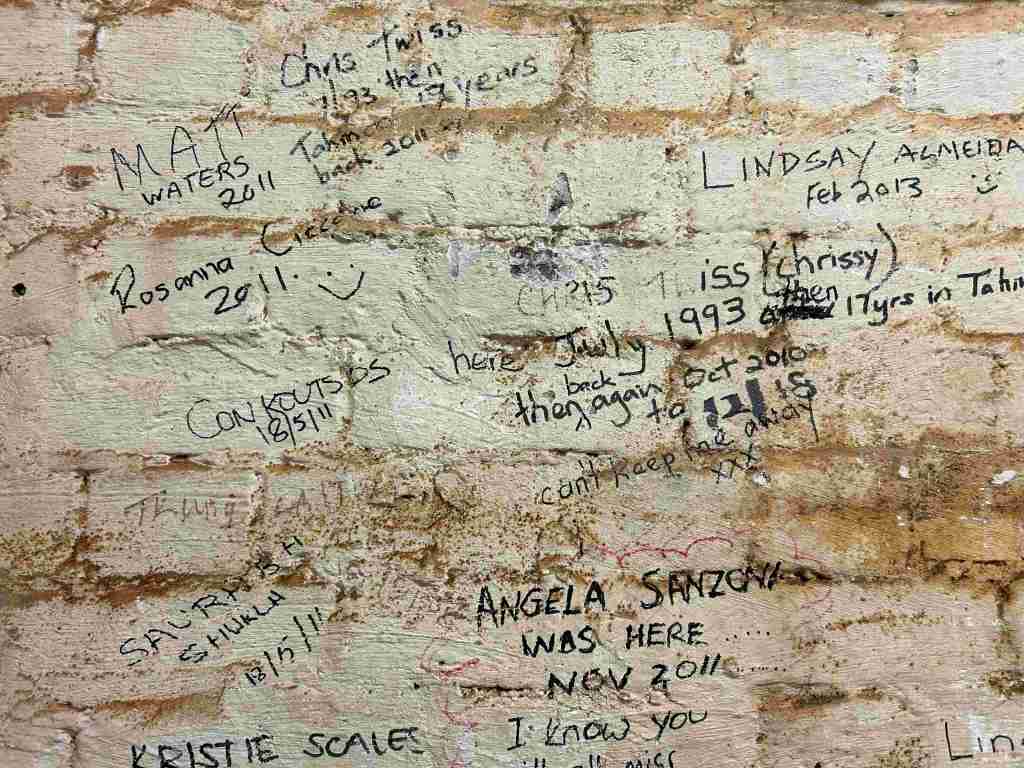
Strongroom signatures as art.
Writing on walls is as old as history and has been going on for thousands of years.
The ArtLife website says that graffiti has value as art because
- Graffiti takes technical skill
- It Exemplifies Freedom Of Expression
- Political and social themes are powerfully represented
- Impressive works bring drab spaces to life
- Huge sales demonstrate its artistic value (Artlife.com. (2024).
Luke Hickman writes:
Graffiti art, a form of visual communication that has been around for centuries, has evolved from simple scribbles to intricate and thought-provoking creations. This once-underground form of expression has gained significant popularity and recognition over the years, with many artists now celebrated for their skill and creativity. (Luke Hickman (2023).
The vault signatures were an act by local bank workers who wanted to leave their mark on local history creatively. Writing on the wall was a political act, a statement of ‘I was here’.
Strongroom signatures as tags.
This is a modern take on graffiti and is itself a form of art.
Scott Decker and Glen Curry write
To some observers graffiti is a form of public art, continuing the tradition, for example, of the murals commissioned by the U.S. Works Progress Administration Federal Art Project during the Great Depression and the work of Diego Rivera in Mexico. Like the murals of these artists, great works of graffiti can beautify a neighbourhood and speak to the interests of a specific community. The question of whether such work is an innovative art form or a public nuisance has aroused much debate. (Curry, G.D., Decker, S.H. (2025).
The vault signatures are a form of tag, a form of art.
Strongroom signatures as public art
The signatures are now in the public domain and are a form of public art.
While the signatures are not great works of art, the writers created them creatively.
The vault signatures have aroused the interest of the Camden community. This is the first time the signatures have been publicly accessible.
Strongroom signatures as history
Yes, they are a form of historical record.
The 90 Degrees Art website states
Humans have been writing and drawing on walls since the dawn of time. Look at the 30,000-year-old examples of cave art found in the Chauvet Cave in southern France, and the equally old Aboriginal rock art in Wunnumurra Gorge. Along with these incredibly ancient examples, archeologists have found an vast amount of graffiti that is over 2000 years old throughout the lost city of Pompeii. Much of what historians and archeologists know about the history of Pompeii today was learned from writing discovered on walls. Graffiti has provided so much insight for archaeologists into ancient life that archaeologists have their own word for it. (90 Degrees Art (2024).
The vault signatures add a little bit more to the Camden story. They are a point of local interest. The signatures are public statements of who was at the bank at a particular moment in time. They are a snapshot of history.
Status of the strongroom signature art
These signatures are names scrawled on the former bank vault walls. While the signatures are a form of graffiti, graffiti is a form of art. The signatures are a form of public art—accessible, meaningful art in a public place.
The signatures are a form of storytelling. If these walls could talk, they would tell quite a story about those whose names are written on them. This is a historic record of former bank workers.
The signatures add to the Camden story. Learn more about the Camden story here.
What should happen to the strongroom signature art?
The ideal situation would be for the signatures to be preserved somehow and protected from the elements.
The signatures should be recorded as a historical record, that is, photographed and recorded for the future.
Since the vault signatures have become accessible for viewing, they have generated much interest.
The signatures as graffiti art and part of Camden’s public art need to be preserved for others to enjoy, and so that the stories around the former bank building can be told to future generations.
References
90 Degrees Art (2024). The History Of Graffiti | 90 Degrees Art. [online] 90degrees.graffitiartistsforhire.com.au. Available at: https://90degrees.graffitiartistsforhire.com.au/news/the-history-of-graffiti/
Artlife.com. (2024). ArtLife. [online] Available at: https://artlife.com/news/graffiti-art-why-graffiti-is-art-and-not-vandalism.
Curry, G.D., Decker, S.H. (2025). Graffiti. Encyclopedia Britannica. Online at https://www.britannica.com/art/graffiti-art
Grasso, Kelly 2025a, Camden Market Collective, Email, Camden, 24 April.
Grasso, Kelly 2025b, Strongroom signatures, Talk, Camden Historical Society, 13 August.
Hickman, Luke (2023). The Rich History of Graffiti Art: Notable Names and Their Contributions. [online] Hickman Design. Available at: https://hickmandesign.co.uk/blog/history/graffiti-art/.
State Heritage Inventory 2025, Commercial Bank, Camden. NSW Government (Heritage), Sydney. Online https://www.hms.heritage.nsw.gov.au/App/Item/ViewItem?itemId=1280011
Willis, Ian 2025. Understanding the Camden Story: History, Community, and Identity. Camden History Notes, 22 April. Online at https://camdenhistorynotes.com/2025/04/22/understanding-the-camden-story-history-community-and-identity/
Discover more from Camden History Notes
Subscribe to get the latest posts sent to your email.

