Camden Council votes to demolish homestead
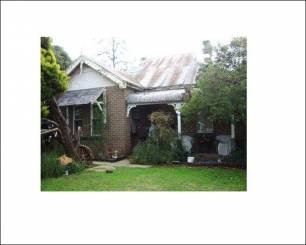
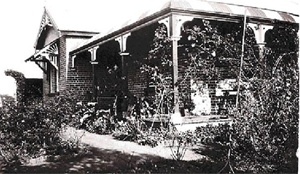
A 2010 meeting of Camden Council on Sydney’s southern outskirts voted five to four to demolish a simple 1890 Federation farm cottage known as Carinya at Harrington Park. The owner, Nepean Pastoral Company, wants to develop a 97-residential lot subdivision on the farm site.

The decision illustrates a wider malaise that has enveloped heritage in this state — a worrying trend that is seeing our past disappear.
Demolition of Carinya
Camden Council’s decision to approve Carinya’s demolition was based on reports written by heritage consultants Urbis. Urbis stated that while the cottage was intact and in reasonable condition, it was not of local significance. In their view, Federation cottages, while rare in the Narellan area, are not rare in the Camden local government area (LGA). Secondly, Carinya has little associative value with the Cross and Paxton families who lived there.
Many people agree with these conclusions. In the past, Carinya was overlooked in heritage surveys of the Camden LGA and was not included on any local lists of historic houses. While not a reason for demolition, it is a contributing factor.
Jonathon Chancellor noted recently in a story on the fight to save the Tilba residence in Burwood Heights that many councils had “neglectful heritage lists” and included Camden.
Even more damming, ”heritage listing at the local level does not provide much protection at all”, wrote Graeme Aplin, from Macquarie University, in Australian Quarterly (May-June 2009).
”What we have witnessed over the last five years is the systematic dismantling of heritage protection,” stated Sylvia Hale, Greens spokeswoman on planning (”Heritage at risk”, National Trust Magazine, February-April 2010).
More than this, the imminent loss of Carinya reflects wider problems in heritage affairs across New South Wales. There is a blatant disregard for the importance of simple cottages of historic value, especially at a local level. They represent the lives of ordinary folk. Simple salt of the earth people who struggled to make a living from the soil.
The story of Carinya fits within the Australian Historic Themes identified by the Australian Government (Australian Heritage Commission 2001). These are common national standards for the identification and conservation of heritage places. Yet, this does not qualify Carinya for recognition of local significance.
Even examples of Australia’s important early colonial houses on Sydney’s urban fringe, which are of national significance, such as Oran Park House and Maryland, suffer from the authorities’ indecision and dithering.
Conflict of interest in heritage
Some heritage consultants have a real, or at least a perceived, conflict of interest in the assessment process. Consultants are guns for hire. There needs to be a separation of roles in the assessment process of historic houses. An independent third party should conduct the judgment concerning the significance assessment. Heritage consultants should not be judge, jury, and hangman. There is a need for due diligence.
The assessment process needs the expertise of professional historians to examine the appropriate historical evidence. There were no historians engaged in the assessment process of Carinya. Urbis has largely relied on a cursory examination of documents at the local library and museum.
Council planning and development officers are under incredible pressure to make timely decisions on development applications. This particularly applies to the Camden LGA, Sydney’s designated growth area.
Council officers and their elected councillors rely on reports written by heritage consultants. Officers and councillors may have had little or no specific training assessing heritage significance, local or otherwise. They are not experts in history and heritage.
One of the casualties in the assessment process is the thorough and considered assessment of historic houses.
Loss of interest in heritage
The current political climate in NSW is not conducive to the protection of historic houses. Heritage is not a high priority. Crowded Sydney and a shortfall in housing stock are political priorities. For this, read new estates on the urban fringe, like the approved Carinya farm subdivision.
The developers of Carinya Farm Housing Estate are selling a dream that is just that—a dream. The new estates create a bland, homogenised suburban streetscape with little charm or character.
The Carinya farm sub-division is part of Sydney’s urbanisation, an octopus that devours everything in its path—including ethical standards, community identity, sense of place, and apparently local heritage and history.
The destruction of simple, charming 19th-century cottages is unnecessary. There is a demand from house buyers who want to live in historic cottages. These buyers restore the cottages to their former glory.
What have we come to in the new century? We have certainly not come to appreciate our past, our inheritance.
Learn more
Updated 10 May 2024. Originally posted on this blog on 24 April 2018 as ‘The lost world of Carinya’
Originally published in the Sydney Morning Herald online as Heritage: a dismal state of affairs 16 April 2010
Discover more from Camden History Notes
Subscribe to get the latest posts sent to your email.

