
Football and Macarthur Regionalism
Macarthur FC
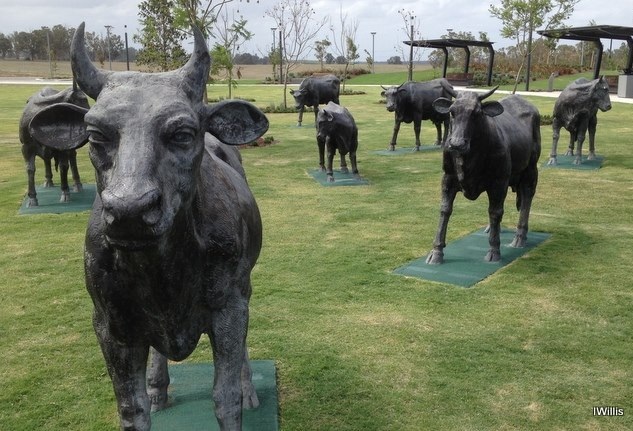
The Bulls are loose on the paddock. Actually, the Bulls have found the Cowpastures, which these days are called the Macarthur region.
We are talking about Macarthur FC, the newest entry into the A-League. For the uninitiated, this is soccer.

Journalist Eric Kontos of the South West Voice nailed it when he wrote:
Macarthur FC is a brand-new franchise, born right here in the heart of our region a couple of years ago.
Whichever way you look it, it is the first time this region, both Macarthur and the entire outer South Western Sydney, have been represented by their own football team – of any code.
The Bulls recently defeated their opposition, the Western Sydney Wanderers, in their opening match of the new season and gave the locals something to support.
Sports journalist Janakan Seemampillai spoke with Campbelltown local and Western Sydney University lecturer Michelle Cull.
Dr Cull said, ‘Only locals will understand how fantastic it is to have a team in Campbelltown. It’s a team for the Macarthur region being played in Macarthur.’
‘It feels good to have a team that is genuinely for our community,’ she said.
Macarthur FC and identity
Identity is how we define ourselves in terms of culture, symbols, language, membership, race, behaviour, and other factors. These are the elements of tribal identification.
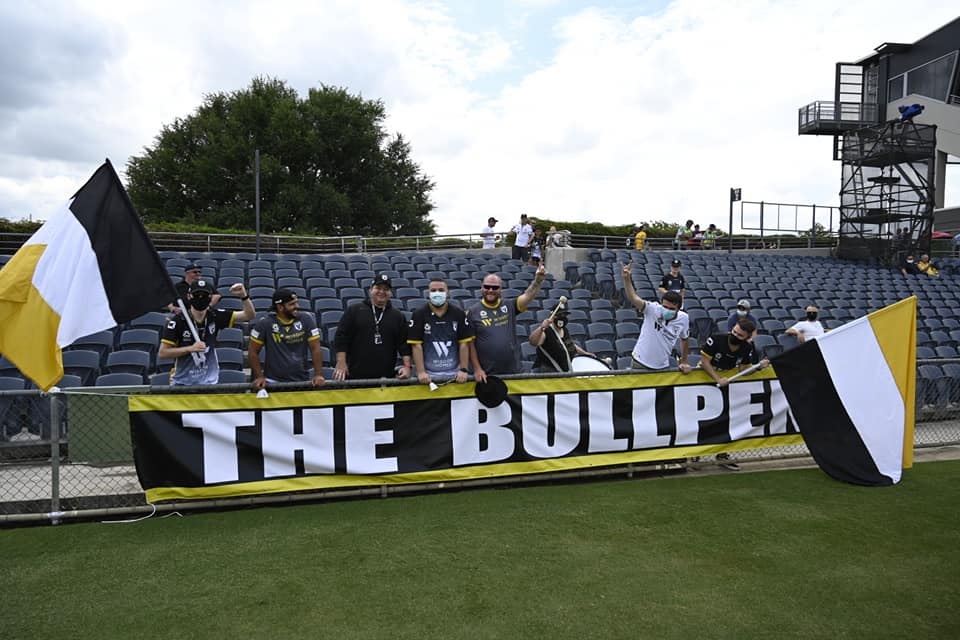
In terms of Macarthur FC, their supporters will identify themselves through a song, a uniform, a logo, a mascot, a culture, origin, and other factors. They will all be part of the Macarthur FC supporters tribe.
The team’s supporters have chosen Macarthur FC’s symbols to build tribalism around the regional brand.
Club officials announced in 2019 that the club’s new colours, ochre, were ‘chosen to represent the area’s diverse cultures.
The club’s press release stated:
Ochre is included to represent one of the traditional colours for the local Dharawal Aboriginal people on whose land the Macarthur region sits.
The logo includes a bull, which is demonstrative of the club’s physical power as well as a tilt to history when a runaway herd of cattle was discovered in the region in 1795.
The three stars of the Southern Cross symbolise football’s links with the grassroots football community, the National Premier League and the A-League.
Macarthur FC and Regionalism
Macarthur FC has captured the notion of regionalism on Sydney’s urban fringe and the communities that are part of it.
The ochre colours of Macarthur FC acknowledge that the Macarthur region is located in Dharawal country, which pre-dates European occupation by thousands of years. Dharawal country is situated between the lands of the Eora to the north, the Dharug to the northwest, and the Gundungurra to the southwest. Ochre was used for paintings, drawings, and hand stencils on rock surfaces and in rock shelters and overhangs.
The Macarthur FC ‘bull’ logo encapsulated the early European history of the Cowpastures region and the wild cattle, after which the area was named in 1795 by Governor Hunter. Initially, 2 bulls and 4 cows escaped from the Sydney settlement in mid-1788, five months after being landed. They were Cape cattle from South Africa, and by 1805, the Cowpastures herd numbered over 3000. This is perhaps the origin of the club slogan, ‘Run with the herd’.
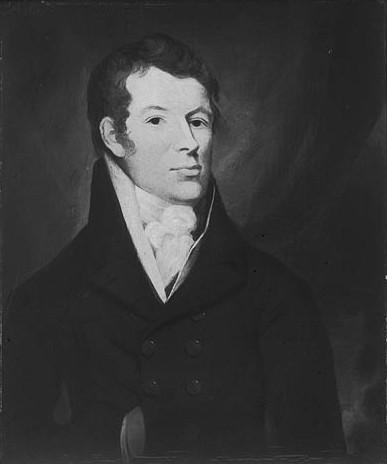
The football club’s use of the Macarthur name comes from John Macarthur’s early colonial identity. Macarthur organized the land grant in the Cowpastures in 1805 called Camden after he had been sent home to England in disgrace. This was the first act of European dispossession of Dharawal country in settler colonialism.
The use of the Macarthur name as a regional identity first emerged in the 1940s, and its growth has had a varied history. In the 1950s, the local press was the first local business to use Macarthur’s regional identity.
The Macarthur FC has widened their vision of the Macarthur region beyond the accepted area of Campbelltown, Camden, and Wollondilly to include the Southern Highlands.
Macarthur FC and nationalism
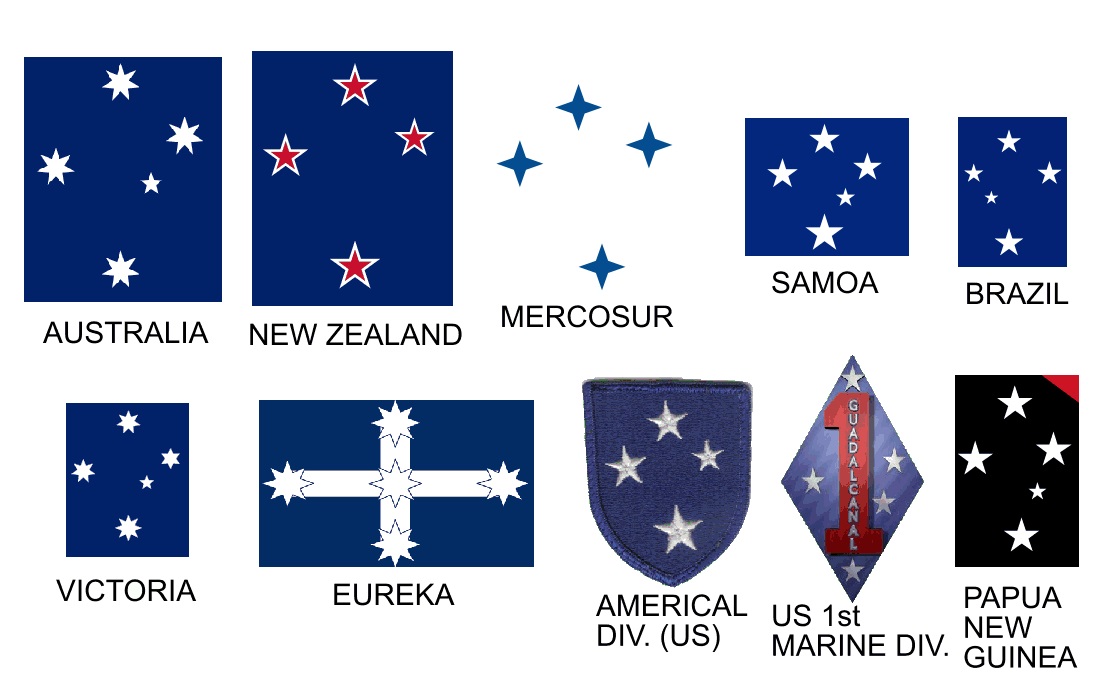
The stars of the Southern Cross on the Macarthur FC logo link the club to Australian nationalism.
Nationalism has been part of modern football since its beginnings in the United Kingdom in the 19th century. Scotland and England were the first two national teams to play each other in the 1870s.
Israeli scholar Ilan Tamir argues that since the foundation of the nation-state, ‘political leaders have used sport to promote individual and national agendas’. Tamir maintains that the forces of globalisation and the commercialisation of sport have weakened the influence of nationalism.
The Southern Cross is a star constellation in the southern skies that have
guided travellers, intrigued astronomers and inspired poets and musicians. Its five stars have been used as a sign of rebellion and as a sometimes controversial symbol of national pride.
In the early 19th century, the Anti-Transportation League adopted the Southern Cross as a symbol of resistance to the British colonial powers and their policy of transporting convicts. In 1854 it was flown at the Eureka Stockade.
The Australian flag with the Southern Cross was first flown in 1901 and became Australia’s official flag in 1954.
The future
So what does all this mean for the future of Macarthur regionalism?
Macarthur FC has adopted the name and symbols of Macarthur regionalism. Over the coming years, much will be written and spoken about Macarthur FC. Macarthur FC will be in the national and international media, consolidating the notion of Macarthur regionalism at a national level.
It will be interesting to see how Macarthur regionalism evolves under the influence of professional sports with a national and international profile.

Updated 21 August 2024; Originally posted 9 January 2021 as ‘The Bulls are loose on the football paddock: regionalism and Macarthur FC’
Discover more from Camden History Notes
Subscribe to get the latest posts sent to your email.


One thought on “Macarthur FC: Symbolism, Regional History, and Nationalism”
Comments are closed.