In late August 1914, the Sunday Times (30 August, Sydney) described the Red Cross as one bright spot in the newly emerging war. According to reports, volunteers for the Red Cross will ‘Stretch forth your hands to Save!’ while Red Cross nurses had the touch of Christ and were willing to stand ready to ‘succour and tend the men laid low in the country’s service’.
More than this, Red Cross workers were encouraged to see themselves as homefront warriors, guardian angels protecting their sons, husbands, brothers, uncles and lovers on the battlefield.

At the outbreak of the First World War, the Red Cross provided a ready outlet for the great rush of enthusiasm by New South Wales women to engage in some practical effort to assist the war effort. They were spurred on by the wife of the Australian Governor-General, Lady Helen Munro Ferguson, who considered that Red Cross work was a noble cause. Women across the state agreed and lined up in their hundreds to help out, and this was not the first time they had done this type of volunteering.
Part of the early success of the Red Cross in New South Wales and elsewhere in Australia can be put down to the experience of New South Wales women in charity work and philanthropy during the Victorian and Edwardian periods, particularly during the Boer War. In Camden, Miss Sibella Macarthur Onslow of Camden Park organised soldier comforts for her brothers on active service in South Africa with the New South Wales Mounted Rifles.
Parcels, comforts and more
Assisted by other Camden women, they assembled parcels containing valuable items, including stationery, tobacco, pipes, pencils, hand-made socks, shirts, mufflers, belts and caps. Camden women raised for the New South Wales Patriotic Fund in 1899, as their relatives did during the Crimean War in 1855. Camden women joined the St John’s Mother’s Union in 1900, a church prayer group founded by Mrs Elizabeth Macarthur Onslow and her daughter Sibella. The MU looked after their spiritual needs, offered practical activities, including sewing and hospital visits, and was centred on mothering and the family.
In Camden, Miss Sibella Macarthur Onslow of Camden Park organised soldier comforts for her brothers on active service in South Africa with the New South Wales Mounted Rifles.
Australian Red Cross founder Lady Helen was trained in ‘good works’ by her mother, tutored at home in accomplishments, educated in politics by her father, and experienced in the rituals of imperial duties. Lady Helen had extensive experience in Red Cross work in Scotland and was active in the Victoria League and the Queen Victoria Nursing Association. In Australia, she was a capable ‘hands-on’ Red Cross administrator and felt that Red Cross service was well within the women’s sphere.
Sydney folk saw the need early and formed a branch of the British Red Cross Society in Sydney in late 1913, but unfortunately, it went nowhere. A more successful exercise was held in early July 1914 by a group of Sydney’s Eastern suburb matrons who organised a meeting in the Woollahra home of ‘a well-known society woman’ (1 July). They invited one of the first advocates of Red Cross work in the Sydney area, Sydney physician Dr Reuter Roth, who delivered a short talk on first-aid training and demonstrated how a wounded man was carried on a stretcher.
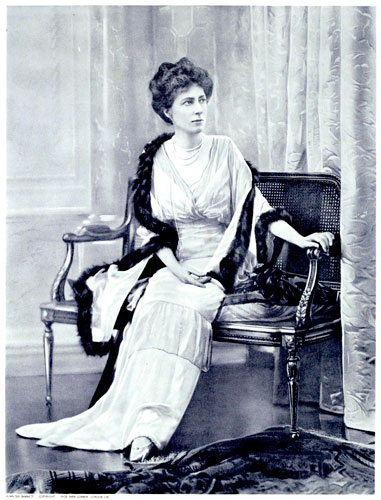
State Library of Victoria
[H82.123/2])
This was followed up by a presentation by Lady Helen at the end of July when she spoke about the British Red Cross at the Double Bay Ambulance Class held at St Mark’s School room at Darling Point (28 July). She stressed the scientific approach to training for caring for the wounded that typified Red Cross activities and outlined how British women were trained in first aid, home nursing, medical cookery and men in first aid, sanitation and transport.
First aid and home nursing training were prerequisites for men and women joining voluntary aid detachments, which were the paramilitary wing of the British Red Cross. Detachments dated from the 1880s in Great Britain were first registered with the Australian military in 1917. According to historian Melanie Oppenheimer, they were to provide trained men and women in the Red Cross to nurse wounded soldiers in wartime.
British Red Cross Society
Lady Helen sought permission to set up an Australian branch of the British Red Cross Society from the British Colonial Office within days of Prime Minister Andrew Fisher’s commitment of 20,000 troops to the war effort. She sent letters to the editors of the Sydney and New South Wales country press.
She proposed establishing a national Red Cross council and state divisions led by the wives of the state governors, which in New South Wales was Lady Edeline Strickland. She encouraged the formation of local Red Cross committees, which could establish sewing groups, supply hospital comforts and clothing, and form VAD detachments.
Mrs Enid Macarthur Onslow called a meeting at the Bondi School of Arts (14 Aug) and hoped women from Waverley, Woollahra and Bondi would attend to start sewing.
The Sydney elite acted and held a meeting at the British Medical Association in Sydney, forming a state committee of the British Red Cross. At the same time, Lady Edeline Strickland wrote to Lady Helen, offering full support for the national approach. The formation of the national Red Cross organisation in Melbourne followed within days.
The New South Wales headquarters set up an office in Castlereagh Street and opened for business on Monday, 17 August 1914. Local committees of the Red Cross appeared almost immediately set up by the Women’s Liberal League (11 Aug), the Sydney Lyceum Club (12 Aug), followed by a host of other local committees, including Westmead (12 Aug) and a meeting at North Sydney Town Hall aimed to set up Red Cross activities between Manly and Hornsby (12 Aug).
Mrs Enid Macarthur Onslow called a meeting at the Bondi School of Arts (14 Aug) and hoped women from Waverley, Woollahra and Bondi would attend to start sewing. The St John Ambulance issued a list of Red Cross medical requisites and soldier comforts required by volunteers. (12 Aug) Mrs RW Richards, Lady Mayoress of Sydney, appealed for funds for hospital comforts and clothing.
At the same time, other Red Cross committees were formed at Turramurra, Parramatta, North Balmain, Burwood, Roseville, Marrickville, Redfern, Wollongong (14 Aug) and Pymble, Chatswood and Ashfield.
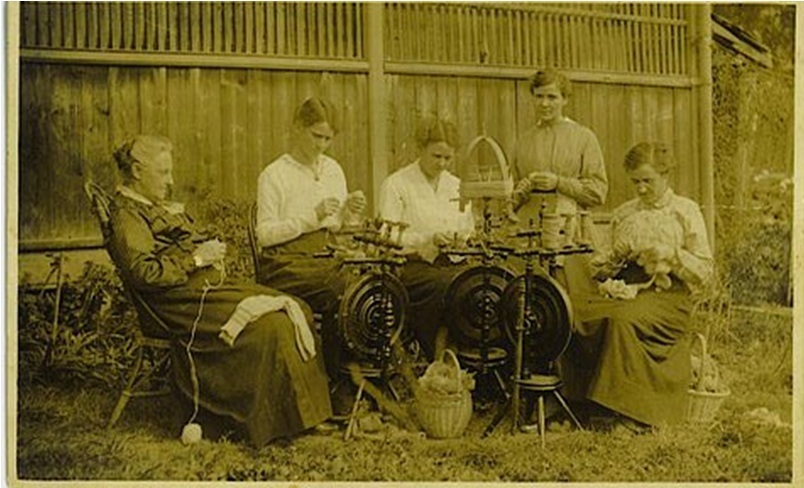
First aid classes had been operating in parts of Sydney’s Eastern Suburbs for some time in anticipation of the Red Cross efforts. They included first aid instruction and home nursing lectures at Mosman, Randwick and Drummoyne. The VAD detachments quickly instilled discipline in their volunteers, and the Glebe Ambulance Division had first aid classes on Wednesday nights and did drill training three nights a week. (17 Aug)
Red Cross at Goulburn
Within days, country Red Cross committees popped up just as quickly all over the state in large and small country towns. At Goulburn, over 150 women attended a meeting convened by the mayoress Miss Betts at the Town Hall on Thursday, 13 August 1914.
Several prominent ‘gentlemen’ attended, including religious and military figures, and the mayor chaired the meeting and spoke to the crowd about Red Cross work in England. Dr Burkitt offered to run ambulance classes, Mr Betts, the mayor, opened the fundraising with a subscription list, and the motion moved by Bishop Barlow to set up a Red Cross branch was met with applause.
Dr Burkitt reminded the women of their Boer War experience to guide their efforts for parcels and sewing, and there was an appeal for donations of shirts, socks, and flannels. At Tamworth, Mrs Green chaired a meeting of 80 women at the council chambers on Wednesday, 12 August, establishing a Red Cross branch and drawing on their Boer War experience.
Miss Prenter read the Boer War experiences of Matron Gould, who accompanied the soldier to South Africa, and the treatment of the wounded soldiers. A donation fund was established with all donors listed in the Tamworth Daily Observer; a practice adopted throughout the war in most localities. There was a ‘large’ gathering of women in Wagga Wagga at a meeting called by Mrs Donough, the mayoress, at the council chambers on Saturday afternoon, 15 August.
The women formed a Red Cross fund, sought regular donations and then announced weekly sewing circles and the commencement of first aid classes. Other country branches formed up at Nowra, Berrigan, Lithgow, Morpeth, Ballina, Berry, Bowral, Casino, Grafton, Lismore, Walcha, Wellington and a host of other part of the states in the following weeks.
There was a ‘large’ gathering of women in Wagga Wagga at a meeting called by Mrs Donough, the mayoress, at the council chambers on Saturday afternoon, 15 August.
Sewing and fundraising became the highest priority for Red Cross branches across the state, and the women sent funds for hospital comforts and clothing to Sydney Red Cross headquarters.
Red Cross workers put in thousands of hours of effort. By mid-1916, Hay Red Cross had provided the most significant number of articles for a country branch, reaching over 13,600 items, and not far behind them was the Walcha Red Cross with 11,400 items, followed by Lithgow Red Cross with 11,000.
Next came Albury with 8,400 items, Goulburn with 7,500, and Camden Red Cross with 7,000. Amongst the branches in the Sydney Metropolitan area, Willoughby Red Cross topped the list with 9,900 items, then Wahroonga, 9,200; Strathfield, 7,600; Manly, 7,300; Chatswood, 7,200; and Cremorne, 7,000.

All these sewing activities needed a strong line of funds, and branches set out from the beginning to finance their Red Cross work as Lady Helen had requested. The Sydney press reported that Mosman women were ‘vigorously’ canvassing the area and had raised £200 in the first week (17 Aug)
The Sydney Red Cross funds appeal was launched on 16 August in the Sydney press, and donations started rolling in. Donors were listed in the newspapers, and within days, over £540 had been collected, with individual contributions of £10 or more common. (18 Aug) By 21 August, donations had topped out at over £3,500 (21 Aug) and increased daily. Donations tallied to over £5,400 by Tuesday, 25 August.
Fundraising
The fundraising efforts of Red Cross workers to the sewing circles were quite astounding, particularly in the country branches where there were only small communities—by mid-1916, Moree Red Cross had raised over £2,800, Camden Red Cross £2,400, Tamworth, £2,100 Walcha, £2,100, Ballina, £1,900, and Grafton Red Cross, £1,600. Country Red Cross branches had the advantage of parochialism and localism supported by communities with intimate knowledge of individuals, solid personal networks, rugged individualism and a self-help approach.
These characteristics were combined with determined Red Cross branch executives and wartime patriotic support for ‘our boys’. The Sydney-based branches could not match these forces and did not do as well. The top of their list by mid-1916 was Vaucluse Red Cross, which had raised over £1,900; Rozelle, £1,200; Ashfield, £1,000; Chatswood, £900, Waverley-Bondi, £730; and North Sydney Red Cross, £730.
Country Red Cross branches had the advantage of parochialism and localism supported by communities with intimate knowledge of individuals, solid personal networks, rugged individualism and a self-help approach.
By the end of the First World War, the New South Wales Red Cross owned the homefront war effort across the state. For many women and the community, helping the war effort meant working for the Red Cross. Led by the New South Wales female elite, the Red Cross allowed women to make a practical contribution to the war effort without compromising their conservative values, public positions, social expectations, domesticity or religiosity.
The Red Cross movement combined Christian charity, service, duty, patriotism, exclusivity and Britishness. New South Wales women could create a public space for themselves on the wartime patriotic homefront, increase their social authority and make a considerable positive and practical contribution to the war effort.
Notes
For those who want a more detailed study, Melanie Oppenheimer’s The Power of Humanity, 100 Years of Australian Red Cross, 1914-2014 (ARCS, 2014) tells the national story of the Australian Red Cross. For a regional study of the Red Cross, Ian Willis’s Ministering Angels, The Camden District Red Cross, 1914-1945 (CHS, 1914) provides a good starting point.
First published in the RAHS History Magazine March 2015.
Discover more from Camden History Notes
Subscribe to get the latest posts sent to your email.

