
Studley Park House
52 Lodges Road, Narellan, NSW.
Part Lot 1 & 5, DP 859872
-34.05021106586053, 150.7302815385643
Significance of house
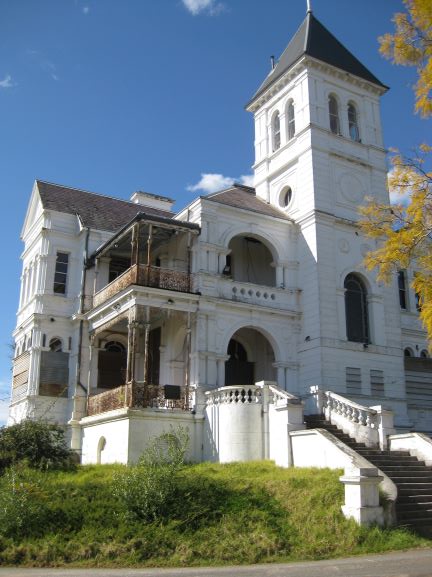
Studley Park House is an excellent example of Victorian Italianate architecture, enhanced by its prominent location and open landscape setting. It is one of the last ‘country estate’ dwellings to be built in the Camden-Campbelltown area and represents the work of the Sydney firm of architects AL & G McCredie.
Studley Park has been listed for state significance for its aesthetic and visual qualities associated with a beautiful nineteenth-century country house, its setting and its historical associations with important uses and themes of twentieth-century development around Sydney. (SHI)
The site has natural heritage value in retaining two areas of regenerating remnant (endangered ecological community) Cumberland Plain Woodland, including a population of the nationally endangered shrub species, Pimelea spicata. (EPA 2005)
William Charles Payne (1888-1902)
In 1888, businessman William Charles Payne bought a combined 200-acre property comprising two 100-acre grants to W Parrott (1812) and J Condron (1810) with frontages along the Great South Road. These blocks were consolidated by developer WH Thompson in 1878.
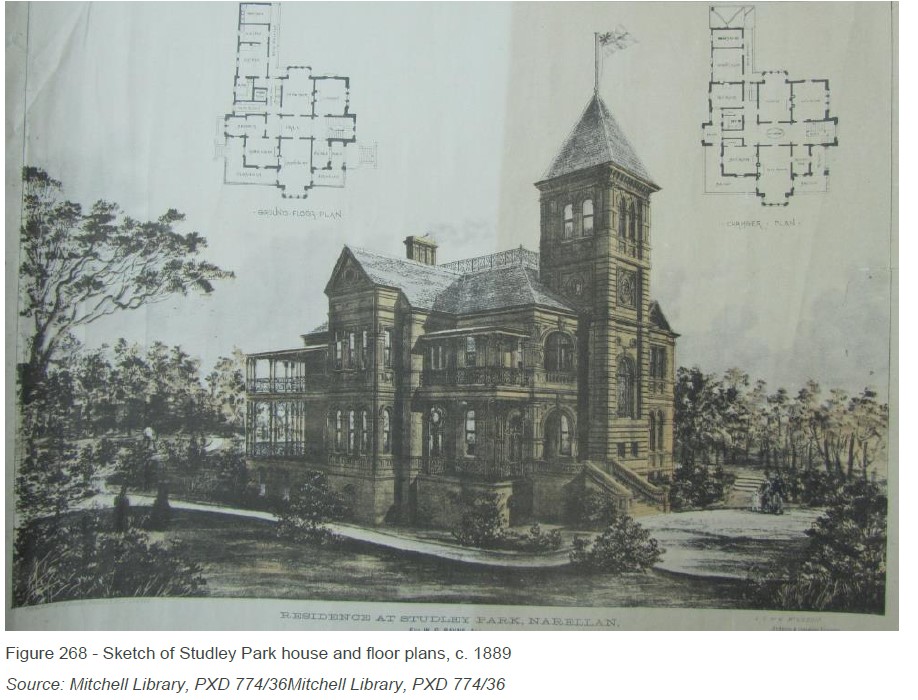
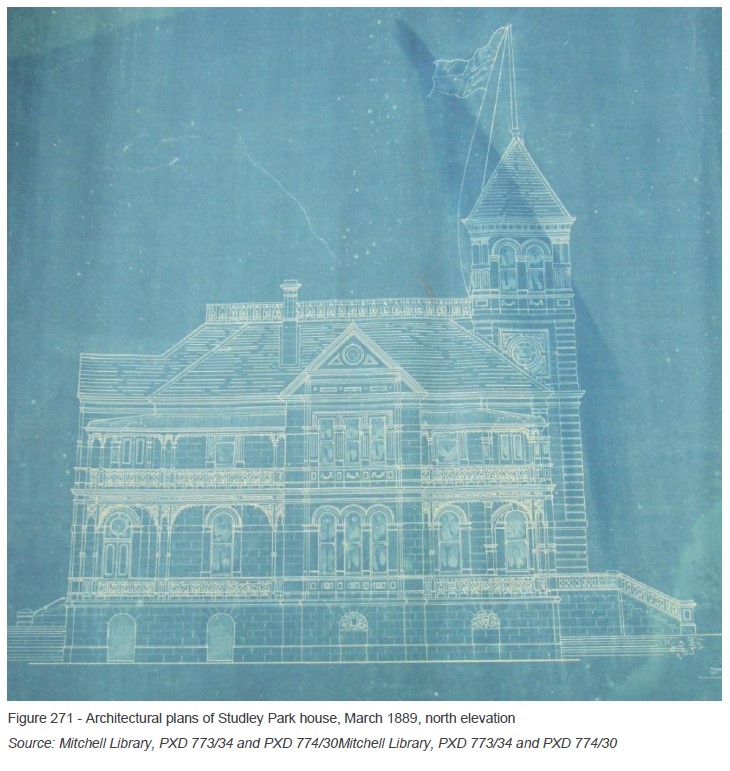
In 1889, Payne commissioned AL & G. McCredie of Sydney to construct the house, stables, and a granary/engine house. The engine house reportedly contained a steam traction engine and a dynamo, which provided electricity to the house.
A lengthy article in the “Australasian Building and Contractors News” on 20 July 1889 described the project. It called the house a ‘picturesque looking villa-residence, in a light Italian style’. A rendered drawing view of the house from the west incorporated the two-floor plans produced by the McCredies at the time of construction.
Payne named the property ‘Studley Park’. Ray Herbert writes that Payne named it after a property near where his father-in-law lived at Ripon in England. There is no evidence Payne intended Studley Park to be a self-supporting farm. What is more likely is that it was established as a country retreat. Many such estates were built around the outskirts of Sydney during the latter half of the 19th century.
The house is located on the highest point on the ridge and would have been visible from other gentry properties in the area, including Harrington Park, Camelot, and Kirkham. Its location was meant to impress the neighbours.
A curved, long, tree-lined carriageway with a substantial entry gateway made the house accessible from the Great South Road (later the Hume Highway).
The entry to the house is up a grand stairway on the western side of the house.
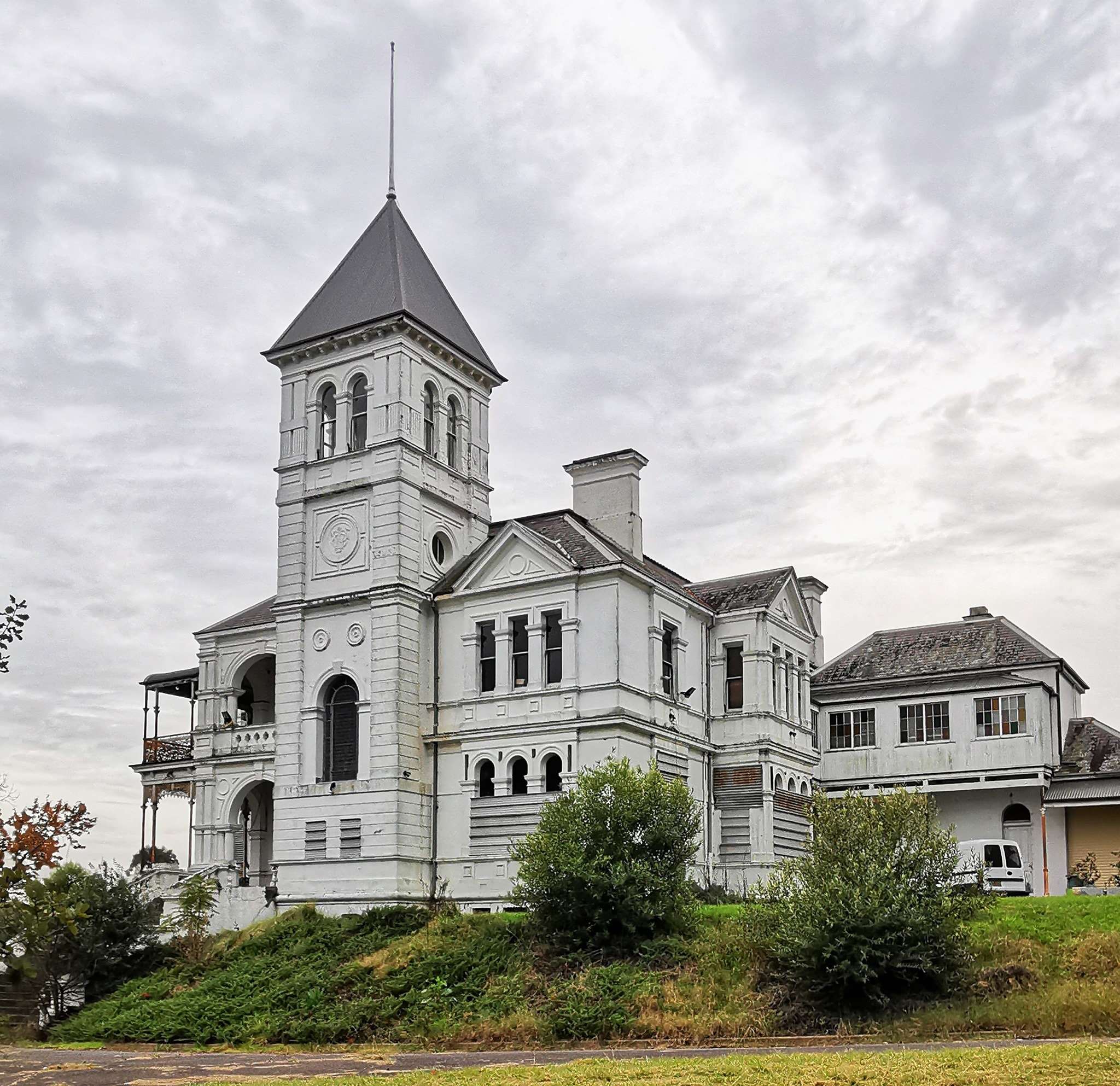
The two-storey building is rendered brick construction with a slate roof with a hipped and gable form and three double chimneys. Originally there was a widow’s walk accessible from the tower promenade deck.
The house has three basements, and the ground-floor rooms include a vestibule, a stairway, a hall, a drawing room, a dining room, a library, a morning room, a boudoir, a china closet, a service hall, a pantry, a kitchen, a scullery, a wash house, a WC, and a strong room.
The first floor included eight bedrooms, a dressing room, a hall, and two verandahs. A tower provided extensive views of the Narellan area and rose from the main stairway.
The stable building was built in 1889 at the same time as the house. It had two loose boxes, two stalls, a hayloft, a harness room, and three living areas.
The opulent mansion bankrupted Payne, and he sold it in 1902.
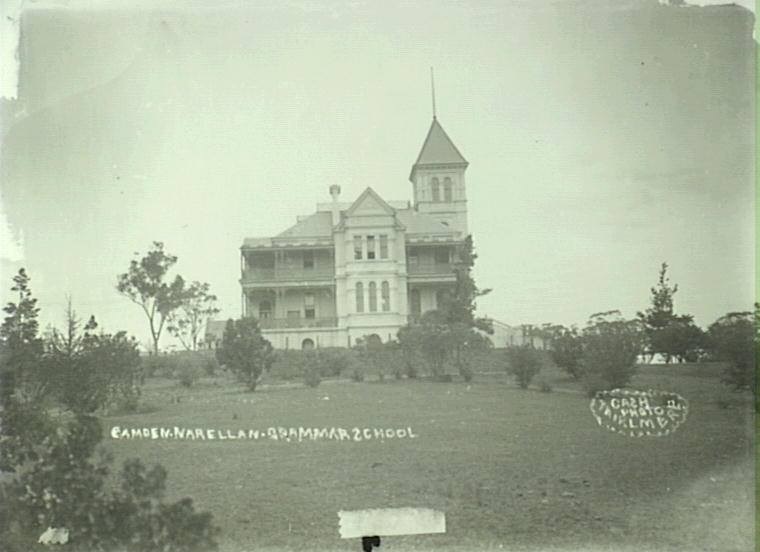
Campbelltown-Camden Grammar School 1902-1933
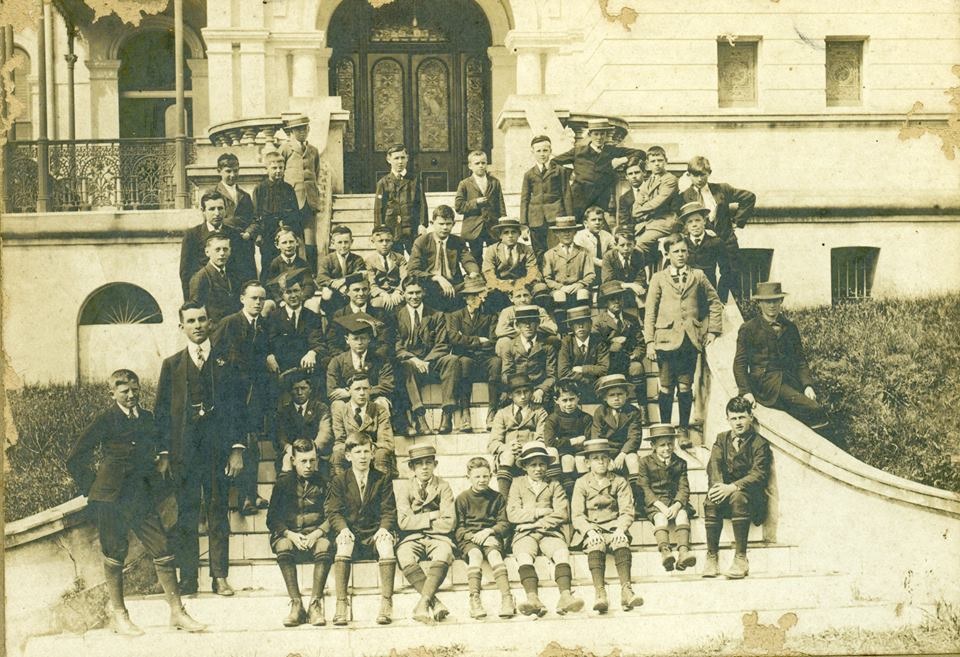
Dr Henry Oliver, headmaster of Campbelltown-Camden Grammar School, purchased the site in 1901. Oliver became headmaster in 1890 and moved the school to Narellan in 1902 from Campbelltown.
The school was initially established in Camden as the Camden Classical and Commercial School in 1872 and later combined with Camden Grammar School in 1882.
During this period, the house was used as the headmaster’s residence, and bedrooms and towers were used as dormitories.
The school set up golf links in 1910 and formalised a 9-hole course in 1926. Other sporting facilities included tennis courts, a swimming pool, and sporting fields. The earliest record for golf was played in 1910.
In 1902, the school added a dining room as an external separate weatherboard building, which acted as a student common room.
Archibald A Gregory (1933-1939)
The building was changed to a residence under the ownership of AA (Arthur) Gregory, the sales manager of 20th Century Fox, who used it as a gentleman’s retreat. He purchased the house in 1933 and employed builders Simpson and Hickey to undertake renovations (Camden News, 23 November 1933).
The house was transformed into an Art Deco playground and a country club, and in 1937, another nine holes were added to the golf course.
Gregory renovated the house, removing the Victorian ceilings, cornices, and wall finishes and introducing Hollywood-style internal finishes. He introduced ‘light and dainty’ designs using pastel colours and gold paint trim. Other changes involved removing fireplace ornamentation and adding toilets on the ground floor and bedroom.
Gregory converted the dining room into a theatre in the 1930s, using it as a cafe and dance hall and showing films to guests.
Australian Army (1939-1989)
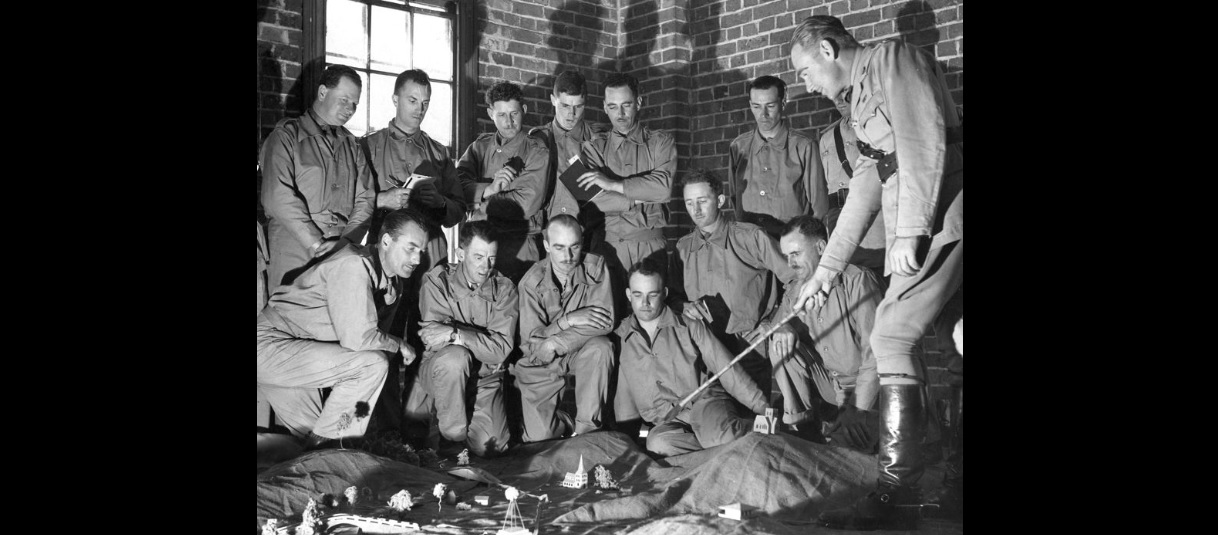
During World War 2, Studley Park was resumed as the Eastern Command Training School for the Army. The house was used as officers’ quarters and later married quarters.
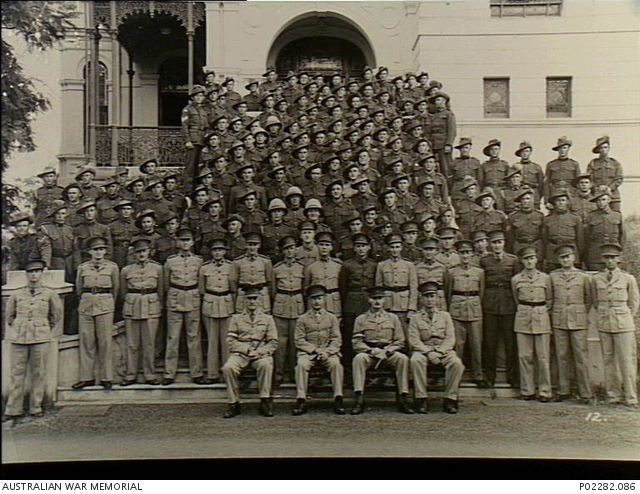
The army converted the dining room into an officers’ mess and lecture hall. Other buildings include a butcher shop, a mess building (1940), a central kitchen and two mess halls, a quarters building with two wings divided into 12 dormitories, six in each wing, an ablutions block, an army Regimental Aid Post (RAP) building,
In 1948, the Citizen’s Military Forces, later the Army Reserve, took control of the property. The site was the home of 1/15 Royal Lancers and Second Ordinance Platoon.
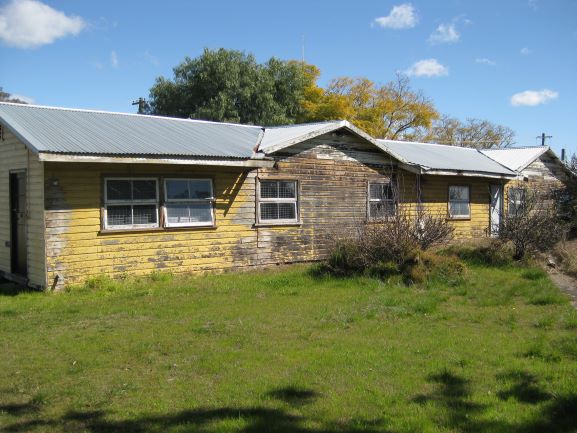
In 1951, the newly established Women’s Royal Australian Army Corps occupied the site.
Between 1959 and 1975, the site was used as an intelligence centre during the Vietnam War, and training courses on helicopter tactics were run.
Charles Naughton and Gabriel Olsen (1985-1996)
Some restoration work was undertaken in the house from 1989.
Camden Golf Club (1996-2009)
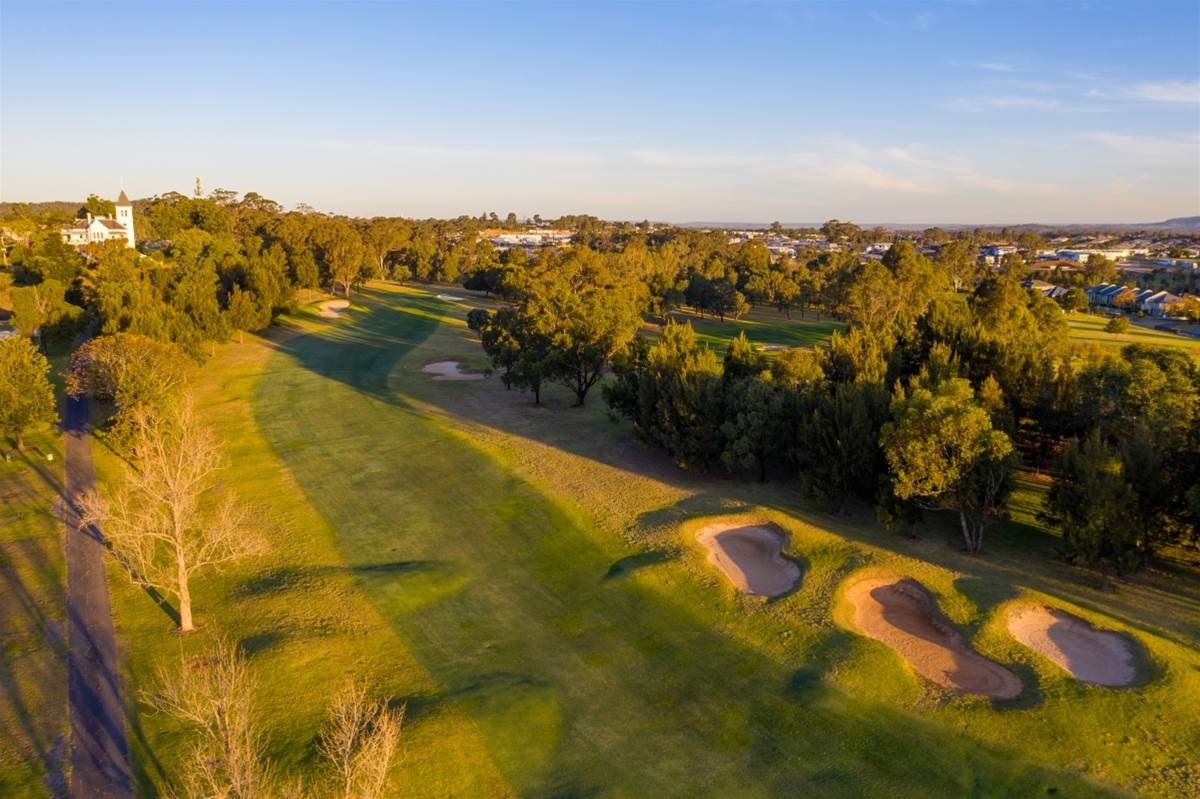
The Camden Golf Club first used Gregory’s course in the 1930s. After the Second World War a group of local residents reformed the club in 1949 and took a lease on the site from the Australian Government.
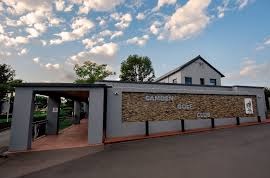
Camden Golf Club Limited was established in 1950 and now manages an 18-hole golf course. The club converted the stables building into a clubhouse and carried out extensions in 1958, 1973 and 1999.
Wilson Crescent estate was subdivided off the property in the early 1960s.
Camden Golf Club purchased the house in 1996 and sold it in 2008. Camden Council purchased the property from the Australian Government in 2006.
Moran Group (2009-present)
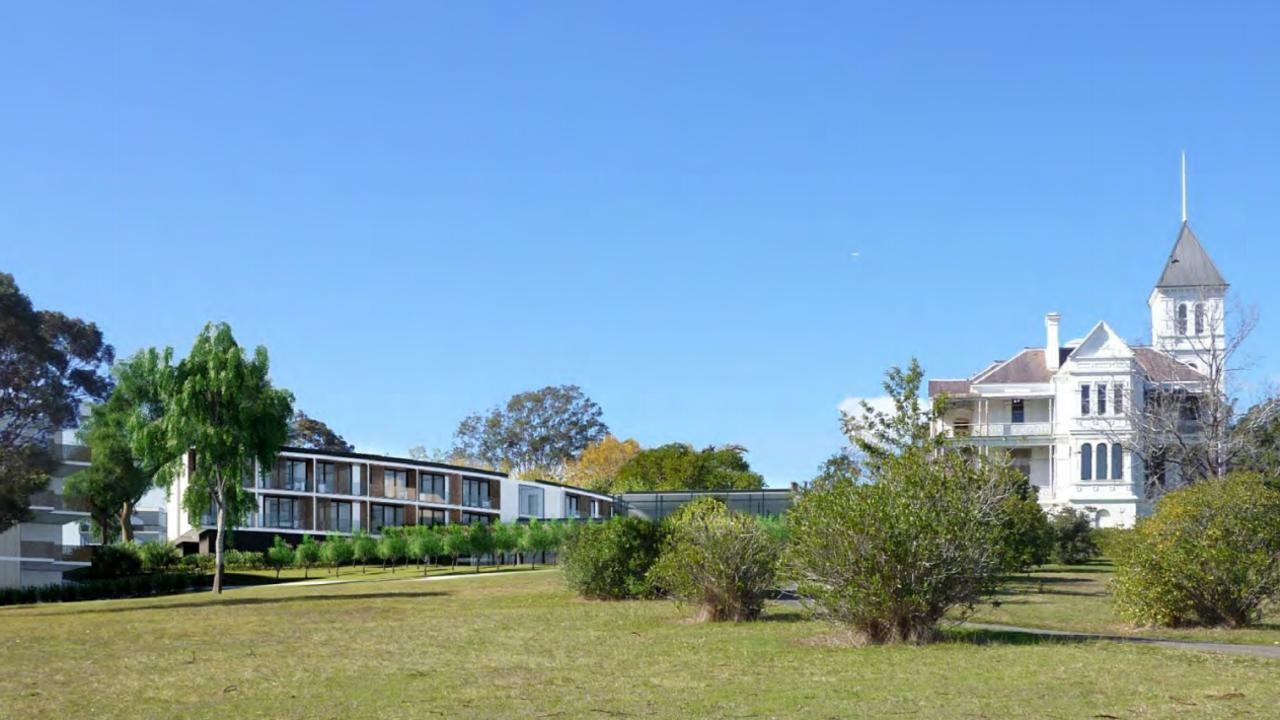
In 2009, the house was sold to the Moral Group, and the golf course land was transferred to the care, control and management of Camden Council (Lisa Howard, Camden Council pers.comm., 14 December 2010).
The Moran Group plans to develop the house into a hotel and residential development and lodged a development application in 2023. (Burnett 2023)
Heritage Listing
Camden LEP I133
Heritage Act – State Heritage Register 00389 (1999)
Register of the National Estate 3240 (1978)
National Trust of Australia register 10045
References
Stephen Davies, Fiona Binns, and Andrew Crisp, 2023. Conservation Management Plan, Studley Park, 52 Lodges Road, Narellan NSW, 2567. Urbis, Brisbane.
Raymond Herbert 2008, Studley Park, Dictionary of Sydney/State Library of NSW. Online at https://dictionaryofsydney.org/entry/studley_park
Clare Burnett 2023, ‘Hotel Redo for 1930s Hollywood Bigwig’s Camden Retreat’, The Urban Developer, 3 October. Online at https://www.theurbandeveloper.com/articles/camden-sydney-mansion-adaptive-reuse-da
Environment Protection Authority 2005. Pimelea spicata (Spiked Rice-flower) Draft Recovery Plan – Environmental Impact Assessment. Available at: https://www.environment.nsw.gov.au/resources/nature/PimeleaSpicata0805EIA.pdf (Accessed: 24 November 2024).
Updated 12 December 2024.
Discover more from Camden History Notes
Subscribe to get the latest posts sent to your email.

