
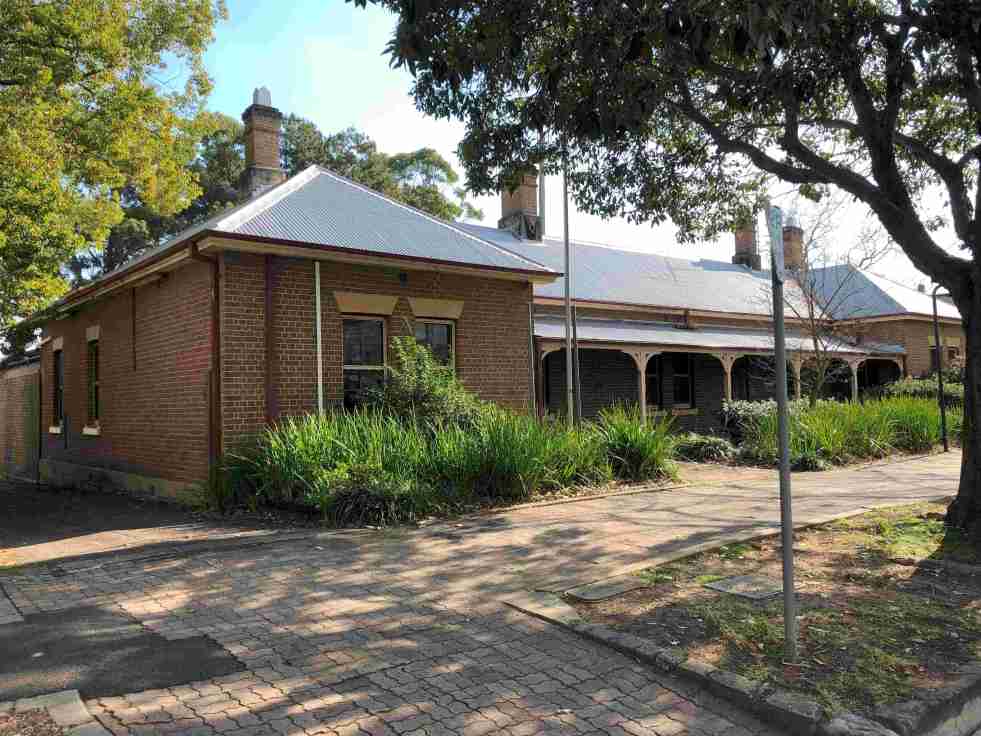
Finding local historical and cultural sites
How do you make local history visible in an ever-crowded landscape of social media?
In Australia, how do you find out about local walks, monuments, stories, landmarks, objects, memorials, and other local attractions?
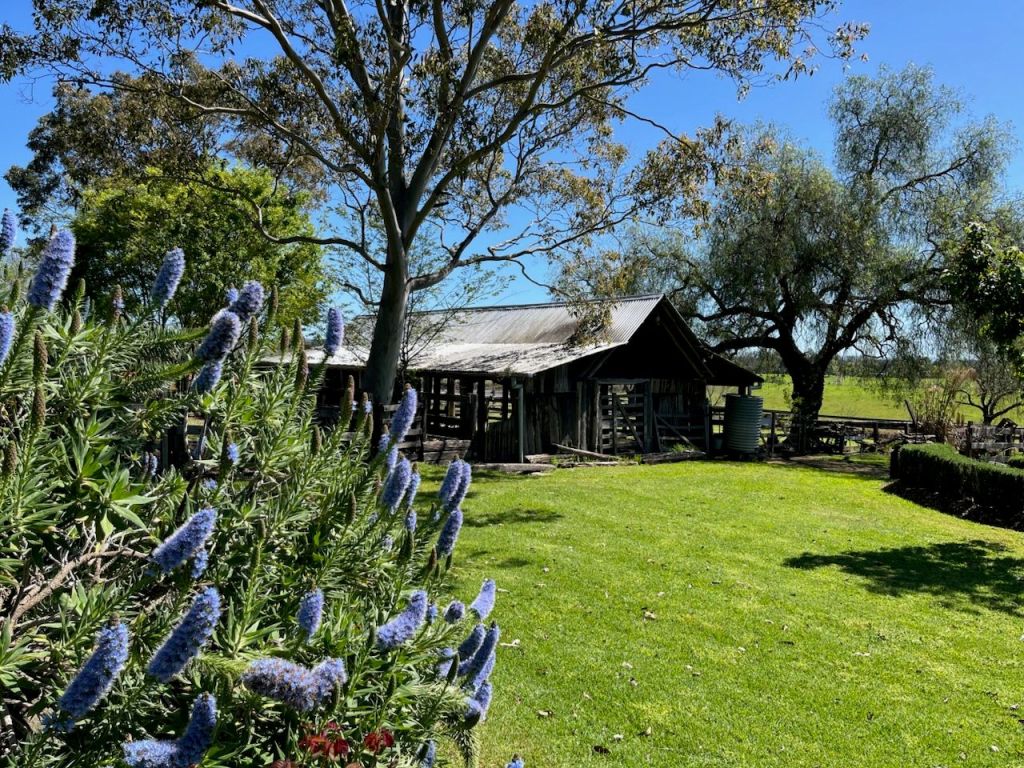
The answer to the question is a difficult one, with numerous apps, websites, blogs, and social media platforms across the country.
Information in Australia about historical and cultural sites is a highly fragmented landscape.
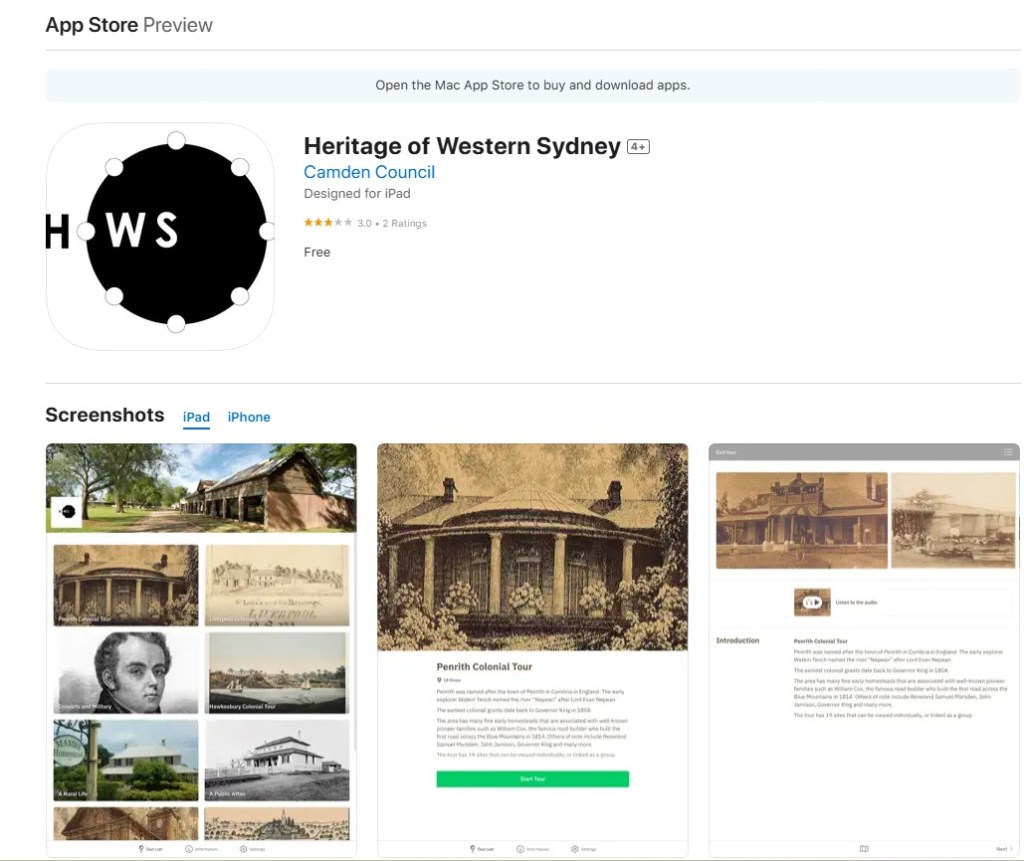
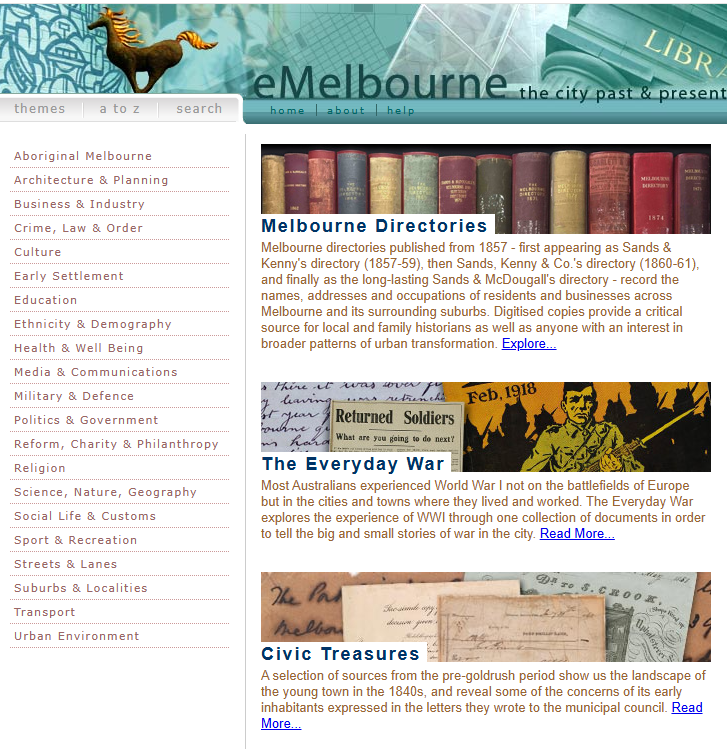
Some examples of these fragmented sites include NLA Trove, SLNSW Dictionary of Sydney, specific regional apps like Heritage of Western Sydney, the Encyclopedia of Melbourne, websites of local historical societies and blogs, walking tours and art trails, amongst others.
There is no central repository that is easily accessible to all folk.
There is no central location where students, artists, and scholars can upload stories, facts, and information on historical and cultural sites around Australia, ensuring that all uploaded content is fully referenced.
Clio
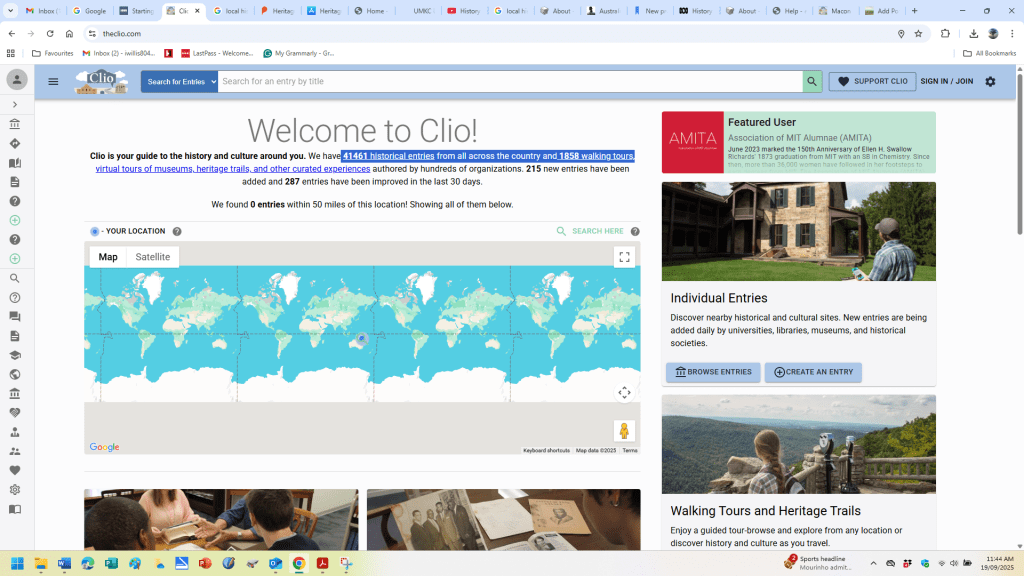
In the USA, there is one website that encourages the central coordination of local stories and landmarks, walking tours, and other local sites. The site is called Clio.
The Clio website states
Clio is an educational website and mobile application that guides the public to thousands of historical and cultural sites throughout the United States along with nature trails, art walking tours, and virtual tours of museums and sites. Built by scholars for public benefit, each entry includes a concise summary and useful information about a historical site, museum, monument, landmark, or other site of cultural or historical significance. In addition, “time capsule” entries allow users to learn about historical events that occurred around them. Each entry offers turn-by-turn directions and links to relevant books, articles, videos, primary sources, and credible websites. Clio https://theclio.com/
Clio is a free website supported by donations from supporters. The website has 41461 historical entries from all across the country and 1858 walking tours, virtual tours of museums, heritage trails, and other curated experiences authored by hundreds of organizations. (Clio. (2025).
Clio was started by Dr David Trowbridge (PhD, Kansas, 2008), who is the William T. Kemper Associate Research Professor of Digital and Public Humanities at the University of Missouri-Kansas City.
His website states
In 2013, Trowbridge began work on Clio, a website and mobile application that connects people to nearby history and culture. https://www.davidjtrowbridge.com/
Clio is part of the digital humanities landscape and public history scene.
Trowbridge writes
I built Clio to share the joy of discovery and learning, both in familiar and faraway places. I think that project has resonated with the public we serve, because it connects our sense of place with knowledge of the past. Since each entry includes sources and links, it also demonstrates the process of history and promotes the work of our colleagues. https://www.historynewsnetwork.org/article/starting-with-a-question (Trowbridge, D. (2025).
Trowbridge has two short videos that explain the value of local history.
- What is the value of history?
- For all societies, history matters.
Conclusion
There is no central repository of stories about historical and cultural sites in Australia, unlike the role of Clio in the USA.
In Australia, local stories are collected in a fragmented fashion across numerous platforms and sites with no coordination and little direction. Several historical databases provide scholarly sources, eg, Dictionary of Sydney. (DoS 2021)
There are databases for specific historical and cultural locations, eg, the Encyclopedia of Melbourne, (School of Historical Studies, D. of H. (2008). )
One local history blog that offers stories about historical and cultural locations in the Macarthur region of Sydney for the Camden, Campbelltown and Picton area.
There are networks of scholars that encourage cooperation and communication in public history, eg, Australia and Aotearoa NZ Public History Network. These are useful but provide little in the way of information about local historical and cultural sites. (AAPHN, 2020).

Some websites record details of monuments and memorials, eg, Monument Australia. From 2023, no new entries will be added to the website, and it is now archived in the National Library of Australia’s PANDORA archive. (Monuments Australia 2023)
The invisibility of many of Australia’s historical and cultural sites is made worse by recent threats to the study of history. Some consider that the study of history at university is in peril with shrinking student numbers. (Stranger 2023) Increasing fees and university job cuts provide some reality to the perception that the humanities in general are under threat in Australia. (Schultz 2025)
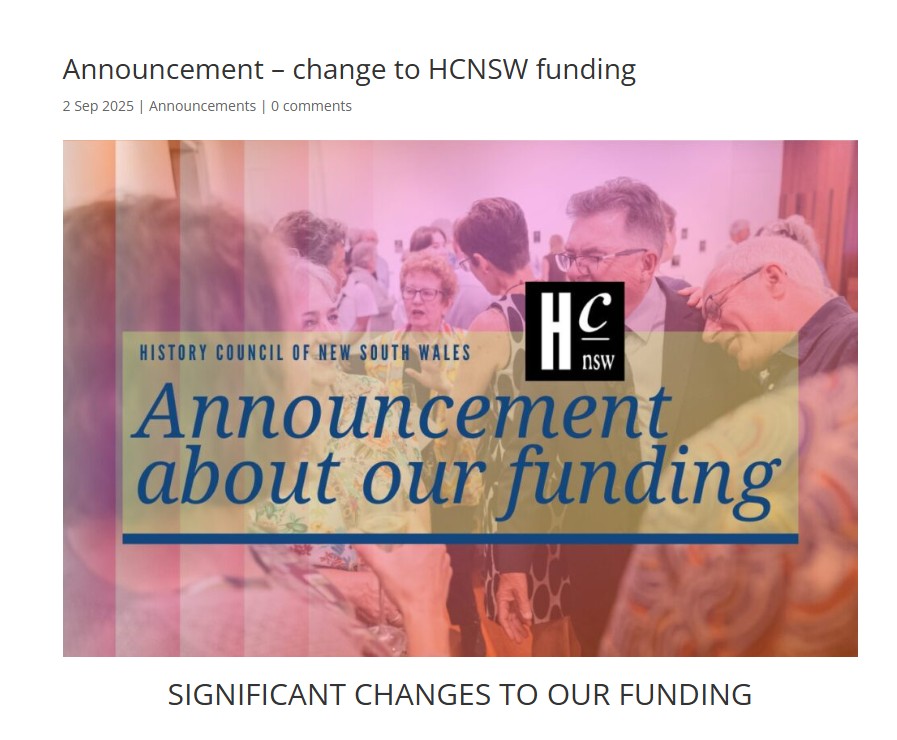
The visibility of historical and cultural sites in New South Wales is not enhanced when the NSW State Government has not guaranteed funding for the History Council of New South Wales for 2026. This is the first time this has occurred since 2010. This is a blow to the interest of local history and its visibility across the state. (Shirley 2025)
In Australia, the visibility of historical and cultural sites is restricted by the fragmented nature of the local history and public history landscape. This is not helped by constant threats to the viability of history as a subject.
References
AAPHN (2020). About. [online] Australia and Aotearoa NZ Public History Network. Available at: https://phn.edu.au/about/ [Accessed 19 Sep. 2025].
Camden Council et al, (2016). Heritage of Western Sydney. [online] App Store. Available at: https://apps.apple.com/au/app/heritage-of-western-sydney/id1135328857 [Accessed 19 Sep. 2025].
Clio. (2025). Clio – Welcome. [online] Available at: https://theclio.com/ [Accessed 19 Sep. 2025].
dictionaryofsydney.org. (2021). The Dictionary of Sydney. [online] Available at: https://dictionaryofsydney.org/ [Accessed 19 Sep. 2025]. Site archived in 2021.
Monuments Australia (2023). Australian Monuments, Statues, Dedicated | Monument Australia. [online] Monumentaustralia.org. Available at: https://www.monumentaustralia.org/ [Accessed 19 Sep. 2025]. Site archived in 2023.
School of Historical Studies, D. of H. (2008). Home – eMelbourne – The Encyclopedia of Melbourne Online. [online] http://www.emelbourne.net.au. Available at: https://www.emelbourne.net.au/. (Accessed 19 August 2025)
Shirley, C. (2025). Announcement – change to HCNSW funding. [online] History Council of New South Wales. Available at: https://historycouncilnsw.org.au/change-to-hcnsw-funding/?fbclid=IwY2xjawM5nTpleHRuA2FlbQIxMABicmlkETFMcTZhYk1sRFBIbXRTSXJHAR5xmdcRGSGDlKTV48qy2m93ICFFWz4tr27yWdbquAMemaHf5kKpO3nw_8gxqg_aem_Bfe5A664ZWdMCqm2-dziPQ [Accessed 19 Sep. 2025].
Schultz, J. (2025). Attacks on the humanities at Australian universities are not new – but they are now more lethal. [online] The Guardian. Available at: https://www.theguardian.com/commentisfree/2025/aug/03/attacks-on-university-humanities-studies-australia.
Stranger, G. (2023). History courses in higher education under threat as student and academic numbers shrink. [online] ABC listen. Available at: https://www.abc.net.au/listen/programs/radionational-drive/history-decline-academics-students-university/102975180.
Trowbridge, D. (2025). Starting with a Question. [online] History News Network. Available at: https://www.historynewsnetwork.org/article/starting-with-a-question [Accessed 19 Sep. 2025].
Discover more from Camden History Notes
Subscribe to get the latest posts sent to your email.

