
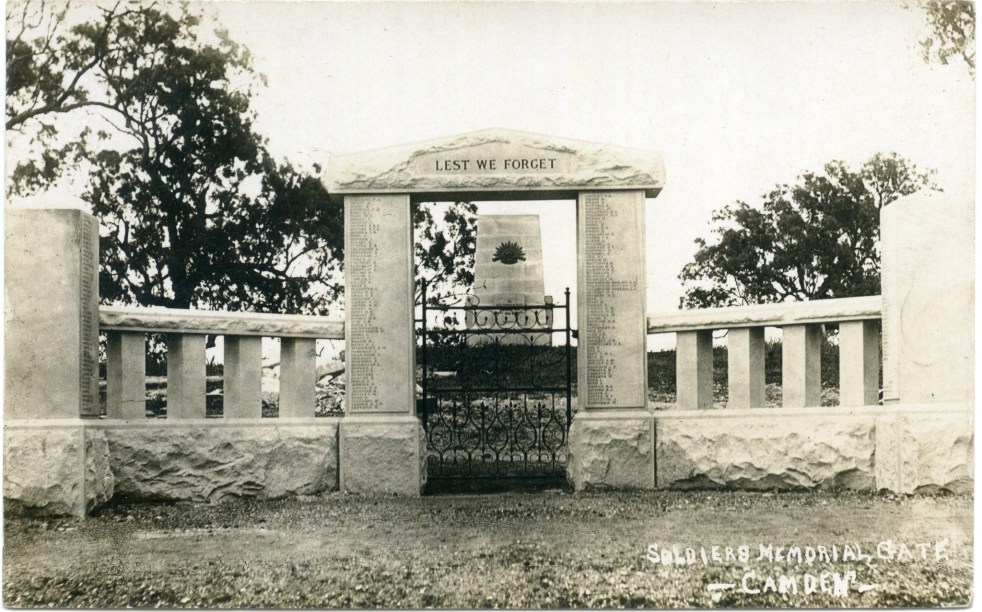
Camden’s World War One Anzac landscape
The first light of a crisp April dawn breaks across the eastern horizon and touches the top of the Camden cenotaph, and the silence is deafening. The dawn light gradually moves down the cenotaph, highlighting the bronze plaques on its four faces with a solitary wreath at the base.
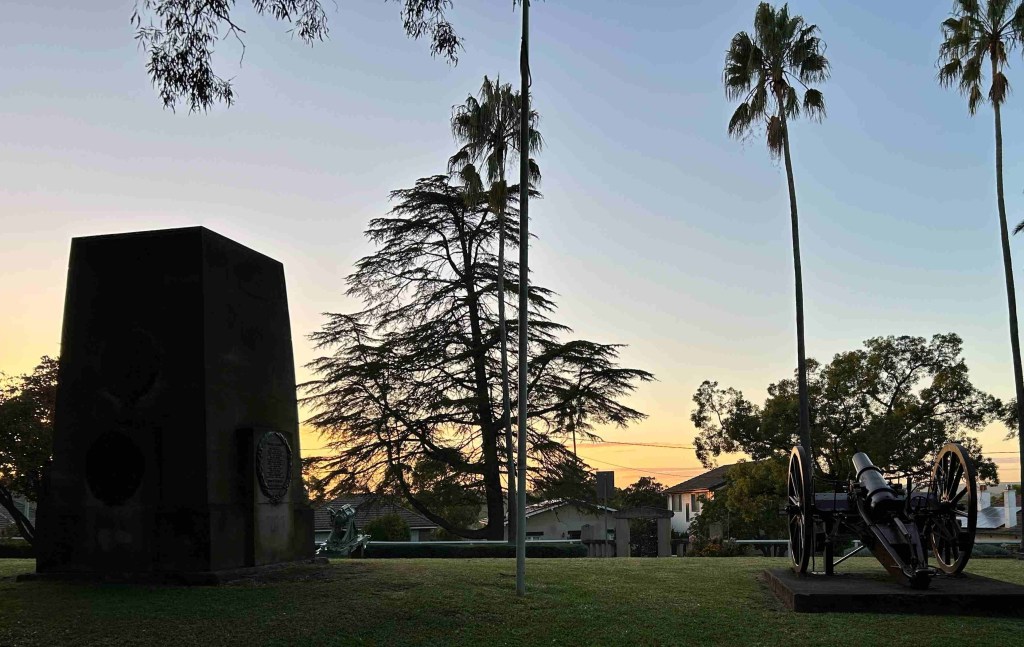
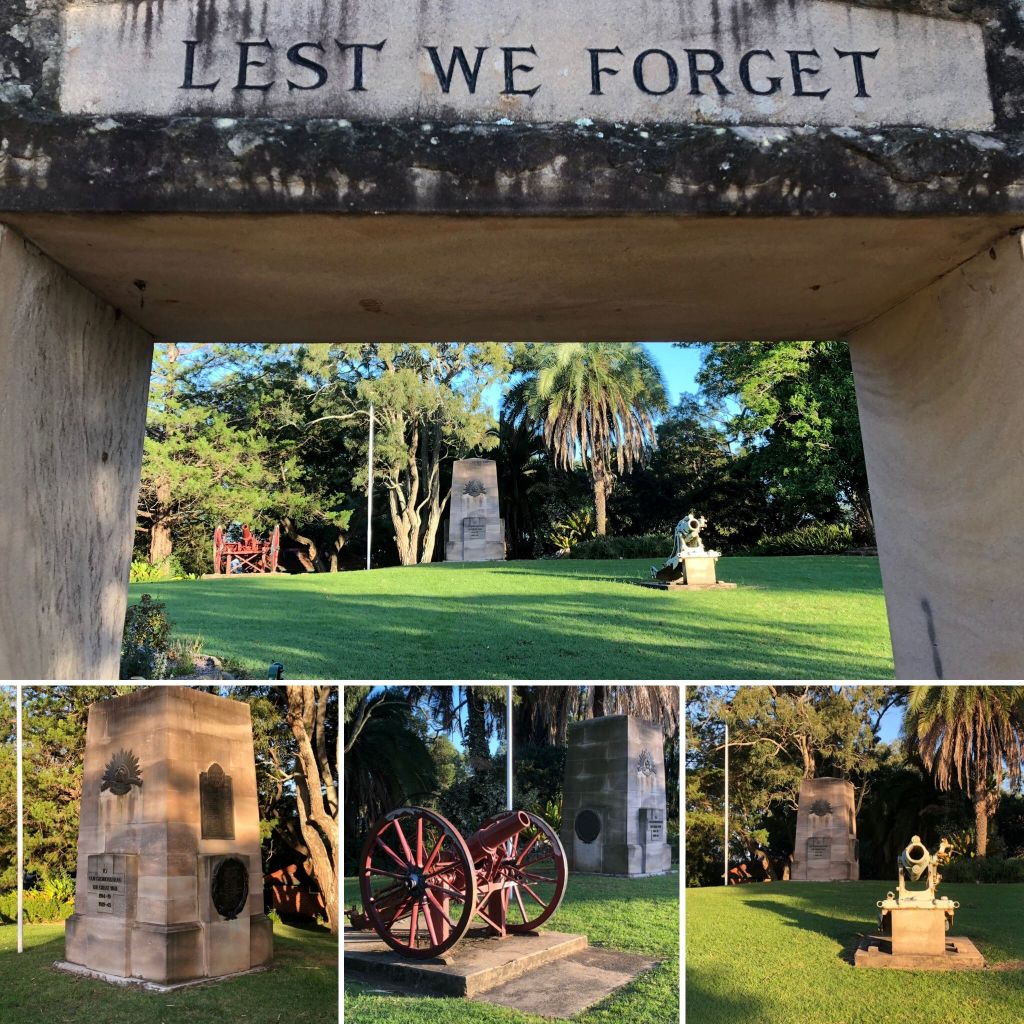
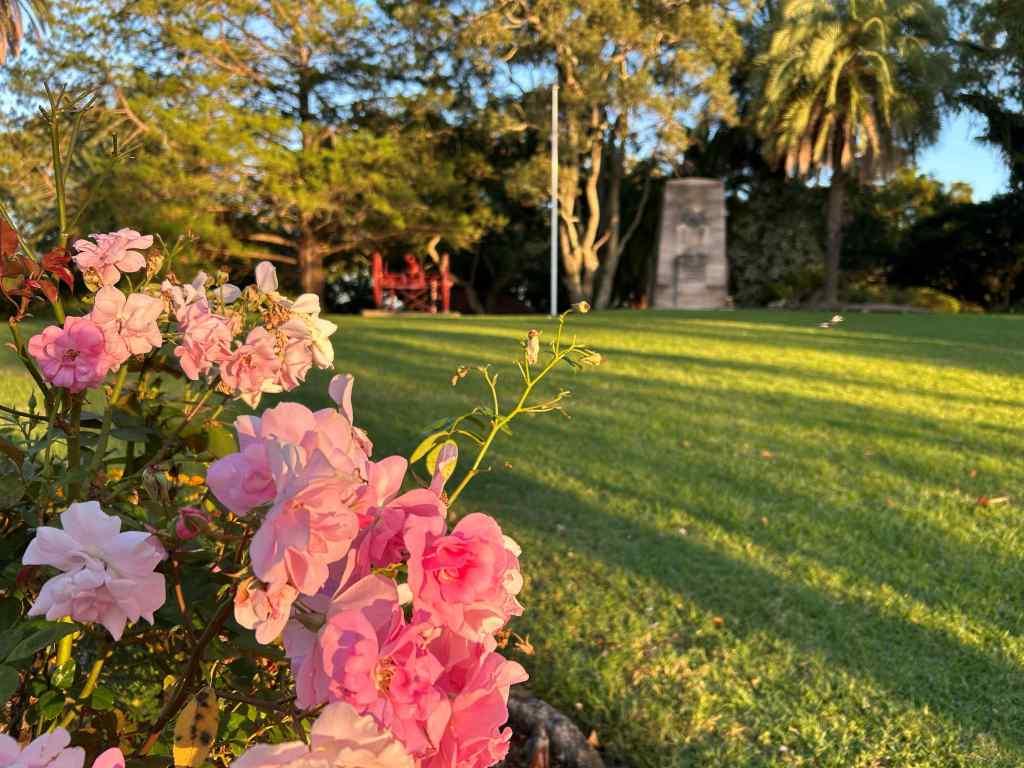
Located in the southeastern corner of Camden’s Macarthur Park, on top of the ridge line on the highest point in the town centre, is the town’s World War One Anzac precinct made up of the cenotaph, the memorial lychgate, and three war trophy guns, surrounded by Mediterranean palms.
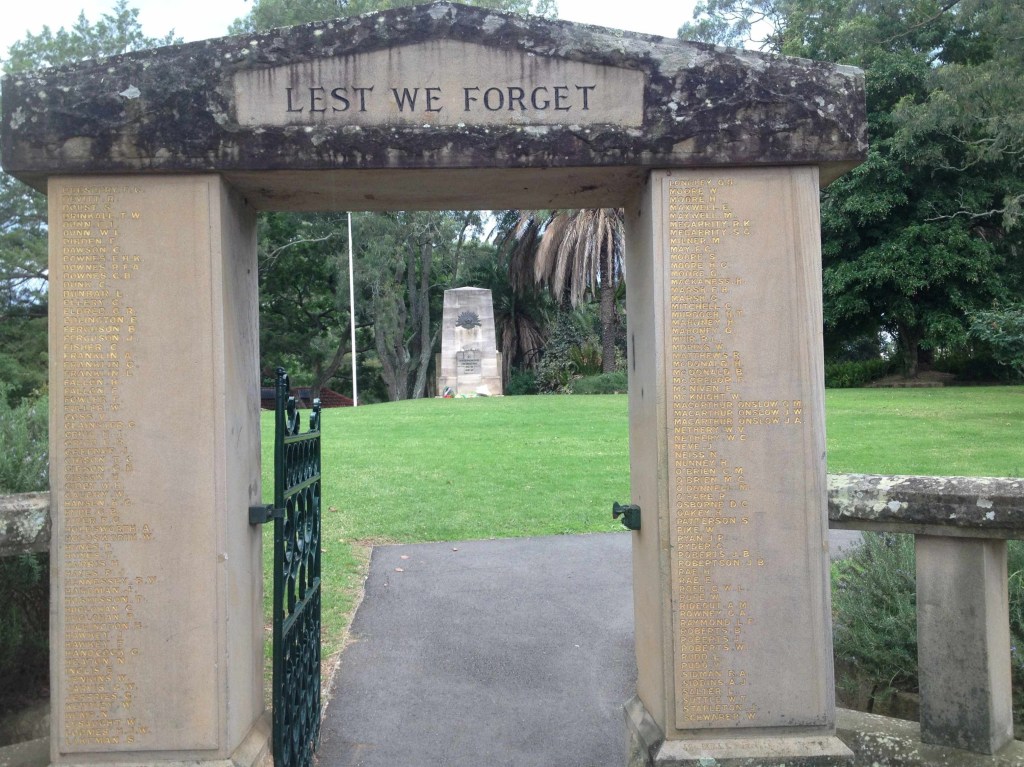
The Macarthur Park precinct is one of Camden’s sacred sites, memorialising the industrial-scale carnage of the World War One battlefields. The bodies of the dead soldiers remained on the battlefield, not allowing the Camden families to mourn their dead, and it is not surprising that a traumatised community did not universally support the construction of these soldier memorials.
Cenotaph
The term cenotaph was new at the end of the Great War and was used to describe a monument designed by Sir Edwin Lutyens in England, which was a tomb on a pylon inscribed with words. It is a modernist design, simple, unadorned, and minimalist, symbolising universal grief rather than religious victory. (Wikipedia contributors, 2026)
The word cenotaph means empty tomb (Inglis 1998:155-156) and was built to represent a grave that the family could visit. The monument mourns and commemorates the communal sacrifice of lives lost at war. (Wikipedia contributors, 2026) For historian KS Inglis, the cenotaph has a ‘deeply imperial form’, reflecting both the imperial war of 1914-1918 and the imperial origins of its design. (Inglis 1998:155-156)
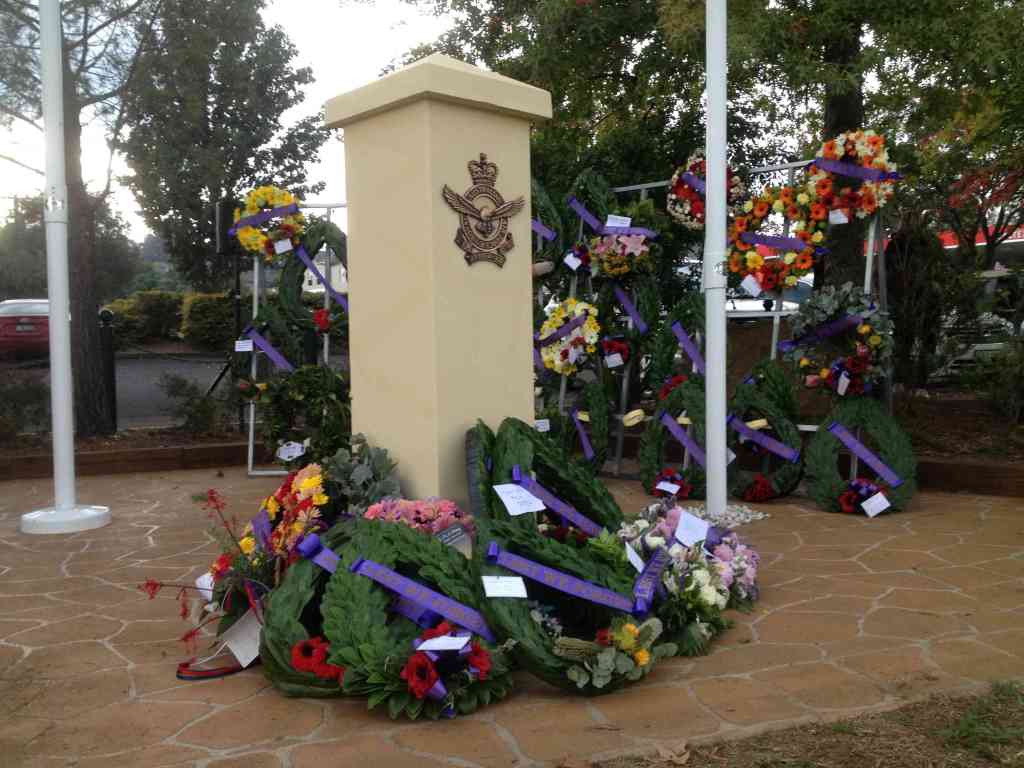
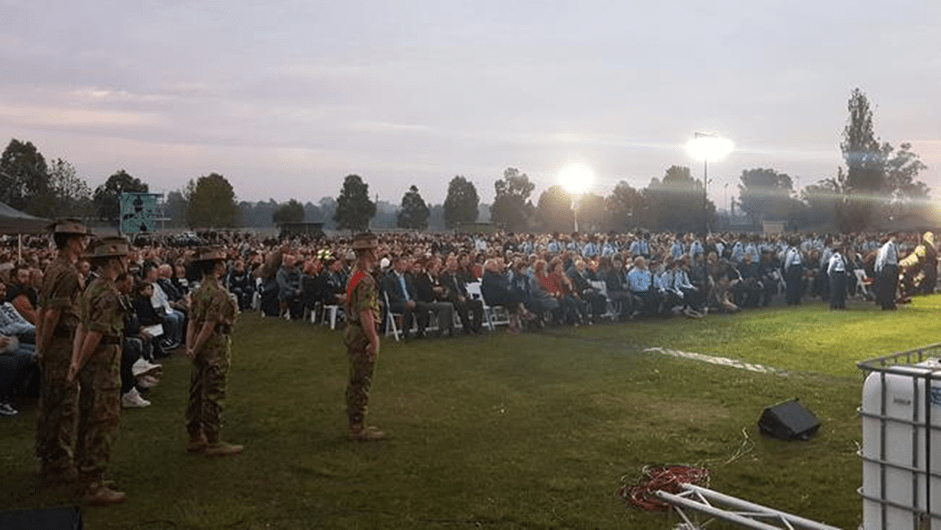
The Camden cenotaph has been the centre of Anzac Day and Remembrance Day memorial services for decades, until large crowds forced a move to a new memorial on Camden’s Cawdor Road in 2007. (Camden Advertiser, 2 May 2007) In 2023, a crowd of over 20,000 people attended the Dawn Service at the Camden Bicentennial Equestrian Park on Cawdor Road. (South West Voice, 25 April 2023)
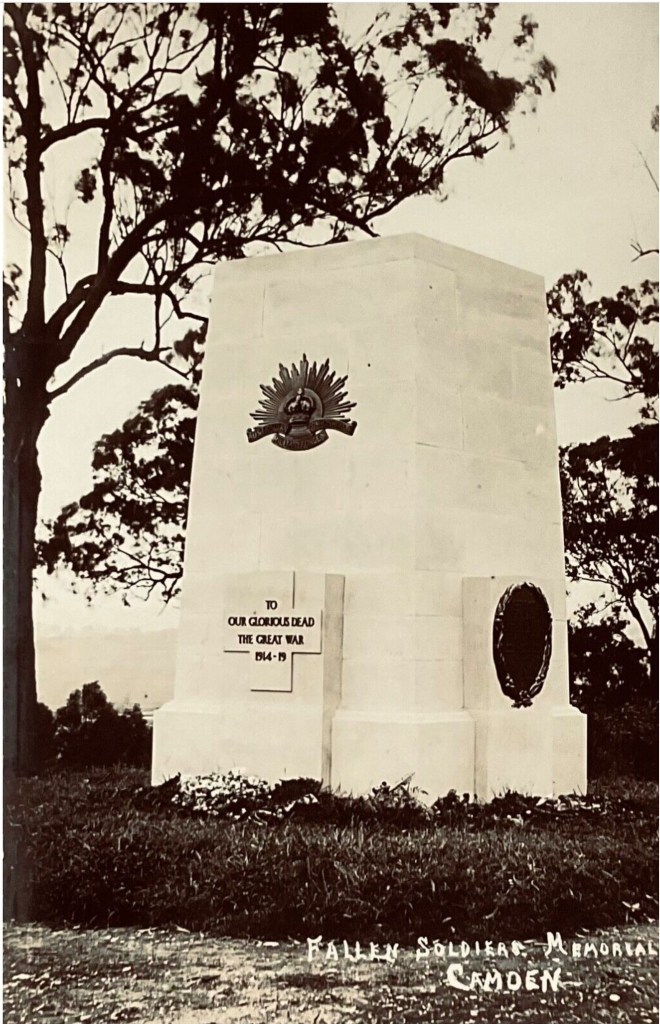
The cenotaph was constructed of ‘Glenmore freestone’ mined on John Moore’s Ellensville at Glenmore (Camden News, 21 September 1922) and was light grey in colour. (CN 16 February 1922) The names on the bronze plaques can be found here. (NSW War Memorials Register 2026b)
The winning design for the cenotaph came from Sydney soldier-architect Colonel Reymond Synnot of Sydney architects Prevost, Synnot and Ruwald and was installed by Camden stonemasons WF Peters & Sons. (CN 16 February 1922)
The 1922 opening ceremony was attended by local dignitaries, including the Member for Wollondilly, Sir George Fuller, who would later become Premier of NSW. Dr FW West, chairman of the cenotaph fundraising committee, who spoke at length of those who fought for ‘call of God, of King and Country’ when the Empire was in ‘danger’. Other speakers included Brigadier-General GM Macarthur Onslow, president of the Camden sub-branch of the Returned Sailors and Soldiers Imperial League of Australia and Camden Mayor, Ald GF Furner.
Members of the RSSAILA and militia led by General Onslow marched, led by the Camden District Band, took up a position next to the ‘young women’ of the Voluntary Aid Detachment (VAD) in front of the cenotaph. The Camden and The Oaks VADs were formed by the NSW Division of the British Red Cross in 1919 to staff the Red Cross Waley Nerve Hospital at Mowbray Park near Picton. The women volunteered at the home, providing a quiet, domestic-like environment to aid the soldiers’ recovery from what we now call PTSD, then called shell-shock. (Willis 2014)
There was no universal support for the Camden cenotaph, and George Fuller noted in his address
It is difficult to understand the attitude of some who deliberately refrain from attending functions of this nature. (CN 16 February 1922)
The cenotaph fundraising committee had a shortfall, and the committee treasurer, Camden Mayor Furner, appealed for more donations at the 1922 opening. (Camden News, 16 February 1922) A year later, committee members pledged to cover a £9 fundraising deficit. (Camden News, 24 May 1923)
Memorial lychgates and pillars
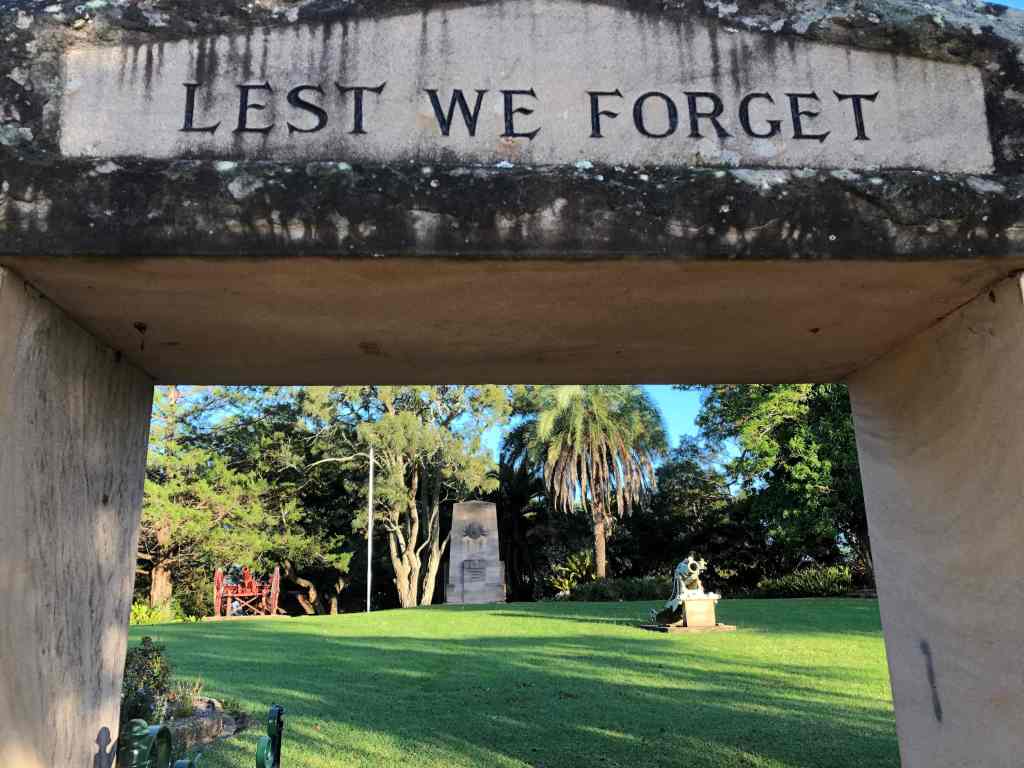
Camden stonemason WJ Kerwin carved the arched memorial lychgates and pillars, which were constructed from local freestone and inscribed with names of those who served in the First World War. The memorial was presented by Dr F.W. West and unveiled by Miss Sibella Macarthur Onslow in September 1922. (NSW War Memorials Register 2026a)
Lychgates are found at the entrance to an English-style churchyard, and in the Middle Ages, the lychgate was where the body of the dead was kept before burial and where the priest held the first part of the funeral. (Wikipedia contributors. 2026b) The list of names on the gates can be found here (NSW War Memorials Register 2026a)
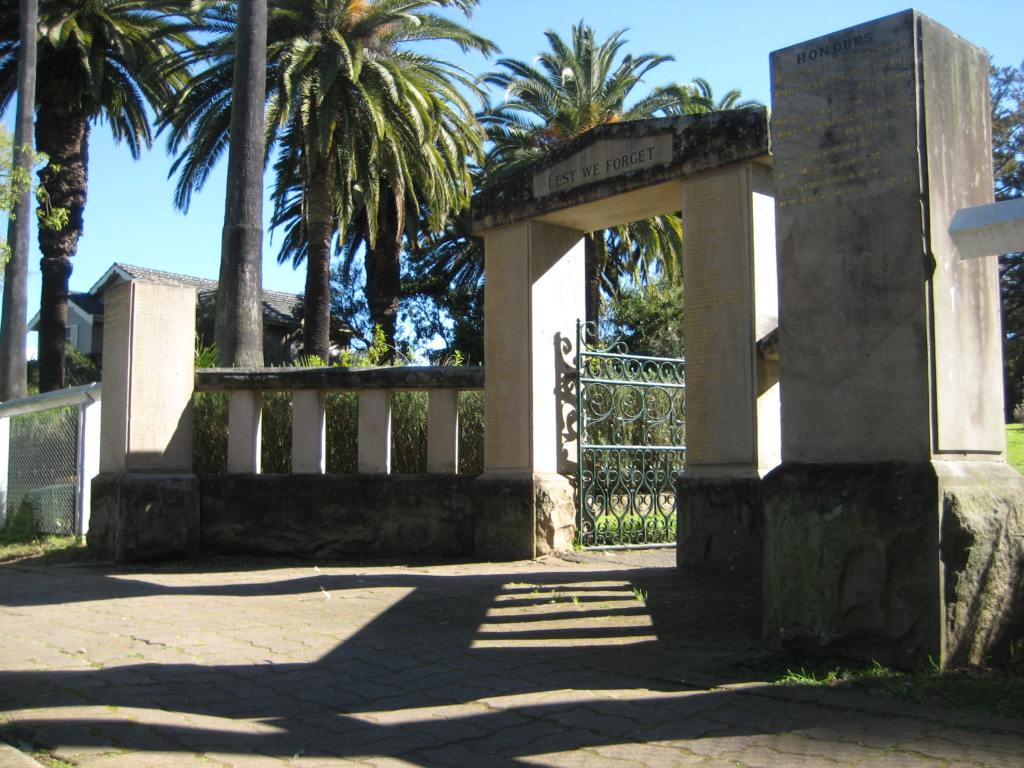
The opening ceremony for the memorial gateway in late-1922 lacked the status of the cenotaph unveiling earlier in the year. While attended by 300 people Sir George Fuller, now premier, sent his apologies as did other local politicians. Reymond Synnot, now with the rank of Lieutenant-Colonel, attended with the mayor.
The mayor’s speech acknowledged three nurses from Camden Cottage Hospital who had served during the war. He said
These noble women left comfortable, and in some cases luxurious homes, and braved all the discomforts and dangers of active service. They gave of their best to the wounded and sick, helped to bring back to life and health many a shattered body, stood by those who were to pass into the Valley of the Shadow, as if they had been their mothers, and performed many brave and heroic deeds of which we hear practically nothing. If woman is God’s most wonderful creation, then ‘the Army Nurse should be placed one higher, and to her I take off my hat, first and last’ and all the time. (CN, 21 September 1922)
Interestingly, Camden soldiers fought to protect the Empire for God, King and Country, while the role of Camden’s volunteer nurses was to repair the broken bodies of the male soldiers in their caring roles as mothers, wives and helpers.
War trophy guns
The war trophy guns surrounding the Camden cenotaph create a strange juxtaposition and an ironic effect. The battlefield instruments of death surround a memorial to soldiers who died on the battlefield.
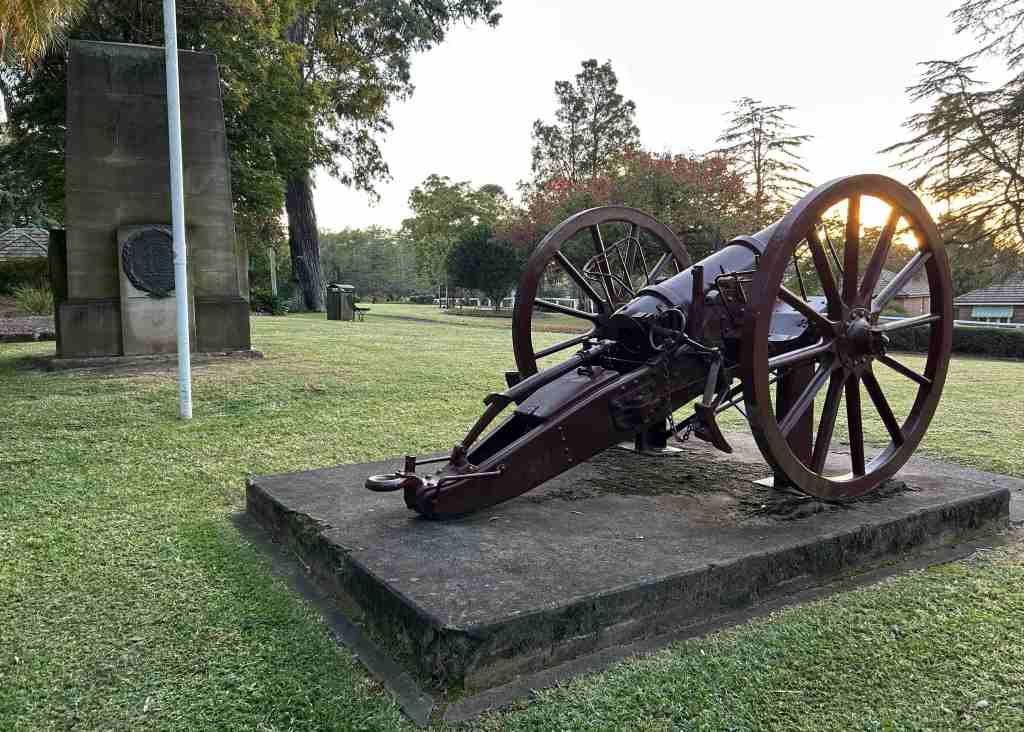
Camden stonemason Alderman Kerwin understood this irony and was the sole objector to the council’s acquisition of the war trophy guns. For his trouble, he was labelled a Bolshevik and accused of disloyalty. Kerwin proposed a motion at council to refuse the war trophies. The motion was resoundingly defeated. (Camden News, 24 June 1920)
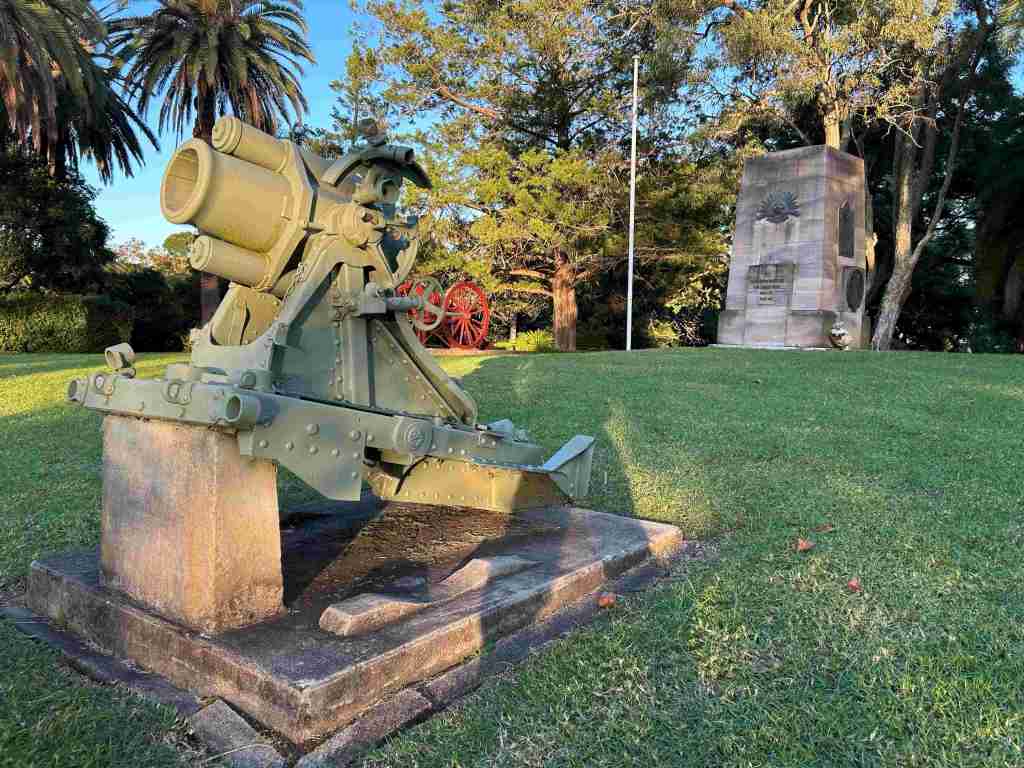
The council was pressured by the Camden Sub-branch of the Returned Sailors, Soldiers and Airmen’s Imperial League of Australia, led by president Brigadier-General GM Macarthur Onslow, to apply for their allocation of war trophy guns. (Camden News, 17 February 1921)
Prime Minister Billy Hughes was an avid supporter of war trophies and relics, and for him, the war trophy guns would ‘educate [Australia’s] children in this national spirit, thereby ensuring loyal adherence to and defence of the Empire’. (Billett 1994: xiv)
War trophy guns were gathered from the battlefields between 1917 and 1919. They were shipped back to Australia, and towns could apply for them. The Australian War Memorial allocated them to towns based on population size. (Billett 1995: 27-61)
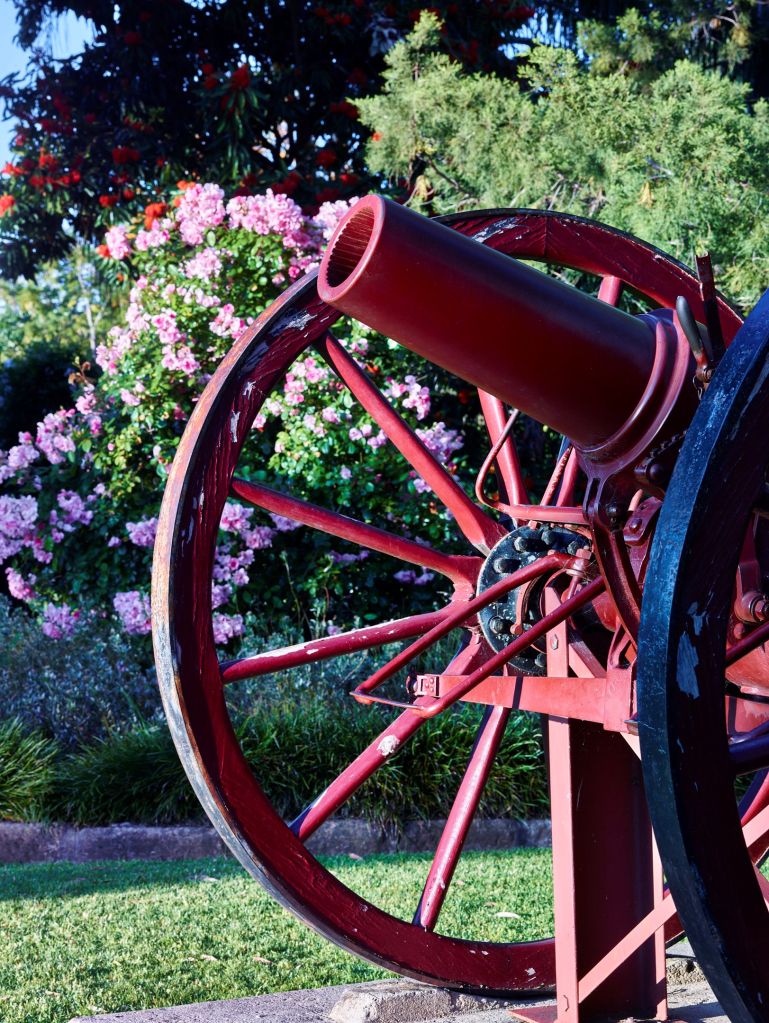
According to former military officer and author Bill Billett, the cultural heritage of the war trophy guns needed to be protected and remembered as ‘tangible reminders of the courage and tenacity of the AIF’. (Billett 1995: xiv)
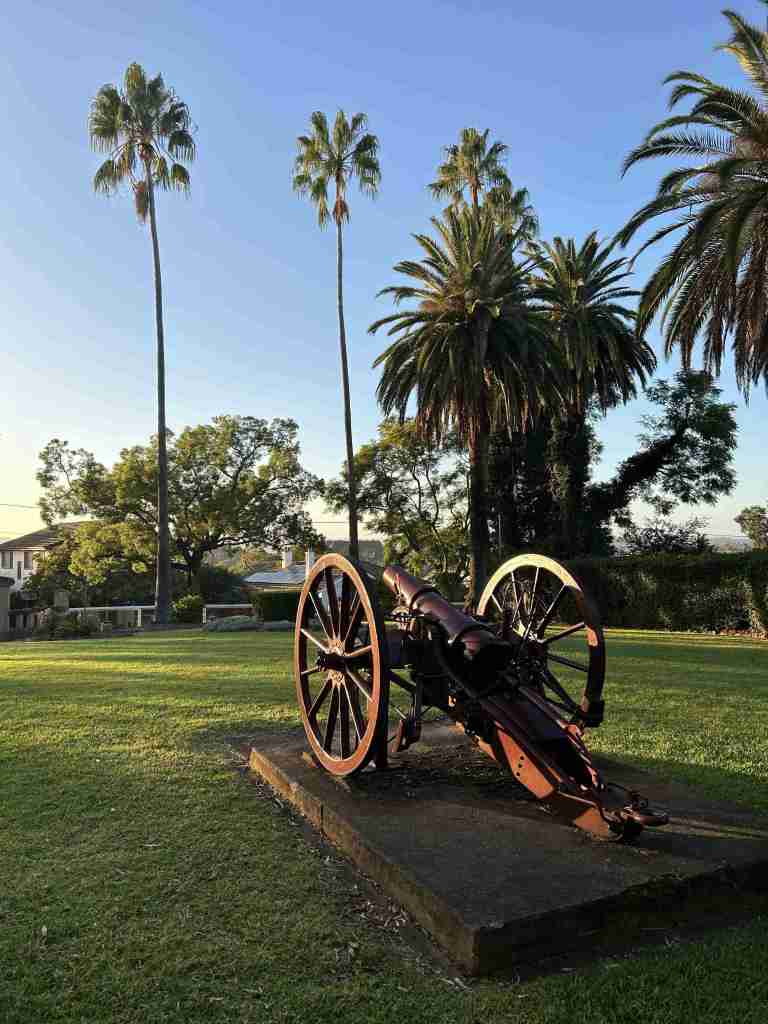
The allocation to Camden comprised two German Field pieces and one Turkish Field Gun. (Camden Council 2018) The details are: a 100mm field gun (#106) captured on 25 September 1918 by the 1st Australian Light Horse at Mafrak. (Billett 1995:75); a 170mm gun (#3578), captured by the Australian Corps; and a 75mm gun (#32818), captured by the 1 Battalion AIF. (RAAHC 2026)
Palm trees
According to the Camden Council webpage on Macarthur Park
The palm trees on the southern end of the memorial gardens were planted by local returned soldiers after the 1914 – 1918 war. (Camden Council 2018)
Reflection
The Macarthur Park World War One Anzac precinct, comprising the cenotaph, the memorial gates, and the trophy guns, offers a glimpse into the town’s military past and what the Great War meant to the local community.
The carnage of war traumatised the Camden community, and there was less than overwhelming support for the soldier memorials in 1922.
The cenotaph organising committee failed to raise sufficient funds to pay for the memorials, and the acquisition of the war trophy guns raised disquiet in the community.
The imperial patriotism, Union Jack flag-flapping, and jingoism for Camden’s soldier memorials in 1922 were led by the Camden Protestant elite at the RSSAILA. The same group of people that supported the entry of Camden’s war in 1914 and 1915, and the pro-conscription agenda for the referenda of October 1916 and December 1917. (Willis 2014)
The meaning of the memorial monuments and Camden’s involvement in the Great War has changed over the past 100 years. The Macarthur Park Anzac precinct has become a sacred site for many in the community and could not accommodate the attendance numbers at Anzac Day services.
The Anzac Dawn Service at the new memorial in the Camden Bicentennial Equestrian Park indicates that the level of support for the memory of Camden’s war dead is stronger than ever.
Resources
Billett, RS 1994. War Trophies From the First World War 1914-1918. Kangaroo Press, Sydney.
Camden Council 2018. History of Macarthur Park. Camden Council. Online at http://pandora.nla.gov.au/pan/39033/20091130-0047/www.camden.nsw.gov.au/page/macarthur_park.html Accessed 23/11/18
Inglis, KS 1998. Sacred Places, War Memorials in the Australian Landscape. Melbourne University Press, Melbourne.
NSW War Memorials Register 2026a. Macarthur Park First World War Memorial Gateway. NSW War Memorials Register. NSW Government, NSW RSL & SLNSW. Online at https://www.warmemorialsregister.nsw.gov.au/content/macarthur-park-stone-arched-gateway Accessed 15 April 2026
NSW War Memorials Register 2026b. Camden Cenotaph. NSW War Memorials Register. NSW Government, NSW RSL & SLNSW. Online at https://www.warmemorialsregister.nsw.gov.au/memorials/camden-cenotaph Accessed 15 April 2026.
RAAHC 2026. Artillery Register, Directory of Allocated Minenwerfer War Trophies – WW1, New South Wales. Royal Australian Artillery Historical Company. Online at https://www.artilleryhistory.org/artillery_register_new/directory_of_allocated_minenwerfer_war_trophies_ww1_new_south_wales.html Accessed 21/4/26
Wikipedia contributors. (2026a). Cenotaph. In Wikipedia, The Free Encyclopedia. Retrieved 05:28, April 21, 2026, from https://en.wikipedia.org/w/index.php?title=Cenotaph&oldid=1349587036
Wikipedia contributors. (2026b). Lychgate. In Wikipedia, The Free Encyclopedia. Retrieved 06:34, April 22, 2026, from https://en.wikipedia.org/w/index.php?title=Lychgate&oldid=1343453192
Willis, Ian 2014. Ministering Angels, The Camden District Red Cross 1914-1945. Camden Historical Society, 2014.
Updated 24 April 2026. Originally posted on 23 April 2026.
Discover more from Camden History Notes
Subscribe to get the latest posts sent to your email.

