
The interwar period
The interwar period in Camden was a time of economic development and material progress. The prosperity of the period was driven by the local dairy industry and the emerging coal industry. The town’s population grew by over 35 per cent between the end of the First World War and the beginning of the Second, so that in 1939, the town was the centre of a district that covered 455 square miles (1180 square kilometres) and had a population of over 5,000.

Camden was one of the most important commercial and administrative centres between Sydney and Goulburn. The town was the centre of the police district, it had the regional hospital, it was the largest population centre, and it was a transport node of a district that spread from Campbelltown to the lower Blue Mountains.
Hume Highway
During the interwar period, one of the most important economic arteries of the town was the Hume Highway (until 1928, the Great South Road). Most understood the value of the rail connection to Camden, most obviously because you heard it, smelt it and saw it. Yet few understand the significance of the Hume. The highway had run up the town’s main street from colonial times until 1973 when it was moved to the Camden Bypass and then subsequently moved in 1980 to the freeway.
The highway and railway were the conduits that brought the international influences of modernism and consumerism to the town and the goods and services that supported them. These forces influenced the development of the local motor industry, the establishment of the local cinemas and the development of the local airfield. All important economic, social and cultural forces for the time.
‘Locals’ travelled to the city for higher-order retail goods, specialist services and entertainment, while the landed gentry escaped to the cosmopolitan centre of the British Empire; London. Conversely, the Sydney elite came to experience the new gentlemanly pastime of flying at the Macquarie Grove Airfield.
Camden Modernism
For a country town of its size, the town had modern facilities and was up-to-date with the latest technology. The town had two weekly newspapers, Camden News and the Camden Advertiser. There was the opening of the telephone exchange (1910), the installation of reticulated gas (1912), electricity (1929), and the replacement of gas street lighting with electric lights (1932) and a sewerage system (1939), and by 1939 the population has increased to 2394. The town’s prosperity allowed the Presbyterians to build a new church (1938), while a number of ‘locals’ built solid brick cottages that reflected their confidence in the town’s future.

Despite the prosperity of the interwar period, the town was still dominated by the colonial gentry and their estates. Apart from their convict labour in the early years, they established a system of class and social relations that ordered daily life in the town from its foundation until after the Second World War. While the townsmen dominated the early period of local government, by Federation, the landed gentry had usurped their power and had imposed their political mantra of conservatism on the area.
The dominance of Macarthur’s Camden Park over the local economy during the interwar period was characterised by the construction of the Camden Vale milk processing factory (1926) adjacent to the railway. The company developed TB-free milk and marketed it through the Camden Vale Milk Bar, a retail outlet on the Hume Highway (1939), complete with a drive-through.
The interwar years were a period of transition. Increasingly, motor cars replaced horses in town, and on farms, horses were replaced by tractor, all of which supported the growing number of garages in the town. The interwar landscape was characterised by personalised service, along with home and farm deliveries by both horse and cart and motor cars.

Morphology of town centre
The layout and shape of interwar Camden have changed little from the 19th century, and the town centre has a certain bucolic charm and character that is the basis of the community’s identity and sense of place. Strip shopping and mixed land use support the country’s feeling, which has become the basis of the modern ‘country town idyll’.
In recent years, Camden has been targeted by the New South Wales government as one of the growth centres for the Sydney metropolitan area. It has become part of Sydney’s exurbanistion on the rural-urban fringe. City types move out of the city looking for places where ‘the country looks like the country’. This has only served to reinforce the duality of the love/hate relationship the community had with Sydney and the city/country divide that has been part of the rural ideology of the area.
The ‘locals’, for their part, have retreated to nostalgia in the form of an Arcadian view of the world through a ‘country town idyll’. The romance of the idyll is based on the iconic imagery of Camden as a picturesque English village, with the church on the hill, surrounded by rural vistas. The idyll has become a defence mechanism against the onslaught of Sydney’s urbanization and the interwar heritage that is part of the town’s iconic landscape.
Selected Examples of Interwar Architecture in Camden
1. Camden Vale milk processing factory, 11 Argyle Street, Camden. Built in 1926 by the Camden Vale Milk Co, a Camden Park Estate Pty Ltd subsidiary.
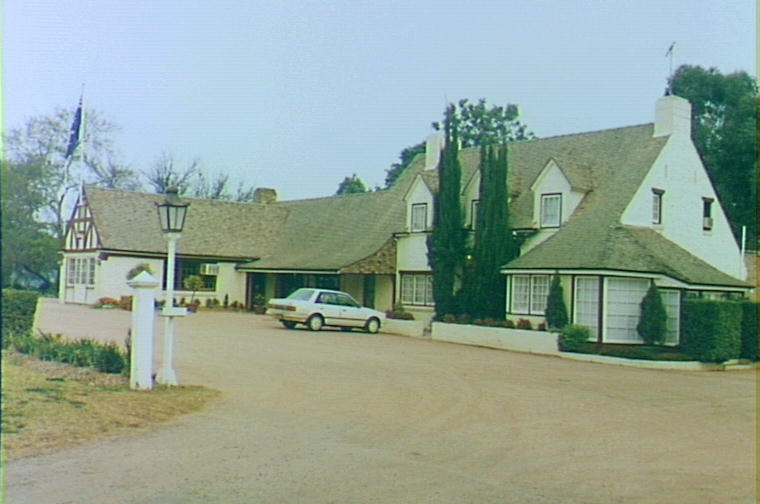
2. Camden Vale Inn, Remembrance Drive (Old Hume Highway), Camden (now Camden Valley Inn). Architect: Cyril Ruwald. Builder: Herb English. A milk bar on the Hume Highway was built in 1939 by the Camden Park Estate Pty Ltd to market its Camden Vale milk from TB-tested dairy herds on Camden Park. It was ‘designed in the Tudor style, with walls in attractively coloured brickwork suggesting a touch of modernity’. [ Camden Park Estate Pty Ltd, Camden Vale Special Pasteurised Milk Production and Distribution, Camden, Camden Park Estate Pty Ltd, c.1939.]
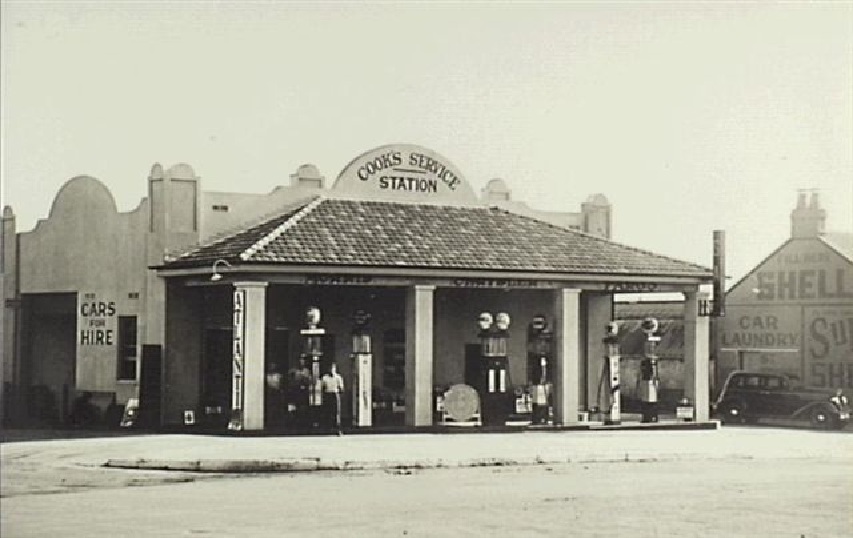
3. Cooks Garage, 31-33 Argyle Street, Camden. Built in 1935. Owned by WH Cook. It was built in the Spanish Mission style and was characterised by terracotta roof tiles, front loggia, brickwork rendering, and shaped parapets. Since demolished.

4. Main Southern Garage, 20-28 Argyle Street, Camden. Built in the mid-1930s.
5. Dunk House, 56-62 Argyle Street, Camden. Built by Harry Willis and Sons, Camden, in 1937, it was a car showroom, shop complex, and professional suites owned by EC Dunk.
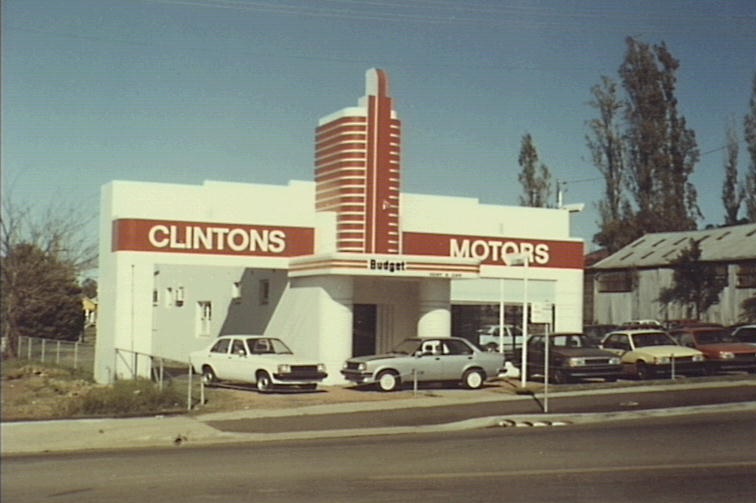
6. Clintons Motor Showroom, 16 Argyle Street, Camden. Mark Jensen built the car showroom in 1947 for Clinton Motors, the Holden dealership in Camden. According to the Camden Heritage Inventory, it is a rare masonry Art Deco building with large shopfront windows and a wraparound awning.
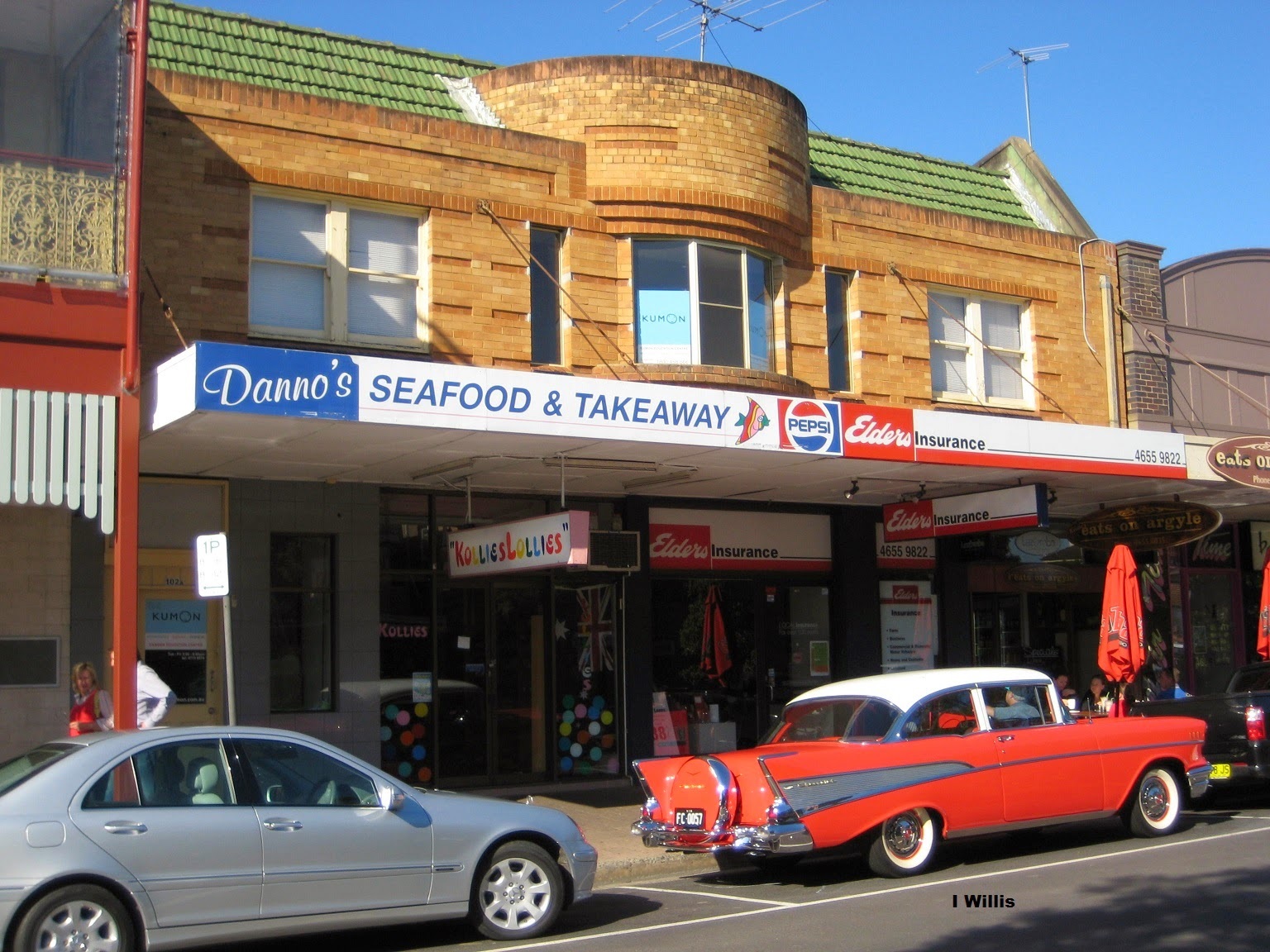
7. Stuckey Bros Bakery, 102-104 Argyle Street, Camden. It was built by Harry Willis and Sons in 1939. In 1940, Stuckey Bros, bakers and pastry cooks, occupied the premises and fitted it out. According to the Camden News, it was ‘fitted with every modern device’.
8. Bank of New South Wales (Westpac), 121-123 Argyle Street, Camden. Built by Harry Willis and Sons in 1936, this two-story building has a residence upstairs and a banking chamber downstairs. According to the Camden Heritage Inventory, it is in the Georgian Revival style.

9. Rural Bank, 115-119Argyle Street, Camden. Built by Harry Willis and Sons, Camden in 1937. The two-storey building had a residence upstairs with a banking chamber downstairs. Art Deco style. There is trachyte stonework on the facing of the building.
Churches
10. Presbyterian Church, 42 John Street, Camden. Built in 1938. Architect: George Gray, R.Vale. A brick church, which, according to the Camden Heritage Inventory, has a Gothic Revival (Gothic Interwar) style.
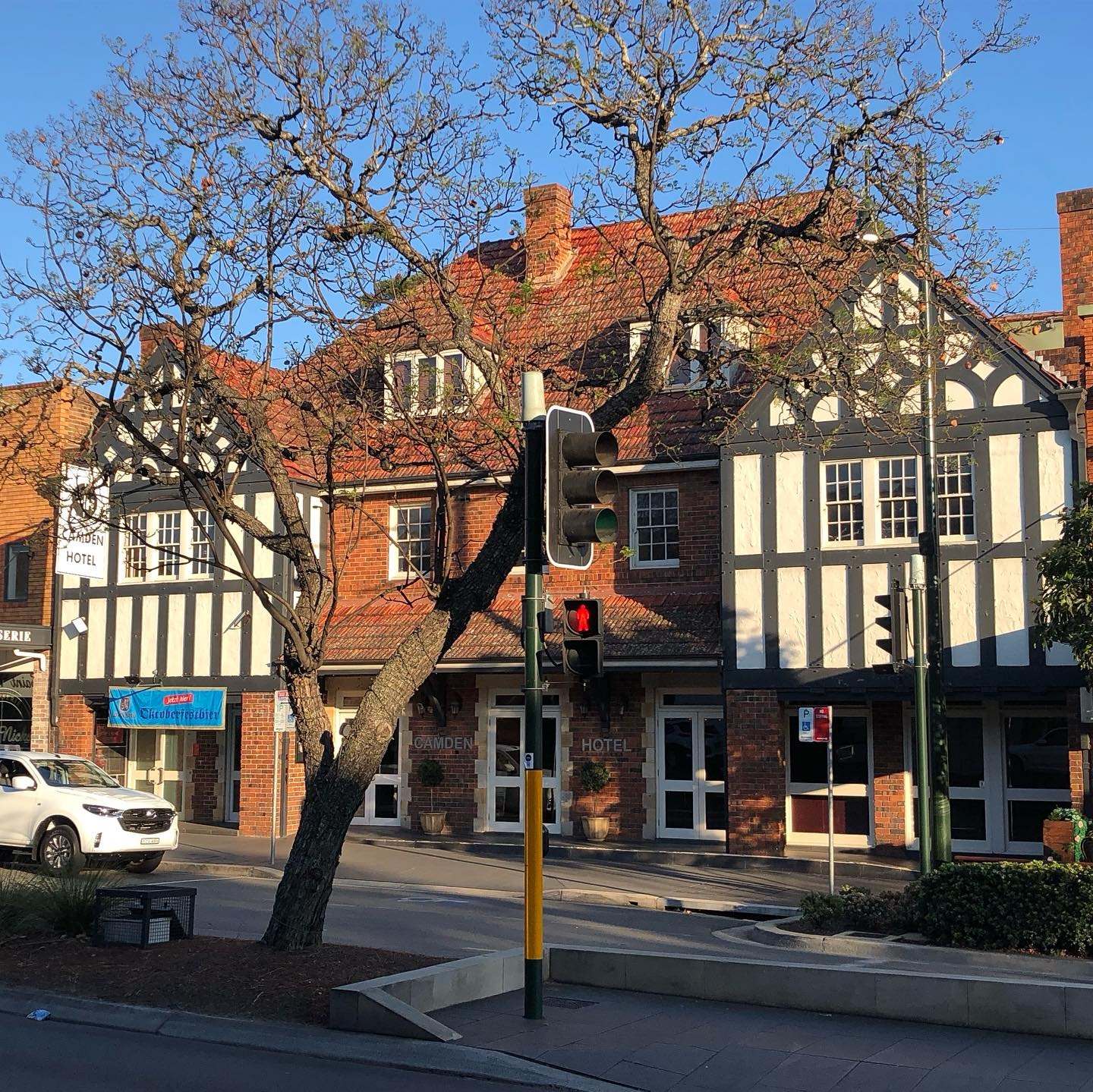
11. Camden Inn (Hotel), 105-107 Argyle Street, Camden. Built by Harry Willis and Sons, Camden in 1933. Tudor style refurbishment. Formerly the Commercial Hotel.
12. Front, AH&I Hall, 191-195 Argyle Street, Camden. The brick front of the building was added to the weatherboard hall in 1936. The original hall was constructed in 1899 by George Furner for JW Macarthur Onslow as a drill hall for the Camden Mounted Rifles.
13. Paramount Theatre, 39 Elizabeth Street, Camden. Built-in 1933. It was owned by DJ Kennedy who had interests in other suburban movie cinemas in the Sydney area. It was designed in the Spanish Mission style.

14. Cottage, 25 Elizabeth Street, Camden. Built in the 1930s by Mel Peat.
15. Flats, 33 Elizabeth Street, Camden. Built in 1930.
16. Cottages, 1-3 Menangle Road, Camden. According to the Camden Heritage Inventory, they are a group of Californian bungalows built between 1924 and 1925 by Harry Willis and Sons, Camden.
17. Methodist Parsonage, 24 Menangle Road, Camden. Built in 1935.
18. Cottage, 26 Menangle Road, Camden. Built by Mel Peat in 1931 for N Freestone.
Murray Street, Camden.
19. Cottages, 24-28 Murray Street, Camden. Built by Mel Peat in 1937. According to the Camden Heritage Inventory, a group of Californian Bungalows.
20. Extension, Camden Hospital, Menangle Road, Camden. Built by Mel Peat in 1939.
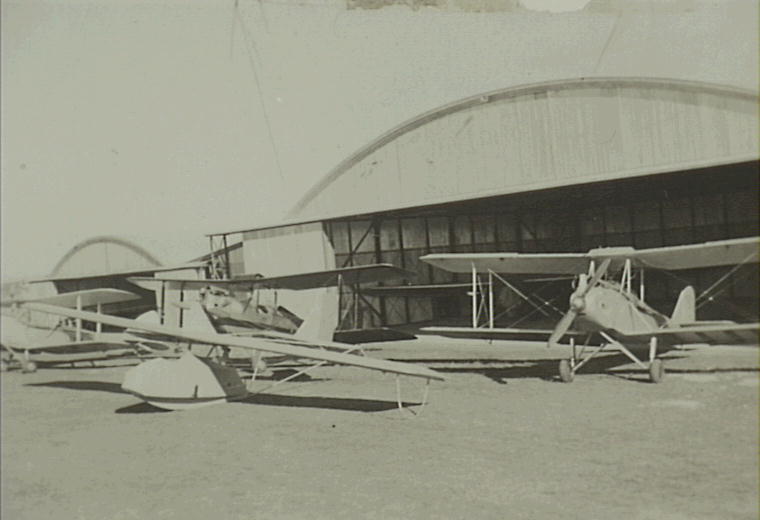
21. Bellman Hangers, Camden Airfield, Macquarie Grove Road, Camden. Built in 1941. The Federal Government acquired the airfield from Edward Macarthur Onslow in 1940 for a central flying school under the Empire Air Training Scheme. The RAAF erected the hangers as temporary accommodation for aircraft. They were designed by NS Bellman in 1936 (UK) as temporary buildings.

References
Archives, Camden Historical Society.
Tropman & Tropman, Camden Heritage Inventory, Camden, Camden Council, 2004.
Updated 3 May 2024. Originally posted on 28 May 2026 as ‘Interwar Camden’.
Discover more from Camden History Notes
Subscribe to get the latest posts sent to your email.


5 thoughts on “Interwar Camden, the heritage of a country town”
Comments are closed.