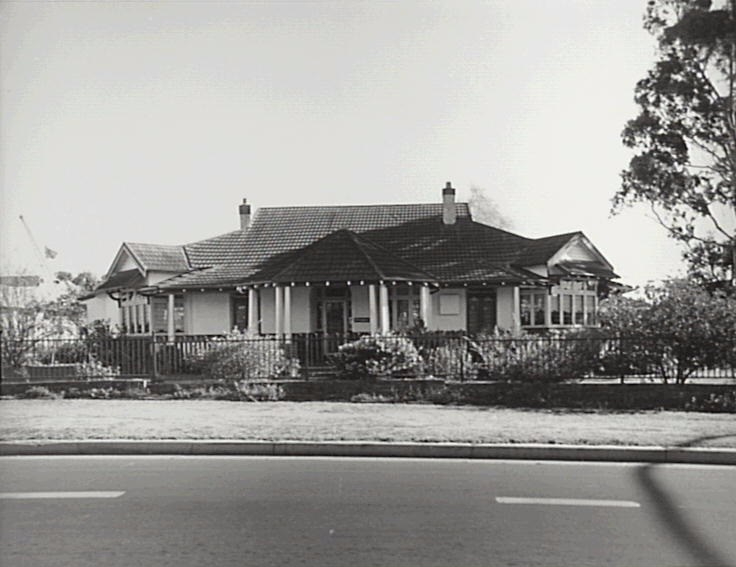
Ben Linden at Narellan
Ben Linden is an outstanding example of an Edwardian cottage in the local area.
Camden has quite some Edwardian cottages in the town area, on surrounding farms and in local district villages. They are typical of the early twentieth-century landscape in the local district.
The housing style was evidence of the newfound confidence in the birth of a new nation that borrowed overseas trends and adapted them to suit local conditions. These houses were a statement of individualism and national character.
The name Edwardian is loosely attached to cottages and buildings erected during the reign of Edward VII from 1901 to 1910. This period covers the time after the Federation of the Commonwealth of Australia in 1901, when the six self-governing colonies joined under a new constitution. They kept their own legislatures and combined to form a new nation.
Australian architecture
Examples of Edwardian-style cottages, including in and around Camden, were an Australian version of English Edwardian houses. Houses were plainer in detail, some with lead lighting in the front windows. Australian architecture responded to the landscape and climate, and the building style tells us about the time, the people who built them, how they lived, and other aspects of Camden’s cultural heritage.
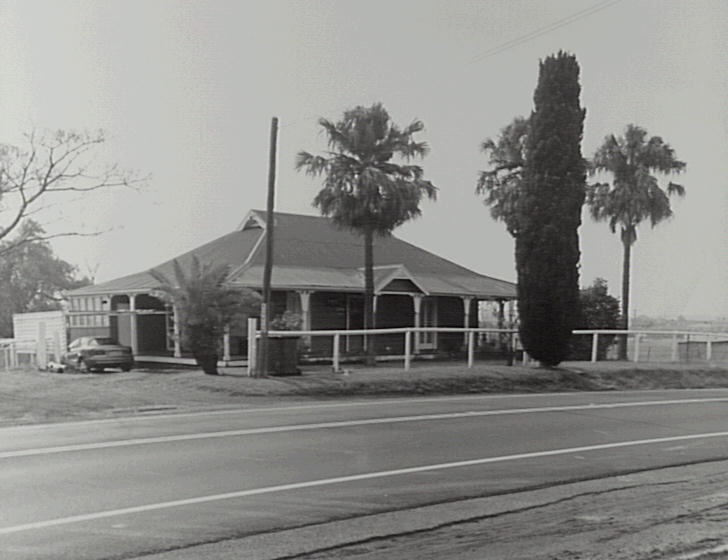
The Edwardian style of housing also includes a broad range of styles, including Queen Anne, Federation, Arts and Crafts and Early Bungalow. These styles often tend to be asymmetrical, with a projecting from a gable and can be highly decorated with detailed work on gables, windows, and verandahs. Edwardian-style cottages often fit between 1900 and 1920, although the style extends beyond this period, influencing the Interwar style of housing.
Ben Linden
Ben Linden was constructed in 1919 by George Blackmore, who was originally from North Sydney. George Blackmore, born in 1851, was married to Mary Ann and had seven children. George and his family lived in Ben Linden from 1921 to 1926. After this time, he retired as a builder and eventually died in 1930.
George’s son George Sydney Blackmore, who was a merchant, lived across the road from Ben Linden in the 1920s with his wife Rena and two boys at Narellan Stores at 332 Camden Valley Way.
The house is located on Edward Lord’s 1815 grant of Orielton Farm, which in the 1830s was reported as a productive farm mainly used for grazing. In the 1870s, hunting seemed to be a popular pastime, with owner William Rudd pursuing live hares by greyhound when it was described as a grazier’s property.
By 1920, it was recorded that there were ‘out-houses, buildings, erections and fences’ on the property.
Ben Linden has some of the typical Edwardian Cottage Detailing
A number of Camden Edwardian-style timber cottages have a projecting room at the front of the cottage with a decorated gable adjacent to a front verandah with a hipped roof line. This housing style is often characterised by a chimney that was a flue for a kitchen fuel stove and chip copper in an adjacent laundry. In some houses plaster cornices were common, sometimes there were ceiling roses, skirting and architraves. A number of them have been restored, but, unfortunately, many others have been demolished.
Some Camden Edwardian homes had red brick walls, sometimes with painted render in part. The local area has many examples of timber houses with square-edged or bull-nosed weatherboards. Sunshades over windows supported by timber brackets are common.
Doors in Edwardian-style houses typically have three or four panels, with entry doors sometimes having an ornamentation. Common windows were double-hung, while later cottages had casement windows, especially in the 1920s. Some cottages have return L-shaped verandahs, sometimes roofed with corrugated bull-nosed iron. Verandah post brackets had a variety of designs, with lattice work not an uncommon feature. Verandahs featured timber fretwork rather than Victorian-style cast ion lacework for ornamentation. Front fences had pickets or a wire fence in country areas.
Typical Edwardian colour schemes include apricot walls, gables, barge boards, white lattice panelling, red roofing, and green windows, steps, stumps, and ant caps.
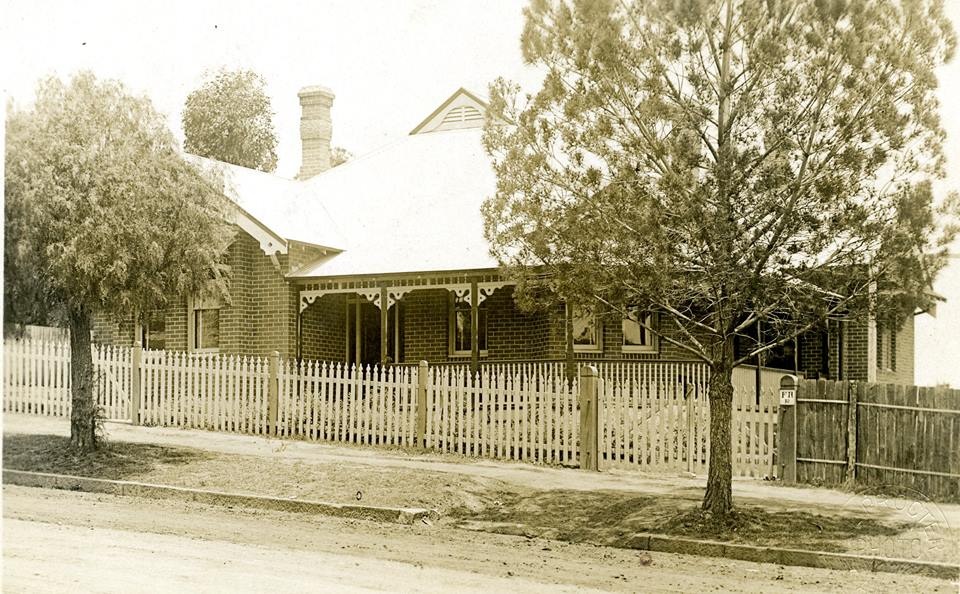
Edwardian Cottage Garden
Gardens were often more complex than Victorian examples. Among Edwardian gardens, growing lawns became popular. Sometimes, a small tree in the front yard frames the house and separates it from adjacent houses. Common trees included magnolia, elm, tulip tree, or camellias, while shrubs and vines were agapanthus, agave, St John’s Wort, plumbago, standard roses, begonias, day lily, jasmine, and sometimes maidenhair ferns.
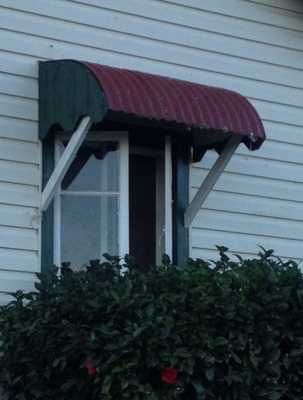
Camden Edwardian Cottage
In the March 2014 edition of Camden History, Joy Riley recalls the Edwardian cottages in John Street. Joy Riley vividly remembers growing up as a child and calling one of these cottages her home. ‘I lived at 66 John Street for the first 40 years of my life before moving to Elderslie with my husband, Bruce Riley.
The two rooms of 66 John Street were built by the first John Peat, a Camden builder, to come to Camden. In the 1960s I had some carpet put down in my bedroom, the floor boards were so hard, as they only used tacks in those days to hold carpet, the carpet just kept curling up.’ She says, ‘The back of the house was built by my grandfather, William Dunk. They lived next door at 64 John Street. He also built the Methodist Church at Orangeville or Werombi.

Updated 4 August 2024. Originally posted on 31 July 2016 as ‘Ben Linden Narellan An Edwardian Gem’
Discover more from Camden History Notes
Subscribe to get the latest posts sent to your email.


6 thoughts on “Ben Linden Narellan An Edwardian Gem”