A local traditional trade
Carpentry was an essential craft in all communities and has been practised for centuries. In the Camden area, the traditional trade of carpentry, as it was practised, had a variety of forms. Traditional trades were part of the process of settler colonialism on the colonial frontier in the Cowpastures.
In pre-settlement times, the first form of bush carpentry was practised by the Aborigines. They stripped bark from trees and used it to make shelters that protected them from the natural elements and to craft weapons.
At the time of European settlement, many on the frontier had no formal trade skills and learnt bush carpentry by watching the Aboriginal people or experimenting on their own. The bush carpenter was a practical make-do pioneer who innovated with naturally occurring products from their local environment. They practised sustainability in a period when it was a necessity for their very survival and relied on their ingenuity, adaptability and wit.

Some of the bush carpenter’s spirit and tradition arrived with the early European settlers and owed some of its origins to the English tradition of green woodworking. This traditional practice dates back to the Middle Ages and is linked with coppicing, a conventional form of woodland management. The craftsmen led a solitary existence in the woods, crafting a wide range of items from unseasoned green timber, including furniture, tools, fencing, kitchenware, and other valuable items.
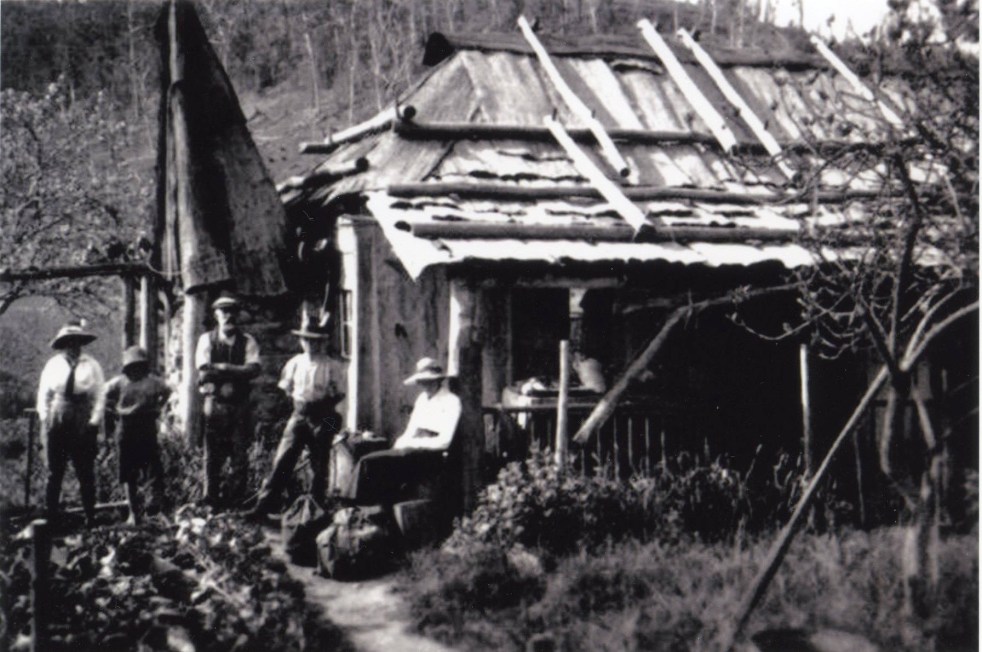
The bush carpenters were amongst the first in the Camden area to erect building structures. Like other rural areas of Australia, the Camden area’s landscape has been defined by the bush carpenter’s huts and sheds. One example was illustrated in Peter Mylrea’s Camden District (2002), the so-called Government Hut erected at the Cowpastures in 1804.

The early settlers who built these basic shelters did so without the manufactured products of the Industrial Revolution. Either through cost or just a make-do attitude, they built rudimentary vernacular buildings that lasted for decades. In later times, settlers’ structures were improved with the introduction of galvanised iron after the 1820s.
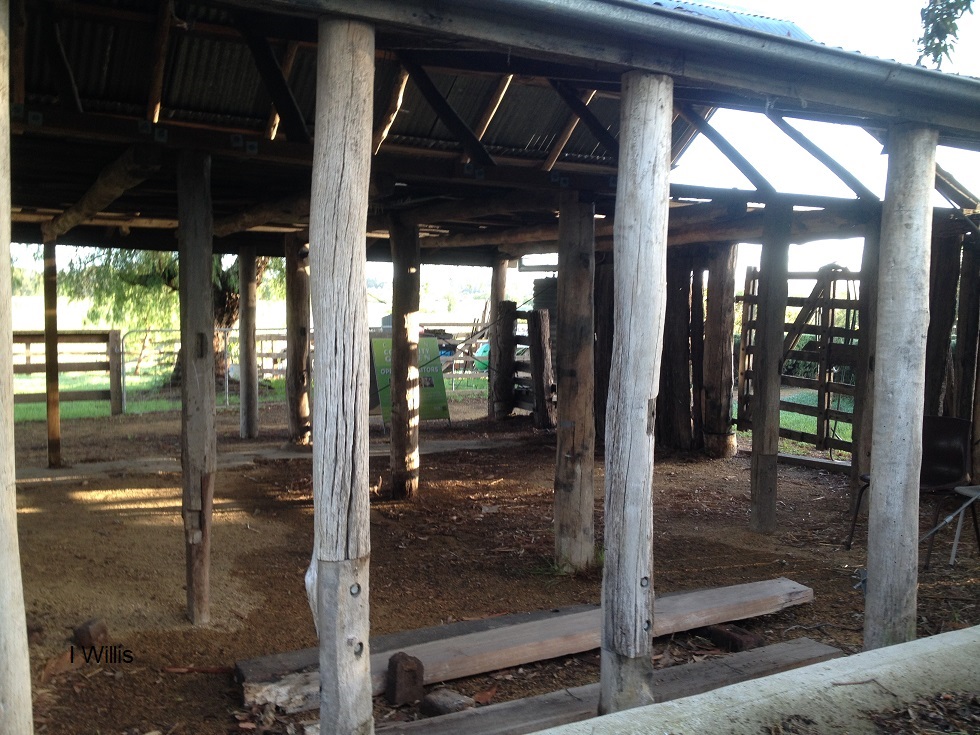
There were many examples of huts and farm sheds being erected in other parts of the Camden district, particularly in remote areas like the Burragorang Valley. Post-and-rail fencing and a host of other structures put a defining character on the rural landscape. There is still evidence of bush carpentry in and around Camden.
The bush carpenter’s tool kit usually did not have specialised tools and would have included saws, axes, adze, chisels, augers, hammers, wedges, spades, and other items. Their kit was designed to cope with all the contingencies of the rural frontier typical of the remote parts of the Camden district.
The formal trade of carpentry and joinery has a long history going back centuries, centred on the guilds. Guilds appeared in England in the Middle Ages, and according to the website London Lives 1690-1800, their purpose was to
defend the interests of the trade, regulate the quality of workmanship and the training of new members, and provide support and welfare for their members.
https://www.londonlives.org/static/Guilds.jsp
In London, they were established by charter and regulated by the City authorities. Guilds in London held considerable political power and were among the largest charitable institutions in the City. Carpenters were organised in the Carpenter’s Company, one of 12 powerful London guilds. Guilds were a mixture of apprentices, journeymen and master craftsmen, with no women.
In the colony of New South Wales, carpenters were formally trained artisans have examples of their work in colonial mansions of the grand estates and the many local towns and villages across the Camden district. These artisans utilised milled timber and other manufactured products of the Industrial Revolution that were readily available and affordable to their clients.
Camden’s carpenters were a mix of journeymen and master craftsmen who had served their apprenticeships in Camden and elsewhere. John Wrigley’s Historic Buildings of Camden (1983) lists 38 carpenters/builders who worked in Camden between the 1840s and 1980s.
The pre-WW2 tradesmen used hand tools and traditional construction methods, which is evident in any of the town’s older buildings and cottages. Take particular notice when you walk around central Camden of the fine quality of artistry that has stood the test of time from some of these traditional tradesmen.
The hand tools used by the Camden carpenter underwent little change over centuries of development and refinement. The tool kit of the mid-1800s would have included hammers, chisels, planes, irons, clamps, saws, mallet, pincers, augers and a host of other tools. It would be very recognisable by a 21st-century tradesman. Master carpenter, Fred Lawton’s tool kit, is on display at the Camden museum (The District Reporter, 19 December 2011).
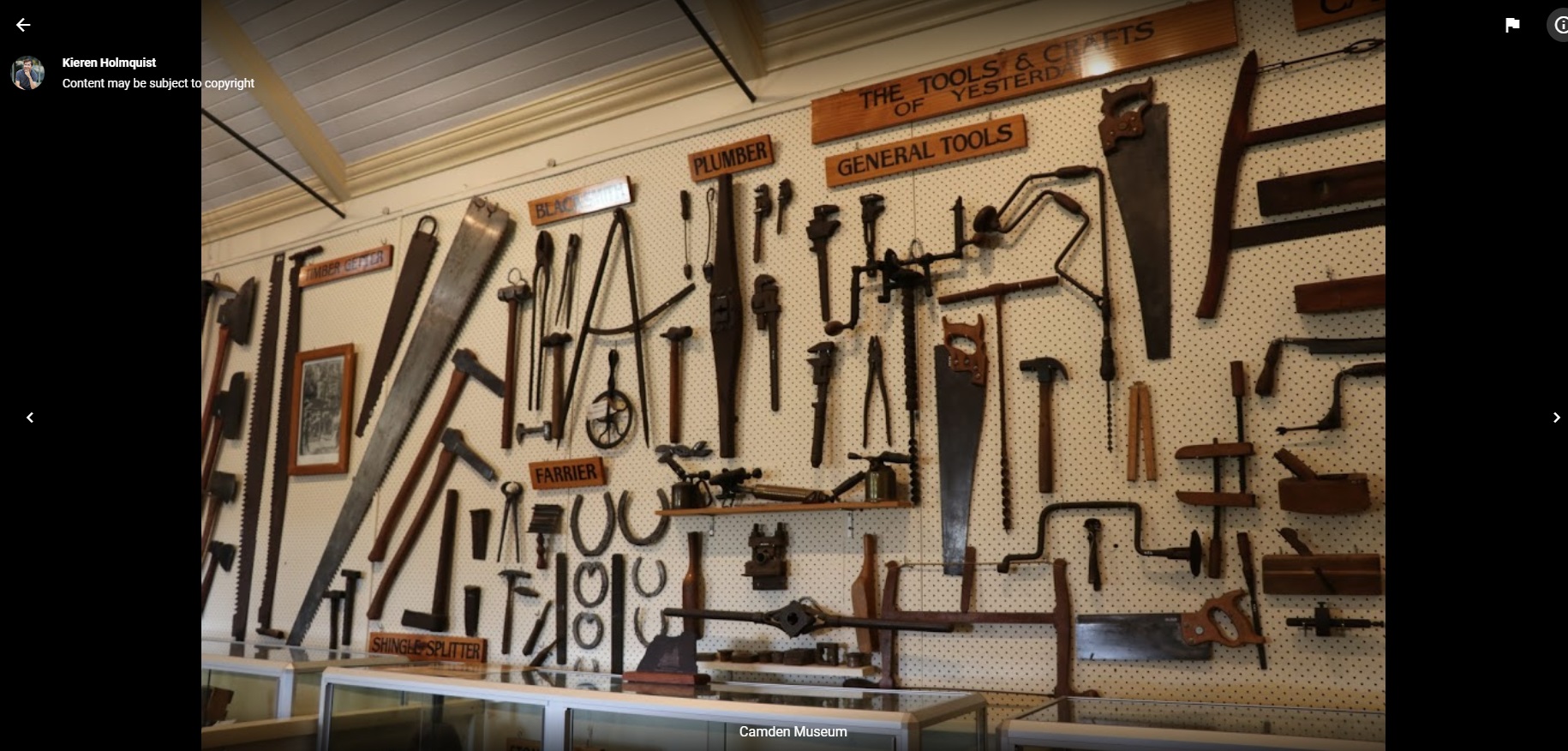
Hand tools were utilitarian, and some had decorated handles and stocks, particularly those made by German and British manufacturers. By the early 19th century, many hand tools were being manufactured in centres like Sheffield, UK, and these would have appeared in the Camden area. Carpenters traditionally supplied their own tools and would mark them with their initials or other identifying marks on their hand tools. Many of the hand tools became highly specialised, especially for use by cabinetmakers, joiners, and woodturners.
The Camden carpenters listed in the 1904 New South Wales Post Office Directory were J.P. Bensley, John Franklin, Joseph Packenham, and Thomas Thornton. At Camden Park, there was Harry ‘Herb’ English. According to Herb’s nephew, Len English, Herb English was one of several generations of the English family who were carpenters in the early 20th century in the Camden area. It was a family tradition for the sons to be apprenticed in their father’s trade and work at Camden Park. This practice followed the training principles of English carpentry guilds under a system of patrimony.
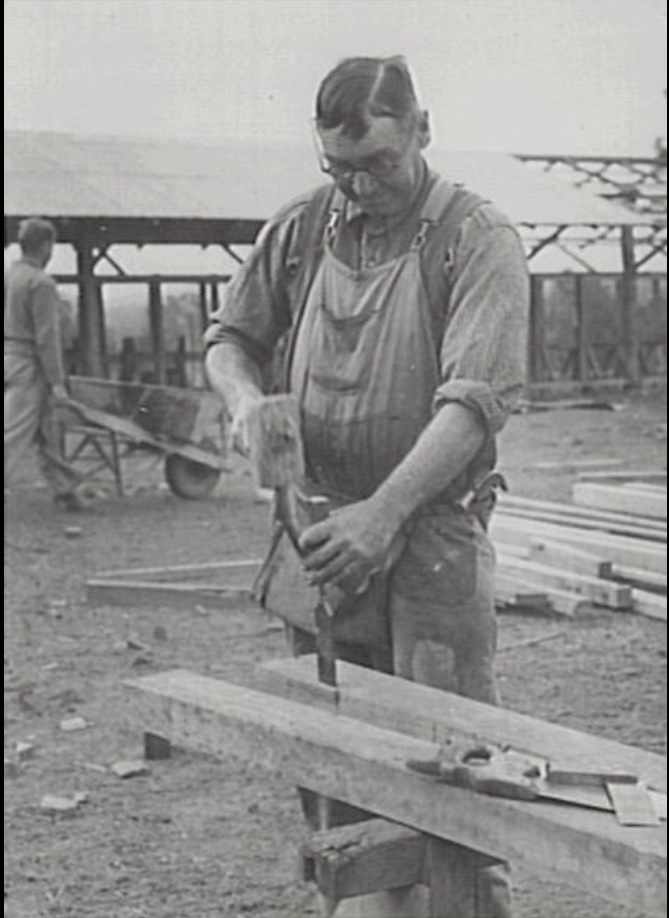
Len English’s grandfather, William John English,e was apprenticed to his father, James, and worked at Camden Park between the 1890s and 1930s. William lived on Luker Street, Elderslie, where he built his house and had his workshop, which Len recalls playing in as a lad. William’s son, Jack Edward English, was apprenticed to his father (William) in the family tradition, also worked at Camden Park and later in Camden and Elderslie during the 1930s and 1940s. During this period, Jack and his brother, Sidney, both worked with local Camden builders Mark Jenson and Mel Peat (The District Reporter, 19 December 2011).
Updated on 8 July 2025. Originally posted on 5 April 2021 as ‘Camden’s carpenters’.
Discover more from Camden History Notes
Subscribe to get the latest posts sent to your email.


One thought on “Traditional trades, the legacy of Camden’s carpenters”
Comments are closed.