
Early English influences
The Camden Cottage Hospital was part of the cottage hospital movement, emerged in England and Wales in the 1860s and reached New South Wales in the late 19th century.
NSW Health administrator CJ Cummins argues that
The influence of Great Britain on medical practice, education, and organisation were still dominant in Australia until after World War Two. (Cummins, 1979: 3)
At the same time, there were significant differences
In the organisation of medical benevolence in the Colony, and here the early settlers were influenced by the abuses of the workhouse system of Great Britain. (Commins, 1979: 3)
Cottage hospitals appeared in New South Wales based on the English model in the 1880s and are part of the transfer of knowledge, innovation, culture and traditions from England to the outposts of the British Empire.
The English cottage hospital movement
Cottage hospitals emerged in England and Wales at a village level where there was no health care. They were small hospitals with rudimentary operating facilities. In the UK, an ill, poor person either had to admit themselves to a workhouse or stay at home.
Unlike the cruelty of the workhouse wards, cottage hospitals were welcoming, homely places away from the gaze of the state where they trusted the nurses. They relied on donations to survive and celebrated the community spirit that supported them through fetes, carnivals and other community fundraisers. (RCN 2024)
Keith Aitkin argues that in the 19th century, cottage hospitals operated alongside voluntary hospitals and workhouse infirmaries. A contributing factor in the emergence of cottage hospitals was the increasing regulation of surgeons, thus increasing trust and the ability of surgeons to provide reliable care. Some of these surgeons moved to rural areas of England and Wales, where they opened cottage hospitals. (Aitkin 2018: 1-2)
RMS McConaghey defines a cottage as
it was a small building, usually one already standing, which was used as a hospital without any major alterations being made to it. All the doctors in the area were allowed to admit patients to it, and in-patients were expected to pay a small weekly sum for their keep. (McConaghey, 1967:128)
In the middle of the 19th century, as the Industrial Revolution proceeded, sick people in villages could only be treated at home, and there was a need for small hospitals.
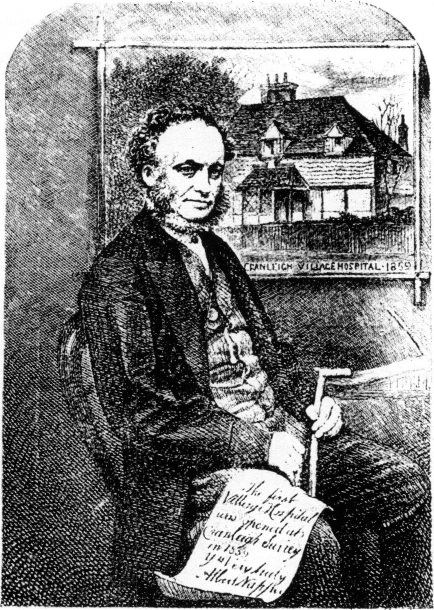
A Surrey general practitioner, Albert Napper, set up a small hospital in a simple cottage in the village of Cranleigh with a nurse and keen surgeon. The villagers paid a small subscription. Cranleigh Village Hospital opened in 1859 with six beds. The staff consisted of a nurse and a female servant. The 1866 list of patients listed accidents and other ailments, with some treated with chloroform. The patients paid for their stay in the hospital, while the doctor did not charge for their service. Within seven years, there were 16 similar hospitals; by 1896, there were 300 across England. (McConaghey, 1967: 131-132)
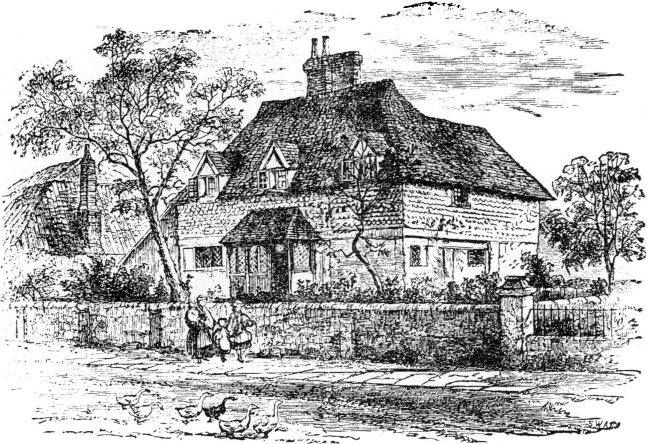
In 1869, the advantage of the cottage hospital was its simplicity, comfort, inexpensive, quiet, private, and homely with a certain level of agency for the patient. The villagers paid a small weekly subscription, giving immediate admission and having a ‘moral value’. These hospitals were popular and successful. (McConaghey, 1967: 133)
The cottage hospital needed a room with a good window and a fireplace to act as an operating room. The nurse lived in an adjacent room as she may be called on at night to assist the patient. There was also a bathroom. (McConaghey, 1967: 134)
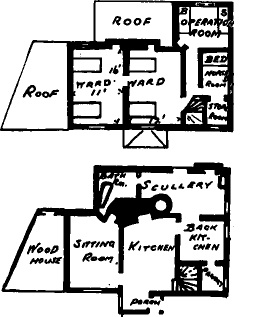
Often, the cottage hospital nurse would be from the village, and occasionally, she would be from somewhere else with experience in a larger hospital. (McConaghey, 1967: 134-135)
At a time when infectious diseases were rife, it was common not to admit these patients to cottage hospitals. (McConaghey, 1967, 136)
These English precedents influenced the emergence of cottage hospitals in the New South Wales colony in the late 19th century and its part in the cottage hospital movement.
Early country hospitals in NSW
There were hospitals in country New South Wales before the appearance of cottage hospitals on the English model in the 1880s.
The earliest country hospitals in New South Wales, like Carcoar where it started out in 1857 as the Carcoar Hospital and Benevolent Society, founded by former convict turned pastoralist Bernard Stimson. The society was the vehicle for fundraising for the hospital, which opened in 1861.
At Goulburn, New South Wales, the cottage hospital was the former Convict Hospital built in 1834, transferred to the cottage hospital committee in 1842, and rebuilt in 1849. (Schwager Brooks 1992)
Early press reports about English cottage hospitals
There were reports of English cottage hospitals in the New South Wales press as early as the 1860s. (SMH, 4 September 1866)
In the late 1870s and early 1880s, proposals for cottage hospitals were regularly reported in several country towns, including Lismore, Grafton, and Wagga Wagga.
First cottage hospital in country NSW
A survey of the NSW press through the National Library of Australia database Trove indicates that the first cottage hospital in NSW was constructed at Urana in the Riverina in 1881, with the tender successfully won by Dr C Johnson of Corowa. (Corowa Free Press, 15 April 1881)
Camden Cottage Hospital
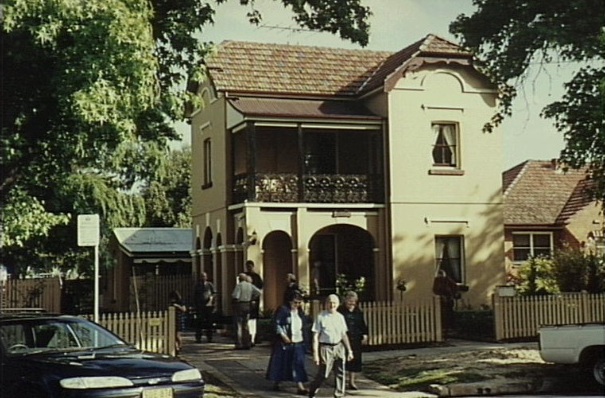
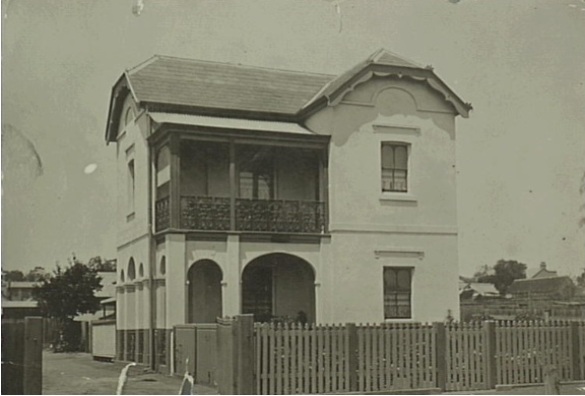
The Camden Cottage Hospital, which opened in 1899 in Edithville at 18 Mitchell Street and moved to a permanent building in 1902, had many characteristics of the English cottage hospital, which appeared in English villages in the mid-19th century.
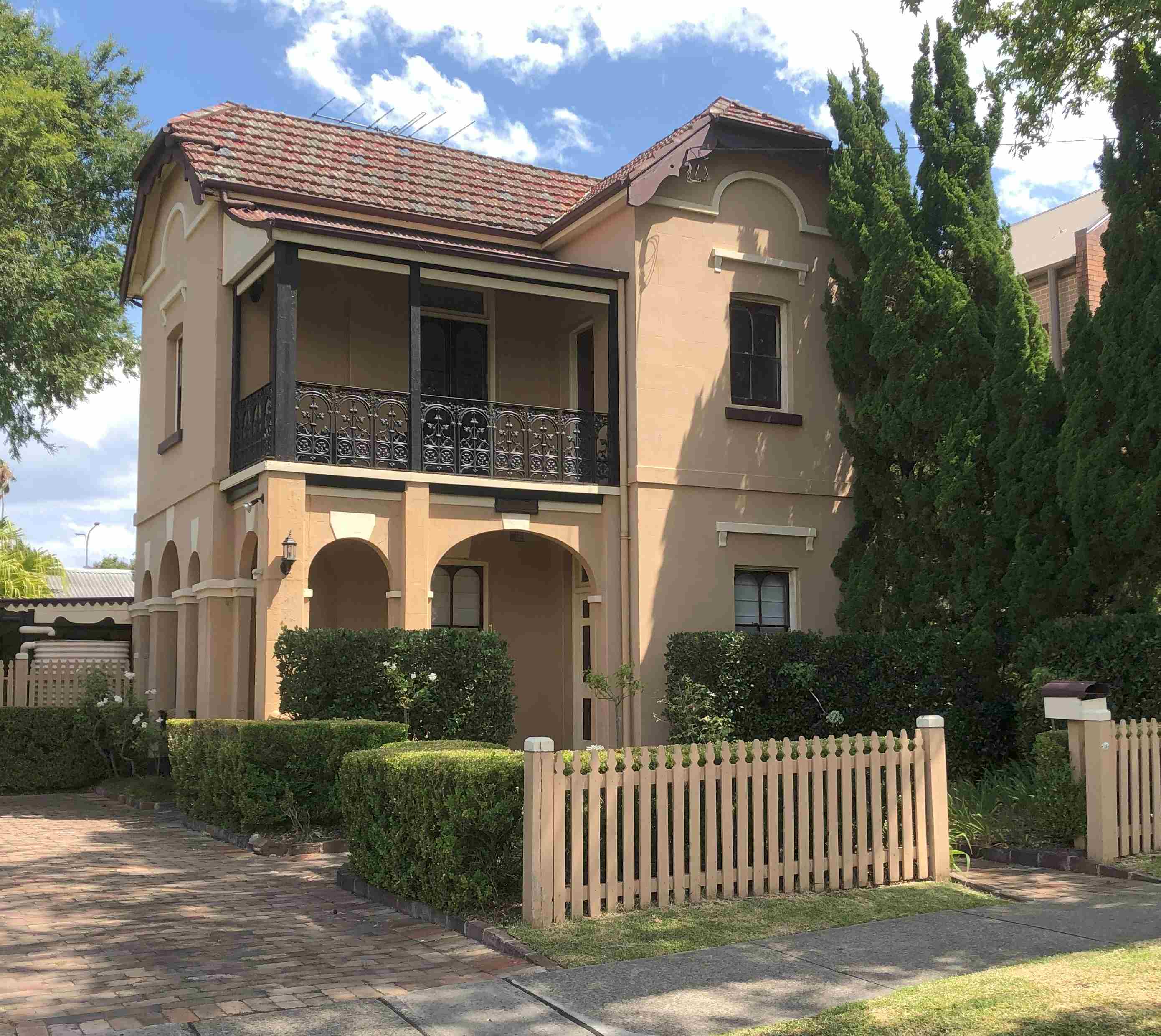
Located in a small house, with an attended honorary doctor and a trained nurse in charge, funded by subscriptions and donations by the community, financial, hospital requisites, food and other items.
The community supported the cottage hospital at the annual hospital ball and the Anniversary Day sports day on January 26 each year. The hospital admitted all patients, charged those who could afford to pay, and did not charge those who could not.
The Camden Cottage Hospital was registered under the Public Hospitals Act 1898 (NSW), which mainly outlined the rules and regulations for the hospital board. The schedule that lists the country hospitals does not clearly indicate the difference between those called cottage hospitals and those that started in other ways yet were cottage hospitals for all intents and purposes.
A permanent building for the Camden Cottage Hospital was opened on Windmill Hill in 1902.
So what does all this mean?
The cottage hospitals in New South Wales were small country hospitals conducted in a manner strikingly similar to that of the English village cottage hospitals.
Yet they developed particular local characteristics that differentiated them from those in England.
From the late 19th century, cottage hospitals became essential to the health and medical landscape across rural and metropolitan New South Wales.
References
Atkins, Keith 2018, The Cottage Hospital Movement in England & Wales 1850–1914: Origins, Growth and Contribution to the Healthcare of the Poor. PhD Thesis, Kingston University, London. Online https://eprints.kingston.ac.uk/id/eprint/43861/1/Atkins-K.pdf
Cummins, CJ 1979, A History of Medical Administration in NSW 1788-1973. NSW Health, Sydney. Online https://www.health.nsw.gov.au/about/history/Publications/history-medical-admin.pdf
McConaghey, RMS, 1967. The Evolution Of The Cottage Hospital. Medical History , Volume 11 , Issue 2 , April 1967 , pp. 128 – 140 DOI: https://doi.org/10.1017/S0025727300011984 doi:10.1017/S0025727300011984 Online https://www.cambridge.org/core/journals/medical-history/article/evolution-of-the-cottage-hospital/E6AAEC25A3B5D188F0632A54247C3900
Royal College of Nursing 2024, ‘From cottage hospitals to community nursing: a history of care in the countryside’. Royal College of Nursing, 2 April. Online https://www.rcn.org.uk/news-and-events/news/cottage-hospital-spotlight-case
Schwager Brooks 1992, Preliminary Heritage and Conservation Register, South East Area Health Service, NSW Dept of Health, Sydney.
Stevens, Annie 2018, Colonial Medicine at Carcoar, A Chest of Cures. Storyplace, Museums and Galleries of NSW, Sydney. Online https://storyplace.org.au/story/colonial-medicine-at-carcoar/
Read more
Discover more from Camden History Notes
Subscribe to get the latest posts sent to your email.


One thought on “Camden Cottage Hospital – early English influences and the cottage hospital movement”
Comments are closed.