Memorial garden
In Canberra, there is a memorial garden to the memory of John and Elizabeth Macarthur, which celebrates their role in establishing the fine wool industry in Australia. In the 1930s, a family member donated two roses to the newly established Australian Parliament House garden.
This story is one of the foundational narratives of Australian nationalism and the early pioneers, particularly as the sesqui-centenary year approached in 1938, which marked the arrival of the First Fleet and the establishment of the British colony.
The rose donor, Sibella Macarthur Onslow, the great-granddaughter of John and Elizabeth Macarthur, meant her donation to symbolise a message of hope, grace, and gratitude, which rose gardens often expressed, towards the efforts of her great-grandparents and their contribution to the Australian wool industry.
Camden connection
Little is known about the role of Rosa ‘Sibella’ Macarthur Onslow of Camden Park and her connection to the Old Parliament House Gardens during the Interwar period. The gardens were for the enjoyment of Federal politicians at the new Parliament House and have only been open to the public since 1989. (NCA(h))
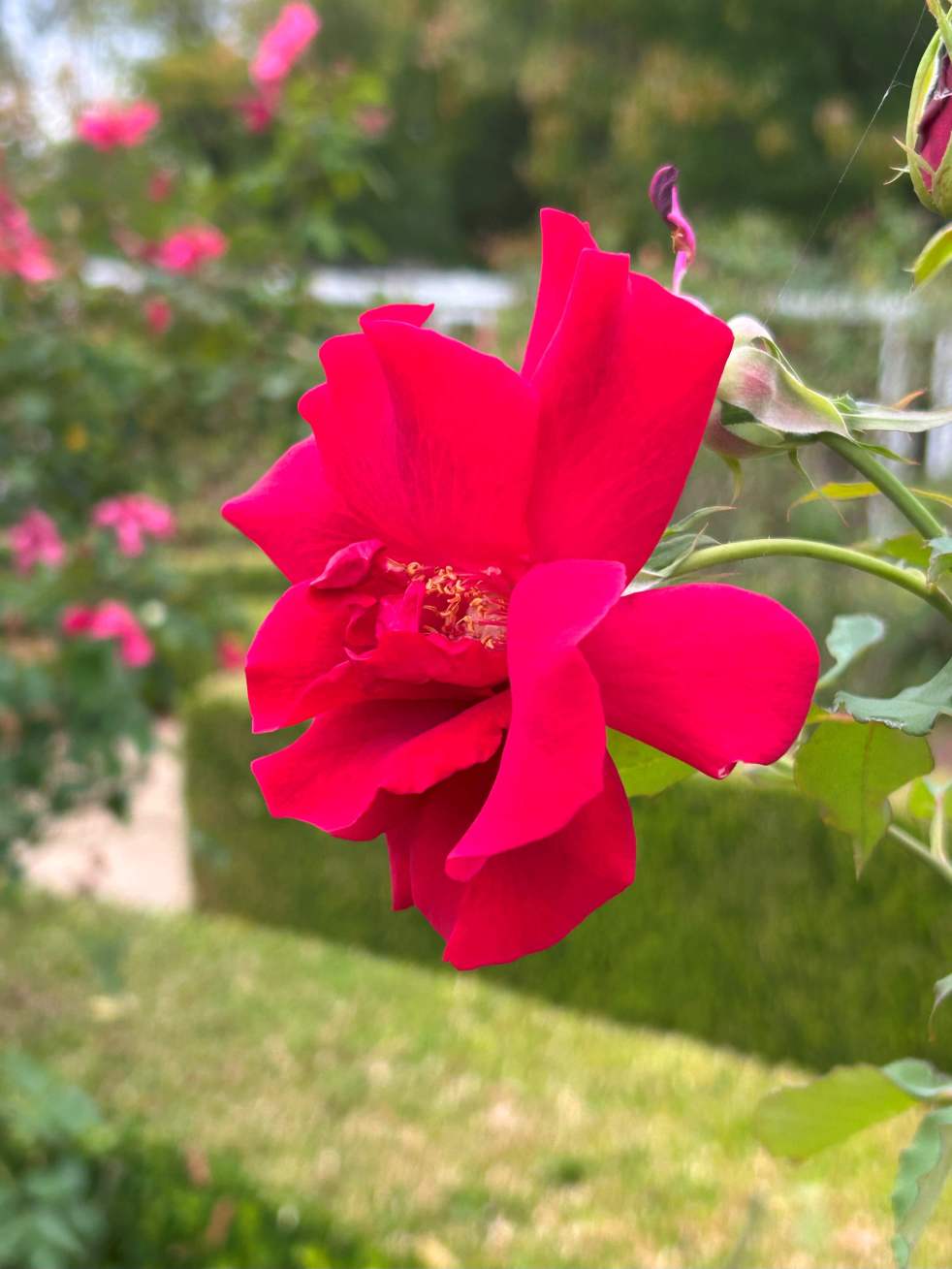
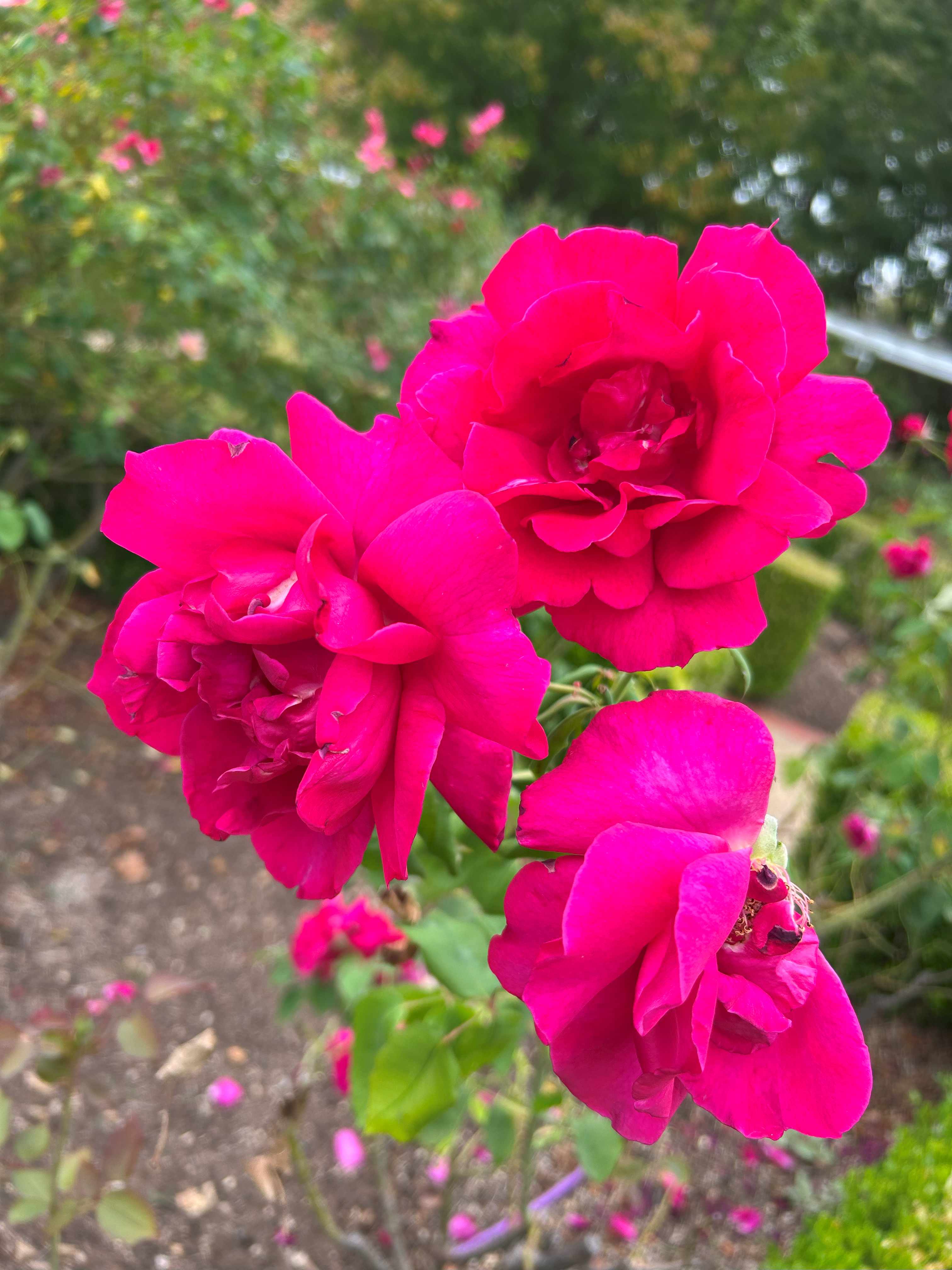
In 1995, the Macarthur Rose Garden was named in honour of Sibella Macarthur Onslow’s 1930s donations of two varieties of roses, the red ‘Etoile de Holland’ rose from Camden Park (NCA(h)) and the pink ‘Shot Silk’ rose, for the Old Parliament House Gardens.
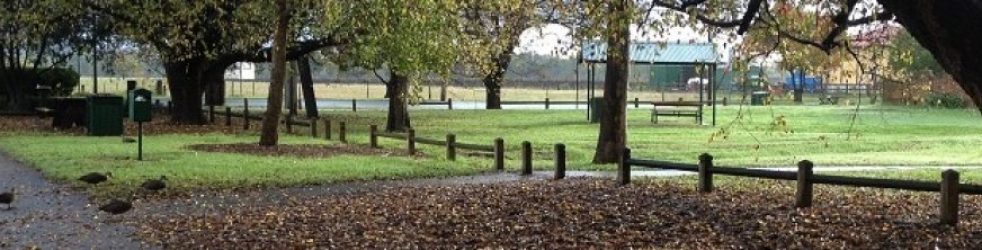
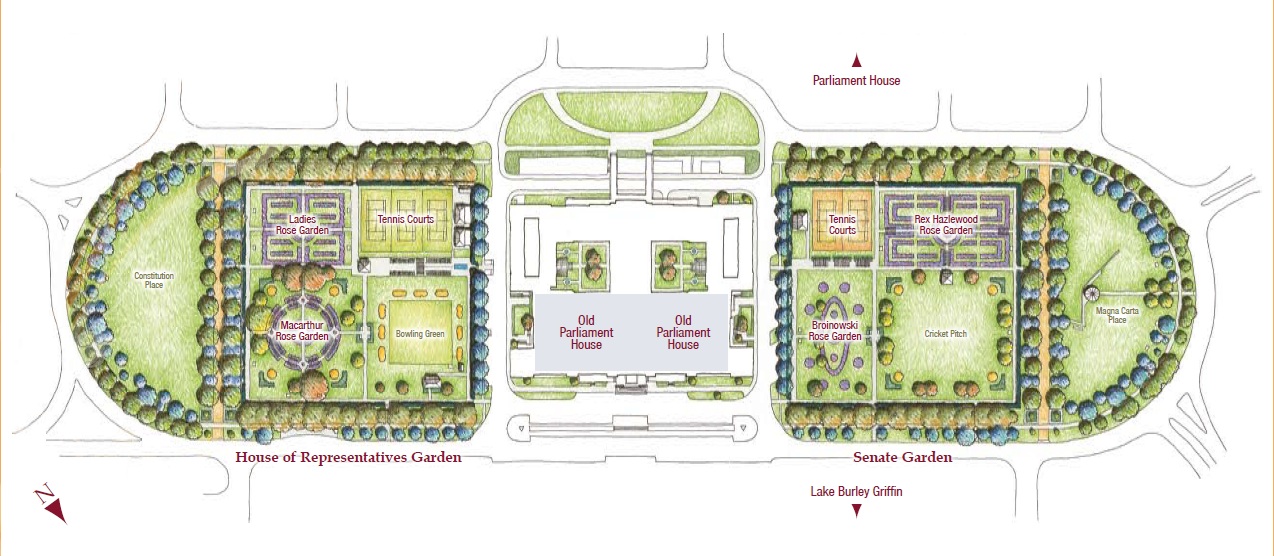
The Old Parliament House rose gardens, which contain over 500 varieties, are situated on the western and eastern sides of the building. The House of Representatives Garden comprises the Broinowski Garden (early 1930s) and the Rex Hazelwood Rose Garden (1931). The Senate Garden on the eastern side has the Ladies Rose Garden (1933) and the Macarthur Rose Garden (1937).
The Canberra dust bowl
Robert Broinowski, a senior public servant, conceived the gardens and supervised their layout between 1931 and 1938. He arrived in Canberra in 1927 when the Provisional (now Old) Parliament House opened. He had a vision for a grand capital city in the dust bowl of the limestone Monaro plains.
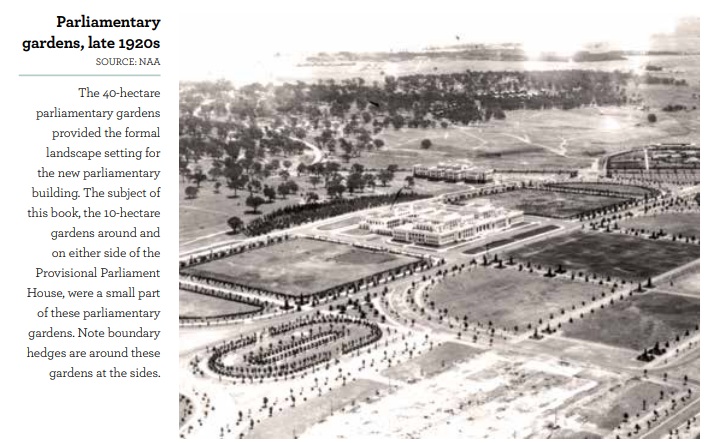
Broinowski worked enthusiastically on establishing the rose gardens, which were surrounded by hedges, similar to those left behind by the politicians at the Treasury Gardens in Melbourne. (NCA (f)) The entertainment of the politicians was not to be forgotten, and the gardens contained features such as a bowling green, cricket pitch, tennis courts, and a now-demolished squash court. (Fraser 2008)
A very English garden
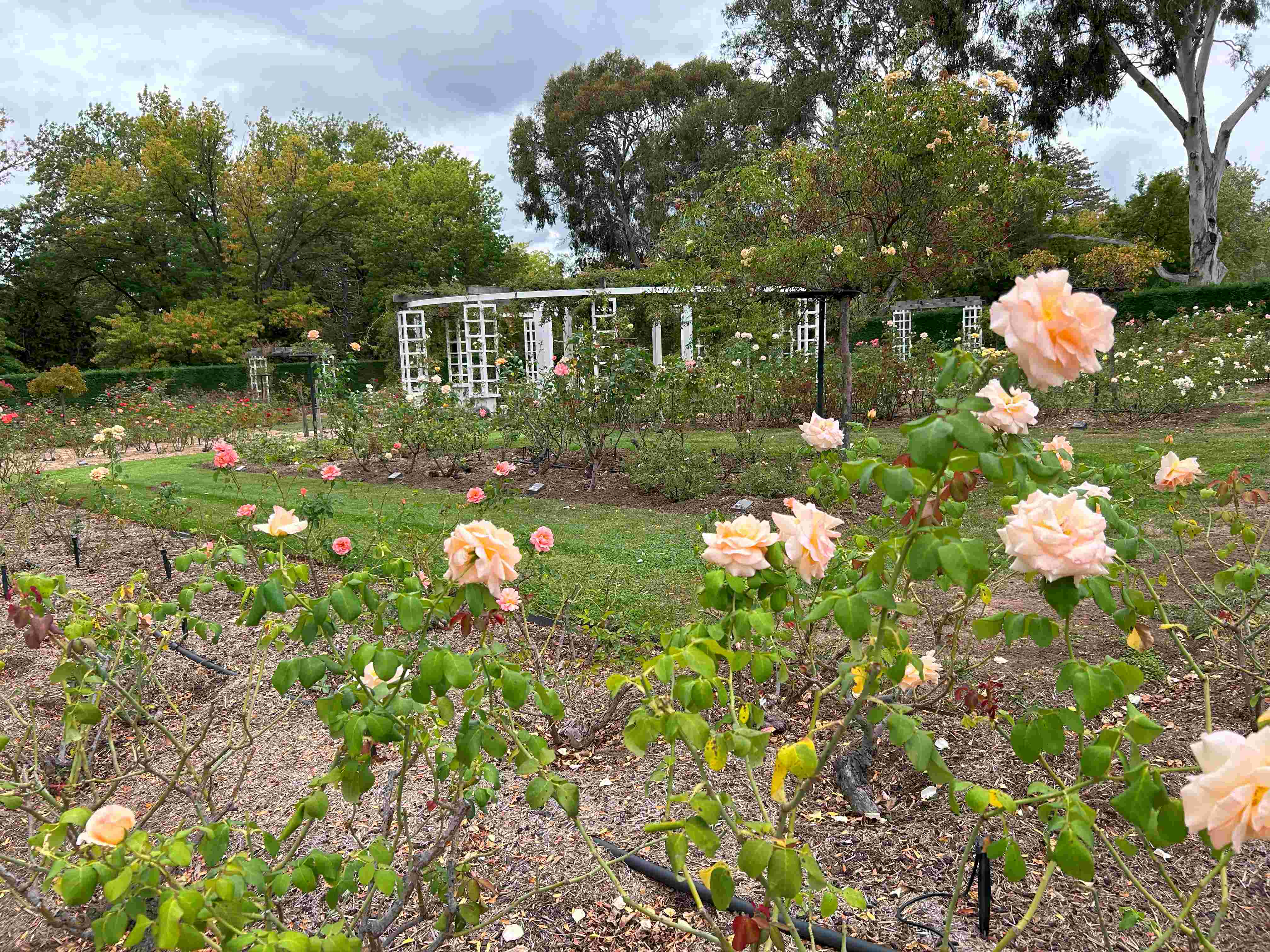
The Macarthur Rose Garden was first established between 1937 and 1938 by Broinowski, who accepted two donations of different roses from Sibella Macarthur Onslow of Camden Park. Initially, the Macarthur Rose Garden site featured four tree species gifted by the Canadian Government: Southern Nettle, Desert Ash, Silver Maple, and Honey Locust. (NCA (a))
In March 1937, Broinowski wrote to Sibella Macarthur Onslow to accept her offer to present some roses in honour of John Macarthur’s memory. (Gray 2014)
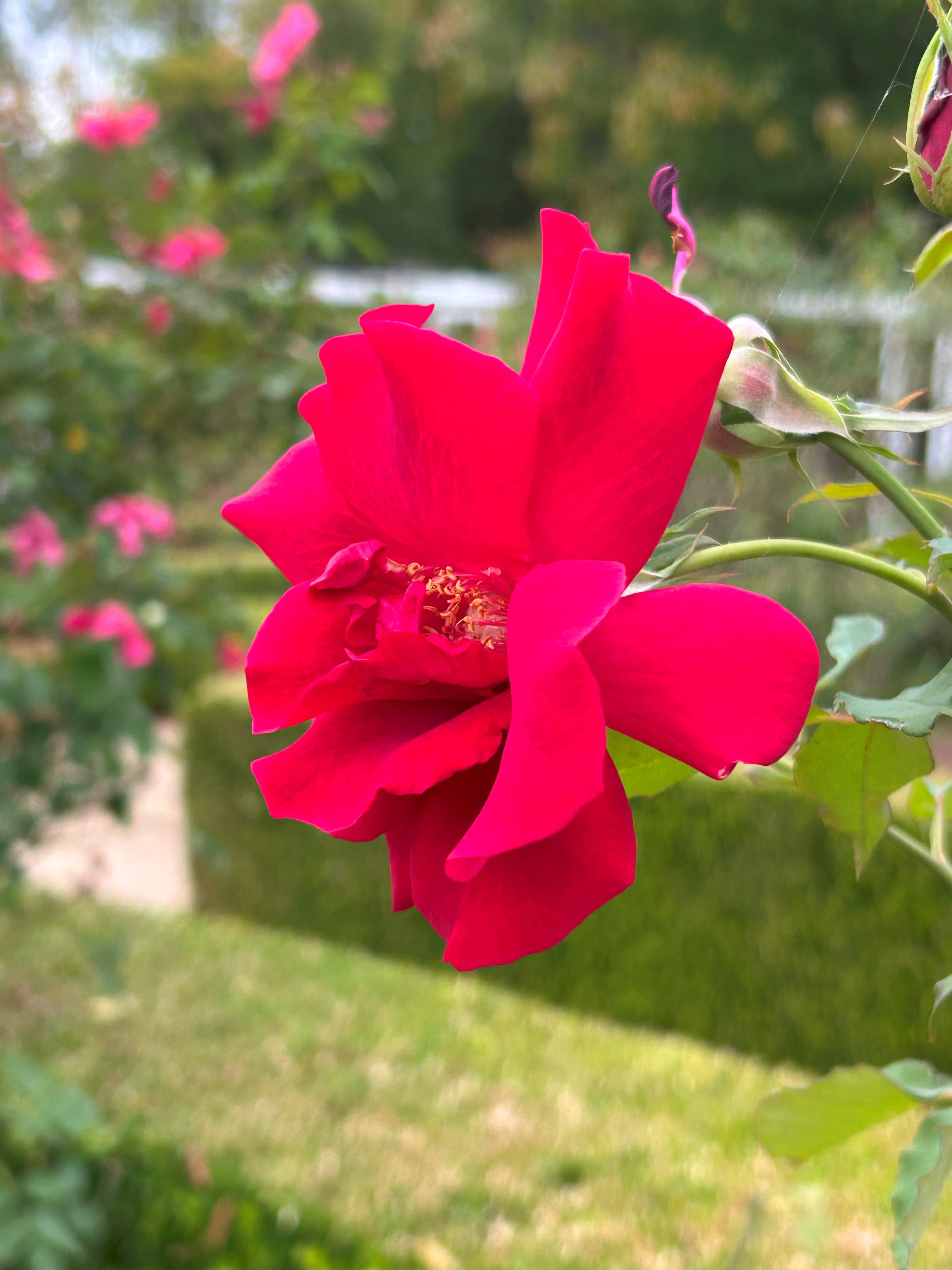
Sibella gave the parliament 100 red ‘Etoile de Holland’. They were planted in a large circular bed in May 1937, commemorating John Macarthur as the “founder of the Australian merino wool industry.” (NCA (a))
The gift of the roses followed a symposium at the Australian Institute of Anatomy, a natural history museum in Canberra, by the president of the Royal Society of Australia on the centenary of the death of John Macarthur. The keynote speaker was renowned surgeon and philanthropist Sir Colin Mackenzie, who spoke in a celebratory fashion on the role of John Macarthur as ‘founder of the merino wool industry in Australia’. Sibella Macarthur Onslow attended the symposium, and the Canberra Times ran a significant supplement on John Macarthur and the wool industry, complaining that the rest of the country ignored the occasion. (Canberra Times, 18 April 1934)
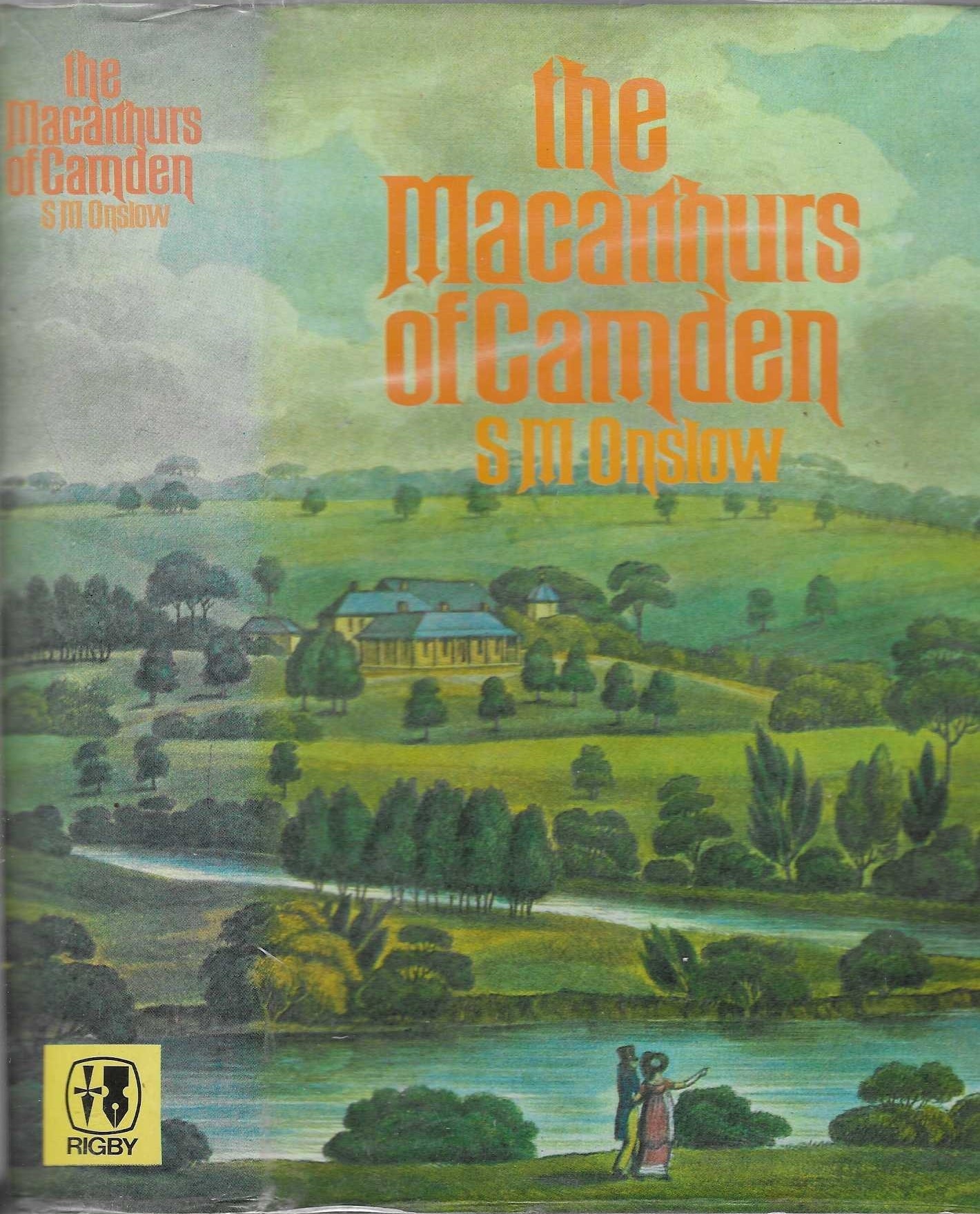
In 1914, Sibella Macarthur Onslow edited and published Some Early Records of the Macarthurs of Camden, a collection of the Macarthur family’s early colonial records. In 1915, the book was reviewed by JH Clapham, who later became the first Professor of Economic History at Cambridge in 1928, who stated ‘nothing in economic history is harder to unearth satisfactorily than a commercial invention or development’. He maintained that
in the last forty or fifty pages of this collection of family papers, we have something like a complete inside account of how the Australian merino wool established itself on the market.
Clapham supported Macarthur Onslow’s proposition that her great-grandfather, ‘John Macarthur of Camden founded the Australian fine-wool industry’. (Clapham 1915)
Formal garden
The Macarthur Rose Garden is a formal, circular-shaped garden design featuring Tea, China, and Noisette roses. The information board states that these were hybridised in the early 19th century, when John and Elizabeth Macarthur established their garden at Elizabeth Farm, Parramatta. (NCA (b))
Tea rose hybrids have an ‘exquisite form’ and colour and a perfume reminiscent of green tea. French growers hybridised China roses after their initial introduction from China between 1760 and 1790. Noisette roses were initially grown by Frenchman Phillipe Noisette and released in 1814 after being crossed in South Carolina by John Champney. (NCA (b))
Shot Silk rose
Sibella Macarthur Onslow made a second donation of 50 ‘Shot Silk’ roses in 1938 in honour of the memory of Elizabeth Macarthur and her ‘pivotal role in the growth of the wool industry. Mrs Macarthur was responsible for managing the merino stock at the family estates in Camden and Parramatta’. These roses were planted out in the Ladies Rose Garden. (NCA(a))
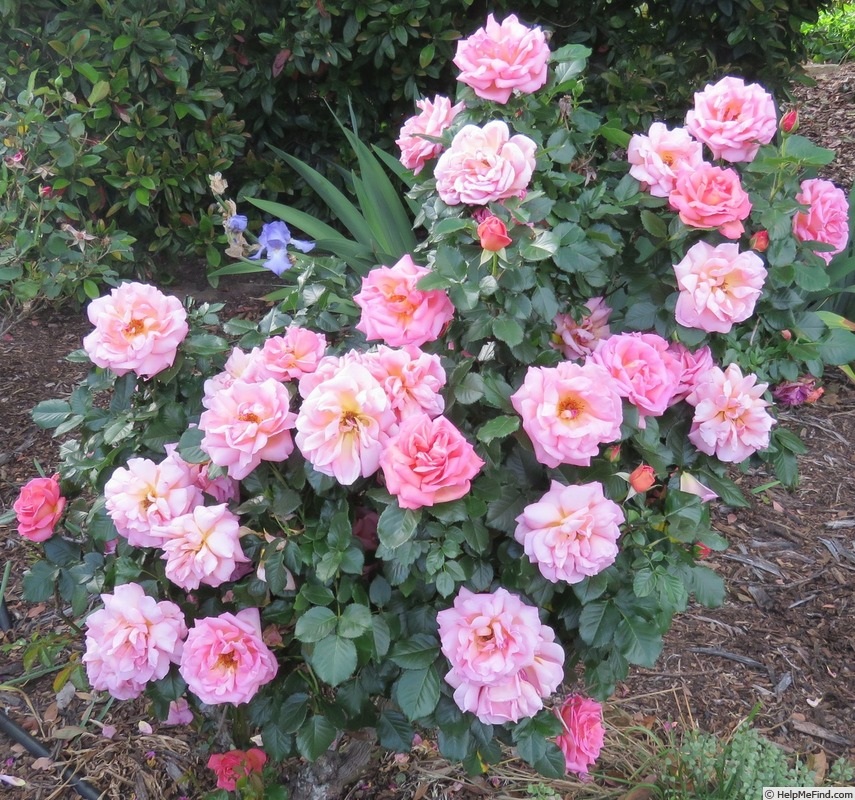
The Ladies’ Rose Garden is a formal, rectangular-shaped garden featuring quadrants of white, yellow, red, and pink shades. The garden exhibits Hybrid Tea roses and smaller Floribundas. Hybrid Tea roses emerged in the mid-19th century due to crosses and are characterised by large flowers, pointed buds, and large leaves, with strong stems. (NCA(c)
Hybrid Tea roses first appeared in France in the 1860s, bred by rose breeder Guillot fils. Meanwhile, Floribunda roses emerged in the 1920s and are repeat bloomers that provide colour over a longer period. (NCA(c)) The wives and friends of federal politicians contributed to the Ladies Rose Garden in donations of roses and cash. (NCA(d))
Redevelopment of garden
When the ‘new’ Parliament House opened on Capital Hill in 1988, the rose gardens at the Old Parliament fell into disrepair.
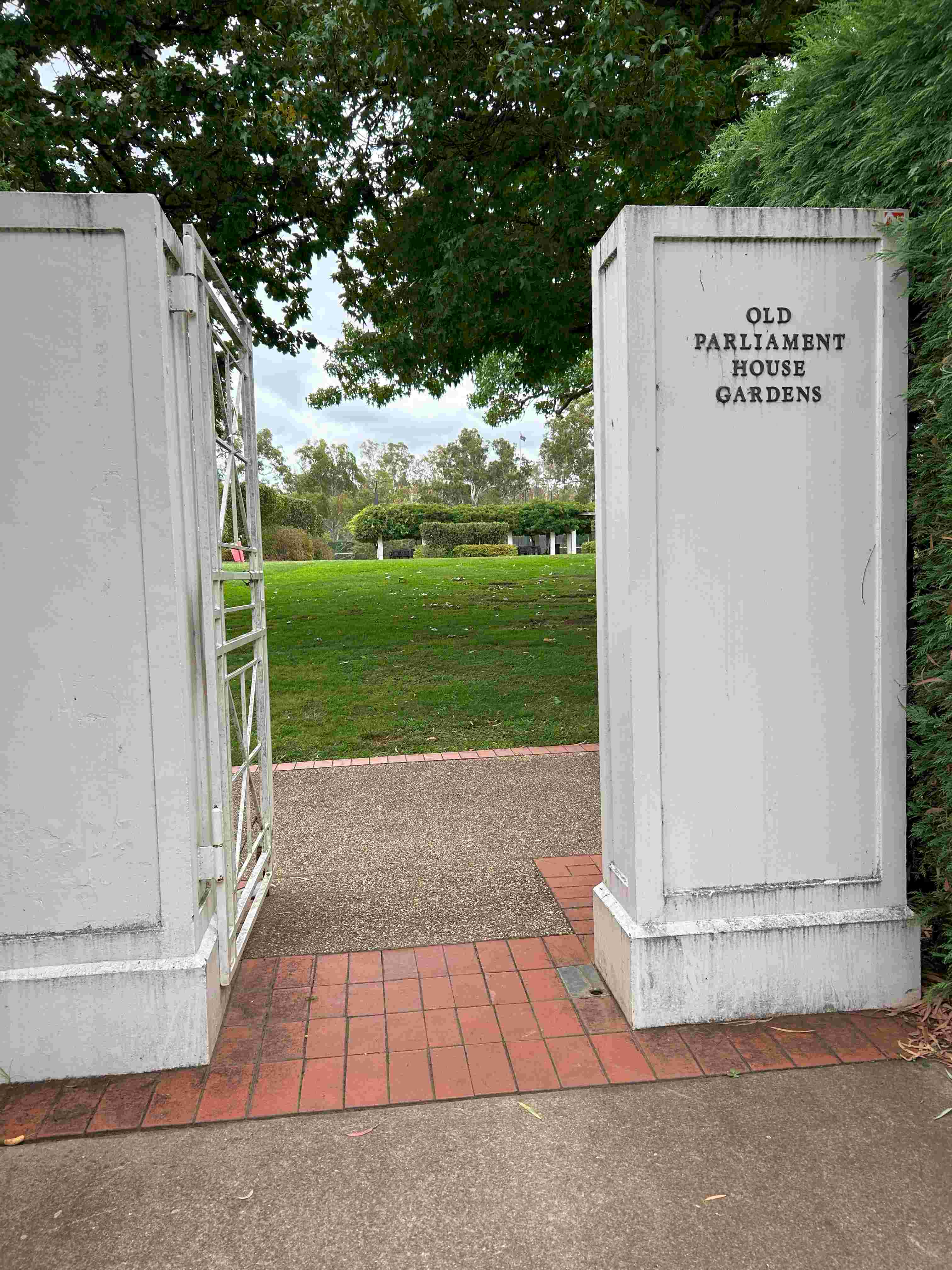
The hedges were replanted in 2000. (NCA(g)) In 2002, Tamie Fraser launched a public appeal for funds to redevelop the gardens. This project was completed in 2004, and the gardens were re-opened. Today, the National Capital Authority Horticultural Volunteers tend the gardens. (NCA (e))
Conclusion
Rose fanciers are well aware of the significance of these rose gardens, yet the wider community has little appreciation of their importance, their original benefactors or their Camden connection and Sibella Macarthur Onslow of Camden Park.
When next in Canberra, check out the Old Parliament House Rose Gardens and the beauty of the rose gardens.
References
National Capital Authority (a), Macarthur Rose Garden History Information Board, Australian Government, Canberra, 2004.
NCA (b), Macarthur Rose Garden Design Information Board, Australian Government, Canberra, 2004.
NCA (c), Ladies Rose Garden Design Information Board, Australian Government, Canberra, 2004.
NCA (d), Ladies Rose Garden History Information Board, Australian Government, Canberra, 2004.
NCA (e), Rose Patronage Information Board, Australian Government, Canberra, 2004.
NCA (f), Broinowski Rose Garden History Information Board, Australian Government, Canberra, 2004.
NCA (g), Old Parliament House Gardens, Australian Government, Canberra, 2025. Online
NCA (h), Old Parliament House Gardens Self-Guided Walking Tour, Australian Government, Canberra, 2025. Online
Tamie Fraser 2008, Old Parliament House Gardens Rose Guide, NCA, Canberra. Online
John Gray 2014, Roses, Tennis and Democracy, The Story of the Old Parliament House Gardens, Canberra. NCA, Canberra. Online
JH Clapham, ‘Review of Some Early Records of the Macarthurs of Camden, (ed) SM Onslow’, The Economic Journal, Vol. 25, No. 99 (Sep., 1915), pp. 407-409
Updated 4 April 2025. Originally posted on 30 March 2025 as ‘Rosa Sibella Macarthur Onslow’s garden legacy in Canberra’.
Discover more from Camden History Notes
Subscribe to get the latest posts sent to your email.

