Aaron Bolot and the agricultural hall
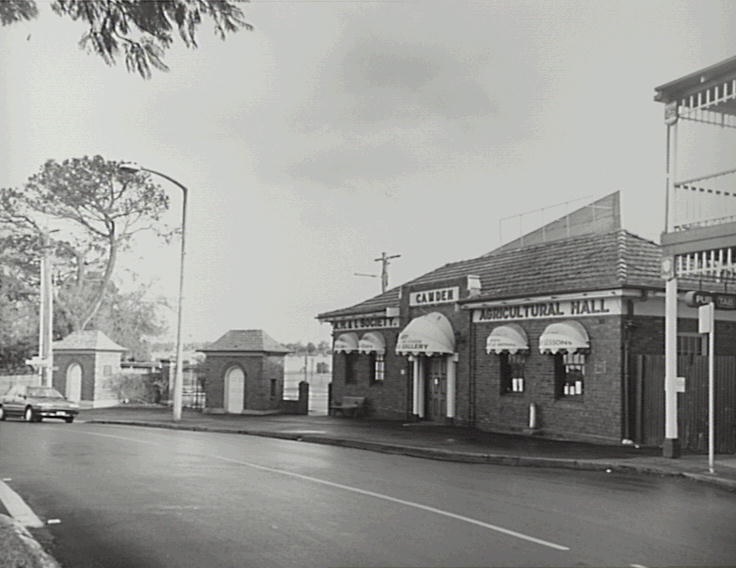
Interwar Camden directly connects to a noted Sydney interwar architect, Aaron Bolot. He designed the 1936 brick extensions to the Camden Agricultural, Horticultural and Industrial Hall.
Aaron Bolot, a Crimean refugee, was raised in Brisbane and worked with Walter Burley Griffin in the 1930s. He designed the extensions on the front of the former 1890s drill hall at the Camden showground.
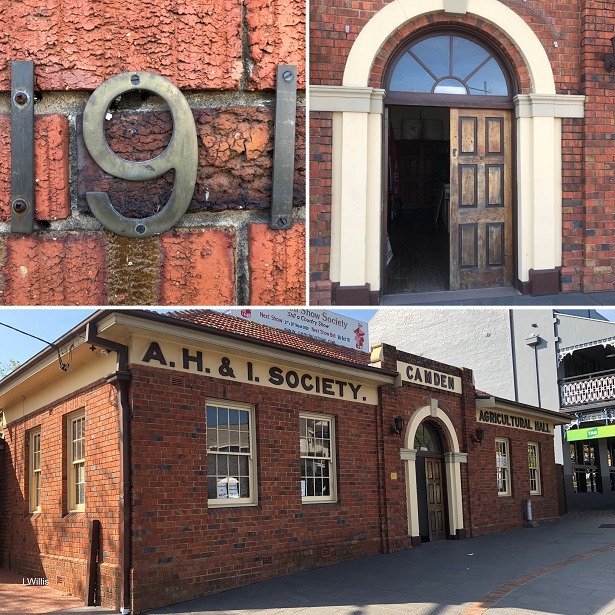
Bolot worked for Sydney architect EC Pitt, who supervised the construction of the new showground grandstand in 1936 and agricultural hall extensions (Camden News, 19 September 1935).
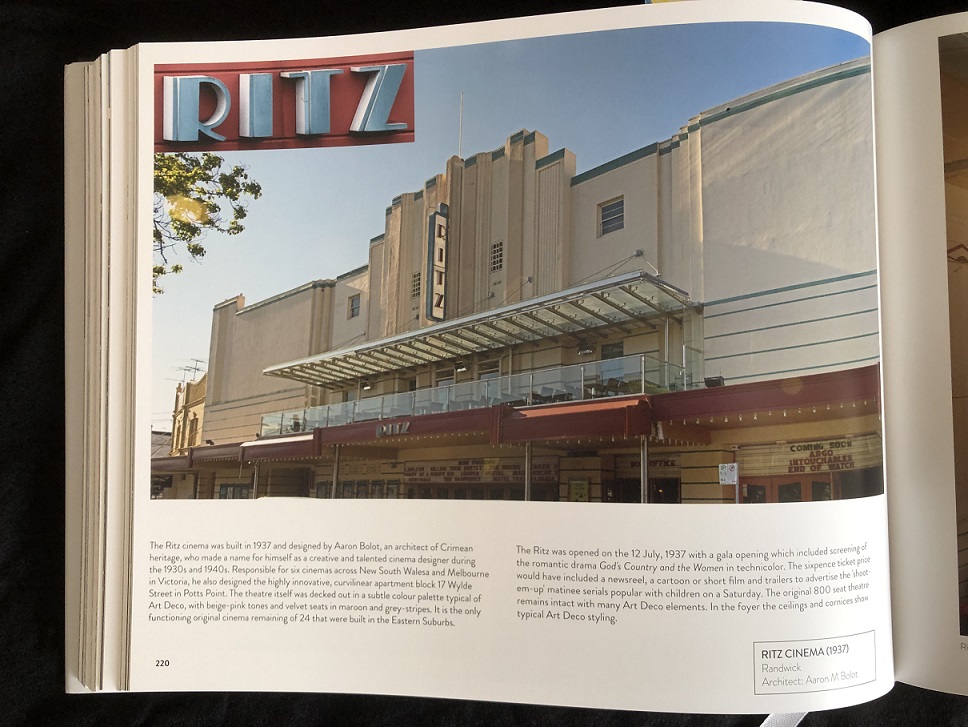
The work of Aaron Bolot and many other Sydney architects is found in photographer Peter Sheridan’s Sydney Art Deco. Sheridan has created a stunning coffee table book highlighting Sydney’s under-recognised Art Deco architectural heritage. The breadth of this Interwar style covers commercial and residential buildings, cinemas and theatres, hotels, shops, war memorials, churches, swimming pools and other facets of design.
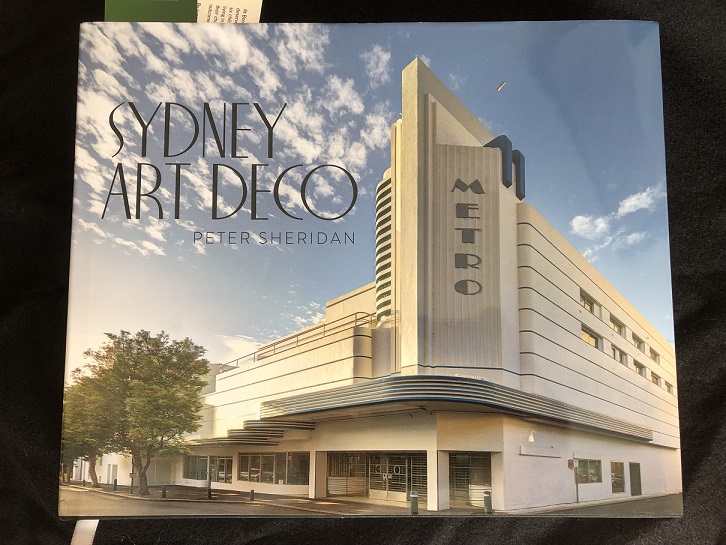
Sheridan argues that Aaron Bolot was an influential Sydney architect during the Interwar period specialising in theatres and apartment buildings.
Bolot’s work at Camden was a simple version of the more complex architectural work that he was undertaking around the inner Sydney area, for example, The Dorchester in Macquarie Street Sydney (1936), The Ritz Theatre in Randwick (1937), the Ashdown in Elizabeth Bay (1938) and other theatres.
The 1936 extensions to the agricultural hall
The brick extensions to the agricultural hall were general improvements to the showground, and works were finished in time for the 1936 jubilee show. The report of the show stated:
The new brick building in front of the Agricultural Hall, erected in commemoration of the jubilee, proved a wonderful acquisition, and its beautiful external appearance was, only a few days before the show, added to ‘by the erection of a neat and appropriate brick and iron fence joining that building with the Memorial Gates, * and vastly, improving the main pedestrian entrance to the showground. The fitting of this new room withstands and fittings for the exhibition of ladies’ arts and crafts, was another outlay that added to the show’s attraction. (Camden News, 2 April 1936)
(Camden News, 2 April 1936)
The hall extensions were designed like the memorial gates erected in 1933 in memory of GM Macarthur Onslow (d. 1931) and paid for by public subscription. It was reported that they would add ‘attractively to the Showground entrance’. (Camden News, 19 September 1935)
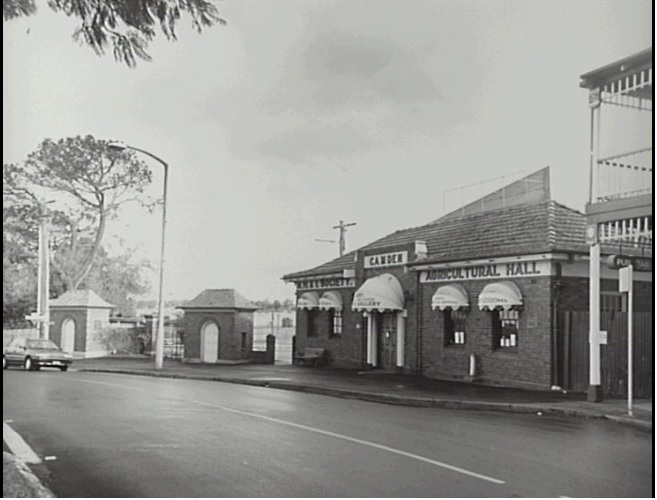
The hall extensions were 50 feet by 23 feet after 5 feet were removed from the front of the former drill hall. A central doorway was to be a feature, and there would be a ‘main entrance porch leading directly to the big hall on the Onslow Park side of the building’. (Camden News, 19 Sept 1935)
The hall extension cost £400 (Camden News, 19 March 1936) and was to be built to mark the 1936 Jubilee Show (50th anniversary). It was anticipated that the new exhibition space could be used for the
ladies’ arts and crafts section, such as needlework, cookery; be used for the secretary’s office prior to the show; a meeting place for committees; and in addition provide a modern and up to date supper room at all social functions. (Camden News, 19 September 1935).
(Camden News, 19 September 1935)
The approval of the scheme was moved at the AH&I meeting by Dr RM Crookston, seconded by WAE Biffin, and supported by FA Cowell. The motion was unanimously carried out by the meeting. The committee agreed to seek finance from the NSW Department of Labour and Industry at 3% pa interest. (Camden News, 19 September 1935)
Camden’s Interwar Heritage
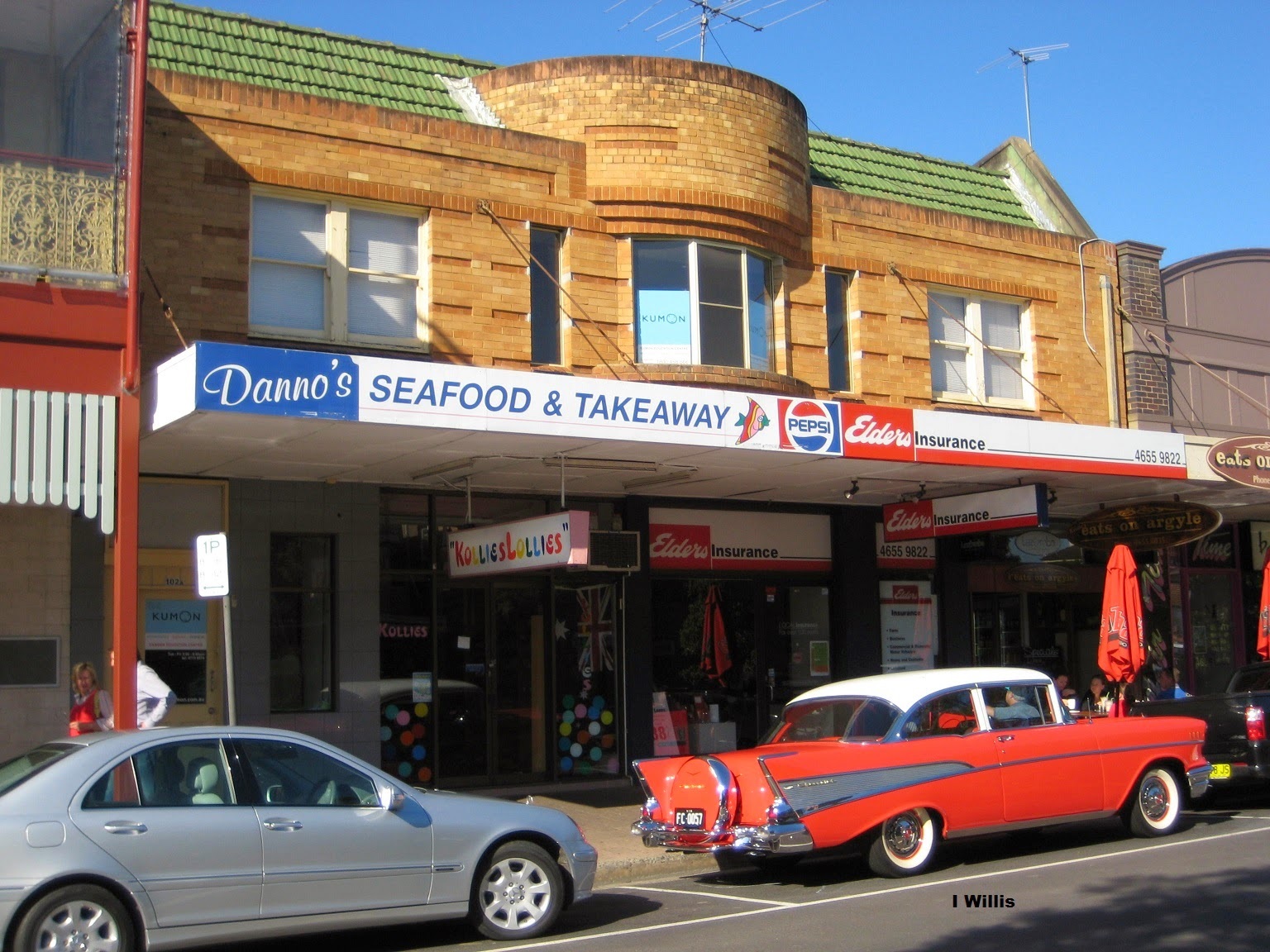
The 1930s in the small country town of Camden had a building boom in Argyle Street and central Camden. The Interwar period witnessed the construction of several new commercial and residential buildings driven by the booming Burragorang Valley coalfields. The period was characterised by modernism and other Interwar building styles. The list of buildings from the 1930s includes:
1930, Former Flats, 33 Elizabeth Street, Camden.
c.1930, Cottage, 25 Elizabeth Street, Camden.
1933, Former Paramount Theatre, 39 Elizabeth Street, Camden.

1933, Camden Inn (Hotel), 105-107 Argyle Street, Camden.
1935, Former Cooks Garage, 31-33 Argyle Street, Camden
c.1935, Former Main Southern Garage, 20-28 Argyle Street, Camden
1935, Methodist Parsonage, 24 Menangle Road, Camden.
1936, Front, AH&I Hall, 191-195 Argyle Street, Camden
1937, Dunk House, 56-62 Argyle Street, Camden

1937, Former Bank of New South Wales (former Westpac), 121-123 Argyle Street, Camden.
1937, Former Rural Bank, 115-119 Argyle Street, Camden.
1937, Cottages, 24-28 Murray Street, Camden.
1939, Former Stuckey Bros Bakery, 104-106 Argyle Street, Camden
1939, Camden Vale Inn, Remembrance Drive (Old Hume Highway), Camden.
1939, Extension, Camden Hospital, Menangle Road, Camden.
Updated 26 June 2023. Originally posted on 2 October 2019 as ‘A Sydney architect with a Camden connection’.
Discover more from Camden History Notes
Subscribe to get the latest posts sent to your email.


One thought on “Aaron Bolot, a Sydney architect, and Camden’s Interwar heritage”
Comments are closed.