
Bellman Hangars at Camden Airfield
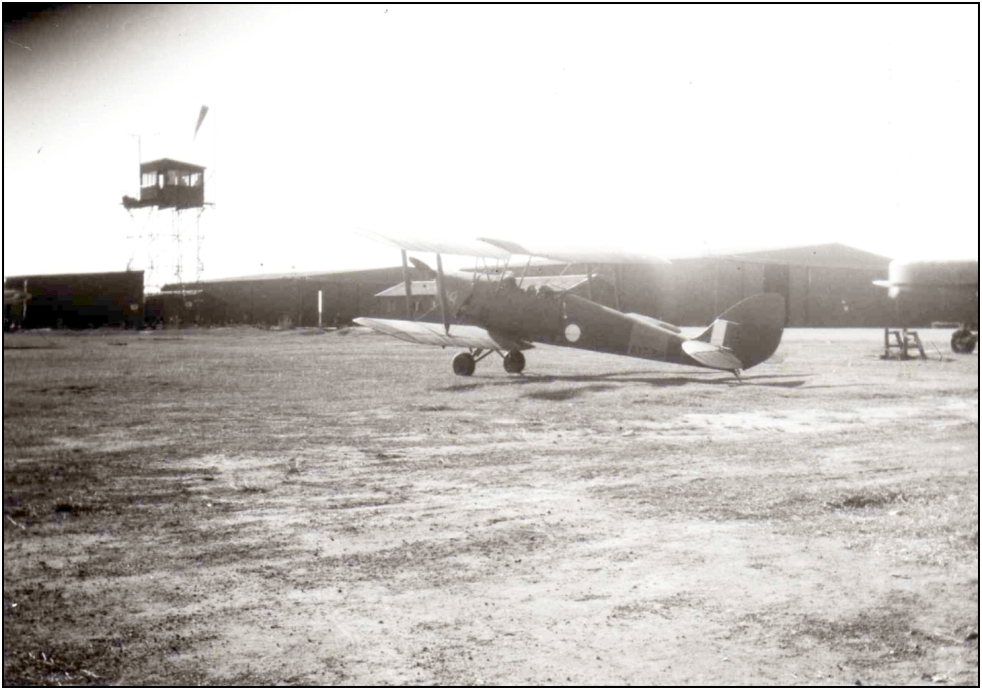
Camden Airfield has some historic hangars from the Second World War. They are called Bellman hangars.
They are British-designed transportable hangars that were erected at the airfield. By mid-1942, Camden had six Bellman hangars.

According to John Dunn’s Comeng, A History of Commonwealth Engineering, vol 1 1921-1955 (2006), they were initially designed in 1936 by NS Bellman, a structural engineer with the British Directorate of Works (UK). The hangars were meant to meet the Royal Air Force’s (UK) needs and the Empire Air Training Scheme (UK).
Australia had very close links with the United Kingdom as part of the British Empire at the time. The country relied heavily on the UK for its defence needs, and Camden Airfield played a small part in that story.
RAAF Central Flying School
The RAAF Central Flying School set up at Camden Airfield in 1940 was part of the Empire Air Training Scheme, and Bellman hangars were supplied by Waddington’s Pty Ltd. According to Daniel Leahy’s ‘Aerodromes of Democracy, The Archaeology of Empire Air Training Scheme flying schools during World War II’, the training course duration for pilots was 14 weeks, air observers 12 weeks, and air gunners 8 weeks. All course instructions were conducted at Camden RAAF CFS while based at the airfield.
According to Dunn, the Australian Government’s Department of Supply and Development called tenders for the supply of the hangars in mid-1940. Overall, 283 Bellman hangars were supplied to a variety of sites across Australia and New Guinea. The final cost to the Commonwealth Government for the supply of the hangars was around £1,500 each.
Bellman supply contract
Over 85 per cent of the Bellman hangars in Australia were supplied by Waddingtons (Clyde). Waddingtons got into financial trouble with the Bellman supply contract, and under the wartime regulations, the Commonwealth Government took a controlling interest in the firm. Although the government discovered problems supplying the hangars, they were a ‘simple product’. The problems were eventually sorted out, and the hangars were all built.

Under wartime regulations, Waddington was a protected industry that supplied a variety of wartime contracts in the engineering field. They included railway wagons, ocean-going lighters, ‘Igloo‘ hangars, pontoons, landing barges, and buses. Waddingtons was completely taken over by the Commonwealth Government in 1946 and renamed Commonwealth Engineering Co Ltd. Interestingly, in the 1920s, the principals of Waddingtons ran a business called Smith and Waddington, which made ‘custom’ car bodies for imported chassis of Rolls Royce, Hudson, Wolseley and Fiat in a factory on Parramatta Road, Camperdown.
Specifications
The Bellman hangars were only ever meant to be temporary, and they were supposed to be capable of being erected and dismantled by unskilled labour with simple equipment. Dunn maintains that the Bellman hangars were 95 feet wide (1 foot = 0.304 metres), 122 feet long, 17 feet high, covering an area of 10,000 square feet (1 square foot = 0.092 square metres), consisted of 60 tons of steel, at an average cost of £3,365 (erected), had 80 major components and could accommodate 5 Barracuda aircraft.
Waddingtons supplied Bellman hangars to around 25 airfields and other locations in New South Wales (from Camden to Temora), 15 in Queensland (from Cairns to Kingaroy), 17 in Victoria (including Ascot Vale and Port Melbourne), 4 in South Australia (including Mallala and Mt Gambier), 8 in WA (from Canarvon to Kalgoorlie), 3 in Tasmania (including Western Junction), 1 in the ACT (Kingston), 3 in the Northern Territory (including Gorrie and Wynellie) and Port Moresby in Papua New Guinea.
Canvas doors and eaves
Initially, Bellman hangars were designed in the United Kingdom with canvas panelled doors and under the eaves. However, steel-framed and clad doors were introduced after heavy snowfalls at Thornaby Airfield in the winter of 1937. The time taken to erect the UK hangar, including levelling the ground, laying door tracks, erecting the steelwork and fitting the original oiled canvas Callender doors, was 500 man hours.
The British Ministry of Defence states that over 100 Bellman hangars, built around the Second World War in 2014, exist throughout the UK. They were originally constructed to provide a fast, economical solution to the need for hangars. A lightweight structure made from steel lattice frames, it forms 14 bays, giving an overall length of 53 metres and width of 29 metres.
United Kingdom
The Airfields of Britain Conservation Conservation Trust states that Bellman hangars were the only type used in the United Kingdom during the war. Over 400 were built between 1938 and 1940. One disadvantage of these hangars was their lack of roof height.
According to some reports, there are 14 surviving Bellman hangars at RAAF Base Wagga, at least three at Point Cook (RAAF Williams), one at RAAF Base Fairbairn, Canberra Airport, four at HMAS Albatross, Nowra, and a number at Auburn, Bankstown, and Camden. For enthusiasts, there is an interesting article on Bellman hangars on Wikepedia.
Updated 12 November 2024. Originally posted 15 July 2014 “Camden Airfield and the Bellman Hangars’.
Discover more from Camden History Notes
Subscribe to get the latest posts sent to your email.


2 thoughts on “Understanding Bellman Hangars: Camden’s WWII Heritage”
Comments are closed.