
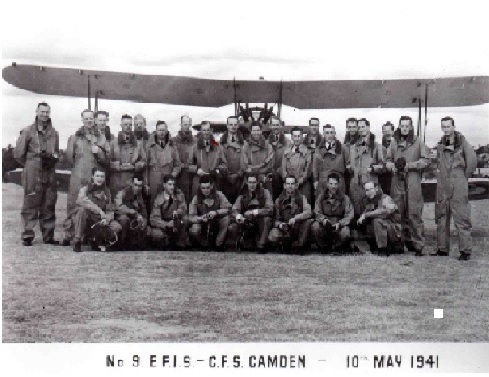
Camden Airfield RAAF Central Flying School 1940-1942
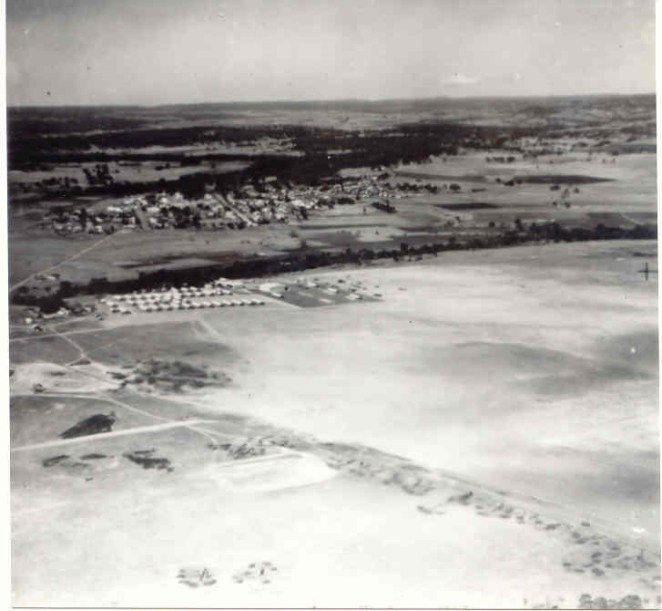
Australia’s entry into the Second World War created a demand for trained pilots. In July 1940 the Commonwealth Government acquired 468 acres of land on the Nepean River floodplain at Macquarie Grove for defence purposes as an airfield.1

The site had been inspected in January 1940 for the RAAF by Wing-Commander EC Bates (RAF).2 He had found it eminently suitable for the establishment of a flying training school. The Air Board took control of the airfield in April, initially expecting it to house 150 men and 50 aircraft.3 According to reports, the airfield had an ideal location with a long runway (1100 feet), clear approaches, room for expansion and existing hangars.4 The site had the advantage of a good surface, reasonable weather throughout the year, and quiet rural surroundings.
Purpose of School
The Sydney Morning Herald reported that Minister for Air, Mr JV Fairbairn had appointed Squadron-leader EC Bates as the commanding officer of the new Central Flying School and Flight-lieutenant GS Coleman as the Chief Flying Instructor. The school’s purpose was to train RAAF instructors.5 The Commonwealth Government also set up training schools at Bradfield Park in Sydney and at Narromine around the same time.6
Establishment
According to the Sydney Morning Herald, the school’s full establishment included headquarters, a flying squadron of four flights and equipment, and accounting and workshop sections, and would ultimately consist of 385 men. The school was to have a permanent staff of 28 flying instructors. The regular intake of potential instructors, when the school was in full swing, would be 55, comprising 25 civil pilots and 30 service pilots. There would also be a link trainer instructor course.7 One of the first training courses at the flying school involved 13 British Royal Air Force officers who arrived for an instructor conversion course in June 1940.
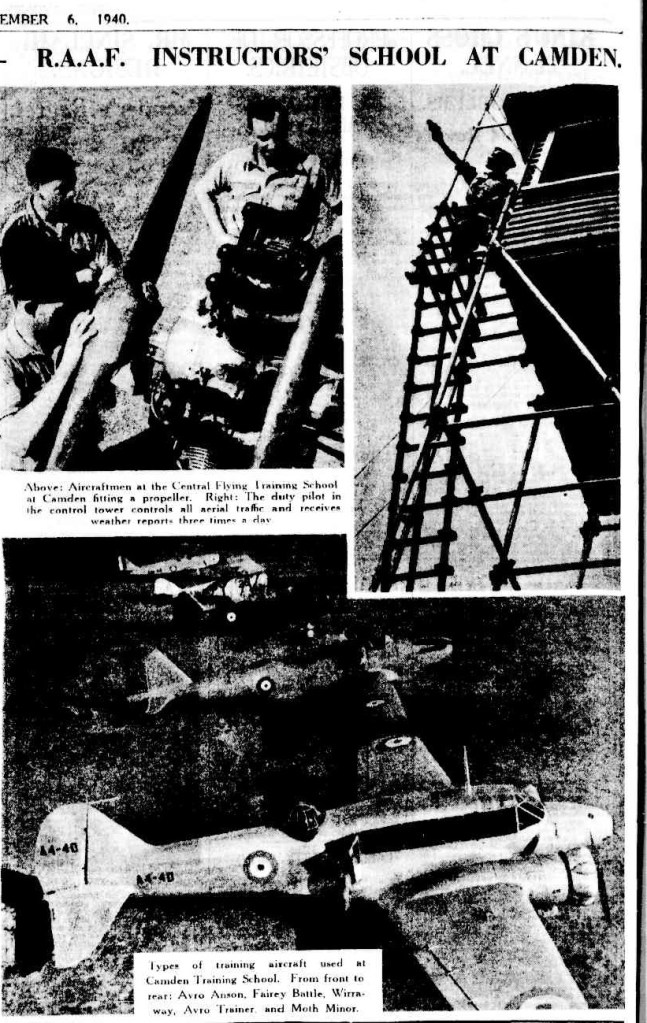
The school’s purpose was to provide flying training and administrative duties for selected RAAF officers and airmen so they could serve as flying instructors at RAAF Service Flying Training Schools across the country. The programmes included pilot courses lasting 16 weeks, air observer courses lasting 12 weeks, wireless operator courses lasting 16 weeks, and air gunner courses lasting four weeks.8 There were four Flights – A, B, C, D. The commanding officer of C Flight was Flight-Lieutenant LN Ford. He commanded 35 officers, NCO’s and other airmen. Flights A, B and D had similar numbers. The aircraft used for training included Avro-Ansons, Airspeed Oxfords, Tiger Moths and Wirraways, while the Avro-Cadets were seen as `ideal’ for flying.
Movement from Point Cook, Victoria
The flying school shifted from Point Cook to Camden in March 1940 using aircraft, motor transport section vehicles and private cars. `C’ Flight was the first to move, and due to a temporary lack of accommodation, a number of airmen were put up for two weeks at Podesta’s Hotel in Camden. The move from Point Cook to Camden involved 48 Avro-Ansons and 2 Wirraways.
The personnel included Wing Commander EC Bates (RAF), Squadron-leader GS Coleman, seven Flight-lieutenants, 23 flying-officers, ten pilot-officers, 132 airmen.9 By December 1941 the personnel at the school included staff of 45 officers, 422 airmen, with 48 officers and 81 airmen in various training courses. Bates was commanding officer from 18 May 1940 to 11 May 1941 and was replaced by Wing-commander DJ Eayrs (RAF).
The flying school staff consisted of RAAF instructors, as well as former commercial airline pilots and private instructors. For example, GS Coleman was the chief flying instructor at the Royal Aero Club and the Kingsford Smith Air Service Co at Mascot before the war.
Macquarie Grove
While the Department for Air had control of the airfield, they lengthened the runway to 1000 feet, built huts for officers and the airmen, completed new hangars to house training aircraft, erected a control tower, Macquarie Grove house had been converted into the officers’ mess, a hospital was added, and there had been the completion of a parade ground, roads and lawns. The Central Flying School was described by an aviation correspondent as ‘the nerve centre’ of the Empire Training Scheme in Australia. (SMH 6 November 1940)
Movie Shoot for The Power and the Glory
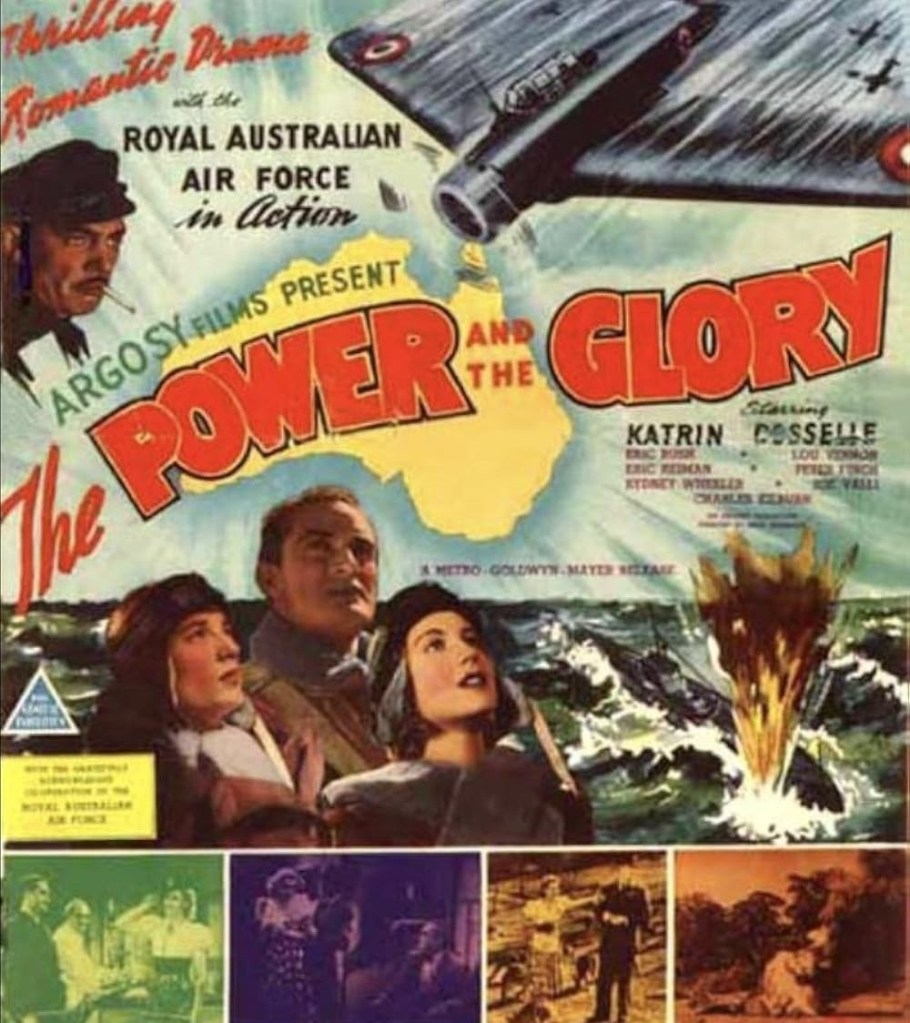
In 1940, Camden airfield was the location for the film The Power and the Glory, and some CFS personnel played an important part. Noel Monkman directed and produced the black-and-white film, which Argosy Films made. The cast included heartthrob Peter Finch, along with Lou Vernon, Eric Bush, and Katrin Rosselle.
The plot was one where a Czech scientist accidentally discovers a new poison gas, and he escapes to Australia rather than give the secret to the Nazis. In Australia, he works for the government but is plagued by spies desperate to obtain the formula. Camden airmen were involved in a scene involving enemy infiltration on the coast near Bulli, with the sighting of an enemy submarine. Five Avro-Anson aircraft from Camden airfield were directed to seek-and-bomb the submarine.
Wirraway aircraft acted as fighters and the `pilots’ were the `good looking’ airmen who worked in the mess. During filming, a grassfire was accidentally started on the western side of the airfield along the Nepean River, causing much confusion among the film crew. The base fire unit contained the fire, and it eventually burnt itself out. The `bombing’ effect was achieved by digging a deep hole in the ground between the landing wheels of the Avro-Anson and a few bales of straw were placed at the bottom of the hole.
The bombs were released and fell into the hole with the camera down at ground level to give the proper effect. All the personnel from the flying school were shown a special screening of the film at the Paramount Theatre so they could see themselves. The crowd was amused to see how effective faking can be in the movie business.10
In August 1940, the airfield and flying school were inspected by the Governor of New South Wales, Lord Wakehurst.11
Visit for Americans
In the last few weeks the flying school operated at the airfield, they were privileged to host a short visit from a squadron of American Bell P-40 Aircobras. The first aircraft arrived at the end of March 1942, and by 2nd April there were 11 aircraft and 117 personnel. The number of American airmen peaked the following week, when there were 25 aircraft. Their stay was short-lived, and they soon departed, with all personnel leaving by 15 April 1942.12
In 1942, the flying school and the hospital had a dentist, RM Kavanaugh,13 as well as the welfare of the base was looked after by the Rev. AA Adams, a Presbyterian minister.14
Base Security
Security was always an issue. There was a guard post on the entry road to the airfield, although airmen who had been in Sydney had no trouble getting onto the base late on a Sunday night. There was a ban on the taking of photos in the vicinity of the airfield, and in March 1941 someone was reportedly taking pictures around Macquarie Grove. The police investigated the matter and found that it was the `well known’ press photographer Mr SHE Young of Fairfield.15
Access to the town for most airmen was restricted in March 1942 when there was heavy rain, and the Macquarie Grove bridge was covered by 2½ feet of water.16
The Town of Camden
The town welcomed the airmen from the beginning, and Camden was always seen as the RAAF leave town. Soldiers from the Narellan Army Camp were always discouraged from coming into the town. In 1941 a contingent airmen from the flying school was present at the Anzac Day ceremony.17 Some officers lived in Camden, for example, Squadron Leader Ford lived in Elizabeth Street in the house next door to the station master.18

Time Off and Leave
Military authorities always considered relaxation important, and the servicemen at the airfield were no exception. In 1940 the RAAF personnel at the school were made honorary members of the Kirkham Country Golf Club.19 On 9 January 1941 the RAAF A cricket team gained an outright win over Campbelltown and was in second place behind Narellan in the Camden District Association first-grade competition. By 16 January 1940 the RAAF team were on top of district cricket.20 According to Claude Whitfield (1941-42) airmen who were wearing `cricket creams’ could leave the airfield without a leave pass, while others without passes could not leave.21
In January 1941 the Central Flying School Swimming Club used the swimming pool at the Nepean Picnic Reserve for training for the inter-station carnival at North Sydney Olympic Pool. In October 1941 the swimming club asked the council to clean out the swimming pool at River Reserve in Chellaston Street.22 An athletics sports meeting was held on Onslow Park on 16 April 194123, and the CFS Rugby Football and Recreation Club were using Onslow Park.24 The rugby union joined the local competition later that year, but despite local goodwill, the Council objected to the RAAF playing football on Sundays at Onslow Park. After protests from the airmen, the Council amended its regulations so that games could proceed.25 This was not the only time this occurred in Camden during the war.
Tea and Scones
In 1940 and 1941 correspondents recall with fondness Mrs FA (Sylvia) Macarthur-Onslow who lived in the old house next to Hassall Cottage. She gave tea and scones to airmen on Friday nights, and they played cards, read, played bingo, and sang around the piano. She was a `lovely old lady’ who provided some family touches to homesick young airmen. Only about ten to fifteen officers and airmen were selected at a time to visit the house. Local women from the district churches and CWA auxiliary also attended these functions. These evenings were organised by Squadron-leader Fred Huxley and were eagerly awaited by the airmen. CR Portch remembers that Mrs Macarthur-Onslow had a particularly large great dane that moved among the airmen as they had their sing-a-long.26
Soldiers’ Recreation Room in Camden
The Camden AH&I Society opened a ‘Soldier’s Recreation Room’ in the supper room in the hall at the showground in June 1940 for the airmen and soldiers based in the area. Dr Robert Crookston and George Sidman, a Methodist and owner of the Camden News, strongly supported it. Women from the Camden Women’s Voluntary Services staffed it, under the presidency of Crookston’s wife, Zoe. It had mixed patronage and could not compete with the local hotels. It was out of the way and largely set up as an alcohol-free venue for local airmen and soldiers. This might have suited the morality of some local townsfolk but not the more pragmatic men on active service at the military bases in the area. These military establishments included the airfield, the Eastern Command Training School at Studley Park and Narellan Military Camp. The Room was closed in March 1942 when the 11th Casualty Clearing Station, a mobile hospital unit, requisitioned the hall.
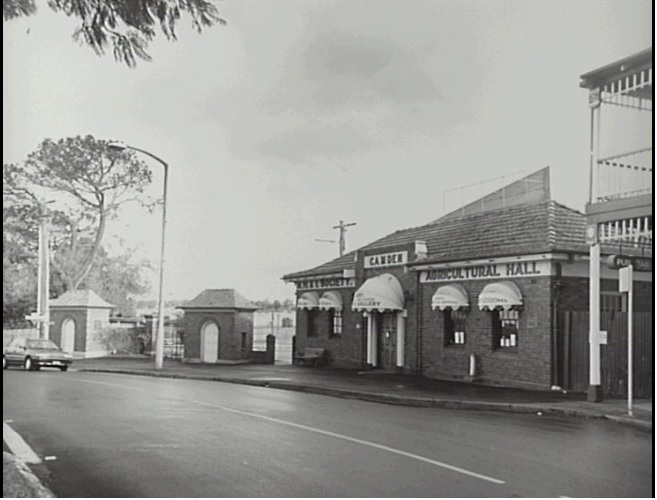
Move in 1942
In March 1942 the airfield was flooded and operations suspended. Within days of the flood, it was decided to move the training school as soon as a suitable airfield could be located. Inspections were conducted at Forbes, Young, Kerang, Horsham, Mudgee, Wagga, and Corowa. In early April 1942 a site at Tamworth was inspected and deemed suitable, and by mid-April the first personnel were transferred to the new site by rail. Personnel left by road a few days later, with the last aircraft moved to the new site by the third week of April. (Movement Orders, Operations Record Book, Central Flying School, March-April 1942)
The whole flying school was transferred in mid April 1942. One corporal, four cooks and six officers departed on 17 April 1942, while 13 officers and 216 airmen left by rail and 11 officers and 19 airmen departed by road. The aircraft that moved consisted of 14 CAC trainers, nine Wirraways, 18 Avro Trainers, and eight Oxfords.27
References
1 Commonwealth of Australia Gazette, No.134; National Trust of Australia (NSW), Listing Card, 19 January 1987
2 CR Portch, Letters to ICW, 17 November 1986, 10 January 1987, 4 May 1987
3 Camden News, 11 November 1940.
4 Camden News, 4 April 1940
5 Sydney Morning Herald 23 May 1940 p.11.
6 Sydney Morning Herald 23 May 1940 p.11.
7 Sydney Morning Herald 23 May 1940 p.11
8 Camden News, 4 April, 1940
9 Movement Order No 2, Movement Order No 1, Central Flying School, Point Cook, 14 May 1940; Nominal Roll of Staff, CFS,Camden, 1 June 1940;
10 CR Portch, Letter to ICW, 10 January 1987, 4 May 1987
11 Wakehurst visited the airfield on 13 August 1940.
12 Operations Record Book, CFS, Camden.
13 Register of Dentists, NSW Government Gazette 1942, p.619
14 Register of Ministers of Religion, NSW Government Gazette 1942, p200
15 Camden Advertiser, 6 March 1941
16 Operations Record Book, CFS, Camden, May, 1940 to April, 1942
17 Camden News, 3 April 1941
18 Claude Whitfield, Interview, 3 January 1988
19 Camden News, 6 June, 1940
20 Camden Advertiser, 9 January, 1941; 16 January, 1941
21 Claude Whitfield, Interview, 3 January 1988
22 Camden Municipal Council Minutes, 13 January 1941, Camden Advertiser, 23 January 1941; Camden Municipal Council Minutes, 13 October 1941, 24 November 1941;
23 Camden News, 3 April 1941
24 Camden Municipal Council Minutes, 28 April 1941
25 Camden Advertiser, 5 June 1941; Camden Municipal Council Minutes, 23 June 1941, 14June 1941;
26 Claude Whitfield, Interview, 3 January 1988; CR Portch, Letters to ICW, 17 November 1986, 10 January 1987, 4 May 1987;
27 Movement Orders
AI Disclaimer
AI was used to assist in auto-correcting grammar.
Updated 1 September 2026. Originally posted on 10 August 2014.
Discover more from Camden History Notes
Subscribe to get the latest posts sent to your email.


My father was a Wireless Operator transferred to Camden NSW from Lossiemouth Scotland by the RAF in 1945. He was sent to train Australian RAAF for the ongoing Pacific War. Your history seems to stop in 1942 for Camden and moved to Tamworth. Is there any history regarding Camden between 1942 and 1946?