
Tribute to mining and industrial heritage
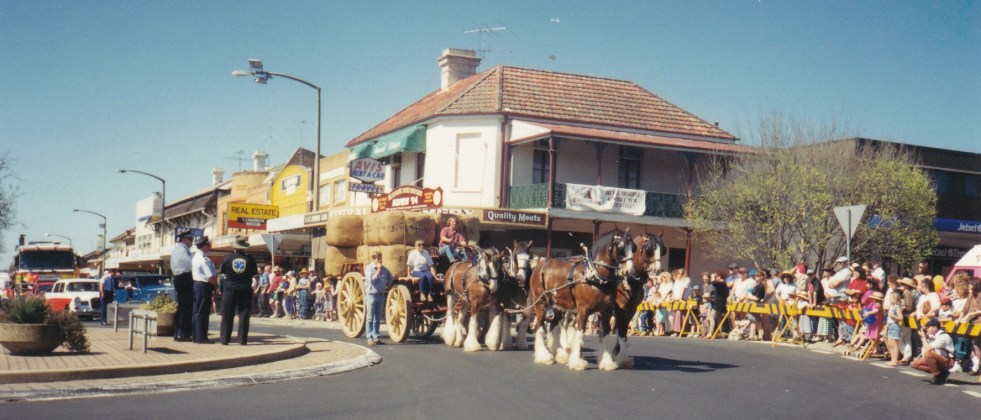
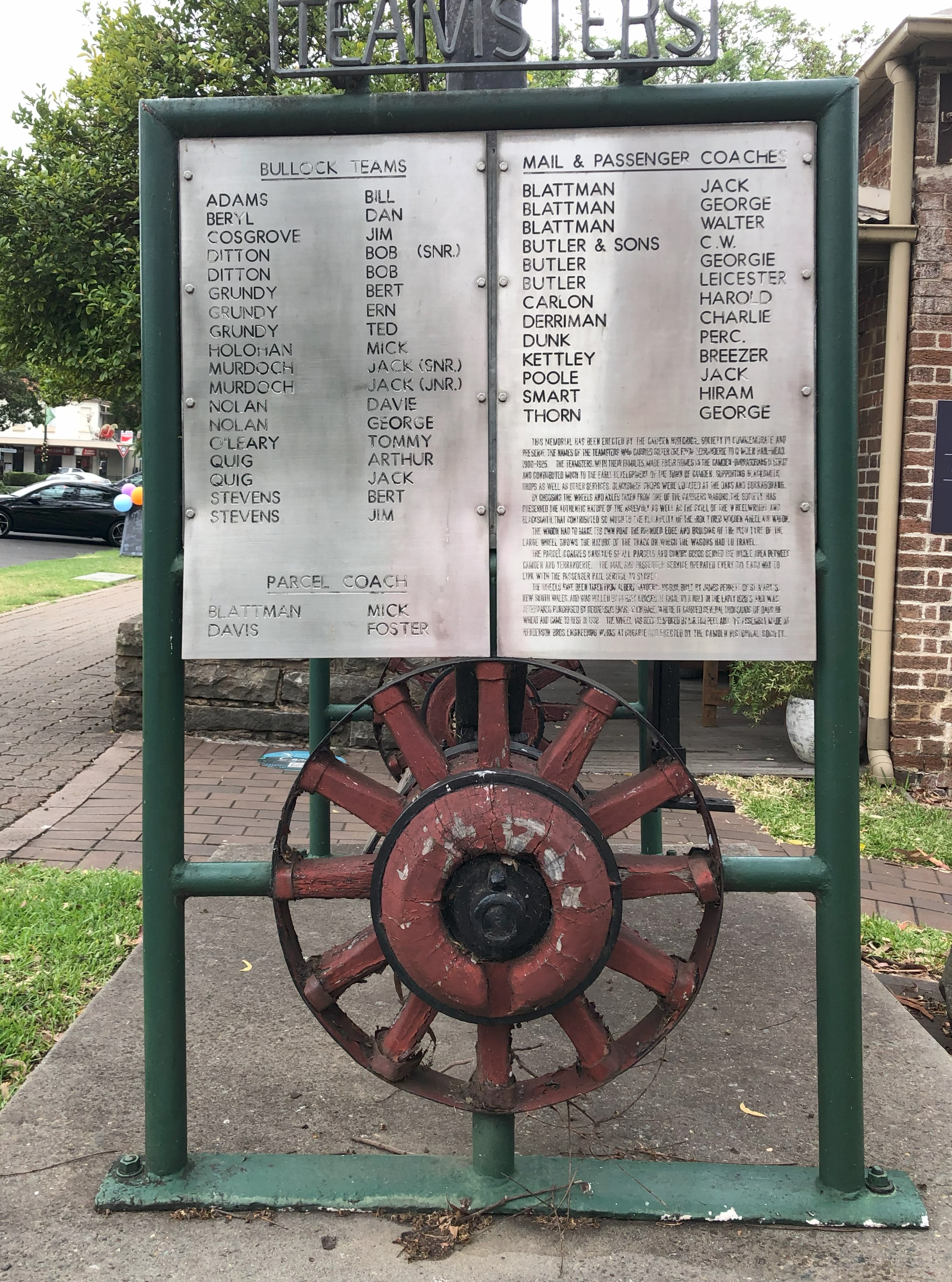
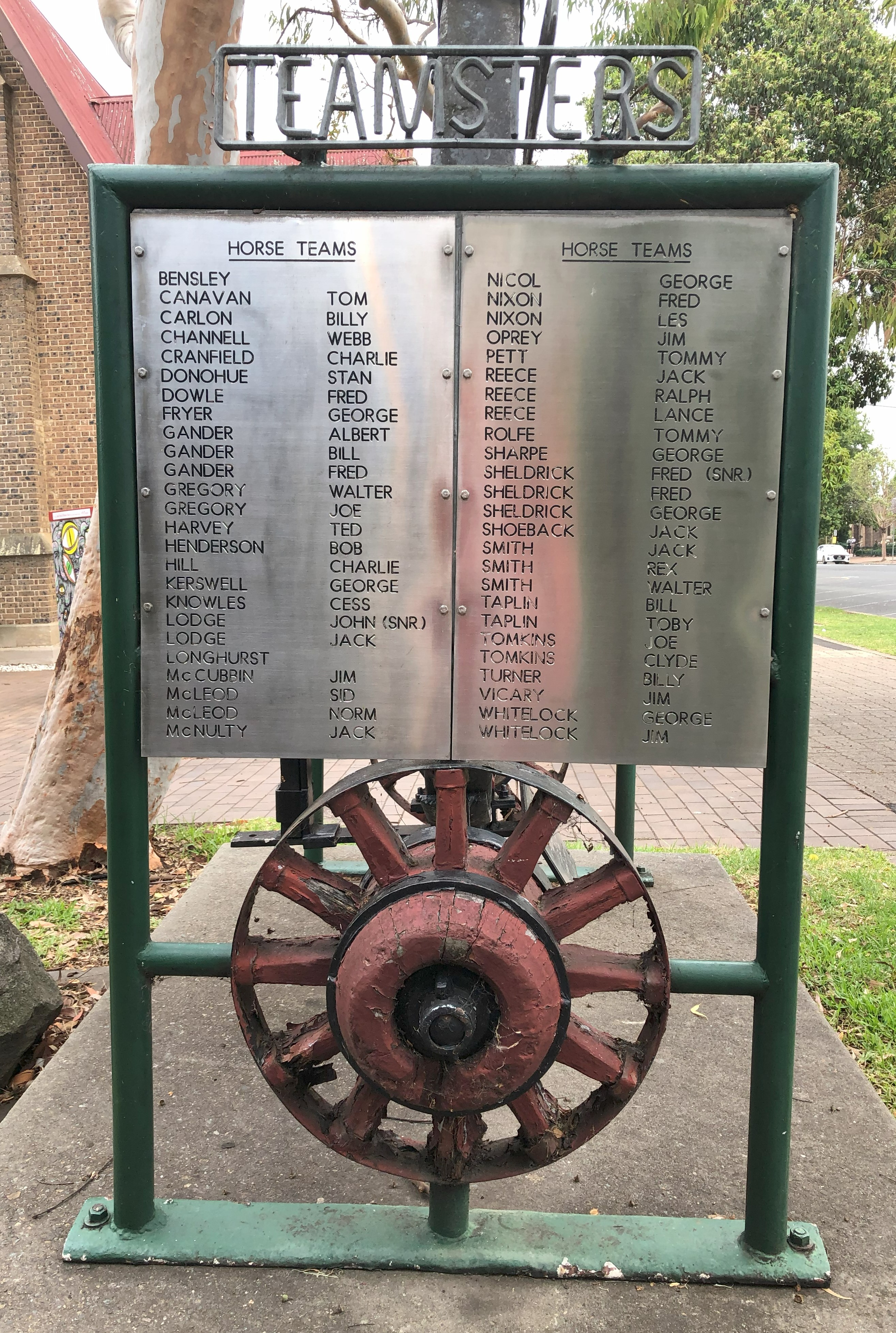
If you wander along the John Street heritage precinct, you will come across a quaint monument with a large wagon wheel reminding you of when the horse was king on the Yerranderie Road.

Before, motorised transport teams of between 13 and 16 horses pulled wagons along the Yerranderie Road that were no more than a goat track in places, up and down steep inclines, through bushfires, floods and droughts.
The Teamsters Memorial, an item of public art, is a tribute to the memory of these horses, the men who worked with them, and the district’s industrial and mining heritage.
What was a teamster?
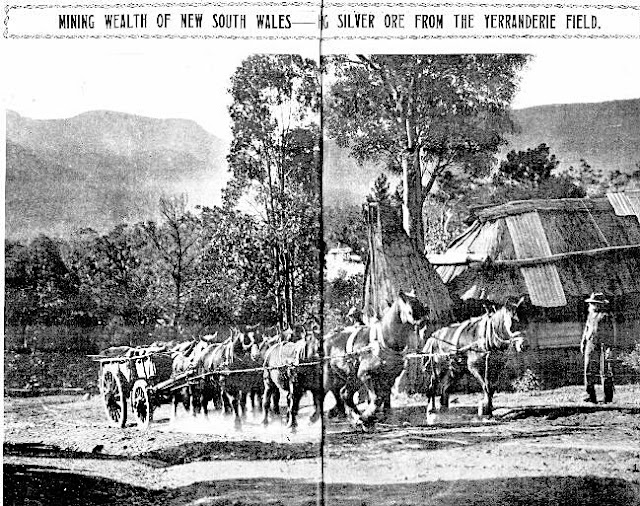
These hard-bitten characters could handle a team of up to 16 horses pulling a wagon loaded with up to 15 tons of ore.
Wikipedia defines a teamster as someone who drives a team, usually of oxen, horses, or mules, pulling a wagon in Australia, sometimes called a bullocky. In 1912, the term carrier was used to describe the teamster.
These men, and they were only men, were skilled horsemen with a tough, dangerous job. Teamsters were out in all weather, working dawn to dusk, and some died on the job.
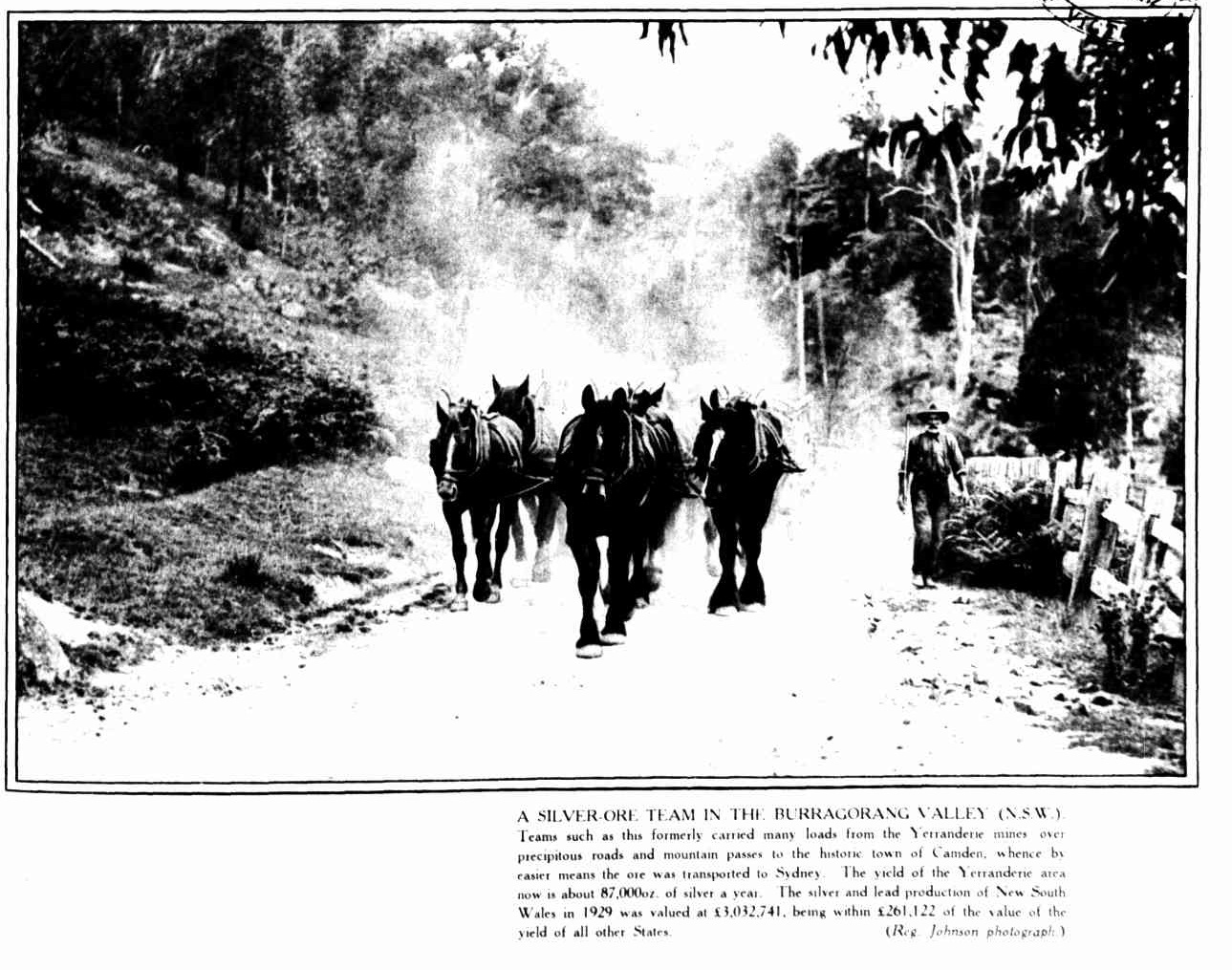
The Camden teamsters carried ore from the Yerranderie Myall gold & silver fields to the Camden railhead between 1900 and 1925.
At its height, Yerranderie had a population of around 3000 people, with 16 mines extracting silver and lesser amounts of gold and lead. Between 1900 and 1926, over £2 million of silver was extracted from the Yerranderie fields.
Royalty on the Yerranderie Road
In the early days of mining operations, the teamsters were at the height of their reign. They were the royalty of the district and commanded their authority over the mine owners at Yerranderie. Without their services to cart ore from Yerranderie to the Camden railhead, mining operations at Yerranderie stopped.
The teamster would load his wagon at Yerranderie, unload at the top of the Bluff (at Nattai) and go back for another load. On his return to the Bluff, he would reload the remainder and head to the Camden railhead. This process would take about five days.
The horse teams
The horse teams would be between 13 and 16 horses carting a flat-top wagon with a load of 13 to 16 tons of ore.
In 1908, there were 54 horse teams on the Yerranderie Road carting to the Camden railhead.
Bennetts of St Marys NSW built a common flat-top wagon type used by the teamsters.
The going rate for carting ore was £2/ton. (1908) The rate varied little across the years the Yerranderie fields were operational.
The high cost of cartage meant that only the highest grade ore could be sent for refining at Sulphide Corporation at Cockle Creek on Lake Macquarie via the Camden railhead.
Lower-grade ore remained at the Yerranderie mines as waste. Partial treatment of the ore was tried with varying success.
There was a serious attempt by the mine owners to bypass the stranglehold of the teamsters from 1906. The mine owners tried to have the state government build a light tramway to the top of the Bluff and, at one stage, from Thirlmere to Yerranderie (1910). The NSW Government was never really interested in any of these proposals.
In 1904, the idea of using camels to cart ore was floated. The idea did not last long.
The authority of the teamsters started to wane in the pre-war years, and there were moves to unionise and fix cartage rates by the Australian Carrier’s Union (1913)
Others plying the Yerranderie Road
The Yerranderie teamsters were not the only ones plying the Yerranderie Road.
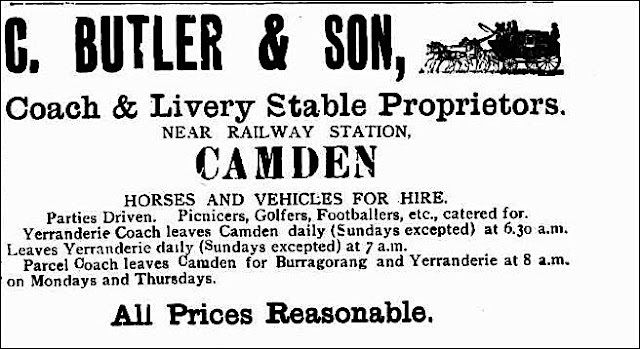
There was a daily mail coach that ran between Camden and Yerranderie. The passenger fare was 12/6 one-way from Yerranderie to Camden (1908), which had come down from a height of 30 shillings.
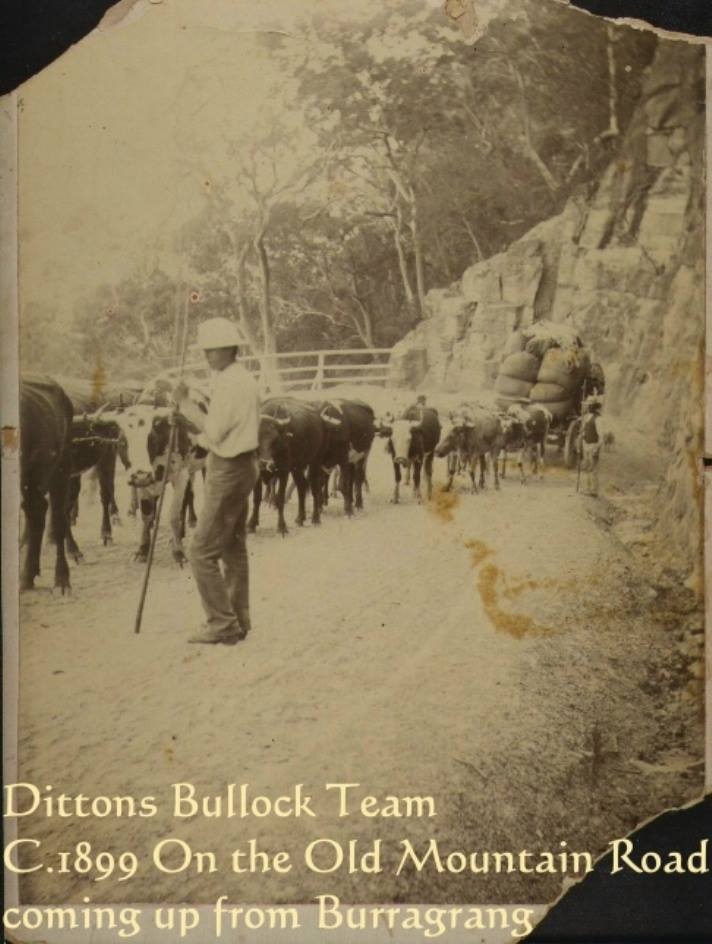
Bullock teams occasionally appeared on the Yerranderie Road, carting cedar logs extracted from the Kowmung area of the Blue Mountains (1911).
A local ecology
The teamsters and the horse teams supported a local ecology of farmers growing hay, blacksmiths at The Oaks and Camden, breeding horses, wheelwrights, wagon makers, and many others.
The memorial
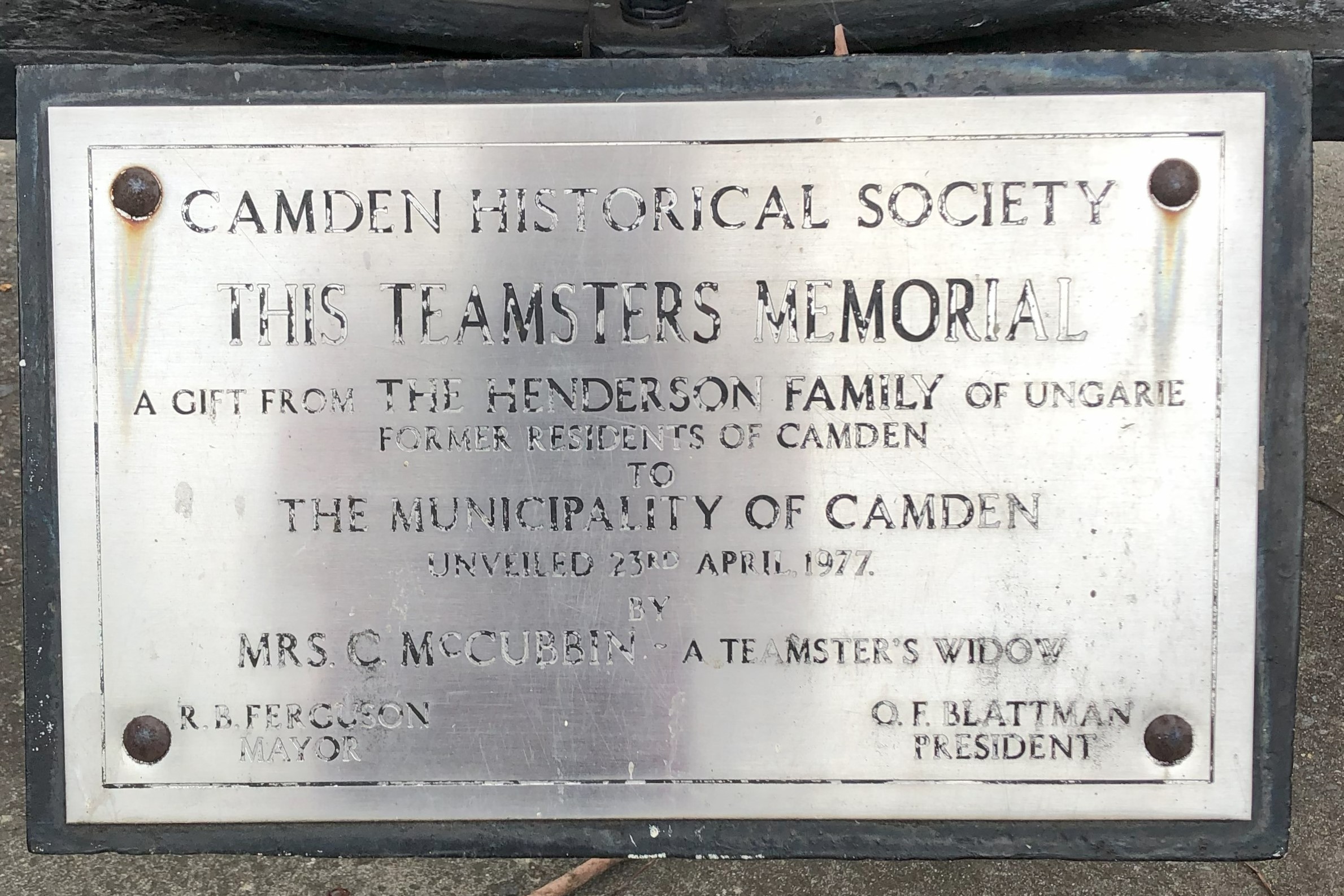
The memorial has a rear wagon wheel, a front axle and two hubs. These are mounted on a steel frame set in a concrete base. The wheels are timber construction with a steel rim. There are three metal information boards.
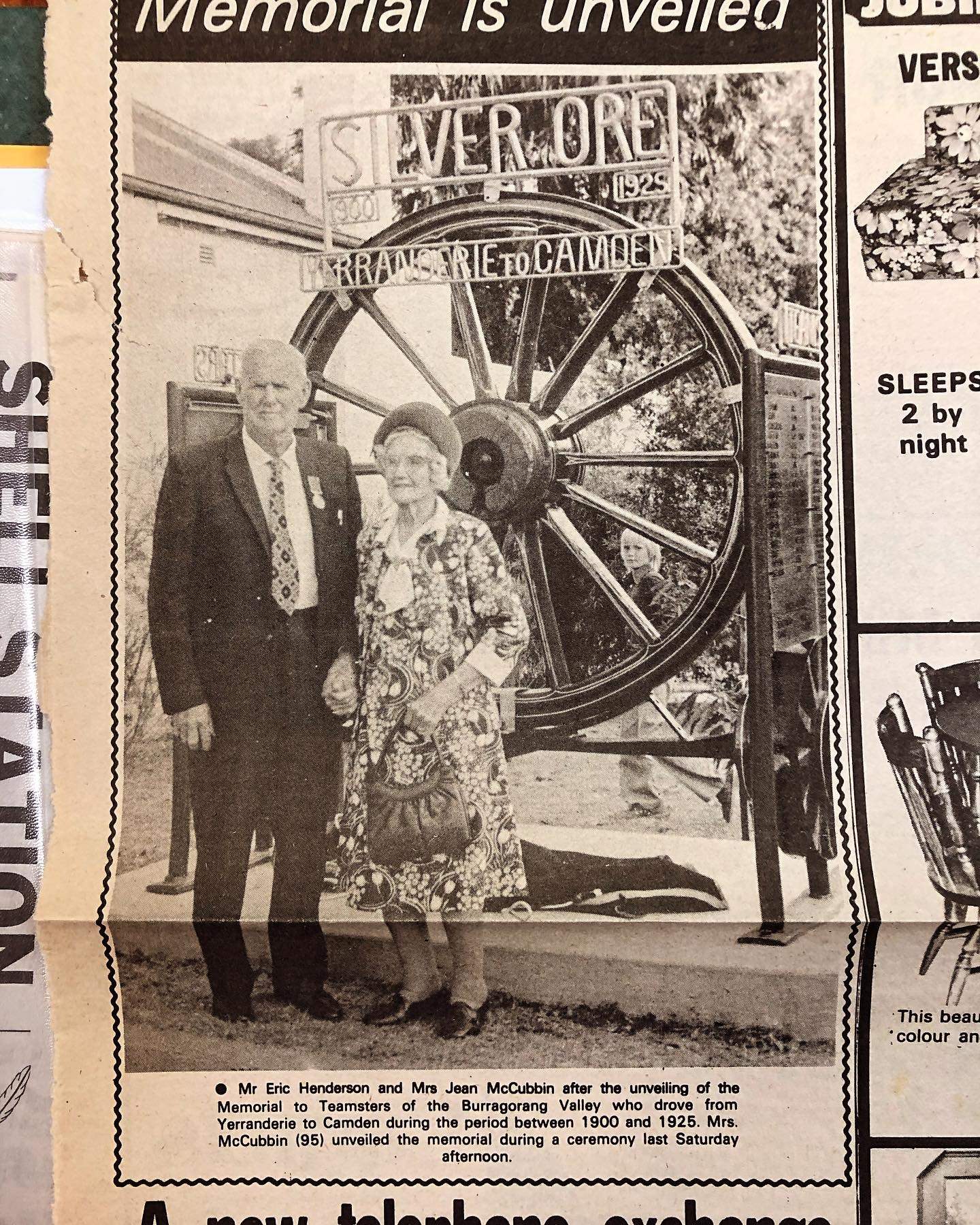
Construction was completed by Eric Henderson of Ungarie, formerly a teamster who worked for Cook & Co.
The memorial was opened in 1977 by 95-year-old Mrs Jean McCubbin, the widow of a former teamster.
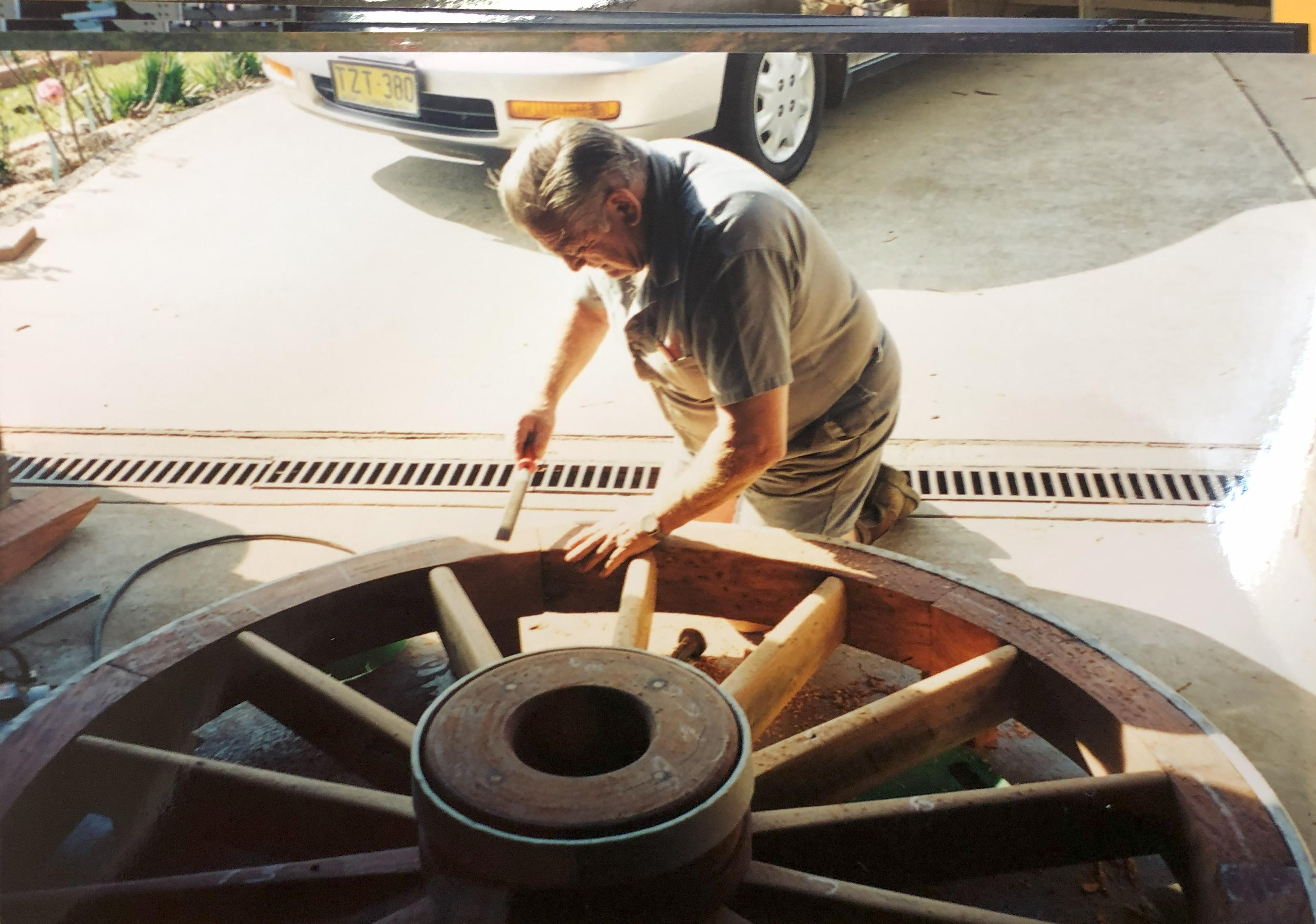
The memorial was restored in 1995 and 2003.
The mythology of the horse team
The memorial is a wonderful, evocative reminder of times in the district when the horse was king.
A Bennett wagon is on display at the blacksmith shop at the Wollondilly Heritage Centre.
There is a certain degree of mythology around the teamster, best exemplified by The Australian Teamsters Hall of Fame in Queensland.
Driving teams are still practised today, and there are driving competitions at Barellan, horse teams at the Royal Easter Show, on ABCTV, and occasionally at Belgenny Farm.

Updated 29 December 2023. Originally posted on 21 December 2023 as ‘Camden Teamsters Memorial, when the horse was king on the Yerranderie Road’.
Discover more from Camden History Notes
Subscribe to get the latest posts sent to your email.


One thought on “Camden Teamsters Memorial, when the horse was king on the Yerranderie Road”
Comments are closed.