
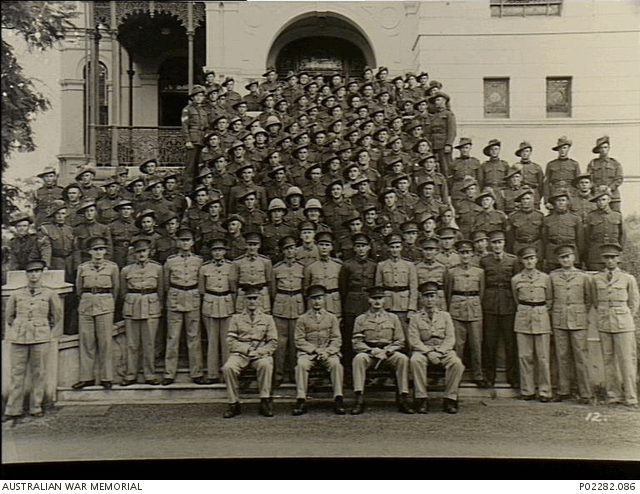
Eastern Command Training School, 1939-1945
Studley Park, Narellan, NSW
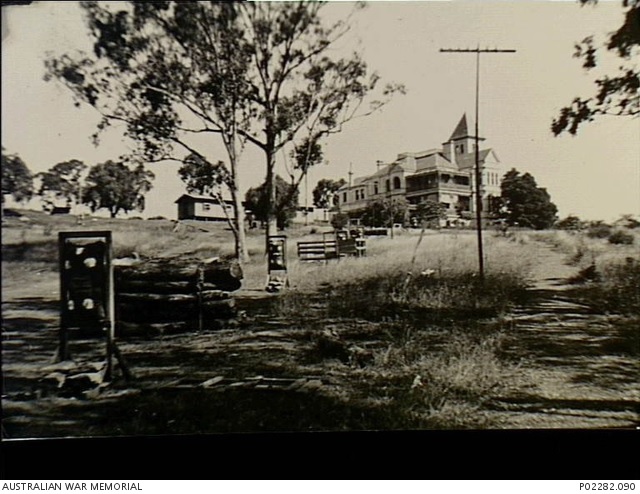
Studley Park was located on the Hume Highway at Narellan. During the war period, it was used as a defence facility for the Australian Army Service Corps (AASC) School to conduct infantry training courses.[1] The Department of Defence leased the property in October 1939 at £12/12/—per week, although it had been first occupied in September.
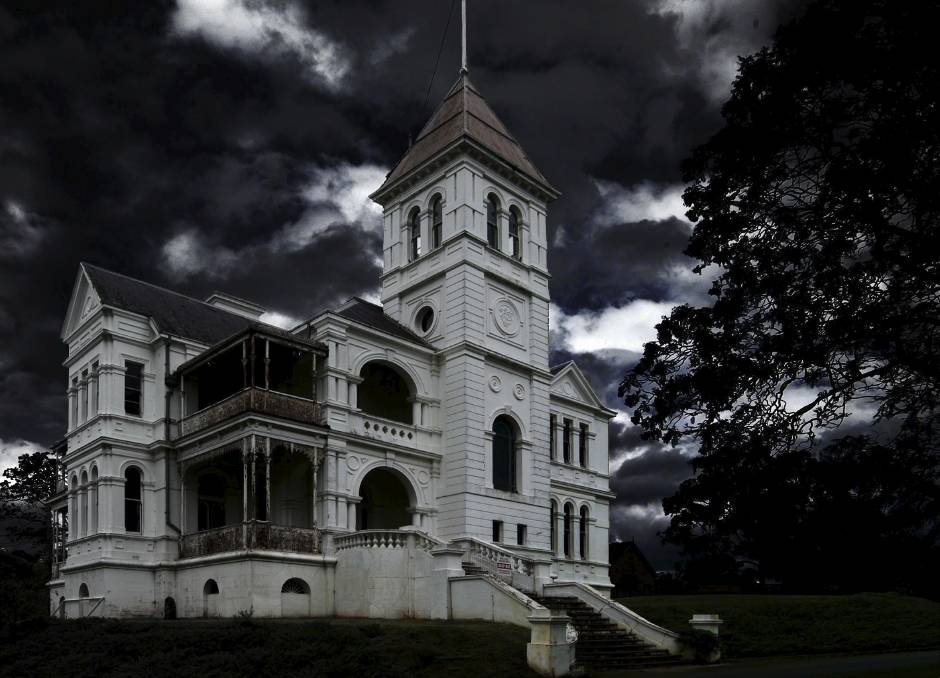
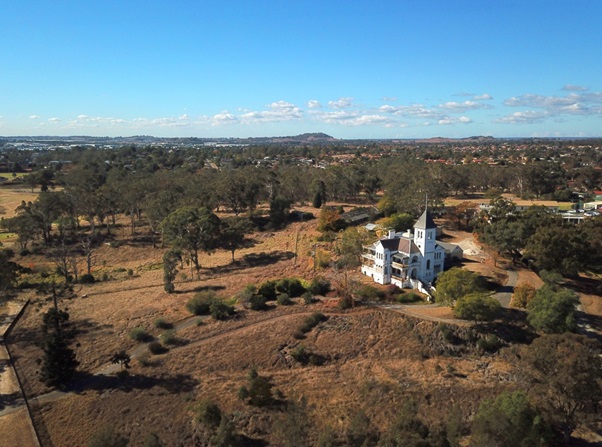
A report[2] for the defence authorities in 1940 gave a detailed property description, including a valuation. According to the report, the site fronted the Hume Highway, with the rear of the property on Lodges Road. The property consisted of an undulating country that was mostly cleared and grassed, with 193 acres. The soil was clay, and the land was suitable for grazing, fruit growing, and viticulture. It was considered an appropriate site for a country club, golf course, or agricultural school.
The site had been purchased by Archibald Gregory, a company director, in 1933, and Gregory had established a golf course. Gregory had converted the house into a high-class residence, and the author of the report considered it unlikely that the property could be maintained in that state during the Army’s occupation. The report author considered it probable that the entire golf course would have to be reconstructed after occupation.
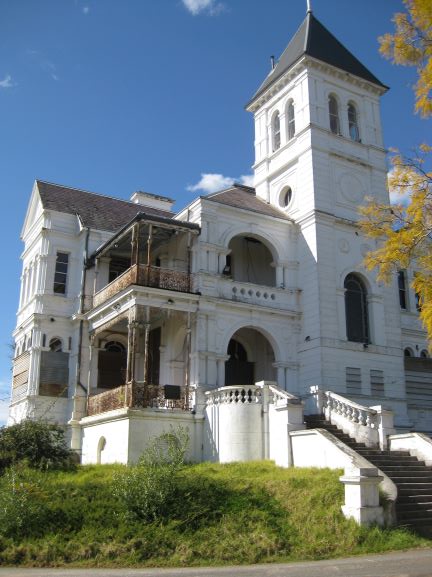
Property Improvements[3]
Asset – Valuation
Land- 198 acres – £4,958; House – £6,592; Theatre – £465; Club House – £1,057; Barn – £370; Swimming Pool – £188; Golf Course – £4,625; Motion Picture Plant, Screen – £750; Rental Value – £25 per week; Improved Value – £20,000.
Complaints
During the army’s early occupation of the site, Gregory continued to occupy the house, but by May 1940, his patience had worn thin. He complained to the authorities that the army had occupied the site from September 1939 without payment and had caused considerable disorganisation to his business and considerable damage to his property.
Gregory’s solicitors claimed that the government had published a report in the press in April stating that the army had decided to purchase the property. Gregory’s business virtually stopped with the publication of the report, resulting in considerable losses.
In April 1940, approval was given to purchase the entire property at a cash price of £16,000, including all buildings, property, floor coverings, and some furniture. [4]
List of property[5]
Golf House – 8 tables, chairs, mirrors, golf lockers, stove, counters, showcase, boiler;
Studley Park house – carpet, lino, wardrobes, tables, stove, bookcases, lounge suite, bedroom suite, tables, toilet stand, dresser, refrigerator, boiler;
Theatre – Theatre talking equipment with amplifiers and sound equipment
After the Department of Defence acquired the property, additional buildings were moved to the site or constructed to house 280 staff and students.[6]
![Narellan Studley Park Derelict Army buildings[4] 2015 IW](https://camdenhistorynotes.com/wp-content/uploads/2020/02/narellan-studley-park-derelict-army-buildings4-2015-iw.jpg)
Officers and Other Ranks
18 July 1940 – Captain Costello[7];
August 1941 – Major Ironmonger, CO, Captain Peach, Adjutant[8];
29 November 1943 – 26 February 1944 – Major John Whitmore, Chief Instructor. Lt Max Cadogan, 17th Battalion, Instructor[9]
![Narellan Studley Park Derelict Army buildings[2] 2015 IW](https://camdenhistorynotes.com/wp-content/uploads/2020/02/narellan-studley-park-derelict-army-buildings2-2015-iw.jpg)
School Operations
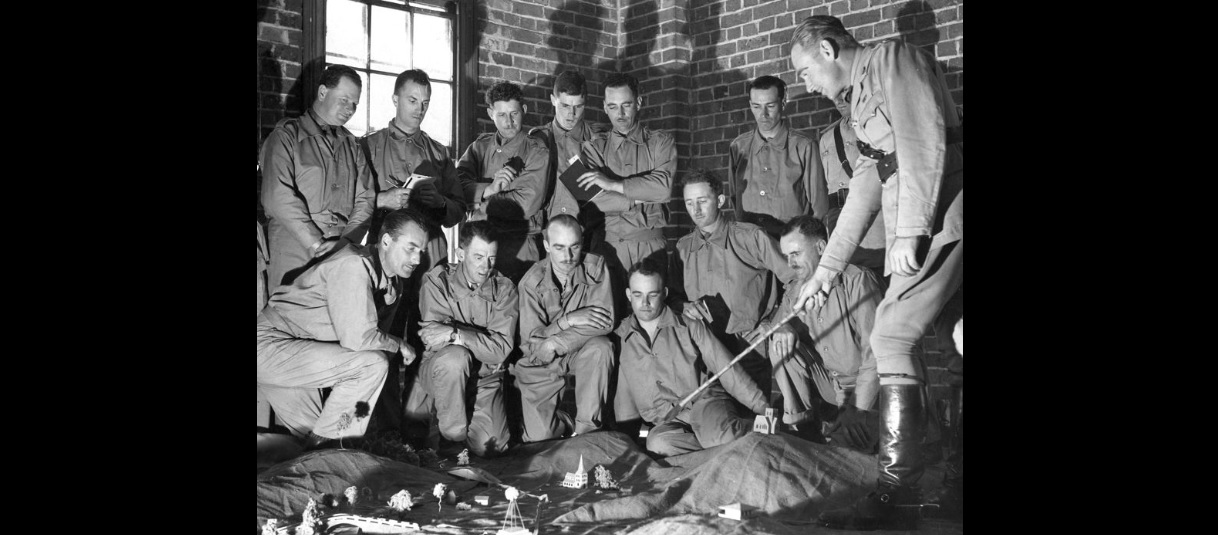
The Eastern Command Training School conducted tactical instruction courses on the Vickers machine gun and driving Matilda tanks.[10]
Most of the instruction at the school, including artillery, was conducted by the Australian Instructional Corps. The instructors were warrant officers, and the chief instructor was Captain Peters, a Duntroon graduate. Other instructors included W/O Jim Turpie, W/O Johnston, and W/O Chad (WW1 veteran).[11]
Alan Bailey reports that he occasionally took mail and quartermaster stores from Narellan Military Camp to Studley Park, usually by horse transport.[12]
Pansy the Locomotive
In their time off, some of the troops would `flag down’ Pansy, and it was reported that the driver would pick them up anywhere along the line on the way into Camden. The guard and the driver would wait a reasonable time for the return journey in Camden, and they would be rewarded with a bottle of wine, which was `…the only drink available in take-away form at the time…’.[13]
Military Exercises
Exercises were carried out on the Nepean River with river crossings. There were day and night exercises around Menangle and Camden Park, bayonet training, anti-gas warfare, and range practice with a rifle, Bren Gun, mortars, pistols, sub-machine guns, carbines, and hand grenades. Infantry tactics, leadership, and supporting arms were also applicable to the infantry. In 1941, there were also instructions on Vickers Machine Gun, Aircraft Identification, and protection from air attacks.
All soldiers who attended the courses spoke well of them, and Bede Tongs reports that they helped in action as a member of the 2/3rd Infantry Battalion against the Japanese in 1942 New Guinea in the Wewak campaign. The accommodation was two to a tent.[14]
During the war, the school provided quarters for married officers as well as single officers.[15]
![Narellan Studley Park Derelict Army buildings[3] 2015 IW](https://camdenhistorynotes.com/wp-content/uploads/2020/02/narellan-studley-park-derelict-army-buildings3-2015-iw.jpg)
Units Attending Training School
September 1939 – October 1939 – Sydney University Regiment[16]
Early part of the war – 1 Field Brigade, RAA, and various other units: Artillery, Light Horse, Infantry, Signallers; 130 personnel[17];
August 1941 – 3rd Infantry Battalion, AMF, Course Series No 1, Infantry Training; 30 participants in each of 3 platoons – total 90 personnel[18];
1941 – 100-150 personnel[19];
Little contact with townies
The troops at the school had little, if any, contact with the local community. If they had any time off, such as an hour in the evening, they tended to walk across the paddock to the Narellan Hotel. Sir Roden Cutler reports that at such a time, the Camden Police were understanding enough not to monitor the hotel’s opening hours too closely.
Cutler stated that Camden was a very quiet, pleasant little town, and in their off-duty time, they frequented the Camden Inn milk bar, where the owner, his wife and their daughters always gave them a warm welcome.[20] Bede Tongs reports that Camden shops and streets were full of friendly people.[21]
Post-war use
After the war, the military use of the site continued, and initially, the AASC School was used by the Citizen Military Forces. In 1951, the School took the First Recruit Platoon of the newly formed Women’s Royal Australian Army Corps. During the Vietnam War, the School was used as an intelligence centre where troops were introduced to helicopter tactics. The site has also served as the base for Camden Troop of the 1/15th Royal New South Wales Lancers, Second Ordinance Platoon and the Officer Cadet Training Unit (OCTU). [22]
The farmland surrounding the house was leased in 1945 to A Chapman of Kirkham for grazing his cattle.[23] In 1949 a group of Camden residents approached the Department of the Army to secure all but 18 acres of Studley Park for use as a golf club, and eventually, in 1996 the Camden Golf Club purchased the site.[24]
![Narellan Studley Park Derelict Army buildings[5] 2015 IW](https://camdenhistorynotes.com/wp-content/uploads/2020/02/narellan-studley-park-derelict-army-buildings5-2015-iw.jpg)
Infantry Wing Syllabus Course
7 June 1941 – 9 July 1941
(from the diary of BGD Tongs)
Instruction commencing 0945 – Instruction finishing 2200
Tuesday, 8 July 1941
Demonstration of C & C and Practical; Judging distance; Military vocabulary and searching ground; study of the ground; Demonstration and Observation by night;
Wednesday, 9 July 1941
Lewis Light Machine Gun; Scouts and Patrols; Penetration; Map Reading – Definitions, Conventional Signs, Reference System; Indication and Recognition of targets; Fieldcraft; Military Intelligence;
Thursday, 10 July 1941
Weapons and their characteristics; Map Reading – Contours and North Points, Direction; Lewis Light Machine Gun; Fieldcraft; Fieldcraft – Epediascope;
Friday, 11 July 1941
Lewis Light Machine Gun; Map Reading – Scales and Protractor, Compass and Intervisibility; Fire Control; Fieldcraft – Individual Stalk, Epediascope;
Saturday, 12 July 1941
Patrol Exercise
Monday, 14 July 1941
Fieldcraft; Bayonet; Rifle; Grenade; Anti-Gas Respirator and Fitting; Attack Rifle; Military Intelligence; Message Writing; Lewis Light Machine Gun; Map Reading – Setting Map and Finding, Own Position;
Tuesday, 15 July 1941
As for 14 July 1941 [25]
References
[1].AA: SP857/PC681, Studley Park, Dept of Interior, Correspondence, 17 May 1946
[2]. AA: SP857/PC681; Memorandum from Valuer CH Jackson, 16 February 1940;
[3]. AA: SP857/PC681; Memorandum from Valuer CH Jackson, 16 February 1940;
[4]. AA: SP857/PC681, Studley Park, Department of the Interior, Correspondence, 16 January 1940 – 7 June 1940;
[5]. AA: SP857/PC681, Studley Park, Department of the Interior, Correspondence, 16 January 1940 – 7 June 1940;
[6].Ray Herbert, Brief History of Studley Park, Pamphlet (Camden: Studley Park Golf Club, 1998)
[7].Camden News 18 July 1940
[8].BGD Tongs, Letter, 16 November 1986
[9].Max Cadogan, Letter to ICW, 18 February 1999
[10].Ray Herbert, ‘Army Spy Centre now a golf course’, District Reporter 5 August 1998
[11]. Sir Roden Cutler, Letter, 21 August 1987; BGD Tongs, Letter, 16 November 1986; George Carter, Letter, 7 November 1986;
[12]. Alan Bailey, Letter, 3 October 1988
[13]. BGD Tongs, Letter, 16 November 1986
[14]. BGD Tongs, Letter, 16 November 1986; George Carter, Letter, 7 November 1986;
[15].Ray Herbert, ‘Army Spy Centre now a golf course’, District Reporter 5 August 1998
[16]. Sir Roden Cutler, Letter, 21 August 1987
[17].Dr John Ratcliffe, Letter to ICW, 18 February 1999
[18]. BGD Tongs, Letter, 16 November 1986
[19]. George Carter, Letter, 7 November 1986
[20]. Sir Roden Cutler, Letter, 21 August 1987
[21]. BGD Tongs, Letter, 29 January 1987
[22].Ray Herbert, ‘Jobs for the girls’, District Reporter 12 February 1999, 29 July 1998, 5 September 1998, 19 February 1999; Ray Herbert, Brief History of Studley Park, Pamphlet, (Camden: Studley Park Camden Golf Club, 1998);
[23]. AA: SP857/PC681, Studley Park, Dept of Interior, Correspondence, May 1945, 1955.
[24].Ray Herbert, ‘Jobs for the girls’, District Reporter 12 February 1999, 29 July 1998, 5 September 1998, 19 February 1999; Ray Herbert, Brief History of Studley Park, Pamphlet, (Camden: Studley Park Camden Golf Club, 1998);
[25]. BGD Tongs, Letter, 29 January 1987
Updated 24 November 2024. Originally posted on 21 February 2020 as ‘Eastern Command Training School, 1939-1945, Studley Park, Narellan, NSW’.
Discover more from Camden History Notes
Subscribe to get the latest posts sent to your email.


3 thoughts on “Exploring Studley Park’s Role in Army Training 1939-1945”
Comments are closed.