Turning the first sod
In July 1923, the first sod was turned at North Sydney, marking the commencement of the construction of the Sydney Harbour Bridge.
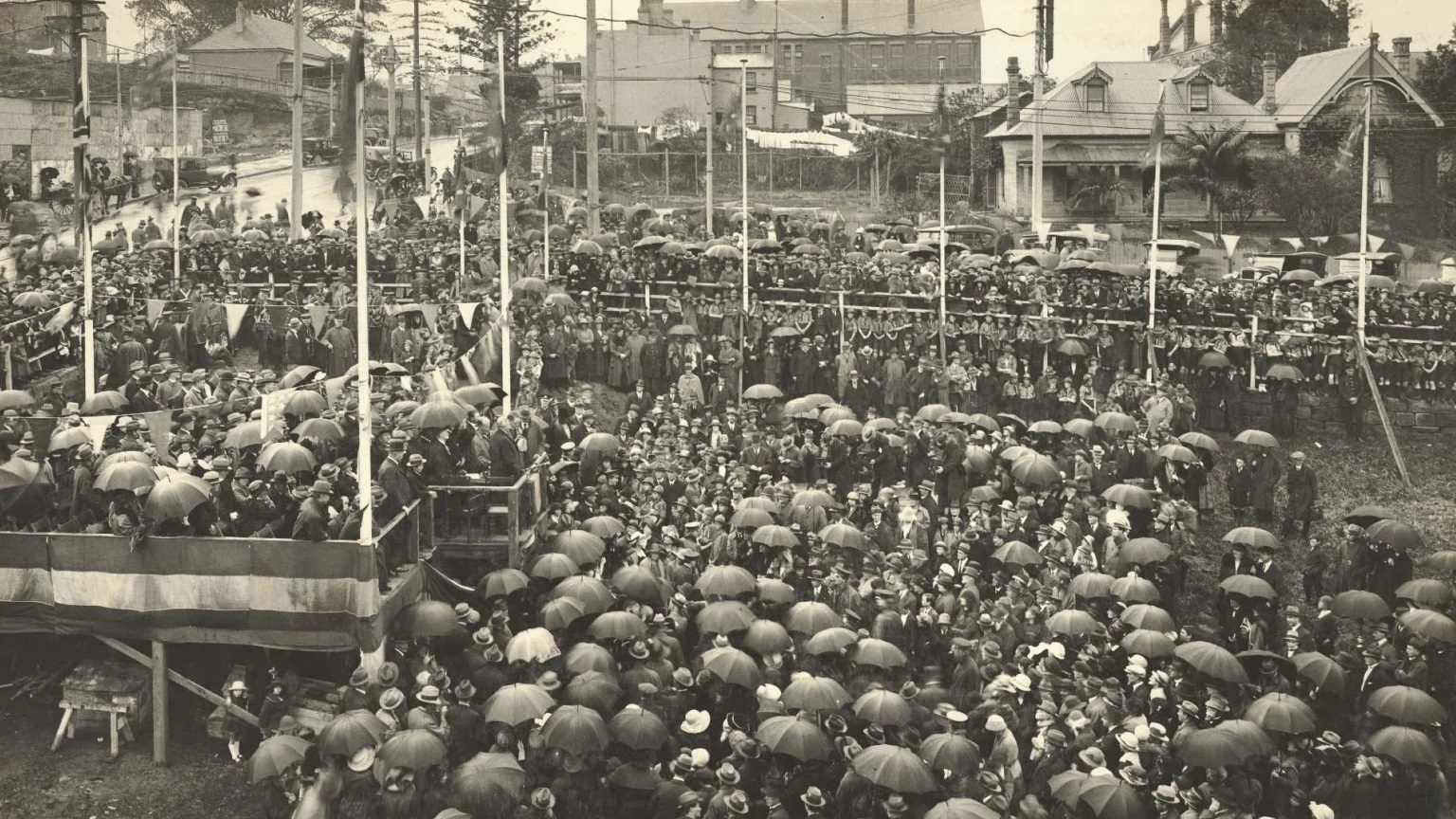
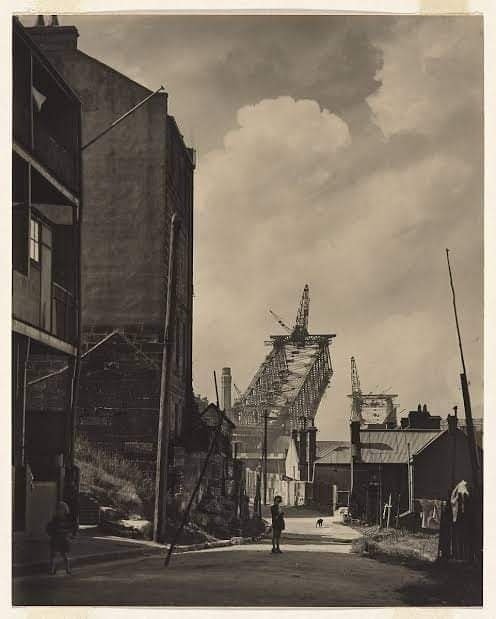
When construction started after the speeches and ceremonies, there was the destruction of over 500 houses in the North Sydney area. Neighbourhoods in Waverton and Milsons Point were destroyed.
North Sydney historian Ian Hoskins estimates that 5%-10% of North Sydney’s population was displaced.
Commissioning the bridge
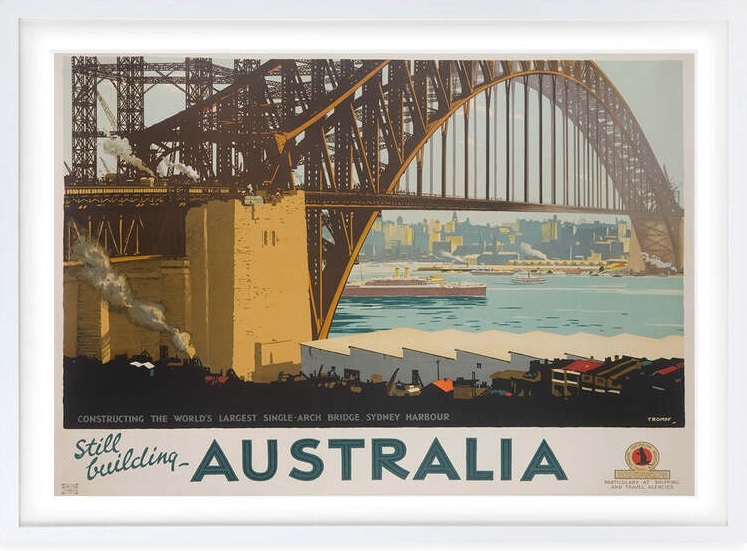
When the bridge was commissioned in the early 1920s, it was the largest construction project ever undertaken in Australia. It was a bold concept and design and captured the Sydney imagination. It joined two parts of the emerging city and crossed the picturesque Port Jackson waterway.
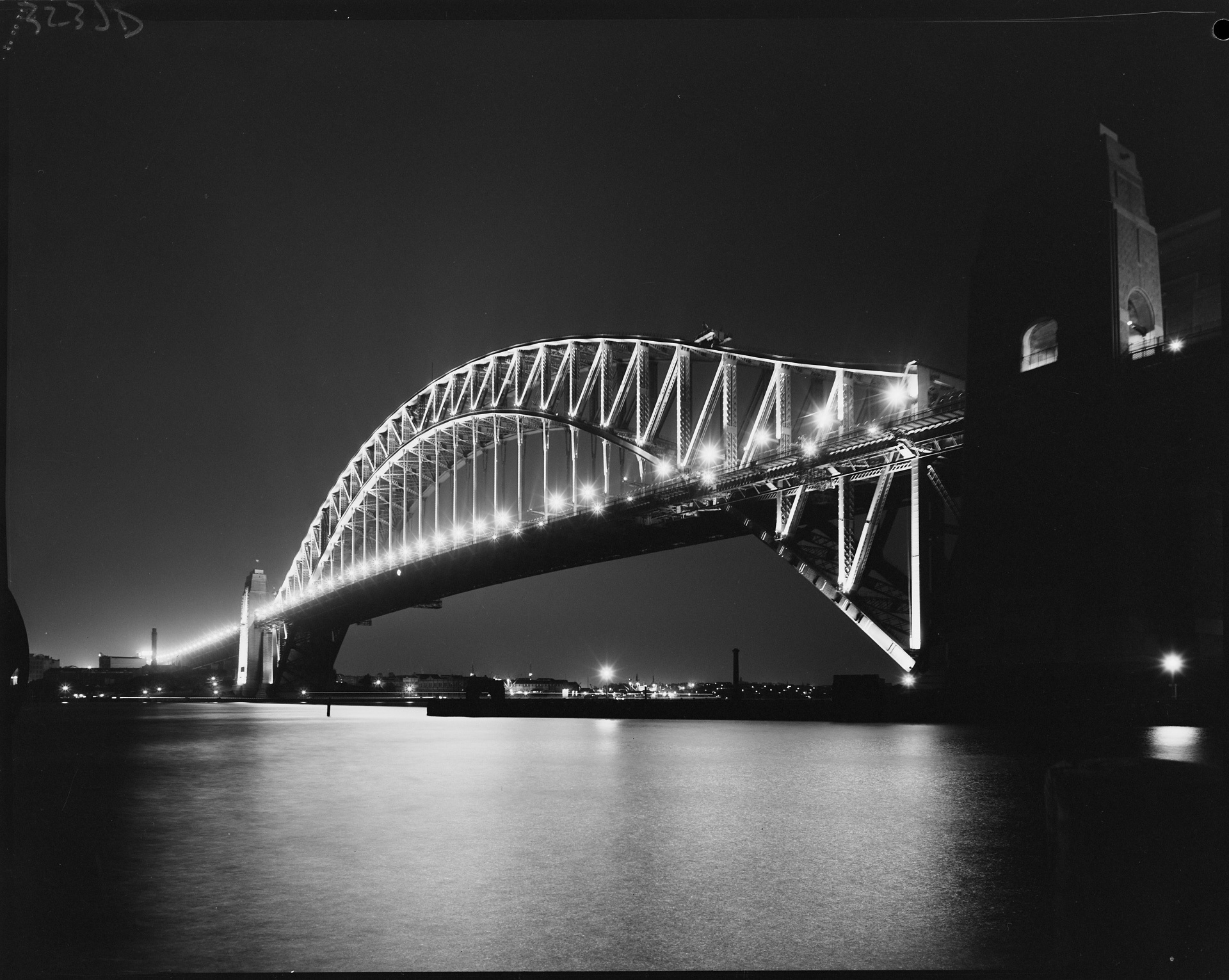
Historian Peter Spearritt’s The Sydney Harbour Bridge A Life states that the idea of linking Dawes Point with the North Shore was first proposed in 1815 by ex-convict and government architect Francis Greenway. The first bridge sketch appeared in 1857 when the NSW Commissioner of Roads and Bridges, WC Bennett, proposed a pontoon. Other ideas included a tunnel under the harbour. Meanwhile, ferries plied between both sides of the harbour carrying millions of passengers yearly.
JE Bradfield
In the 1890s, a Sydney University-educated Queenslander joined the NSW Department of Public Works. He was engineer JE Bradfield. He was an enthusiastic bridge supporter and profoundly impacted the bridge story and the Sydney transport system.
Linking Sydney and North Sydney became political in the 1880s. Between 1880 and 1909, it was the subject of two Royal Commissions and advisory board reports.
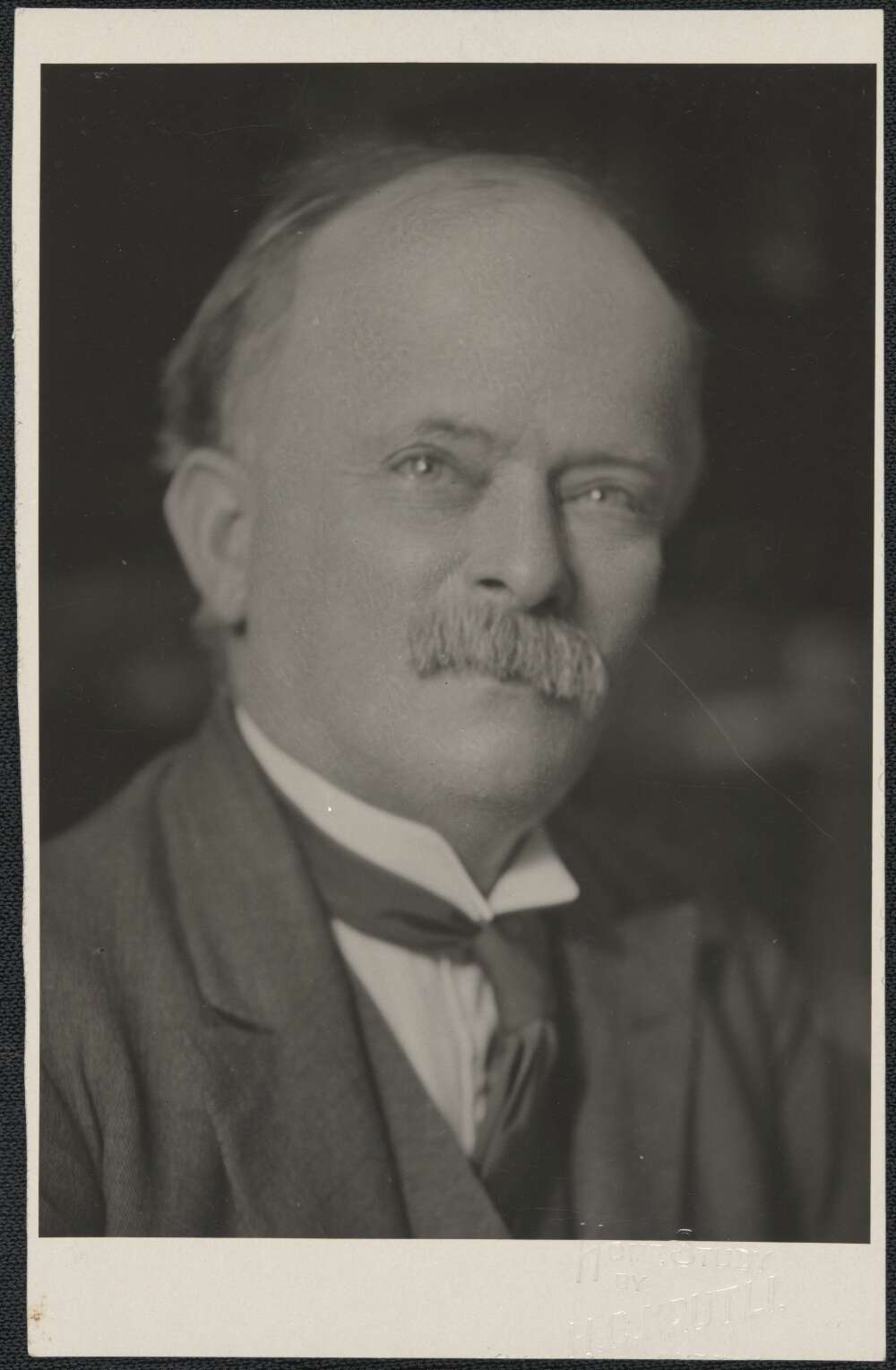
Bradfield put his first proposal for a Sydney Harbour Bridge in 1909. After a study trip to North America and England, his ideas were incorporated into the 1922 enabling legislation, the Sydney Harbour Bridge Act 1922 (NSW), passed by the New South Wales parliament.
In 1922 tenders were invited for both an arch and a cantilever-designed bridge, with English engineering firm Dorman, Long and Co winning the tender for their arch design. The bridge was to cost over £4 million.
Before construction began, hundreds of houses and businesses were demolished. Tenants were evicted while landlords received compensation. Construction started in 1923, and excavations began in 1925.
Nation-building project
There was great public interest during the construction of this nation-building project, with daily updates in the Sydney press and further afield. The construction of the Sydney Harbour Bridge was the great engineering wonder of its day.

The two arches, one each from either side of the harbour, grew in height and were visible all over Sydney. The arches were eventually joined in 1930. The bridge deck was completed by the end of the following year.
Bridge Opening
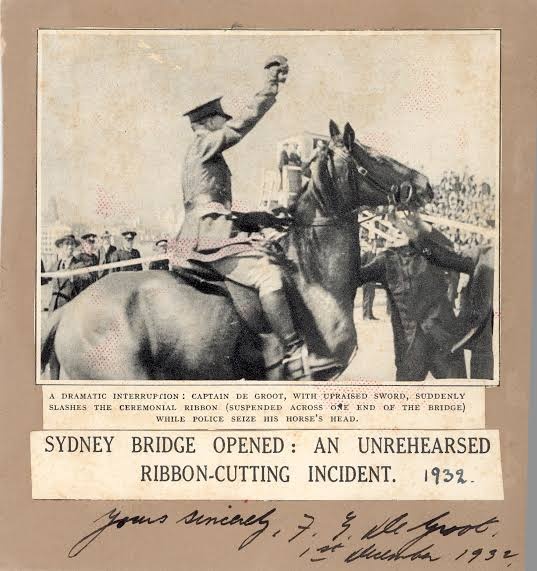
The notoriety of the bridge was assured when Francis De Groot, from the New Guard, stole the moment and cut the ribbon with his sword at the official bridge opening in 1932. Just as NSW Premier Jack Lang was going to cut the ribbon de Groot rode through on a borrowed horse and captured all the glory – for that moment, anyway.
Celebrating the bridge
Various events and publications commemorated the bridge’s opening, including a postage stamp.
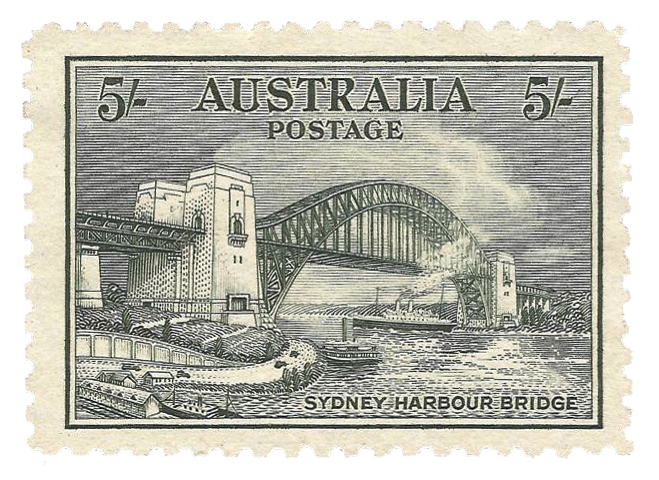
At the time and later, the bridge was celebrated in song, poetry, stories, novels, postcards, paintings, photography, cartoons, commemorative booklets, biscuit tins, jigsaws, teapots, coffee cups, salt & pepper shakers, calendars, tea towels, cake icing, construction kits, pamphlets, brochures, newspaper supplements and even a bottle stopper.
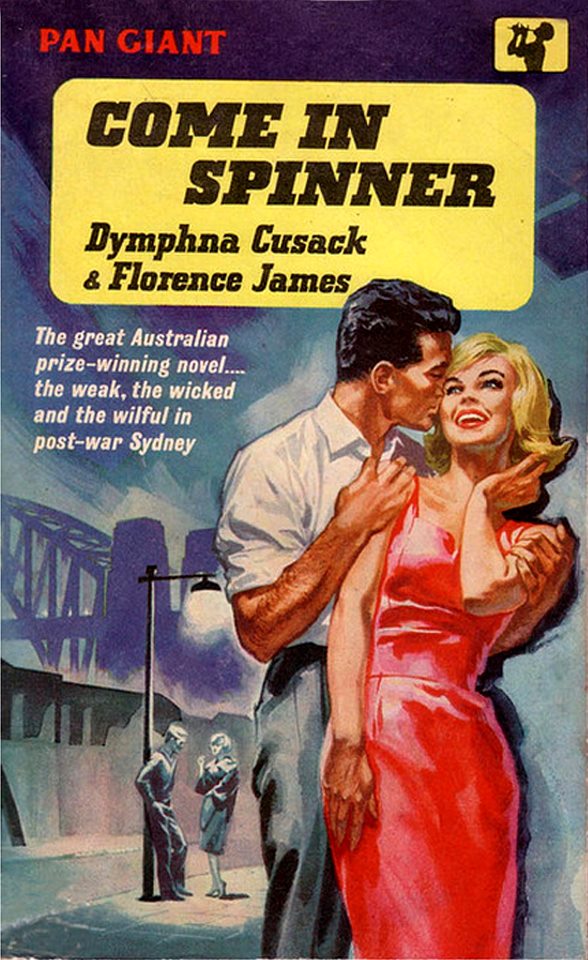
Examples included the Reverend Frank Cash’s self-published book Parables of the Sydney Harbour Bridge (1930) and CJ Dennis’s poem ‘I Dips me lid to the Sydney Harbour Bridge’ (1932). The bridge was used on the cover of Dymphna Cusack and Florence James’s novel Come in Spinner (1951). The romantic story was set in Sydney at the end of the Second World War.
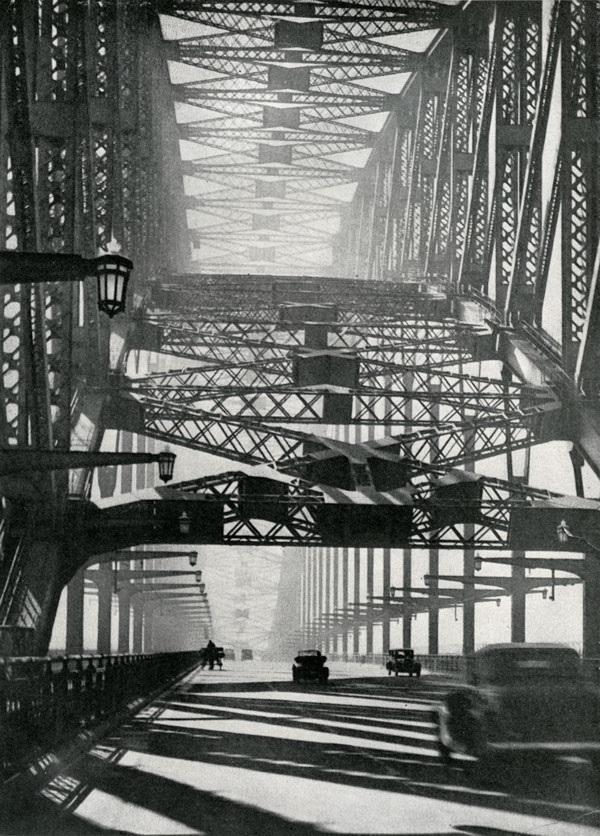
The bridge story was recorded by photographers Harold Cazneaux, Henri Mallard and Frank Hurley, while artists Grace Cossington, Ure Smith, and Margaret Preston put a different slant on the story.
Pylon Lookout
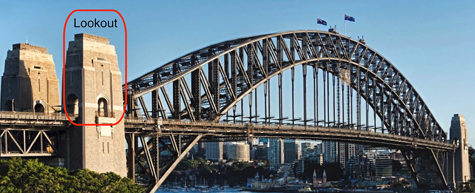
Bridge visitors could go up the Pylon Lookout from 1934. A 1950 advertisement proclaimed:
See Sydney from the Harbour Bridge Pylon Lookout. The highlight of a trip to Sydney is your visit to the Pylon Lookout. The Pylon Lookout has dozens of attractions to interest youngsters, school-children, youths and adults. Among the many features are…unusual souvenirs…See ’The Magic Picture’ – only one in the world – amusing, historical… Open every day 9.30am to 6pm.
Lorenz Rychner on his blog International Travel News writes;
Few visitors realize the bridge can be crossed on foot in about 20 minutes and that the southeastern pylon is open to the public, rewarding a fairly short climb up a flight of stairs with wonderful, 360-degree views from a viewing platform. I’ve taken many visitors up there, and nobody has yet been less than enthralled.
Once inside the pylon, whether on the way up or down, one can study the fascinating displays showing how and when the bridge was constructed, what life was like for those who built it and what impact the bridge had on life in Sydney.
https://www.intltravelnews.com/2018/sydney-harbour-bridge-pylon-lookout
Crazy Brave
One of the crazy brave, and illegal activities taken up by young, energetic Sydneysiders as a rite of passage was to climb the bridge at night in the 1960s and 1970s. After scaling the man-proof fence and climbing up the inside on one of the girders, the young adventurers could walk up and along the top of the bridge arch. The result was a magnificent view of the Sydney night-time city skyline. Eventually, the BridgeClimb was opened in 1998, and everyone could legally take in the views.
Specs
One of the most unusual things linked to the harbour bridge is the official unit of measurement – one Sydharb. It is used to measure volume and is equivalent to 500 gigalitres and is the volume of water in Sydney Harbour.
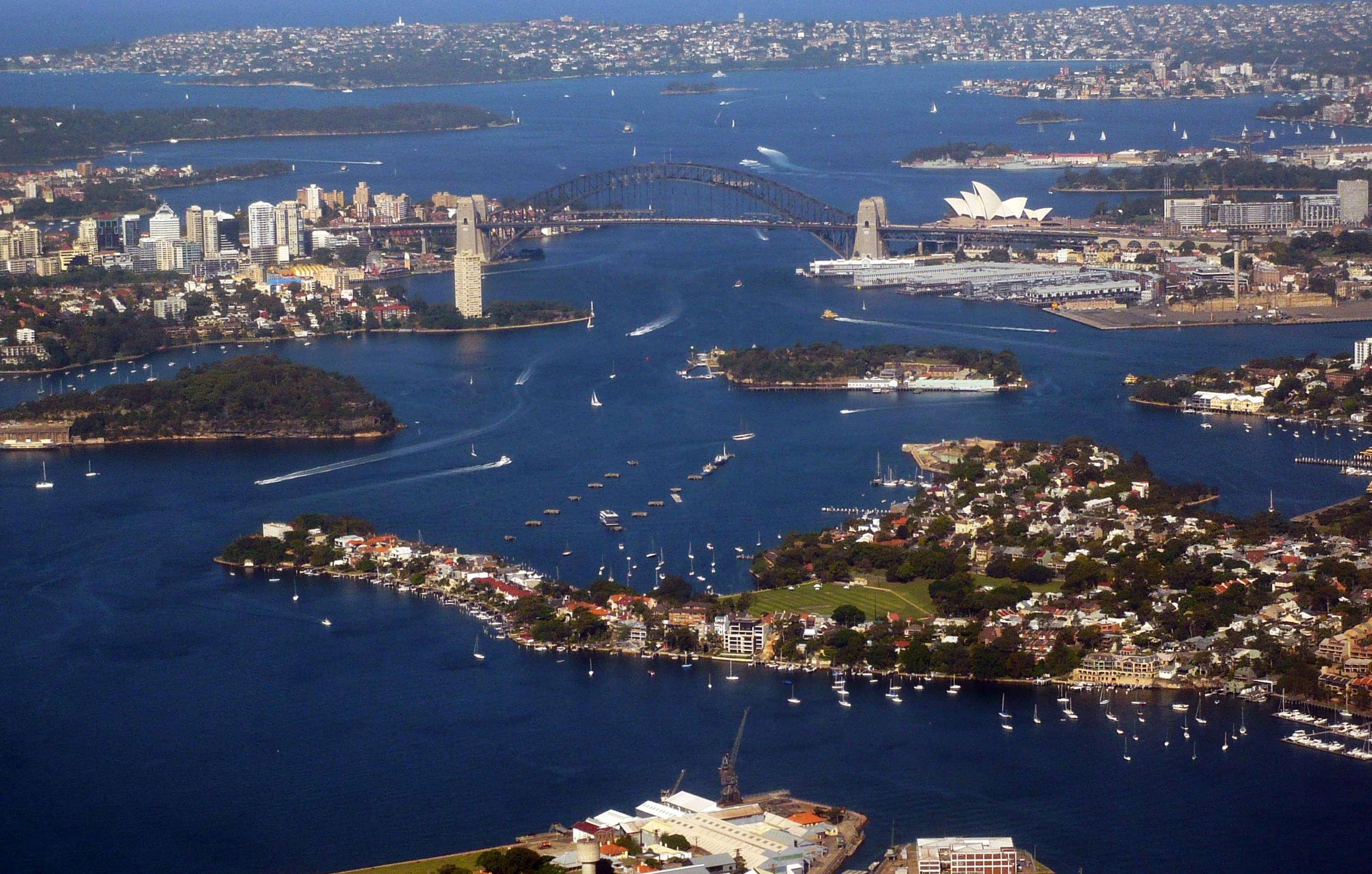
And just for the pedants and the record, the bridge was opened in 1932. It contains 6 million hand-driven rivets. The bridge toll was 6d. for a car, and for a horse and rider 3d.
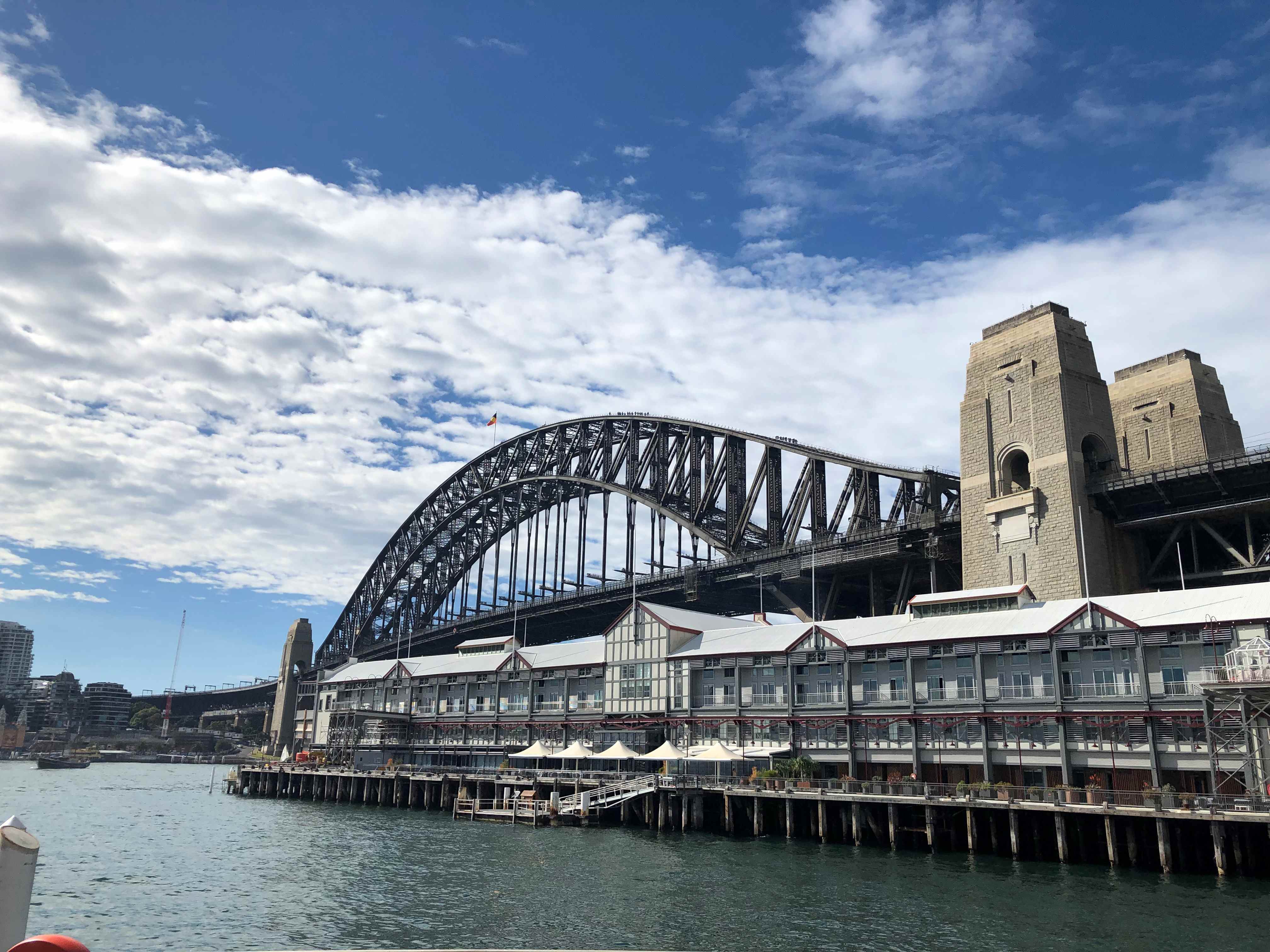
The bridge is the world’s longest steel arch bridge. It is 1149 metres long, height 141 metres, width 49 metres, 134 metres above sea level and 16 men died during its construction. It took 272,000 litres of paint to give the bridge its first three coats, and the four pylons are only for decoration. (australia.gov.au)
Watch a video on the Sydney Harbour Bridge.
Video on the construction of the Sydney Harbour Bridge
Iconic status
The bridge has achieved iconic status and has transcended from being a symbol of Australian nationalism in the 1930s to a Sydney and Australian brand instantly recognisable the world over.
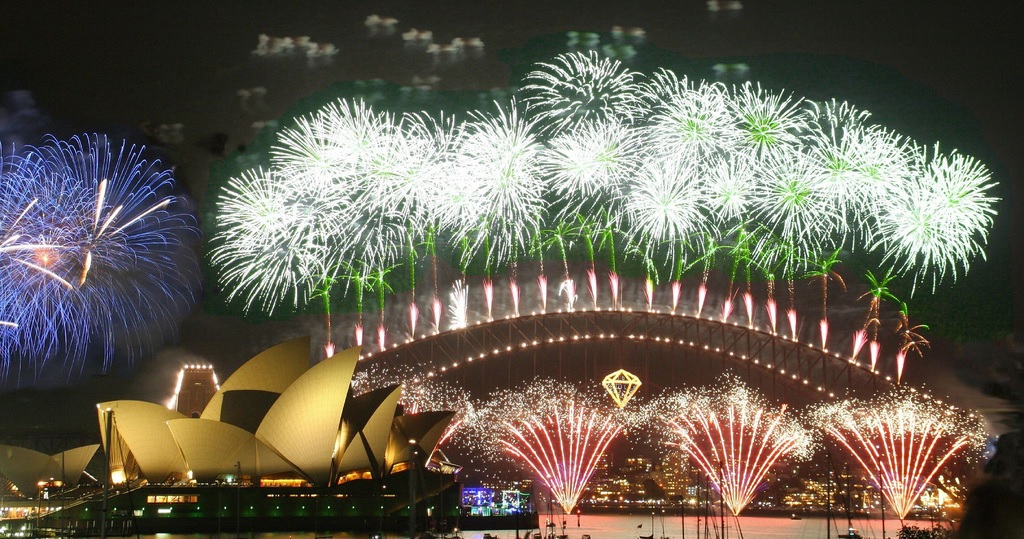
The Sydney Harbour Bridge is recognised globally for the annual New Year’s Eve fireworks.
Updated 30 July 2023
Discover more from Camden History Notes
Subscribe to get the latest posts sent to your email.

