Back to Belgenny Farm in 2024
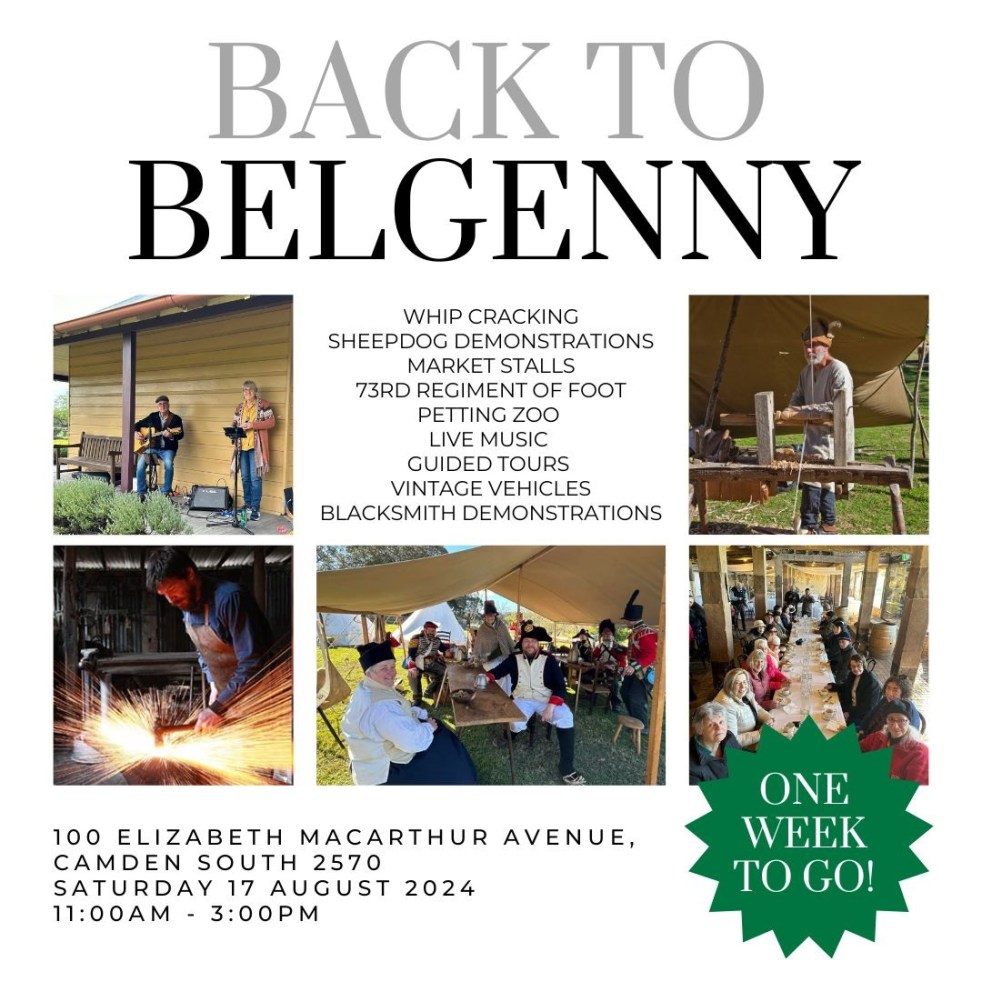
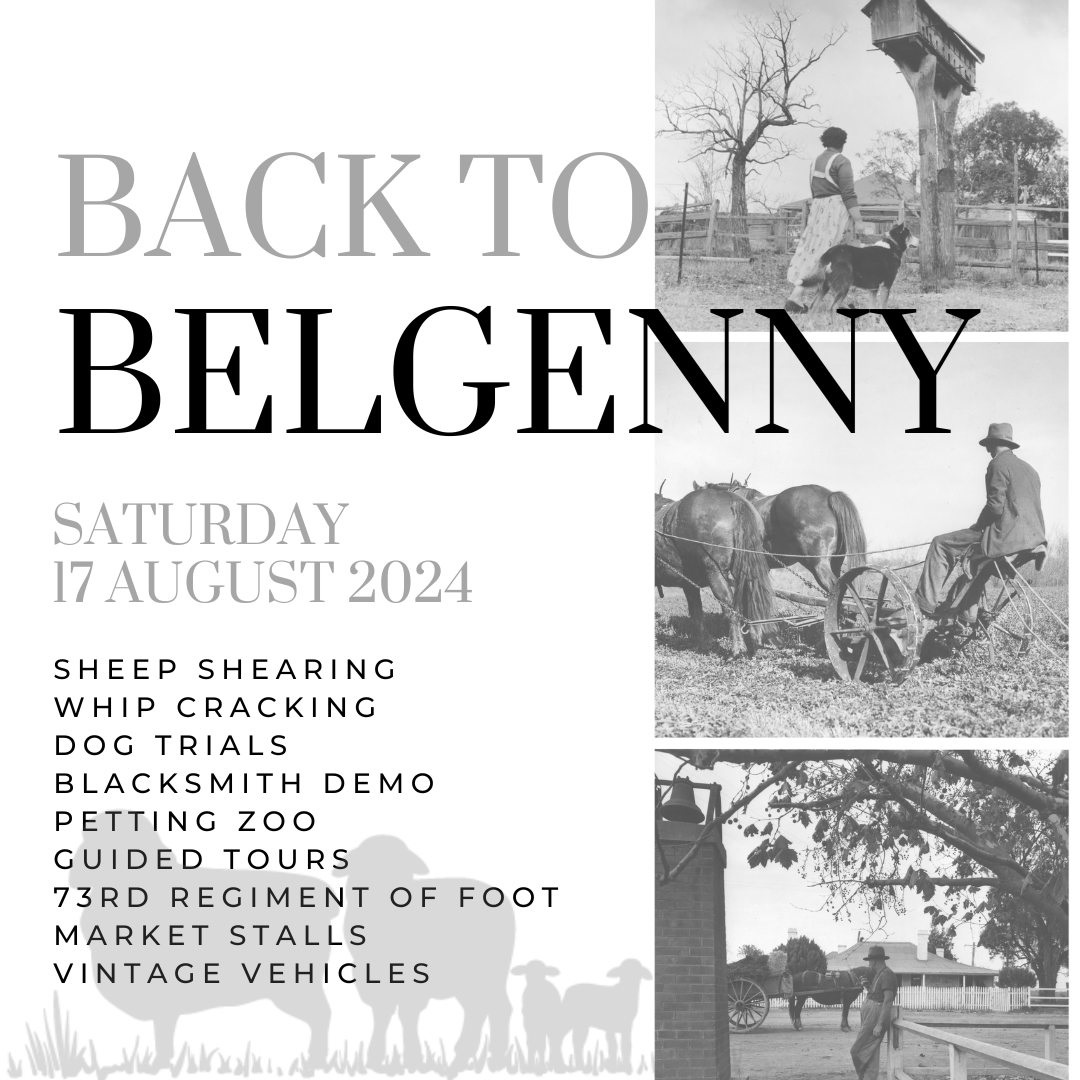
Living history was alive and well at Belgenny Farm at South Camden on a slightly overcast Saturday in August for the 2024 Back to Belgenny festival. The day was a festival of living history, with reenactments, traditional trades, and stalls selling arts and crafts of the past.
Shafts of sunlight greeted the early arrivals, who set up their stall gazebos, presenting produce. Those with food stalls set up their cooking equipment, and the traditional tradesmen set out their hand tools.
The crowd started to pour in just before 11 a.m., the official opening time. The schedule was packed with activities, and hundreds of visitors enjoyed the festivities.
Activities included sheepdog trials, live music, Macarthur cemetery tours, vintage cars, art activities, market stalls, displays, demonstrations and guided history tours of the site.
Ghosts were everywhere. If walls could speak, they would tell tales of the past: ploughing fields with horse teams, workers emptying milk cans at the creamery, and husking corn at the granary. Visitors could immerse themselves in these stories embedded in the farm buildings, which had changed little from their working days.
Governor Macquarie’s regiment
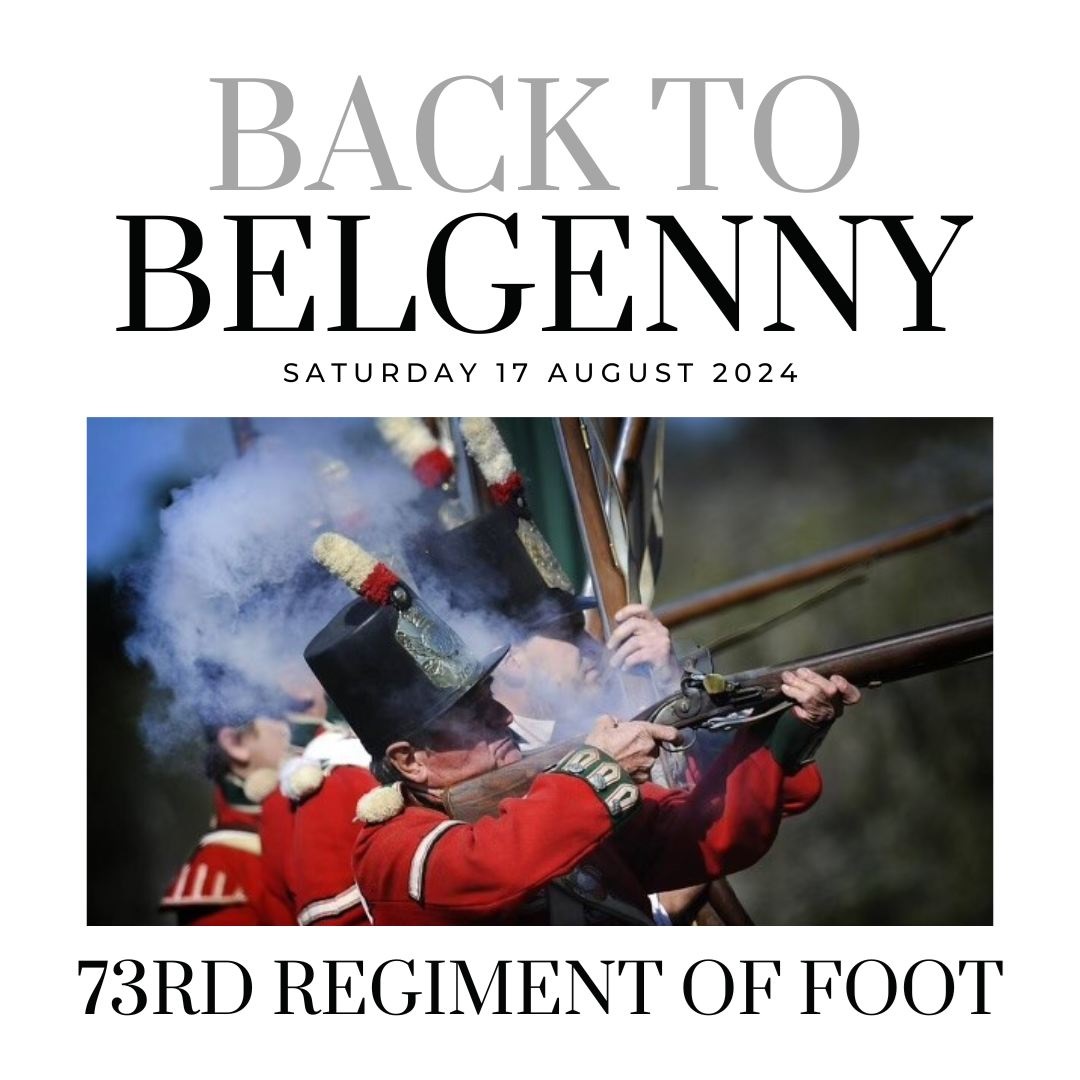
The 73rd Regiment of Foot, Governor Macquarie’s regiment, established an encampment on the former working horse paddock. At 11 a.m., regiment members raised the Union Jack over the encampment and officially opened festivities.
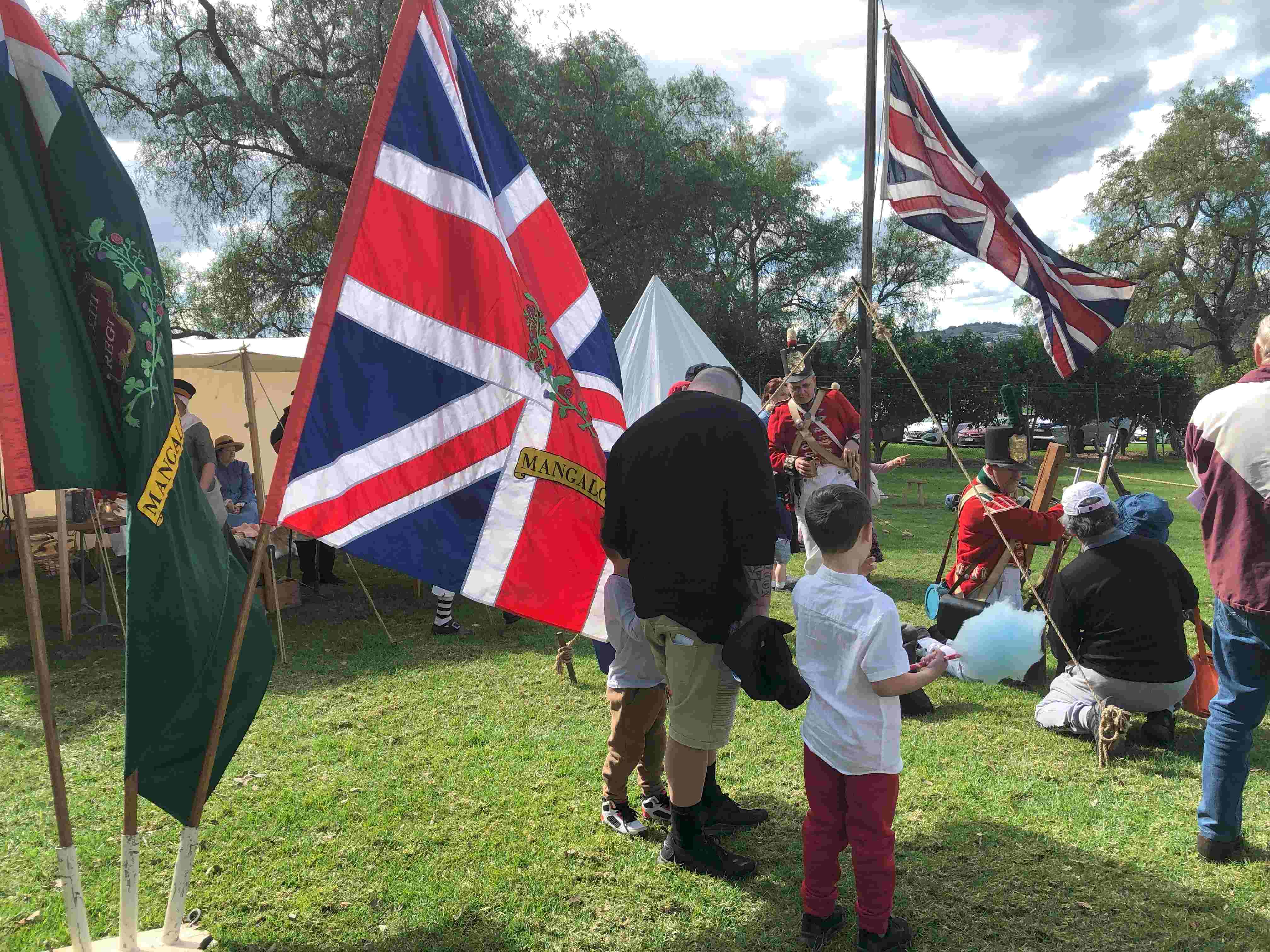
Regimental members did a parade drill, demonstrated live canon firing and cavalry tent-pegging, and re-enacted a Redcoat Battle. The 73rd Re-enactors are part of a thriving living history movement that spans the globe. They closed the day by lowering the Union Jack at 3 p.m.
The hub of the farm
The former Home Farm’s central courtyard was the day’s centre and became busy, just as it would have done daily when the site was still a working farm.
The toing-and-froing of visitors was reminiscent of a busy working day on the farm with working horses, deliveries, and constant movements of spring arts at the creamery.
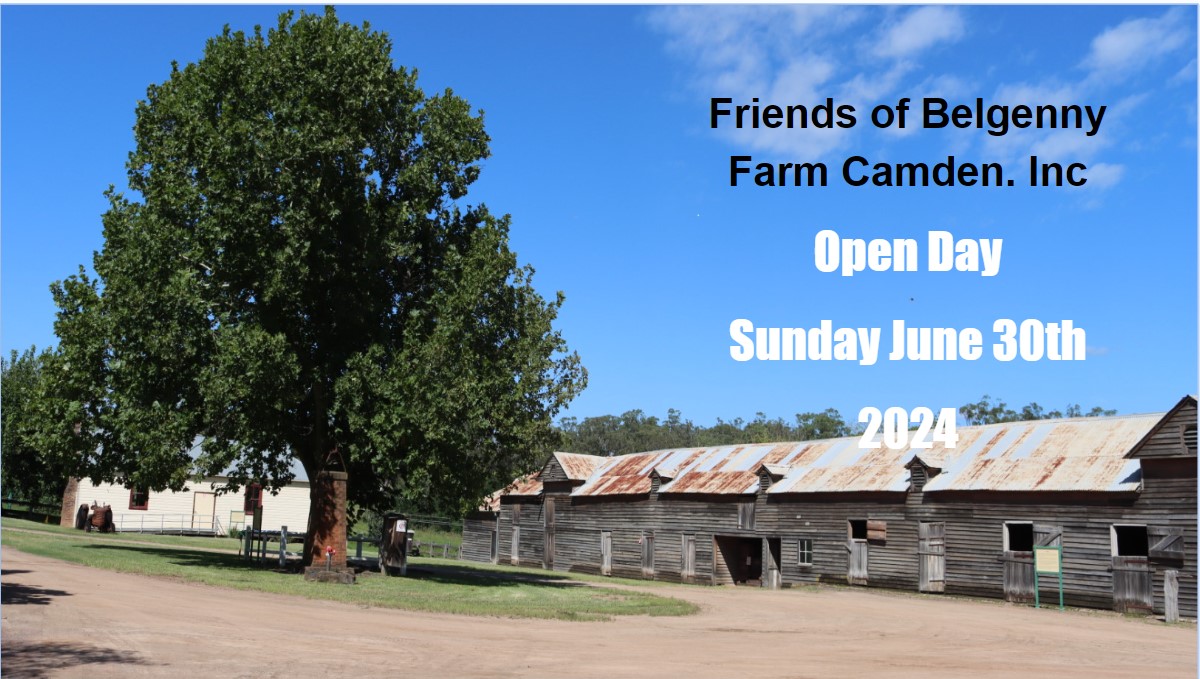
The courtyard is surrounded by layers of the past, including stables, the creamery, the manager’s cottage, and the hall.
In the centre of the courtyard is the bell, once located near the smokehouse, that rang in and rang out the workday. In 1935, tragedy struck when the bell fell on the head of WA Channell, killing him as he rang the bell. The current brick monument is a memorial to Channell.
Vicarious immersion for visitors
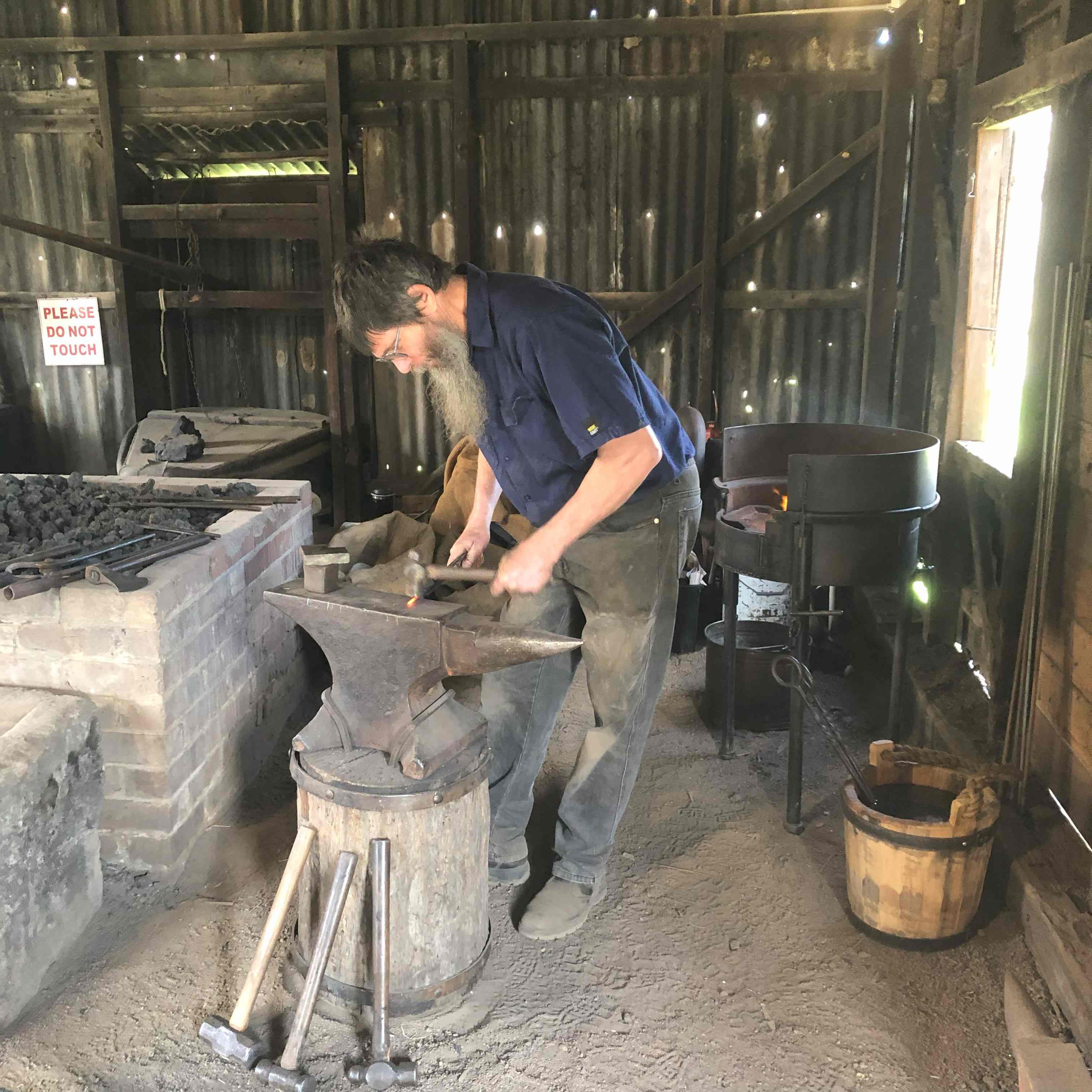
The blacksmith shop had an operating forge and working blacksmith, and visitors could immerse themselves as he shaped the red hot metal with a hammer and anvil after extracting it from the forge. The current location of the blacksmith shop dates back to the 1930s, when it was rebuilt behind the stables and the community hall was built in 1937.
The blacksmith shop was originally on the hall’s site, and some old building materials were used in the new location west of the stables.
The blacksmith shop was always the centre of any Cowpastures colonial farm. It repaired farming equipment, sharpened and repaired hand tools, and made horseshoes, gates, hinges, bolts, wheels, and other farm equipment.
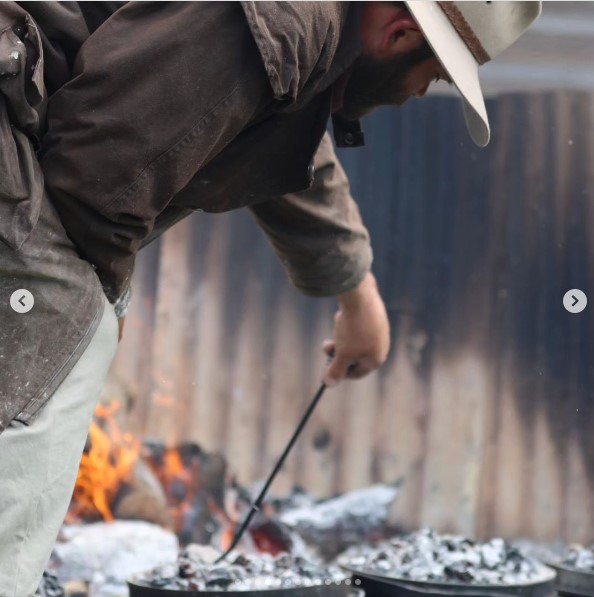
Across the courtyard in the old horse paddock was the drover’s camp. Camden Park drovers moved sheep from the farm around the estate and between Macarthur properties. Drover Jake from the Friends of Belgenny Farm supervised the open-fire cooking damper mixed by John.
The Friends ladies sold damper cooked to perfection in camp ovens. The camp aromas wafted through the long lunchtime queue for damper and golden syrup, satisfying any hunger pangs.
Industrial Revolution
The advances of the Industrial Revolution arrived at the farm, bringing mechanisation and refrigeration. They also ushered in the dairy revolution, with the creamery representing industrial-style milk separators.
The granary, the dovecote, the fuel shed, the manager’s cottage, the community hall, the engine room, and the pigsties were all part of the dairying story. The vineyard disappeared, and there is the thoroughbred grave, where profits allowed the gentry to indulge in horse racing and breeding in the Cowpastures.
Mechanisation replaced hand tools, traction engines replaced hand threshing, and stationary engines replaced horsepower. The 1900 engine room was built on the corner of the stables. The flour mill adjacent to the engine room ground wheat into flour using belt-driven mechanised power for use on the farm or for sale.
What does the farm represent?
Belgenny Farm, formerly the Home Farm, is a rare collection of farm buildings. They create an English-style landscape now unique in Australia, telling the story of the Cowpastures and the Camden district.
The site is a living representation of the actions of a settler society where English colonialism created a frontier that begat violence, actual or implied. This changed the Dharawal-managed landscape into the ordered, structured English-style farming setting that survives.
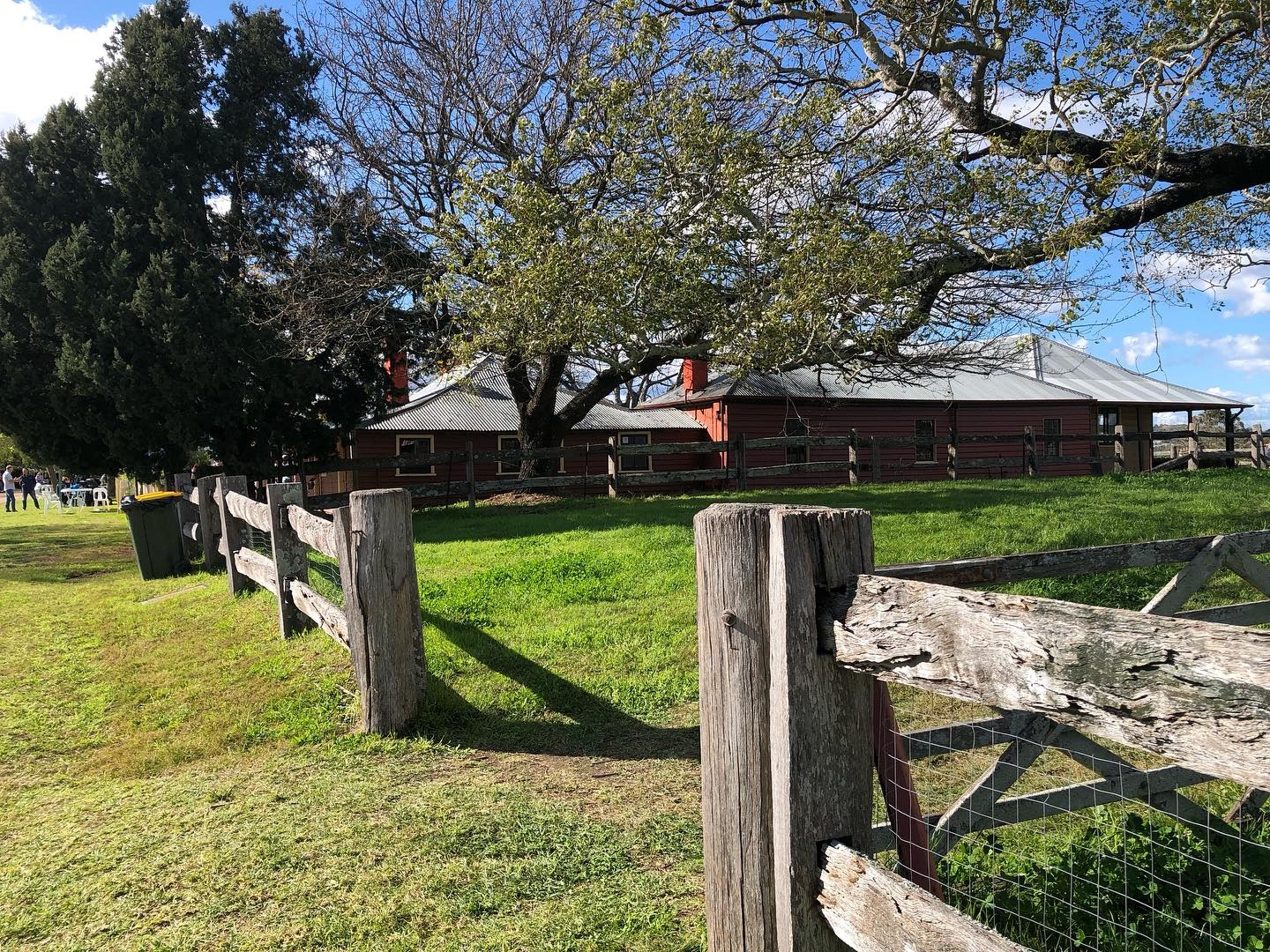
From the first grant allocated to John Macarthur in 1805, the farm was part of the Macarthur family’s agricultural empire, with Camden Park Estate as an outpost. The Home Farm was the central hub of Camden Park Estate until the railway arrived at Menangle in 1863.
In conclusion
Belgenny Farm gives today’s visitors a glimpse into the past through reenactments, traditional trades, history tours, and other activities.
Visitors can use their imagination to imagine life for those who lived and worked on the farm, including convicts, tenants, share farmers, and others.
Living history is alive and well at Belgenny Farm and its regular historic festivals.
Discover more from Camden History Notes
Subscribe to get the latest posts sent to your email.

