Shooting the history breeze for local tourism
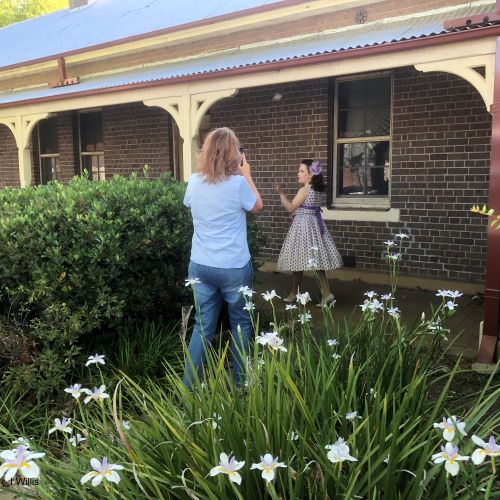
On a balmy late spring afternoon in central Camden, a group of local people were conducting a photoshoot.
The late afternoon provided a deep, even light that was ideal for the whole venture. None were professional filmmakers. But that did not stop anyone.
The filming dodged pedestrians and was occasionally drowned out by local buses.
![Camden & Laura Jane & Debbie photoshoot epicure store History Videos CRET 2019[1] lowres](https://camdenhistorynotes.com/wp-content/uploads/2019/11/camden-laura-jane-debbie-photoshoot-epicure-store-history-videos-cret-20191-lowres.jpg)
Historic John Street precinct
The project centred around the historic John Street precinct.
The film venture involved storytelling, great yarns, interesting characters, old buildings and lots of making do.
The location provided a rich collection of old buildings that speak about the past for those who want to listen. History enthusiasts can immerse themselves in the past in the present by walking the ground – the same streets as local identities and characters have done for decades.
![Camden & Laura Jane photoshoot police station History Videos CRET 2019[1]lowres](https://camdenhistorynotes.com/wp-content/uploads/2019/11/camden-laura-jane-photoshoot-police-station-history-videos-cret-20191lowres.jpg)
Filmmaker Rachel Perkins (2019) has stated
The past is always with us, and it has created the present. The past is all around us, within us all the time. The past lives with us in the present.
abc.net.au/news/2019-11-16/boyer-lecture-rachel-perkins-echoes-uluru-statement/11696504
Storytelling touches something within us. It touches the soul.
Filmmakers and storytellers
The key storyteller was Laura Jane Aulsebrook, who has been described as Camden’s own Miss Honey (for the uninitiated from Matilda) and her happy ways. All dressed up in purple for the occasion.
The key camera operator, director and chief of production was Debbie Roberts (EO of CRET), ably assisted by her roadie husband, Peter.
History material was provided from the Camden Heritage Walking Brochure and chief history boffin UOW historian Dr Ian Willis, ably assisted by his PA Marilyn.
This motley group wandered around a number of Camden’s old buildings. Laura Jane acted as a storyteller for the 1-2 minutes of historic grabs. LJ was full of passion in her ad-lib performances. Ian listened for any gaffs – which were few and far between.
![Camden & Laura Jane photoshoot library History Videos CRET 2019 (2)[1] lowres](https://camdenhistorynotes.com/wp-content/uploads/2019/11/camden-laura-jane-photoshoot-library-history-videos-cret-2019-21-lowres.jpg)
Debbie followed Laura Jane around with her handheld – tripod-held – iPhone camera. If she was lucky, a bus didn’t drown LJ’s monologue. The roadies held all the bits and pieces – then reviewed the take and ably provided all sorts of advice – most it wisely ignored by the camera operator and storyteller.
The most challenging story was that of Henry Thompson’s Macaria from the 1870s, the ghosts and Henry’s 16 children. This is next door to the 1840s Sarah Tiffin’s cottage, one of the oldest buildings in the local area and a one-time lockup.
![Camden & Laura Jane photoshoot epicure store History Videos CRET 2019[1] lowres](https://camdenhistorynotes.com/wp-content/uploads/2019/11/camden-laura-jane-photoshoot-epicure-store-history-videos-cret-20191-lowres.jpg)
The Cawdor courthouse moved into Camden in 1841, much to the chagrin of Picton and Campbelltown, which missed out. Next door to the courthouse is the 1878 police barracks, which was always a site of plenty of action where miscreants were locked up in the cells to cool off.
The 1916 fire station, which was really opened in 1917, was an improvement from the pigsty in Hill Street. Next door is the modern library, once the centre of learning and speeches in the town, the 1866 Camden School of Arts set up by James Macarthur.
Our storyteller and camera operator filmed a street walk outside the 1936 Bank of New South Wales building and its neighbour, the 1937 banking chamber for the Rural Bank – interwar masterpieces.
This was followed by a chit-chat about the long-running Camden Show out the front of the lovely 1937 architect-designed brick frontage to the 1890s Camden Rifles drill hall, now the show pavilion.
Camden festivals
This intrepid troupe were making short film clips as a promo for local tourists and a local spring festival – the Camden Jacaranda Festival.
The aim of the 2019 Camden Jacaranda Festival was to
showcase both our fabulous town and the people that comprise the fabric of it.
camdenjacarandafestival.org/jacaranda-festival/
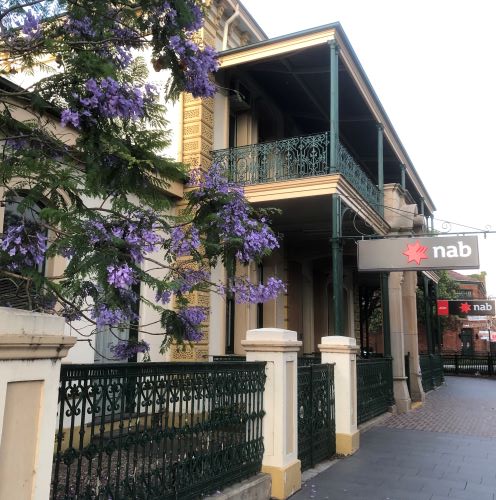
The Jacaranda festival is just one of many that have been held in the local area.
English village sports days
The festival draws on a rich history of community festivals in the local area going back to the 1800s. The heritage of festivals is drawn from the English tradition of the village fair that came with the European settlers.
The origins of these festivals, according to Peter Hampson Ditchfield’s Old English Sports (2007), lie in ancient Saxon customs, particularly in Devonshire and Sussex, associated with ‘wassailing’ (carousing and health-drinking) to ensure the thriving of orchard trees (mainly apples) and exchanging presents.
On New Year’s Day, village youths undertook indoor and outdoor sports to keep out the cold by ‘wholesome exercise and recreative games’. Sports included bat-and-ball, wrestling, skittles, blind-man’s-bluff, hunt the slipper, sword dancing and mumming (play-acting).
Festivals, fetes and fairs encourage lots of visitors to the local area as tourists.
Tourism, cultural heritage and history
What is the connection between local history, cultural heritage and tourism?
Quite a lot.
Tourism Australia says
In the financial year 2017–18 Australia generated $57.3 billion in direct tourism GDP representing growth of 7 percent over the previous year – three times the national GDP growth of 2.3%. Tourism also directly employed 646,000 Australians (1 in 19) making up 5.2% of Australia’s workforce.
More than this, Arts New South Wales says
In Australia and around the world, cultural tourism is growing. In 2015 NSW hosted over 11.4 million ‘cultural and heritage visitors’,1 both international and domestic, who spent an estimated $11.2 billion in the state, an increase of 15.4% on the previous year.
The Australia Council says of arts tourism:
Arts tourist numbers grew by 47% between 2013 and 2017, a higher growth rate than for international tourist numbers overall (37%).
![Camden & Laura Jane photoshoot show hall pavilion History Videos CRET 2019 (2)[1] lowres](https://camdenhistorynotes.com/wp-content/uploads/2019/11/camden-laura-jane-photoshoot-show-hall-pavilion-history-videos-cret-2019-21-lowres.jpg)
Tourism can create jobs, drive economic growth and encourage local development.
Updated 17 January 2024. Originally posted on 17 November 2019 as ‘Shooting the history breeze for local tourism’
Discover more from Camden History Notes
Subscribe to get the latest posts sent to your email.

