
Modernism in the 1960s
Modernism was a transnational force that embraced the Camden community of Elderslie.
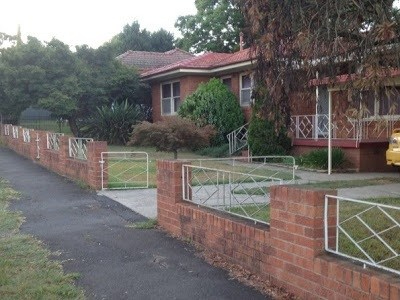
The land releases in the Camden suburb of Elderslie in the 1960s produced a number of houses that expressed mid-20th-century modernism. The house designs were taken from the book of project homes of the day and were quite progressive.
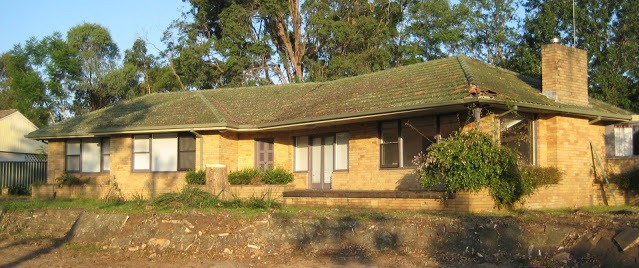
Australian architects, including Robin Boyd, were expressing Australian modernism. These architects were commissioned by housing developers like Lend Lease to design their housing estates. One such development was the Lendlease Appletree Estate at Glen Waverley in Melbourne. Another Lend Lease land release and a group of show homes were at their 1962 Kingsdene Estate in Carlingford,
Homes of miners
The Elderslie homes were built by miners who worked in the Burragorang Valley and wanted new, modern houses. They generated the wealth that funded the urban growth of the Camden suburbs of Elderslie and South Camden.
Elderslie was one of the original land grants to John Oxley in 1816. The area has been dominated by farming, particularly orchards and vineyards.
Elderslie examples of 1960s modernism include houses in Luker Street characterised by low-pitched rooves, open planned but restrained design, with lots of natural light streaming in full-length glass panels adjacent to natural timbers and stone. There are also ranch-style houses on River Road with open planning and wide frontages to the street, some of which are architect-designed.

These houses are all located in and among Federation-style farming houses of the Edwardian period. The Federation-style houses were on large blocks of subdivided land during the 1960s.
The now-demolished Henning’s house on Macarthur Road (image) exemplifies an open-planned ranch style. Other modernist designs include the blocks of flats on Purcell Street, which use decorative wrought iron railings.
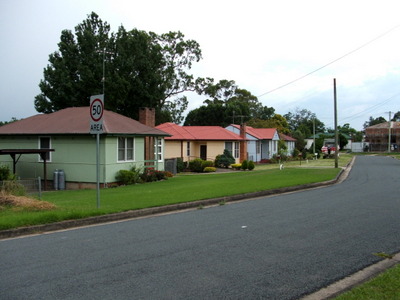
Sunset Avenue in Elderslie was a new land release with a mix of 1960s modern low-pitched roof open-planned houses interspersed with New South Wales Housing Commission fibro construction homes.
Other land releases of the 1960s were the New South Wales Housing Commission’s 1960s fibro houses, some located on Burrawong Road and Somerset Street.
Updated on 9 February 2025. Originally posted on 20 April 2018 as ‘Mid-20th Century Modernism in Elderslie’.
Discover more from Camden History Notes
Subscribe to get the latest posts sent to your email.


3 thoughts on “Mid-Century Modernist Homes in Elderslie”
Comments are closed.