

Fact-gatherers create an important source for local history
Fact-gathering is a popular pastime for amateur sleuths and historians. Some folk spend hundreds of hours of their spare time at it, searching out dark corners of the internet, chasing documents or going down many rabbit holes. They then create data lists of many different types.
Data lists are important sources for historians writing local stories. Lists enhance storytelling about communities and emphasise the importance of combining facts with personal stories for a richer historical understanding. This blog post will briefly explore the link between data lists and the creation of local history stories.
Communities and lists
Communities have lists hiding in plain sight. One of the most common is the list of soldiers’ names on the local war memorial and cenotaph. One example is a data set of soldiers’ names on the Camden War Memorial Gates at Macarthur Park.
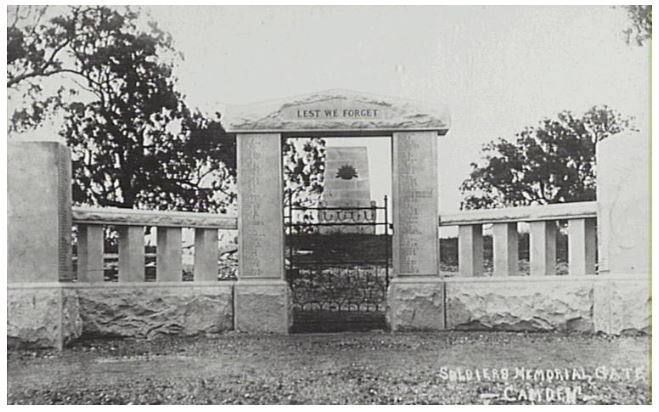
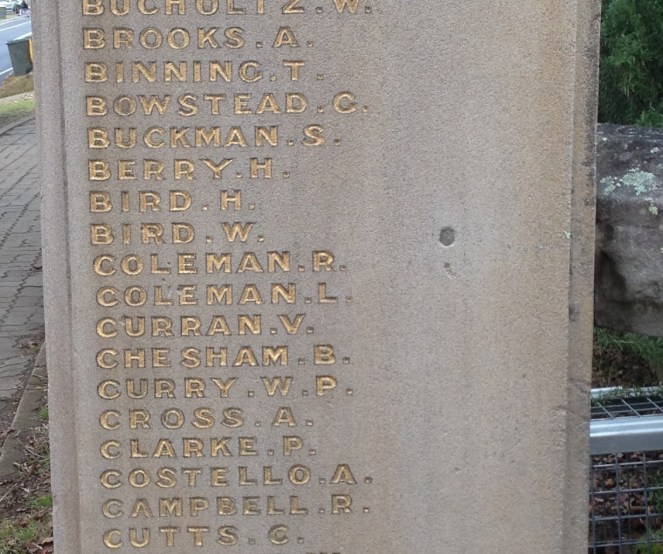
The data sets on the War Memorial Gates provide a starting point for local history to tell each soldier’s story. The list is an integral part of the Camden Anzac landscape. (Willis 2026)
Lists organise chaos
Data lists provide basic information for historians. Lists summarise chaotic information and provide order where there is no order.
Data lists clarify confusing data and increase productivity. Lists prioritise facts, provide better data management, and improve focus. Lists turn large, unmanageable amounts of data into smaller, more easily actionable units.
Lists are the essence of a location and link people directly to a geographic area, an organisation, a political affiliation, a social group or social networks. A list is a snapshot of a moment in time and space. Lists allow cross-checking of facts and data to verify the accuracy of a community’s stories.
Data sets are cultural artefacts that form part of a community’s collective memory. Lists are all around us. They become embedded in the collective memory of the community. On the other hand, lists can be ‘forgotten’ by a community.
Some lists are published as books; one example is the Camden Historical Society’s ‘The Worked At Camden Park‘.
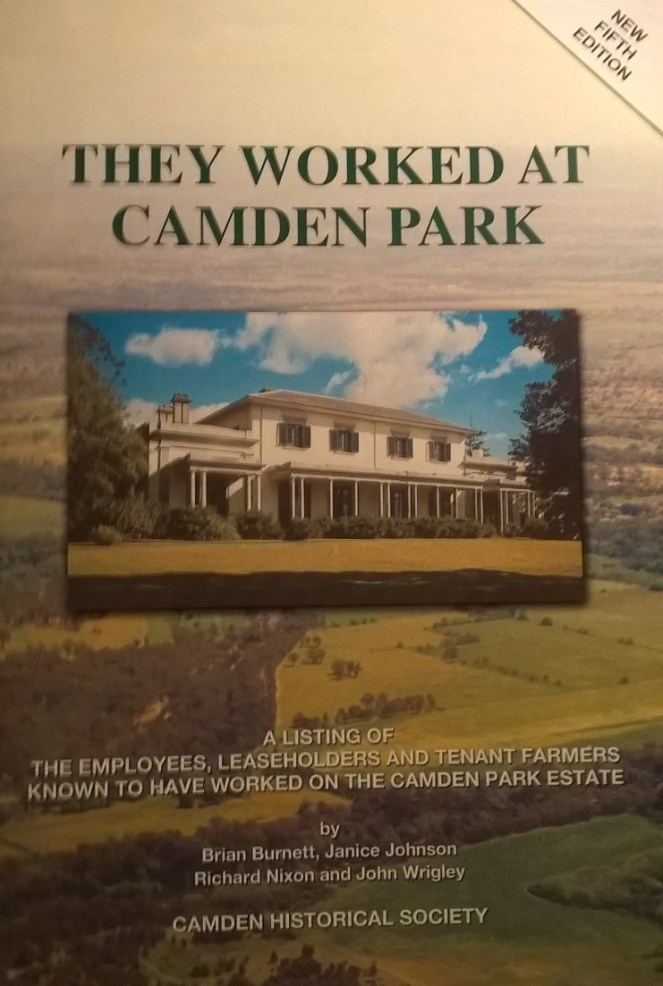
This book has undergone a number of updates as more information comes to hand and provides a valuable resource for further local history research and writing in the Camden area.
Lists are not stories
Data lists have disadvantages. A list is static, unchangeable, objective, tangible and concrete. It is not variable, changeable, abstract, or intangible. A list can be value-laden, biased, exclusionary, specialist, narrow, and full of jargon.
A list provides no commentary on the past or present, no argument, and no analysis of sources or assessment of methods. A list provides no way to understand why the past is important. Why people acted as they did. Why was the list created in the first place?
A data list is not a story. A list does not have a beginning, middle and end. A list provides no explanation, understanding, context, perspective, relevance, importance, significance, meaning, or explanation of the complexity of daily life.
According to historian Peter Woodley, lists are artefacts that ‘become a part of a place’s history, as evidence of what (some) people once valued’. He goes on that ‘they are the stuff of history but, I argue, not works of history themselves’. (Woodley 2026)
A list is just a list. No more, no less.
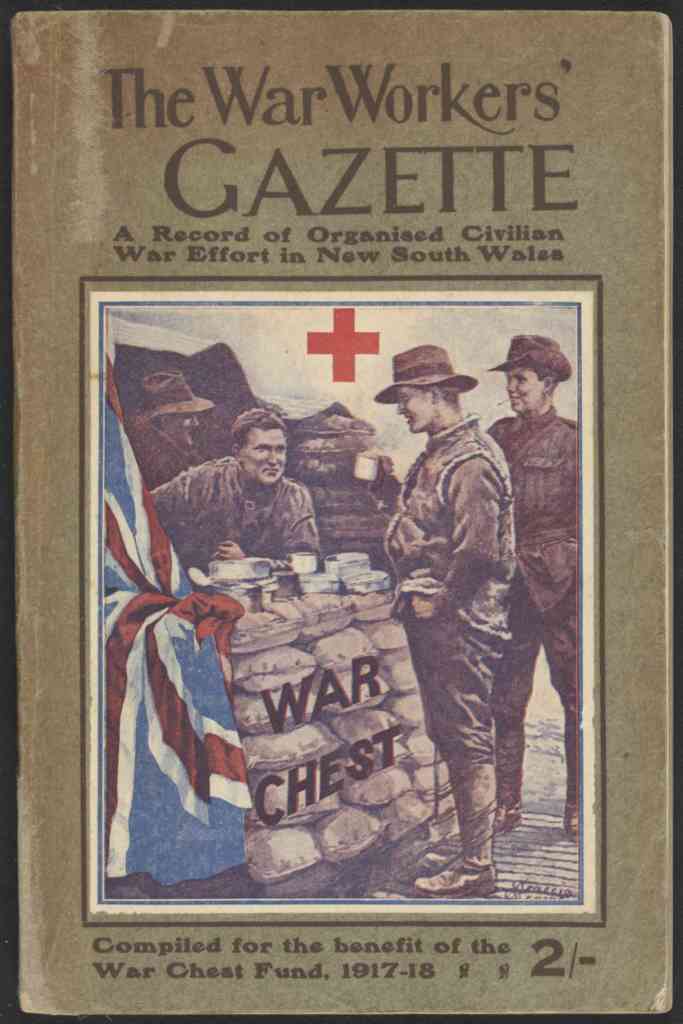
One example of a published list is The War Workers Gazette (1919), which included lists of names of World War One home-front volunteers across New South Wales. There are serious gaps and omissions in this publication. Many organisations and volunteers were left out because of the way the editors compiled the lists. Thus, what you get is only a partial coverage of homefront volunteers and their organisations. This is disappointing and creates unmet expectations among historical researchers and others. The Gazette provides no context for the wartime organisations or stories about individuals or their wartime voluntarism. (Willis 2020)
Fact-gatherers, antiquarians, and the first local historians
Australian fact-gatherers and list-makers are antiquarian in nature and owe much to the legacy of English antiquarians. English antiquarians have been fact-gatherers and list-makers for over 400 years and are seen by some as the founders of local history.
Rosemary Sweet, in her book Antiquaries: The Discovery of the Past in Eighteenth-Century Britain (2004), details how men in Georgian Britain were interested in all aspects of the past and worked to preserve and investigate records and physical remains in England, Scotland and Ireland. According to Sweet, these men laid the foundations for the future study of British prehistory, archaeology, and numismatics, as well as for local and national history. Their fieldwork and recording brought a new standard of accuracy and perception across a range of fields, from the study of ancient Britons to medieval architecture. (Sweet 2004)
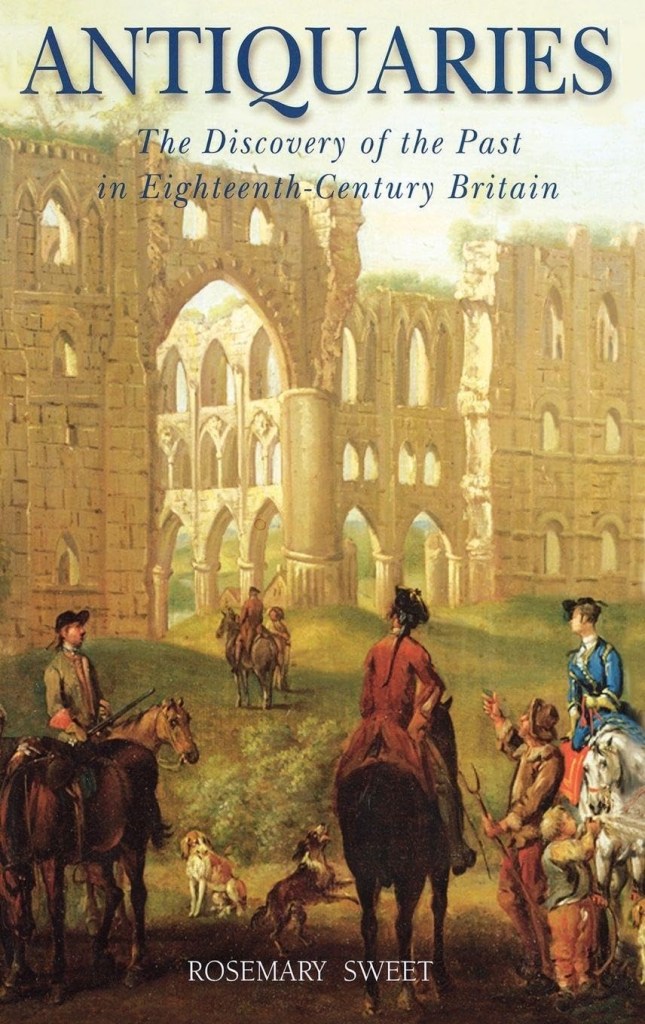
According to social historian Joe Saunders, 18th-century antiquarians laid the foundations of local history in the United Kingdom by studying counties, parishes, towns and villages. They published the first authoritative histories of English counties. Through an empirical approach, by observation, collecting artefacts, and transcribing documents, they pioneered the recording of material culture. They systematically recorded buildings, monuments and landscapes by walking the ground, interpreting the landscape and how people lived in it. They laid the foundations of evidence-based research, even if their work was parochial or obscure. (Saunders 2026)
Saunders argues that many antiquarians never published their histories, and that many underappreciated texts lie forgotten in archives. When relaunched, they provide excellent local material to see the light of day and offer an ‘excellent opportunity for the study of the past and for the practice of antiquarianism itself’. (Saunders 2026)
Antiquarianism became a respectable pastime for rich, white men and was a mark of privilege and intellect. Learned societies were popular, and antiquarians founded the Society of Antiquaries in London in 1707, which still functions today. (Saunder 2026; SAL 2026)
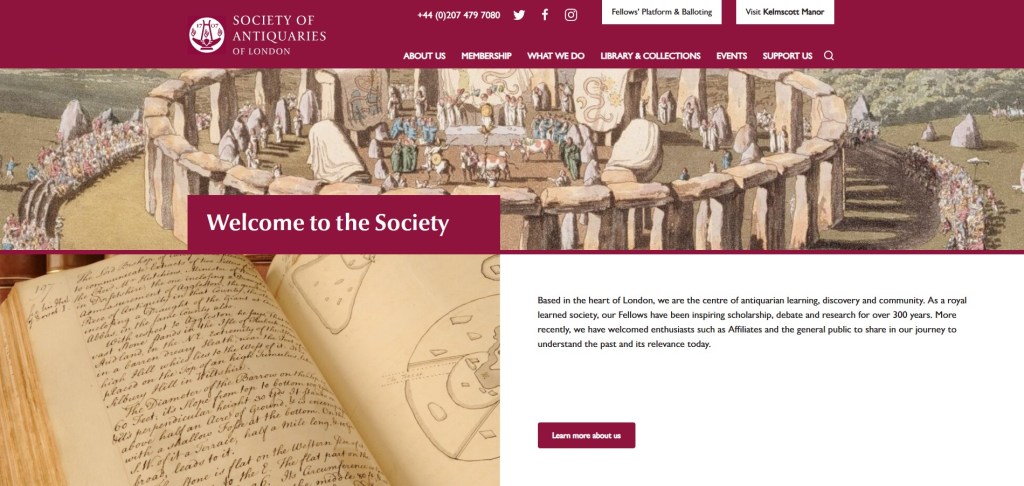
The society provides valuable support for modern local history writing through publications, workshops, conferences and a host of other activities. These traditions continue in the Australian context.
Lists and writing local history
Data lists can serve as useful research tools for historians. Good local history will tell stories about the changes and continuities in community affairs, featuring local characters, miscreants, and identities, the events they were involved in, and how their lives changed over time.
Good local history looks at the local story and places it in the big picture. What are the connections between local people and their relatives in faraway places? Where did these people come from, when, how and why did they move in the first place?
According to Woodley, good local history work
‘delivers persuasive, but always contestable arguments about the past, based in evidence of people’s lives that might include what they did, said and felt; who they associated with, and how they dressed, worked, travelled, played and worshipped’. (Woodley 2026)
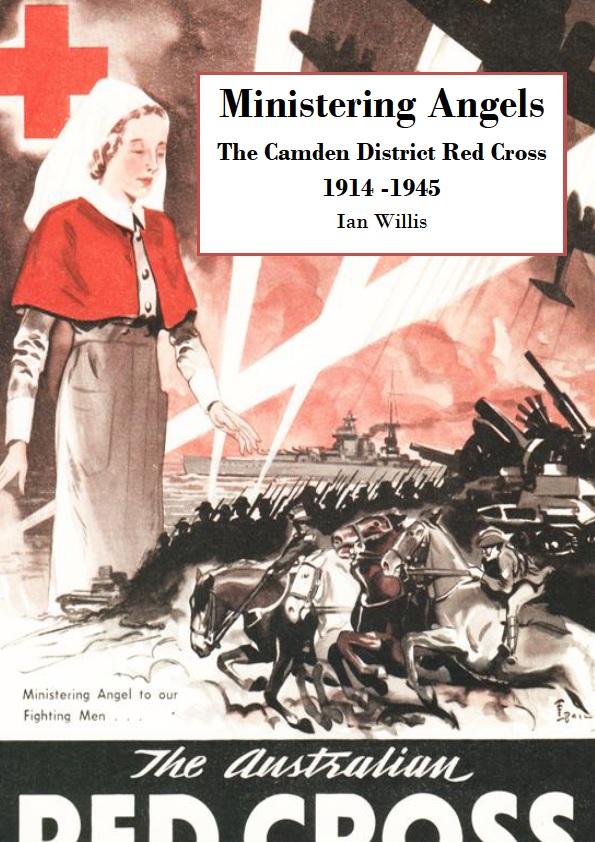
Ian Willis’s Ministering Angels, The Camden District Red Cross 1914-1945 (Camden, CHS, 2014) tells the story of Camden women and their voluntarism. Case studies of individual women make for engaging reading, while the narrative situates the district Red Cross within the big picture and explains how the women were subject to local and transnational trends. The author created data sets of names, dates, places, and events to provide foundational information that was important for creating a compelling narrative.
Controversy at Narrandera over a local history
The writing of local history is not without controversy. In 1988, there was a fuss around Bill Gammage’s Narrandera Shire (1986), a history commissioned by the shire council.
Bill Gammage, a highly respected Australian historian, grew up in Narrandera and Wagga Wagga and knew the area intimately. He has received numerous literary awards, held university positions, and published many books, including two notable works: The Broken Years (1974) and The Biggest Estate on Earth (2011).
Amateur historian Marie Scott says on Facebook in 2024 that Gammage’s Narrandera is an excellent book and that the town is lucky to have such a comprehensive history, rather than a small-town history written by an amateur like herself. She states that Gammage wrote about frontier violence and quoted contemporary sources that called it a war. (Marie Sweet, South West NSW Early History Facebook, 29 December 2024)
Some Narrandera locals felt that Gammage’s Narrandera Shire (1986) did not list enough local people. A local committee was formed with the ambition of producing a different book that listed every person from Narrandera who has ever appeared in a historic photograph. The proposed book with all the Narrandera names never emerged. (Woodley 2026)
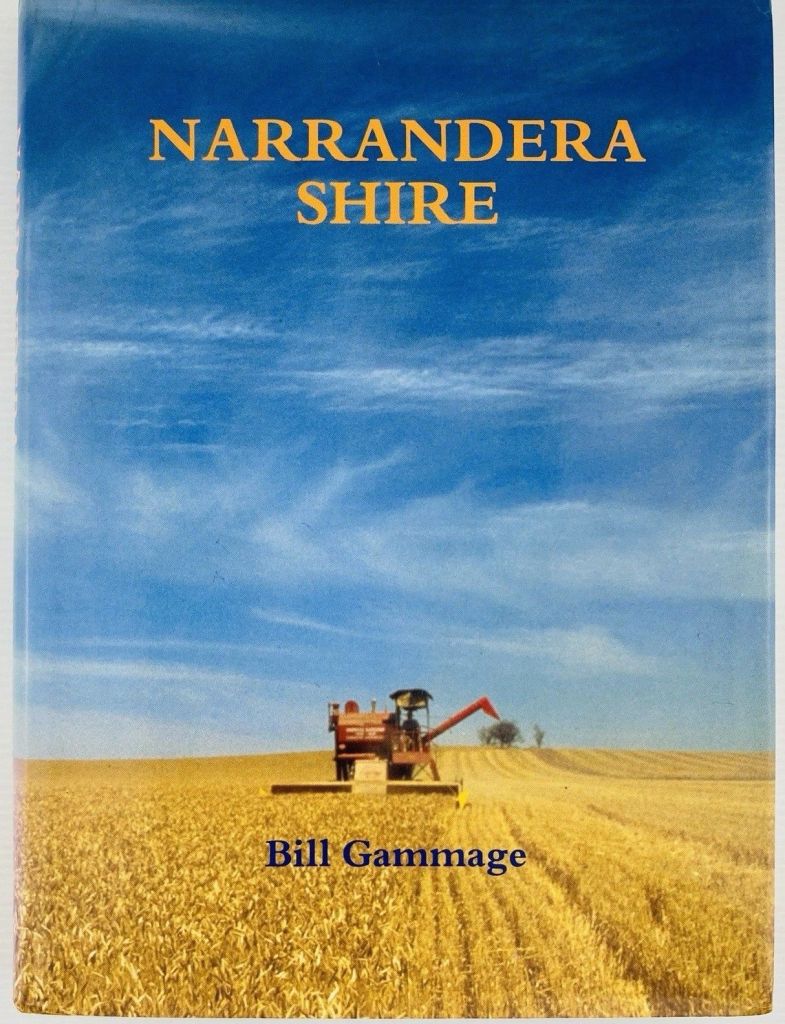
Gammage’s Narrandera created several lists of people, which were included as appendices. An interesting and informative narrative, supported by lists in the appendices, is a much better local history than one that just lists data sets.
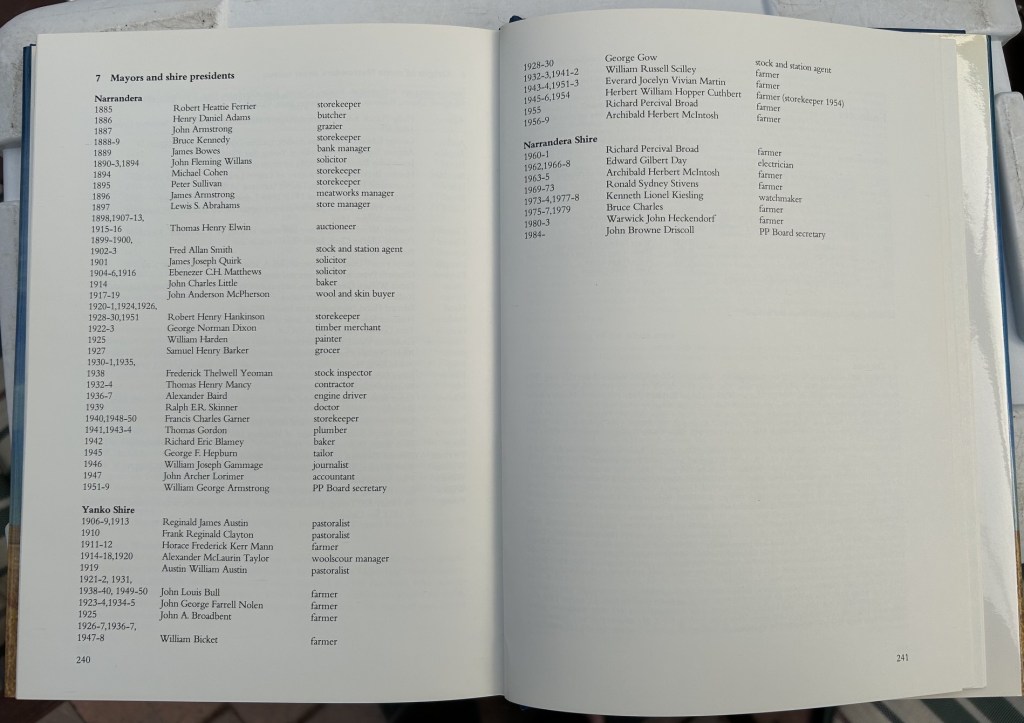
According to Woodley, there is a tension between what some people value as a community history and the sort of history produced by academic historians, like Gammage. He hopes that this gap might be bridged so that good local histories might emerge that are readable, thought-provoking and challenging. (Woodley 2026)
The fact-gatherers and list-makers are not left out of this process and can provide much of the raw material for the writers of these local histories. Although artificial intelligence is making inroads in this area.
Good local histories
According to Willis, the tension between the amateur and the academic historian is not new. In 2012, he wrote in The Conversation, ‘there is a yawning gap between the enthusiastic amateur and the academic historian’. While the fact-gatherers did not get a mention, they are still important in these processes. (Willis 2012)
There are a handful of good local and regional histories written in Australia; some are listed by Willis in his 2012 article in The Conversation. They include Atkinson’s Camden, Ferry’s Colonial Armidale and McQuilton’s Rural Australia and the Great War. (Willis 2012) Other additions include Karsken’s The Colony (2010) and People of the River (2020), and Tyrell’s River Dreams (2018).
A recent addition to the local history genre is Woodley’s ‘We are a farming class’. (NCB 2026). Professor Frank Bongiorno says: ‘Dr Woodley tells a story that transforms our understanding of the evolving relationship of ‘the country’ to colony, state and nation. This model of local history sets a new standard for the field. (NCB 2026)

Reflection
The post discusses the distinction between fact-gatherers and historians, emphasising that while lists compiled by antiquarians are valuable for research, they do not tell a story or provide context.
Some think that fact-gathering is history; it is not, and can lead to controversy in local communities. List creation is increasingly being undertaken by artificial intelligence. If AI continues to undercut the efforts of fact-gatherers, they might like to devote their time to story-writing as AI moves into this area of history
Good local history merges facts, often from lists, with narratives that illustrate people’s experiences and the significance of historical events, creating a deeper understanding of the past. Local history writers often create their own lists, usually found in appendices, which are a useful and informative addition to the story.
Woodley maintains that engaging local histories tells stories about people, their lives, their families, and how they fit into the local landscape and community in the ‘wider social, political and economic context’. (Woodley 2026)
The creation of list-making and data gathering should be encouraged. Data lists are an essential research tool for historians. The post argues for using data lists to enhance storytelling about communities and emphasises the importance of combining facts with personal stories for a richer historical understanding.
References
ANU Press 2026. New Release. ‘We are a farming class’ Dubbo’s hinterland, 1870–1950. ANU Press, Australian National University. Online at https://press.anu.edu.au/publications/we-are-farming-class Accessed 8/7/26
NCB 2026. New Release. ‘We are a farming class’: Dubbo’s hinterland, 1870-1950. National Centre for Biography, Australian National University. Online at https://history.cass.anu.edu.au/centres/ncb/news/we-are-farming-class-dubbos-hinterland-1870-1950 Accessed 8/7/26
Saunders, Joe, 2026. Antiquarianism. How-to-History. Online at https://how-to-history.com/2026/01/28/antiquarianism/ Accessed 6/7/26
SAL 2026, Welcome to the Society. Society of Antiquaries of London. Online at Society of Antiquaries in London Accessed 8/7/26
Sweet, Rosemary 2004. Antiquaries: The Discovery of the Past in Eighteenth-Century Britain, Booksellers’ Notes. Amazon. Online at https://www.amazon.co.uk/exec/obidos/ASIN/1852853093/guardianunlim-21 Accessed 10/7/26
Willis, Ian, 2012. Academic snobbery: local historians need more support. The Conversation, 4 April. Online at https://theconversation.com/academic-snobbery-local-historians-need-more-support-5710 Accessed 6/7/26
Willis, Ian 2014. Ministering Angels, The Camden District Red Cross 1914-1945. Camden, Camden Historical Society. Online at https://www.academia.edu/41478013/Ministering_Angels_The_Camden_District_Red_Cross_1914_1945?hb-sb-sw=104128656 Accessed 8/7/26
Willis, Ian 2020. Wartime volunteers and The War Workers’ Gazette. Camden History Notes, 5 January. Online at https://camdenhistorynotes.com/2020/01/05/new-south-wales-and-the-war-workers-gazette/ Accessed 8/7/26
Willis, Ian 2026. Camden’s Anzac Precinct: A Historical Reflection. Camden History Notes, 23 April. Online at https://camdenhistorynotes.com/2026/04/23/camdens-anzac-precinct-a-historical-reflection/ Accessed 11/7/26
Woodley, Peter 2026. What’s in a name? The Dubbo Farmlands and the Craft of Local History. History, Magazine of the Royal Australian Historical Society, June, n168.
Discover more from Camden History Notes
Subscribe to get the latest posts sent to your email.

