
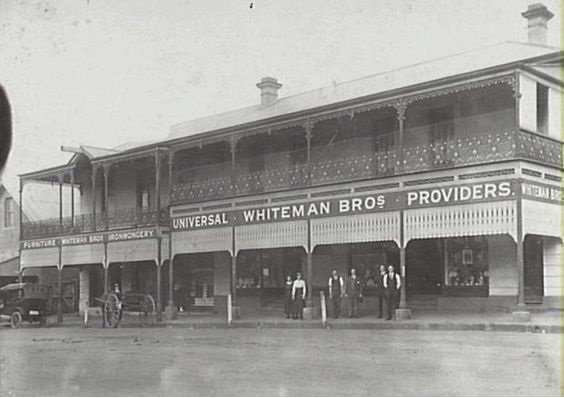
The wonderful Victorian colonial building that was once the Whiteman’s General Store has had a new lease of life through the Burra Charter principle of adaptive reuse. For over 135 years, the same site has been a continuous retail shopping destination.
While the building has also undergone new work and restoration, it is an excellent example of how a building can be adaptively reused for commercial purposes without compromising its historic character and charm.
Adaptive reuse maintains the streetscape’s historic character and the sense of place, which are so crucial to community identity, resilience, and sustainability.
Adaptive reuse is not new and has been happening for a long time.
Adaptive reuse in Europe
In Europe, hundreds of years-old buildings are continually reused century after century.
The Tower of London has been reused over the centuries since the White Tower was constructed by William the Conqueror in 1066 as a fortress and gateway to the city.
Over the centuries, the Tower of London complex has been a royal residence, military storehouse, prison, place of royal execution, parliament, treasury, a menagerie, the home of the Royal Mint, a public record office, storage of crown jewels, royal armoury, regimental headquarters, and, most recently, a centre of tourism.
Adaptive reuse in Australia
In Australia, the adaptive reuse of historic buildings is covered by the Burra Charter, which defines the principles and procedures for conserving Australian heritage places.
The Burra Charter accepts the principles of the ICOMOS Venice Charter (1964) and was adopted in 1979 at a meeting of ICOMOS in 1979 in the historic town of Burra, South Australia.
The Burra Charter has been adopted by heritage authorities across Australia, including the Heritage Council of NSW (2004).
Adaptive re-use is covered by Article 21 of the Burra Charter and states:
Article 21. Adaptation 21.1 Adaptation is acceptable only where the adaptation has minimal impact on the cultural significance of the place. 21.2 Adaptation should involve minimal change to significant fabric, achieved only after considering alternatives.
The explanatory notes say:
Adaptation may involve additions to the place, the introduction of new services, or a new use, or changes to safeguard the place. Adaptation of a place for a new use is often referred to as ‘adaptive re-use’ and should be consistent with Article 7.2.
Reasons for adaptive reuse of historic buildings
Architects advance several reasons why historic buildings should be adaptively reused. They include
- Seasoned building materials are not even available in today’s world. Close-grained, first-growth lumber is naturally more robust and rich-looking than today’s timbers. Does vinyl siding have the sustainability of old brick?
- The process of adaptive reuse is inherently green. The construction materials are already produced and transported to the site.
- Architecture is history. Architecture is memory. (Craven 2018)
Whiteman commercial building
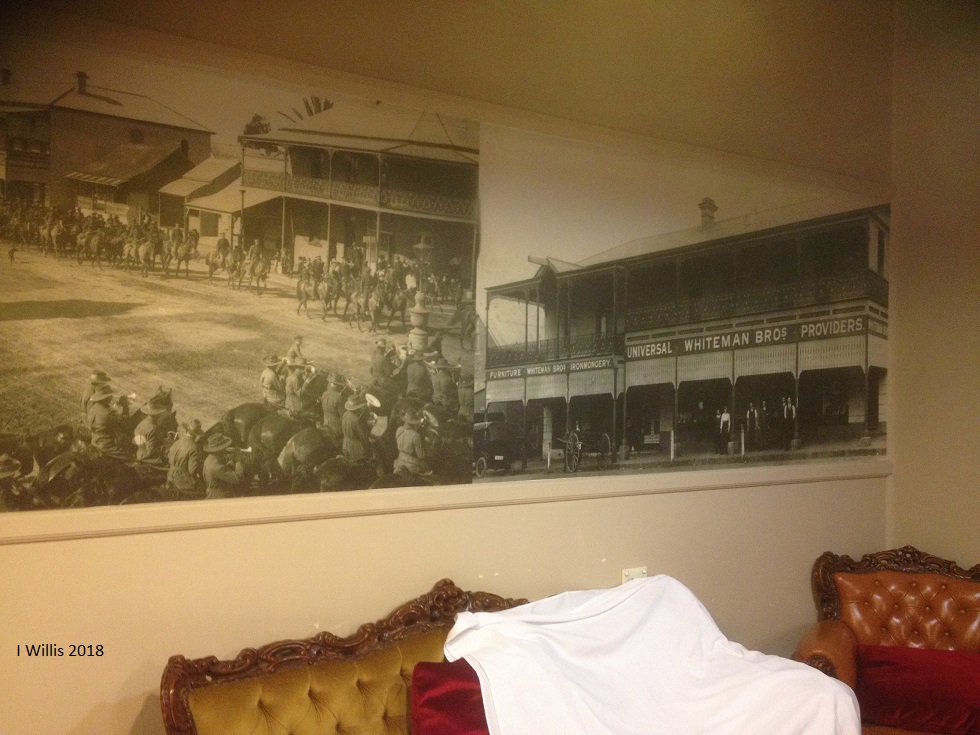
The Whiteman family conducted a general store in Argyle Street on the same site for over 100 years.
![Camden Whitemans General Store 86-100 Argyle St. 1900s. CIPP[1]](https://camdenhistorynotes.com/wp-content/uploads/2018/10/camden-whitemans-general-store-86-100-argyle-st-1900s-cipp1.jpg)
In 1878, CT (Charles Thomas) Whiteman, who operated a family business in Sydney, brought produce to Camden. He purchased a single-storey home at the corner of Argyle and Oxley Street and ran his store from the site. (SHI) In 1878, a fire destroyed the business.
CT Whiteman was a storekeeper in Goulburn and Newtown, and later married local Camden girl Anne Bensley in 1872. Whiteman was a staunch Methodist and was an important public figure in Camden, serving as the town’s first mayor from 1892 to 1894.
CT Whiteman moved to premises in Argyle Street in 1889, occupied by ironmonger J Burret. Whiteman modified the building for a shopfront conversion. (SHI) The store was later leased to the Woodhill family from 1903 to 1906.
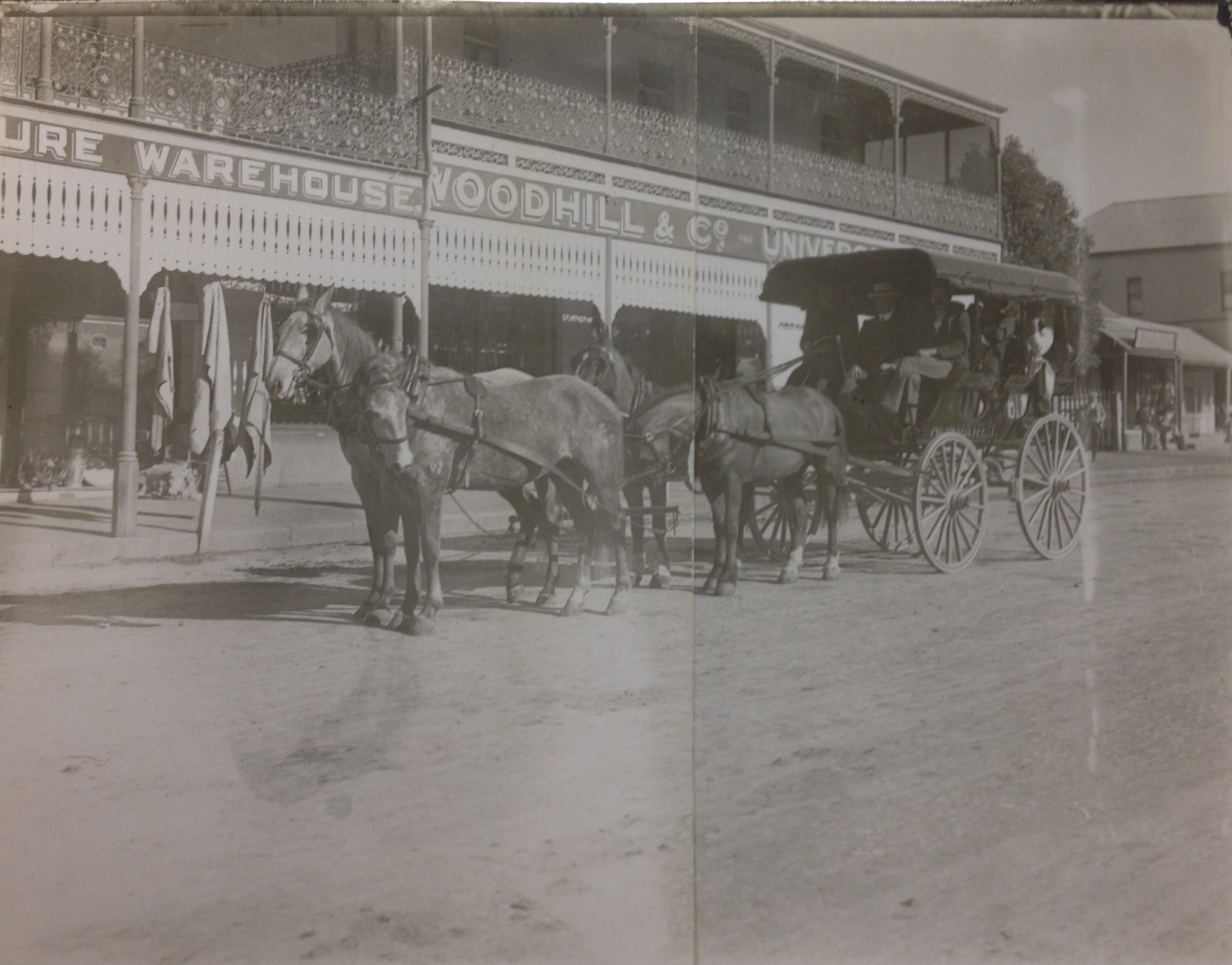
From 1889 to 1940, the building was known as the Cumberland Stores. The store supplied groceries, drapery, men’s wear, boots and shoes, farm machinery, hardware, produce and stationery. (Gibson, 1940)
The original Argyle Street building was an early timber-verandahed Victorian-period store.
The building was a two-storey rendered masonry building with a hipped tile roof and projecting brick chimneys. The second storey had painted timber-framed windows, shaded by a steeply pitched tile-roof awning supported on painted timber brackets. (SHI)
A two-storey addition was constructed in 1936, and the verandah posts were removed in 1939 when the Camden Municipal Council implemented this policy.
Later shopfront modifications to the adjacent mid-20th-century façade street frontage included wide aluminium-framed glazing and an awning at ground level. (SHI)
The Whiteman’s General Store sold various goods and became one of the longest-running retail businesses in Camden.
![Camden Whitemans Store 1978[1] CIPP](https://camdenhistorynotes.com/wp-content/uploads/2018/10/camden-whitemans-store-19781-cipp.jpg)
When it closed in 2006, the Whiteman’s Store was trading as Argyle Living, which was owned by Fred Whiteman. During the store’s closure, the Whiteman family operated on the same site in Camden for 123 years.
On the closure of Argyle Living, the store sold homewares, clothing, furniture, and a range of knick-knacks. It was the largest retail outlet in Camden, spanning 1200 square metres.
Current usage of the Whiteman’s commercial building
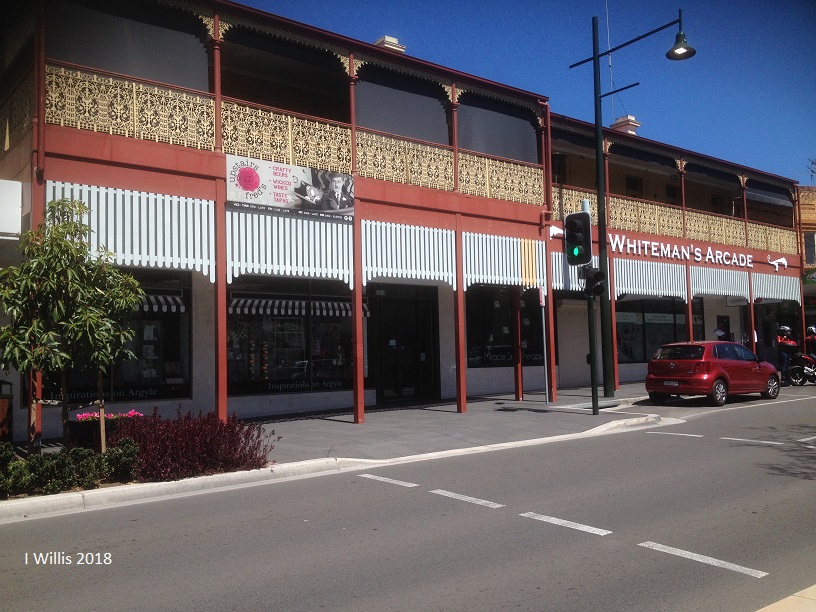
After 2007, the building was converted through adaptive reuse into an arcade with several retail outlets and professional rooms on the ground floor, and a restaurant and other businesses upstairs.
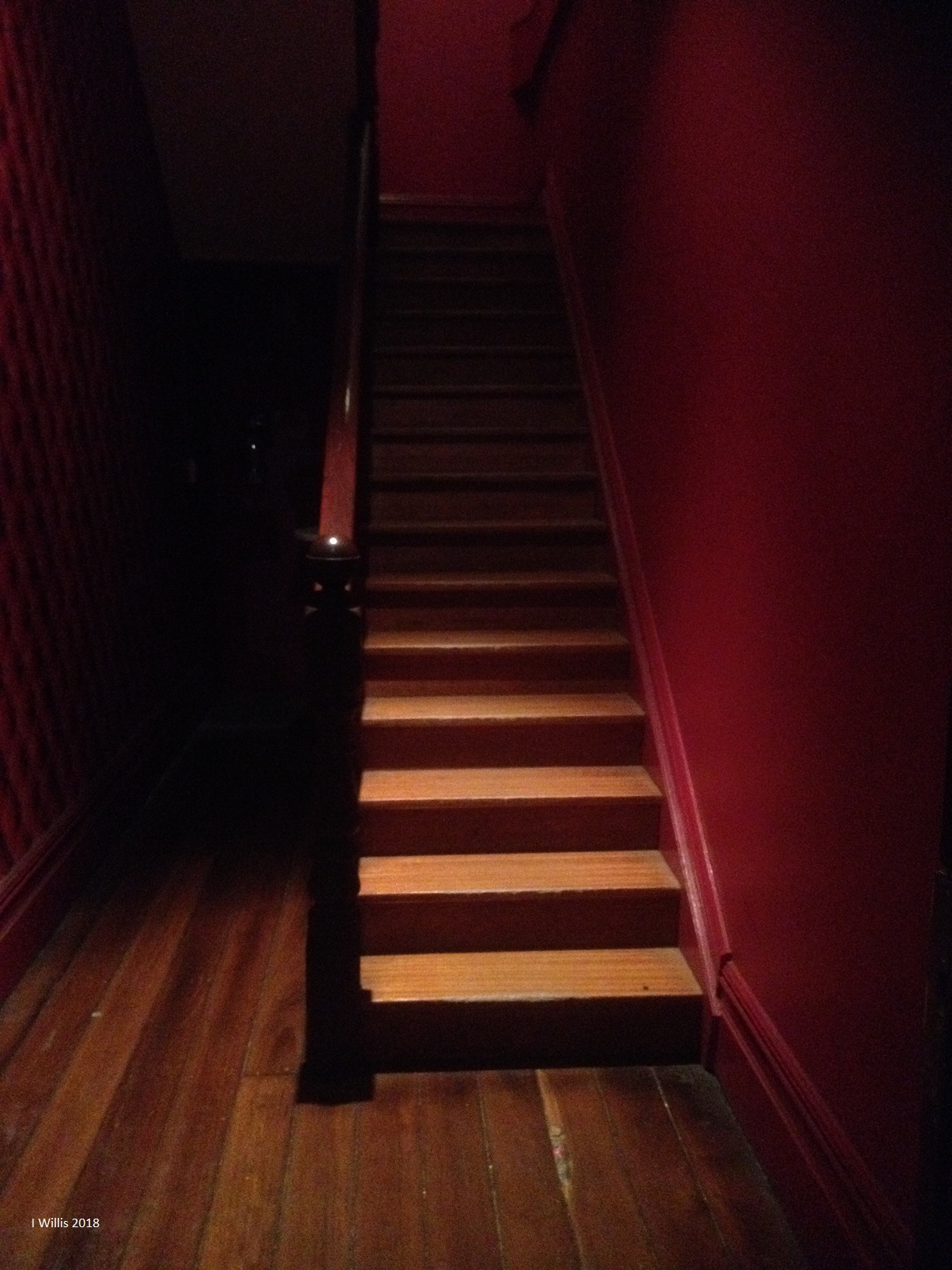
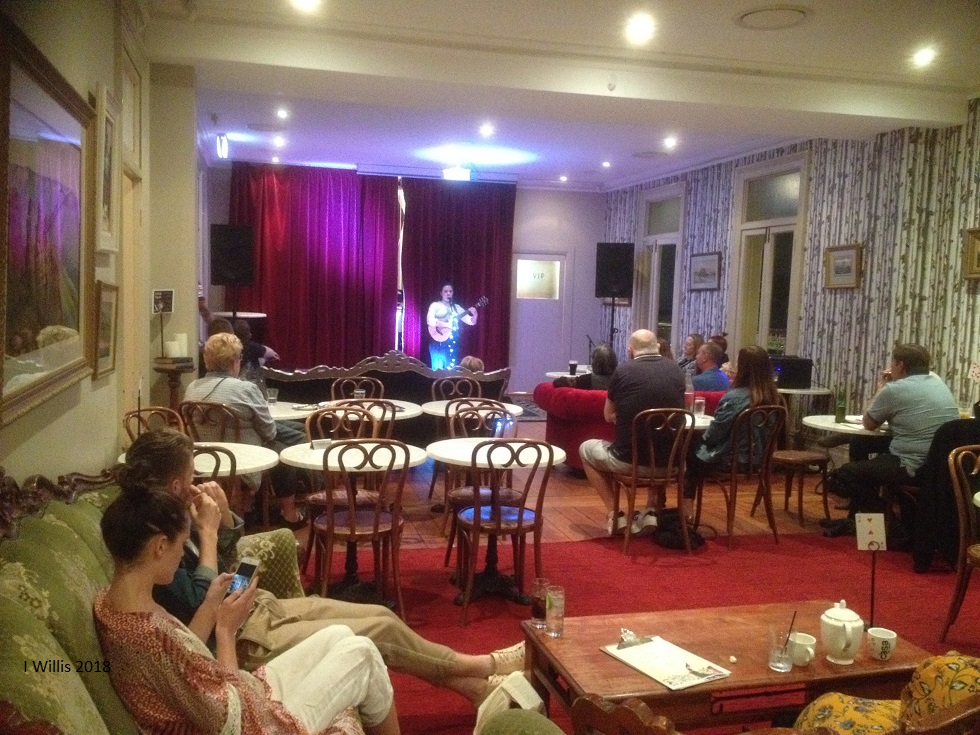
The building has largely retained its integrity, historic character, and delight in the town’s business centre.
The Whiteman commercial building adds to the mid-20th-century streetscape that still broadly characterises the Camden town centre and attracts hordes of daytrippers.
Disaster strikes heritage building
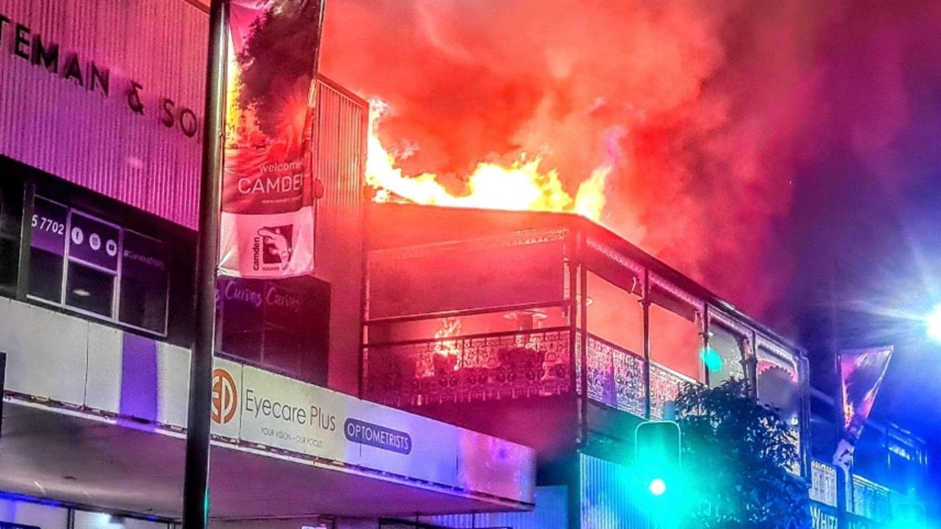
In 2020, a fire destroyed the top floor of the Whiteman’s building, which housed several businesses. According to Fire and Rescue NSW, over 60 firefighters attended the fire in ten appliances and fought the blaze for over three hours. (18 September 2020, news.com)
Re-opening of the top floor
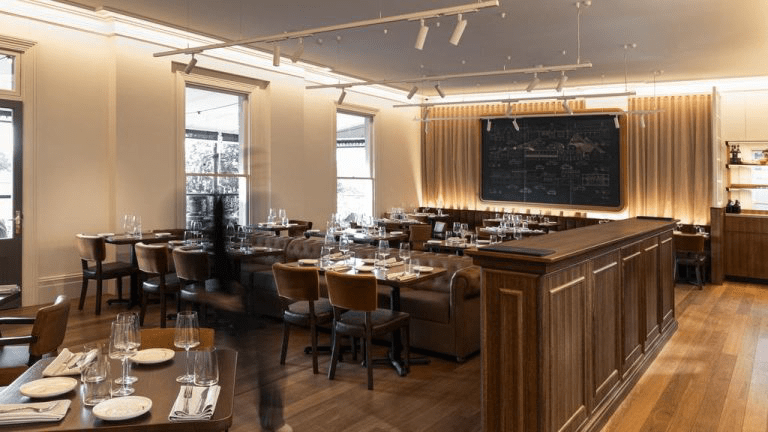
Businesses on the top floor reopened in 2025, led by the restaurant Argyle House. (Facebook 4 June 2025)
Argyle House owners Morney and Nichole Schlebusch said the treasured venue took five years of preparation, with many involved in the design and development.
“There’s a lot of stuff we had to do to keep the original integrity of the heritage building.”
About $5m was spent on refurbishing the building, which dates back to 1889. Its design is guided by the Victorian era, with a quirky edge. (Cranley 2025)
Reflection
After the fire, the building comes back to life and becomes home to a business.
The Whiteman’s General Store has been successfully repurposed in accordance with the Burra Charter principles of adaptive reuse while maintaining its architectural integrity.
Operating continuously for over 135 years, it now houses a variety of retail and professional outlets, contributing significantly to the town’s charm and community identity.
The building has retained its integrity and unique qualities that derive from its historic character, and add to Camden’s sense of place and community identity.
References
NSW Government, Commercial Building Whiteman’s, State Heritage Inventory. Online https://www.hms.heritage.nsw.gov.au/App/Item/SearchHeritageItems?_ga=2.165972984.714120821.1658117920-344545924.1656901875# Accessed 25 November 2025.
Wrigley, Julie 2017. ‘Whiteman family’. The District Reporter, 8 December.
Craven, Jackie 2018. “Adaptive Reuse – How to Give Old Buildings New Life.” ThoughtCo, 22 May. thoughtco.com/adaptive-reuse-repurposing-old-buildings-178242
Cranley, K. (2025). Inside Camden’s new Argyle House restaurant after five-year rebuild. [online] Realcommercial.com.au. Available at: https://www.realcommercial.com.au/news/inside-camdens-new-argyle-house-restaurant-after-fiveyear-rebuild [Accessed 25 Nov. 2025].
Updated on 25 November 2025. Originally posted on 1 October 2018 as ‘Adaptive re-use and the Whiteman commercial buildings in Camden NSW’
Discover more from Camden History Notes
Subscribe to get the latest posts sent to your email.


2 thoughts on “Whiteman commercial buildings in Camden, an example of adaptive re-use”
Comments are closed.