Camden Public Art Trail
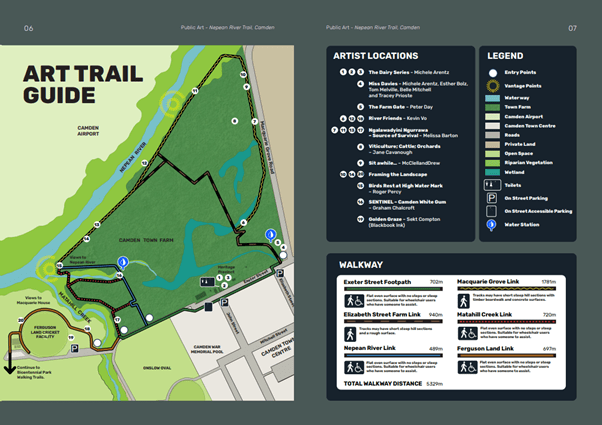
The trail was opened in 2024 with the official opening in June. The project was funded by the NSW Government through the Public Space Legacy Project. The walk is an extension of the Llewella Davies Pioneer Walkway and features the area’s first public art trail.
Camden Council promotional literature states
This beautiful track connects the Nepean River to the heart of Camden, the Camden Town Farm, for a 4.2-kilometre journey of stunning scenery.
Think inspiring artwork installations, heritage signage, exercise equipment, updated furnishings and breath-taking lookouts to gaze at the beauty of Camden. (In Macarthur Magazine, Facebook, 3 June 2024)
Advantage of art trails
Researchers John Thompson and John Day argue that art trails have a number of advantages: they can help generate tourism; contribute to place branding, and provide entertainment for local residents; and they receive significant local publicity. One disadvantage is that tend to hidden in plain sight. (Thompson and Day 2020.)
The oldest art trail in Bristol is the Totterdown Front Rooms spokeman Angie Belcher said. ‘Art Trails are the most democratic form of creative expression, Art work created by the people for the people’. (Trimby 2014)
Official Opening Sunday 16 June 2024
The 4.2 km extension to the Nepean River Trail was opened on a crisp Sunday morning in June 2024 with official speeches, art guides, food stalls, and, for the kids, a scavenger hunt, a painting workshop, and a reptile enclosure.
The NSW Government provided $5.1 million to improve connectivity between Camden Town Centre and the Nepean River.
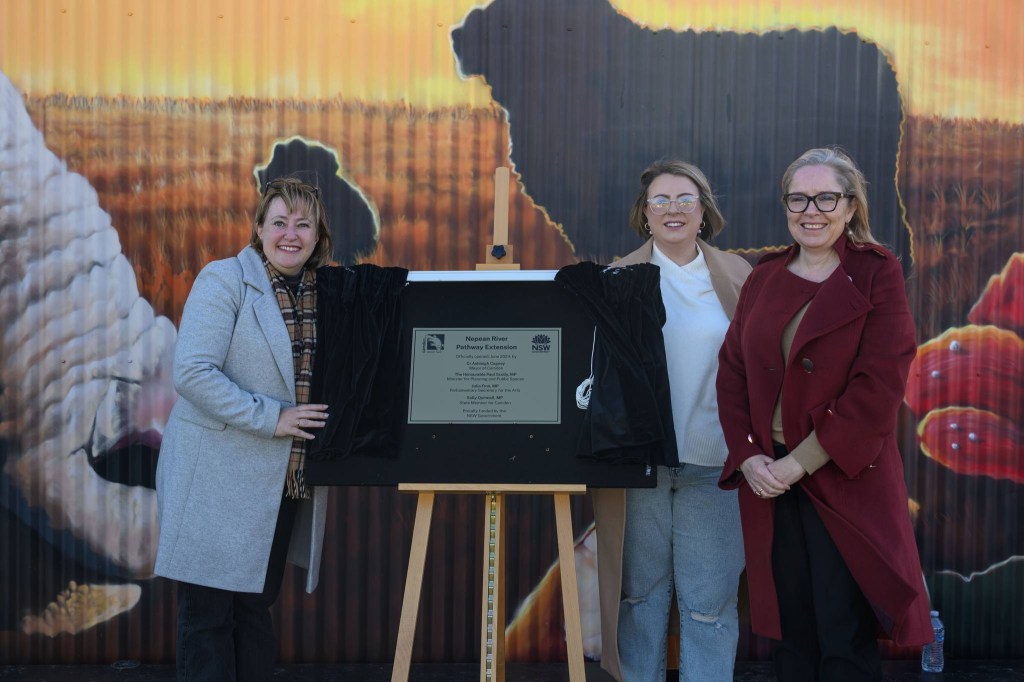
Camden Mayor, Cr Ashleigh Cagney, said she was delighted to officially open the walkway by unveiling the commemorative plaque.
She said, ‘The Trail has something for everyone. You can come experience Camden’s natural beauty and our agricultural heritage with a stroll through the Farm and Ferguson Land.”
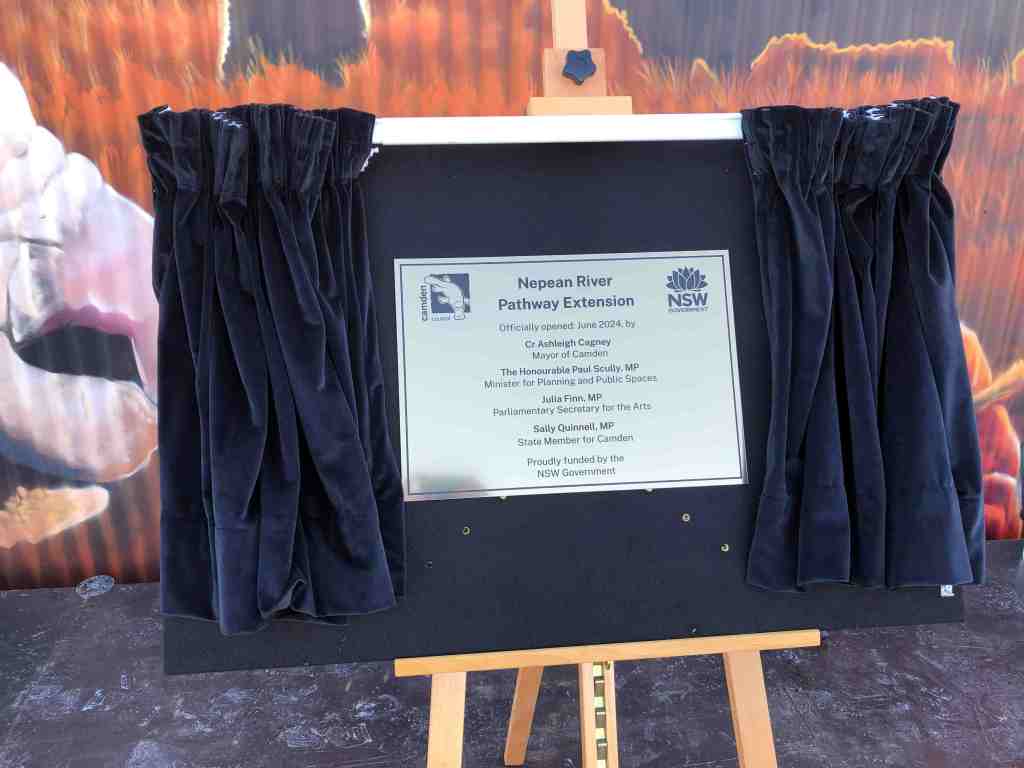
The Minister for Planning and Public Spaces, Paul Scully, said, ‘This fantastic new trail showcases the natural beauty and storied local heritage Camden has to offer.’
The Member for Camden, Sally Quinnell, said, ‘The art we can now enjoy along the walkway shows the depth of talent we have in our region.’ (Mirage News, 18 June 2024)
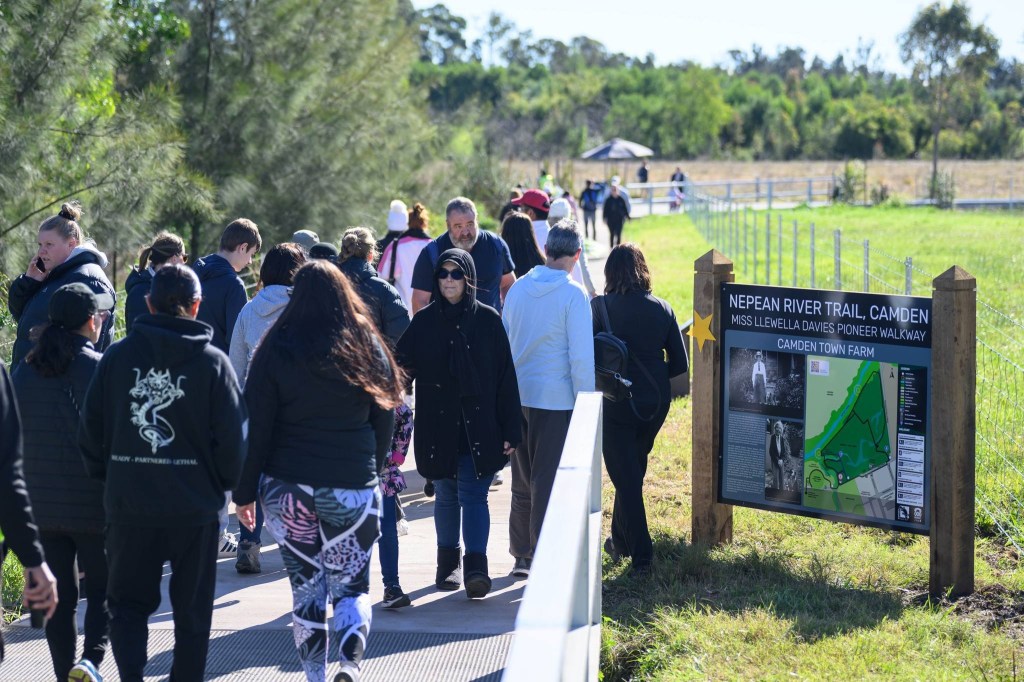
The assembled crowd then strolled around the new walk.
Artworks on the Camden Art Trail
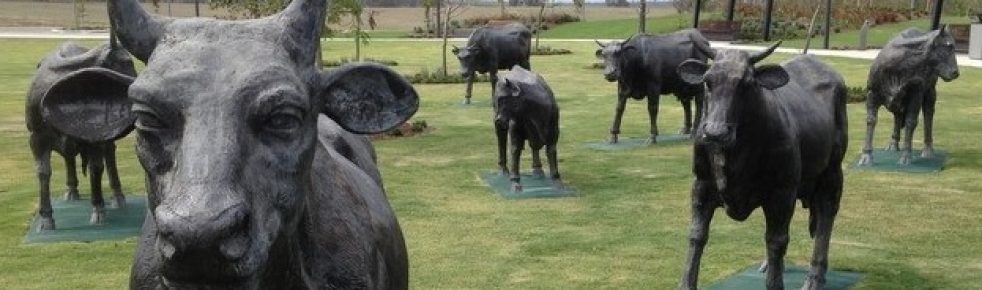
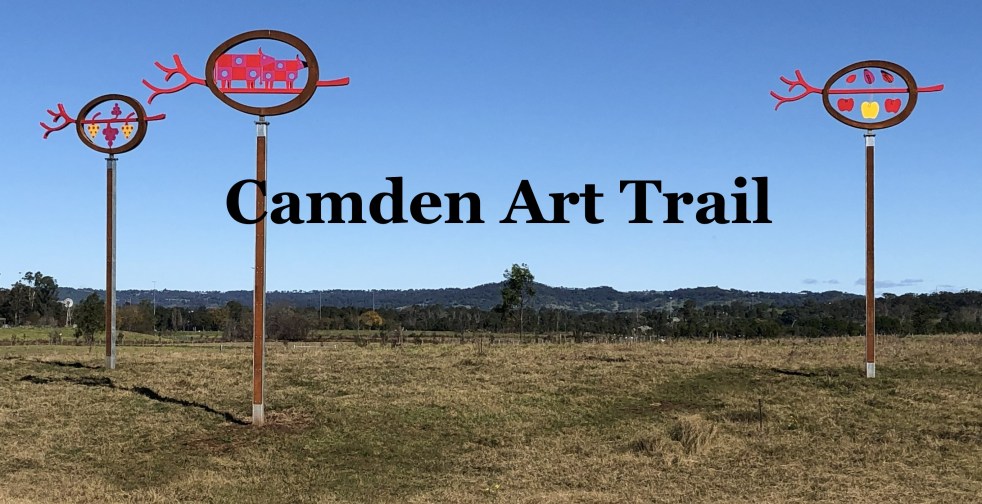
Jane Cavanough, Viticulture; Cattle; Orchards
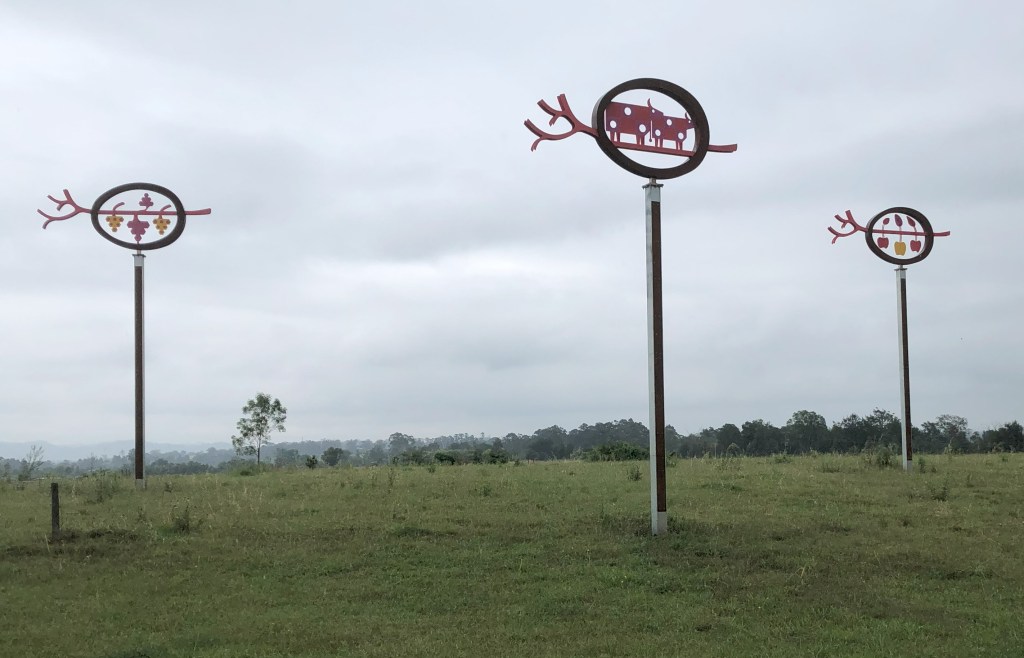
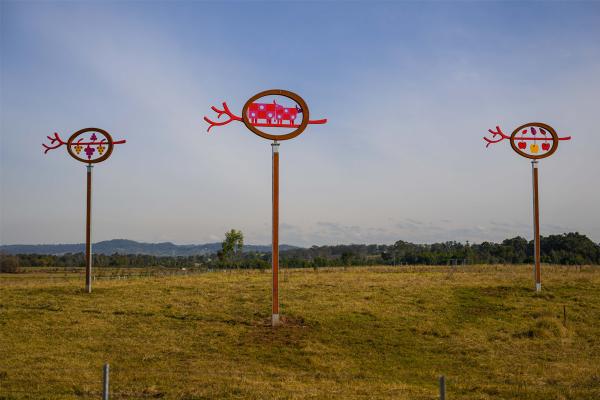
Public artist and landscape architect Jane Cavanough was awarded a Churchill Fellowship to study the relationship between sculpture, community and landscape.
Camden Park Estate, under James and William Macarthur, established vineyards in the 1830’s, exported over 45,000 litres by 1845 and in the 1850s sent cuttings to the Barossa Valley. In the 1830s, the estate had over 33 grape varieties for sale.
The Cowpastures is named after the cattle that escaped from the Sydney colony in 1788 and grew into a herd of several hundred. In 1805, John Macarthur was granted 2000 acres in the Cowpastures reserve south of the Nepean River.
Camden Park had a thriving orchard under the management of horticulturist William Macarthur and, in the early 1900s, had over 72,000 fruit trees, including apples, pears, citrus, apricots, plums, cherries, figs, and quinces.
Kevin Vo, River Friends
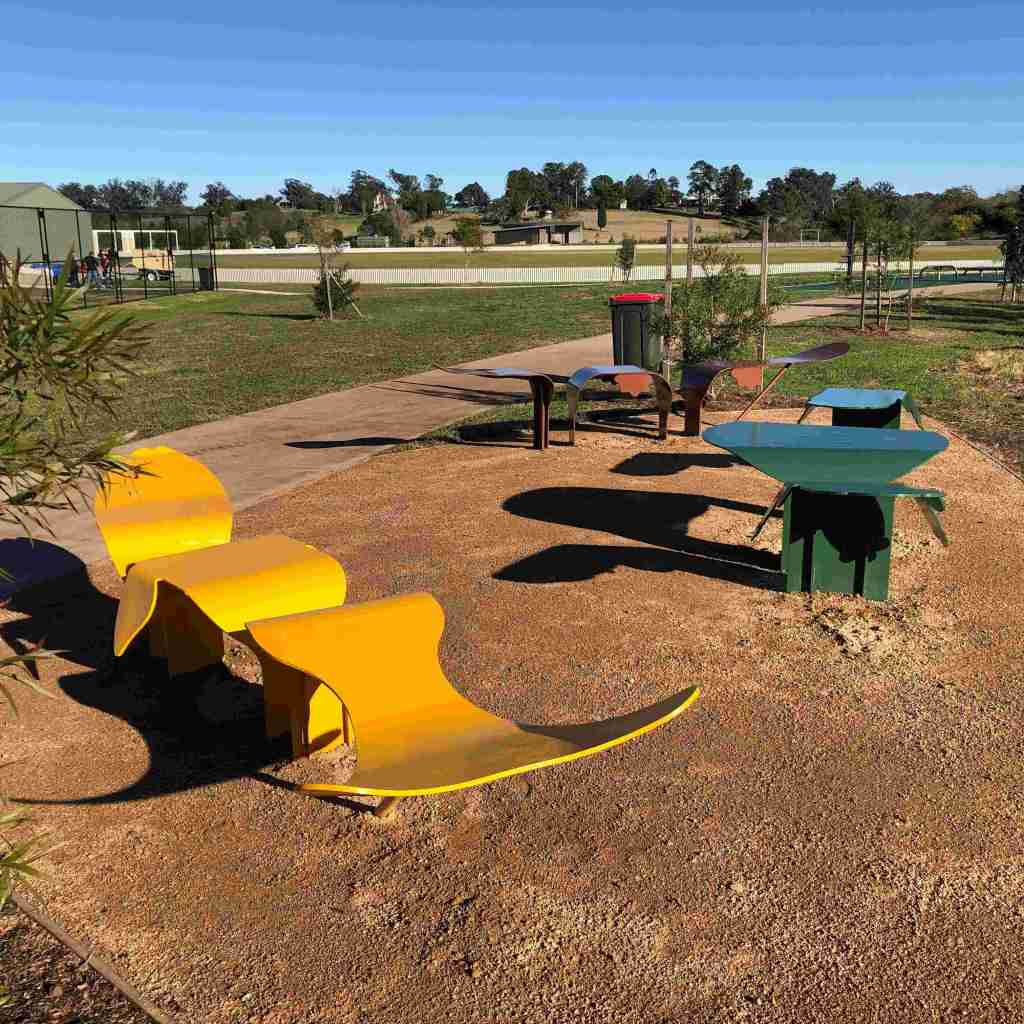
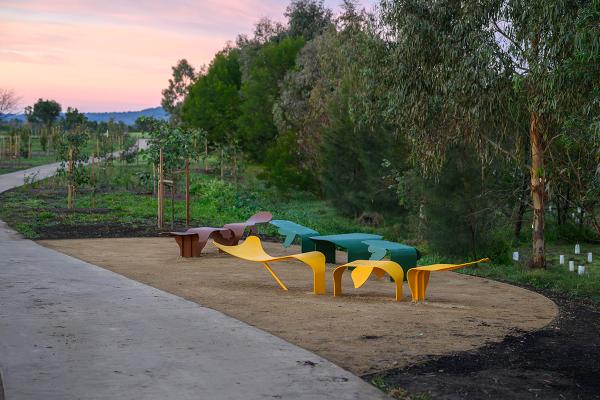
Vietnamese Graphic artist Kevin Vo is based at Liverpool. He explores how cultural diversity complements his contemporary understanding of graphic art.
River Friends comprises a platypus, a frog, and a fish. They are sculptural shapes embodying whimsical play, combining nature with functional art. The artwork encourages sitting and thinking about the local ecosystems along the Nepean River.
Graham Chalcroft, SENTINEL – Camden White Gum
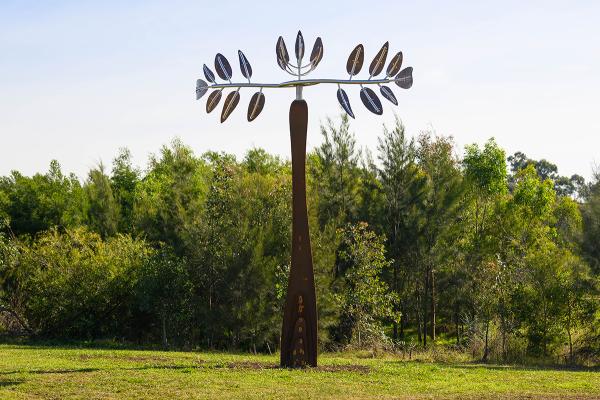
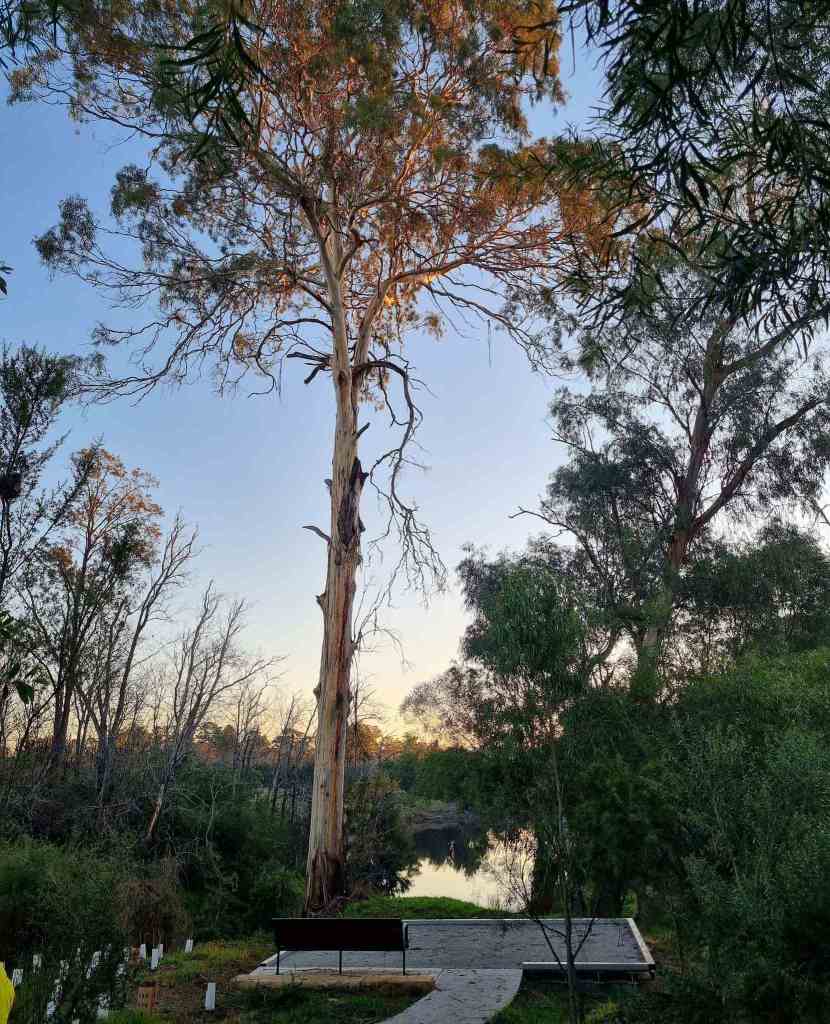
Graham Chalcroft’s ‘Vertebrae’ specialises in public art and place planning, connecting people, place, and culture through art to interpret and enrich urban and natural environments.
The artwork SENTINEL – Camden White Gum interprets a lone remnant Eucalyptus benthamii (Camden White Gum) located within Camden Town Farm on the banks of the Nepean River. Kinetic motion and sculptural form reflect the natural rhythms of wind through tree canopies and the flow of the Nepean River, with a playful nod to the farm’s windmill.
McClellandDrew, Sit Awhile…
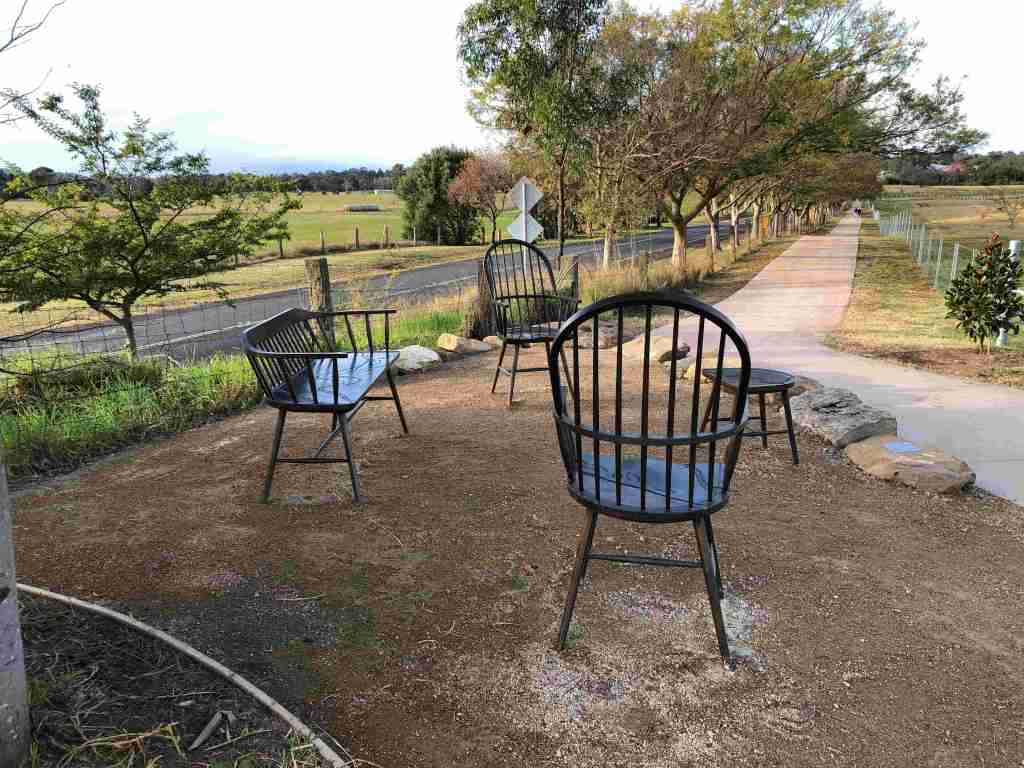
Sculptor and designer Mark McClelland, from Cultural Capital, combines his interests in design, landscape and art. He is a three-time finalist and former winner of Sculpture by the Sea.
Multidisciplinary artist Cathy Drew works in photography, sculpture, drawing and painting and draws inspiration from the natural world, history and contemporary culture.
Sit awhile… evokes ‘Old Camden’ with familiar domestic objects. Art and history create recognisable artefacts that people can discover in an unexpected cultural context. These artworks express a binary as plain yet sculptural, solid yet fine, challenging yet comfortable.
Peter Day, The Farm Gate
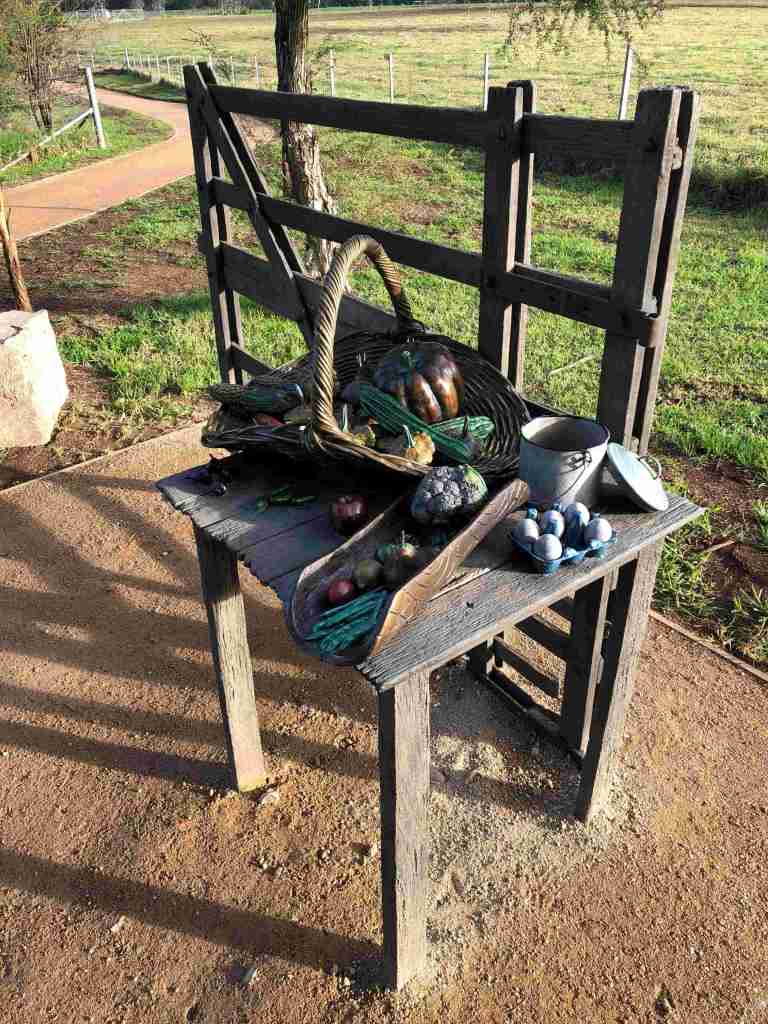
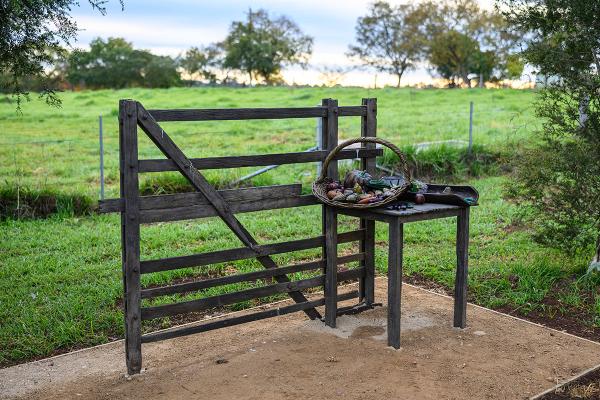
Artist Peter Day is trained in industrial design, and as a director of ‘Environmental Art+Design’ creates murals, sculptural works, ceramics, mosaics, playgrounds, and urban design projects.
Day’s Farm Gate celebrates rural life, commemorating the link between Camden’s farming history and its social life, and juxtaposing it with the Camden Produce Market and the Camden Community Garden. The artwork recognised the historical tradition of the market gardens on Miss Davie’s farm.
Melissa Barton, Ngalawadyini Ngurrawa – Source of Survival
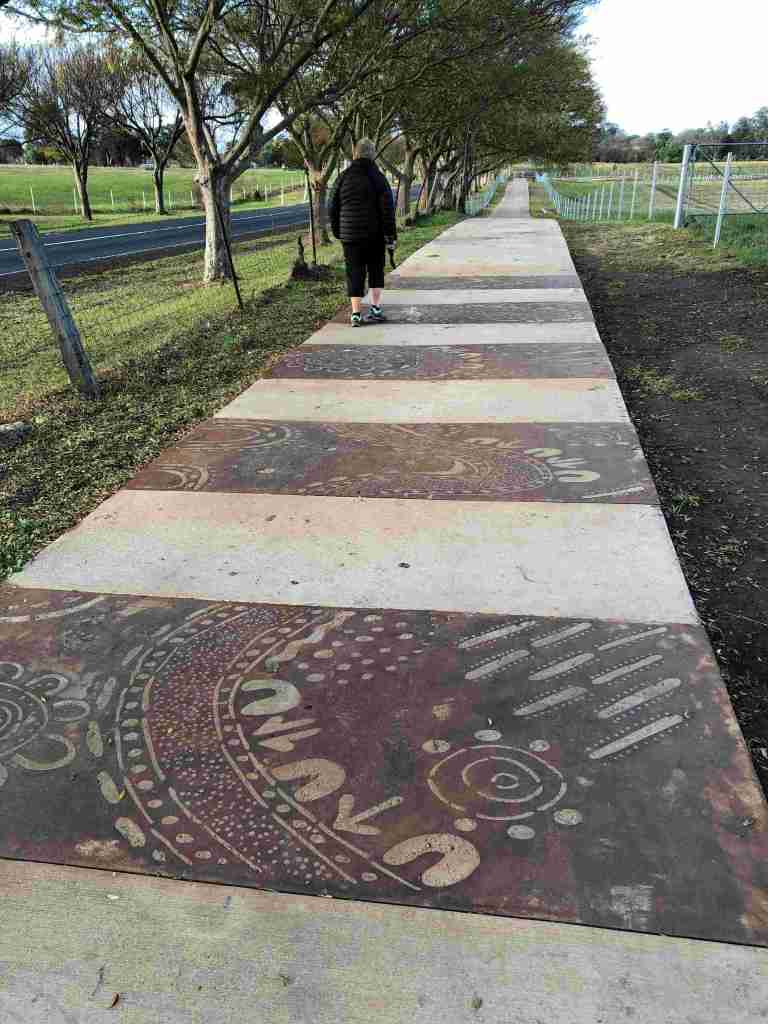
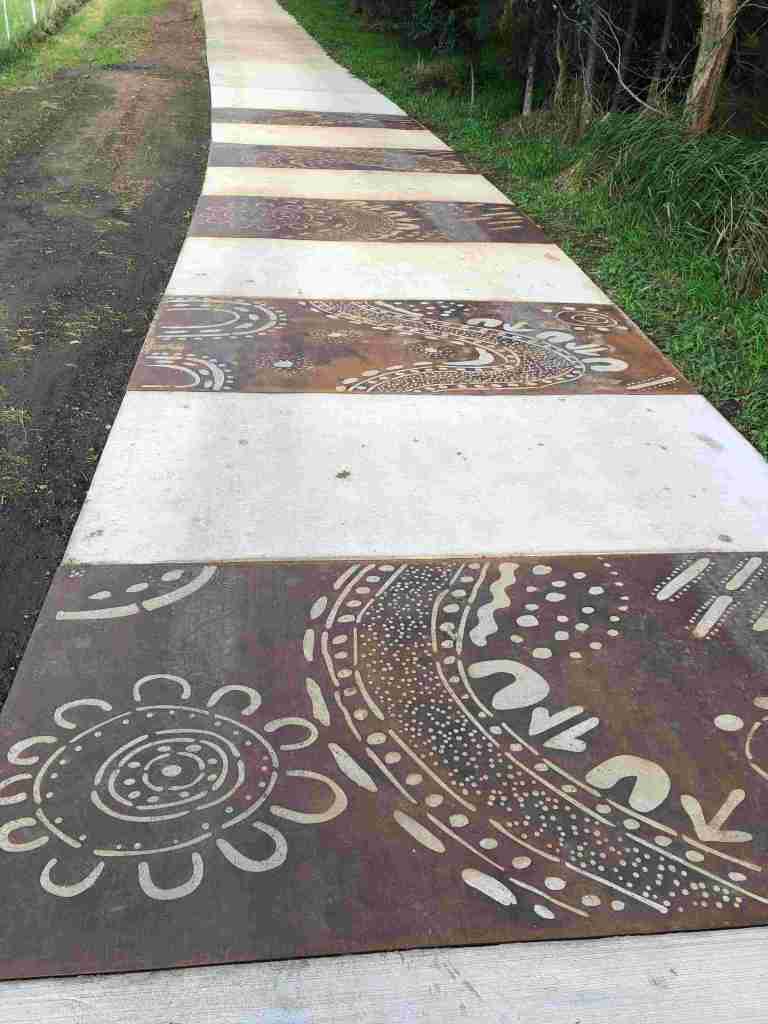
Contemporary Aboriginal artist Melissa Barton of the Dharug nation creates intricate and eye-catching artworks. Storytelling through creativity and art can depict and convey meaning on the canvas. All creations are named in traditional Dharugdalang (language).
The artwork represents the connection to Country that local Dharug people had with the Nepean River. The Cobbitty-Batcha clan group of the Dharug nation were the main custodians along this section of the Nepean River, which was also a place of meeting, trade and ceremony with clans from the Gundangarra and Dharawal nations.
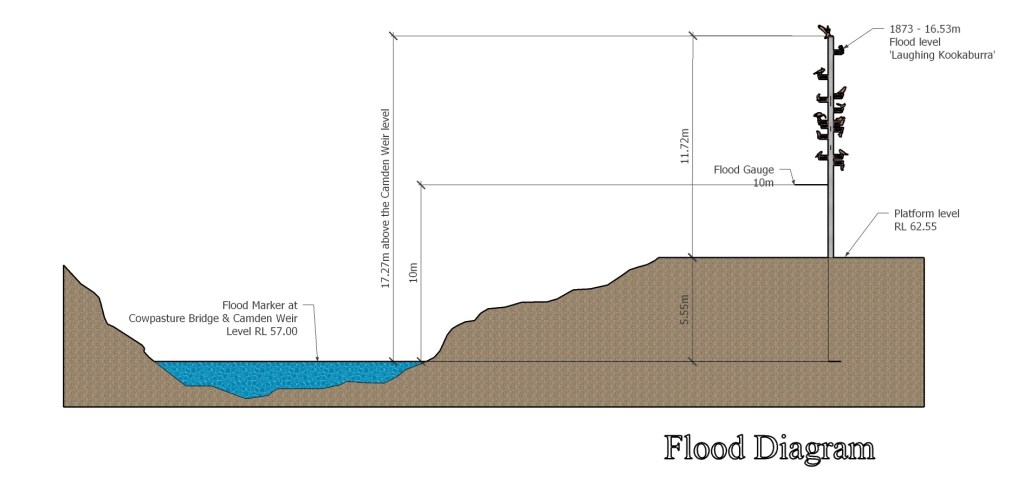
Roger Percy, Historic Flood Marker, Birds Rest at High Water Mark
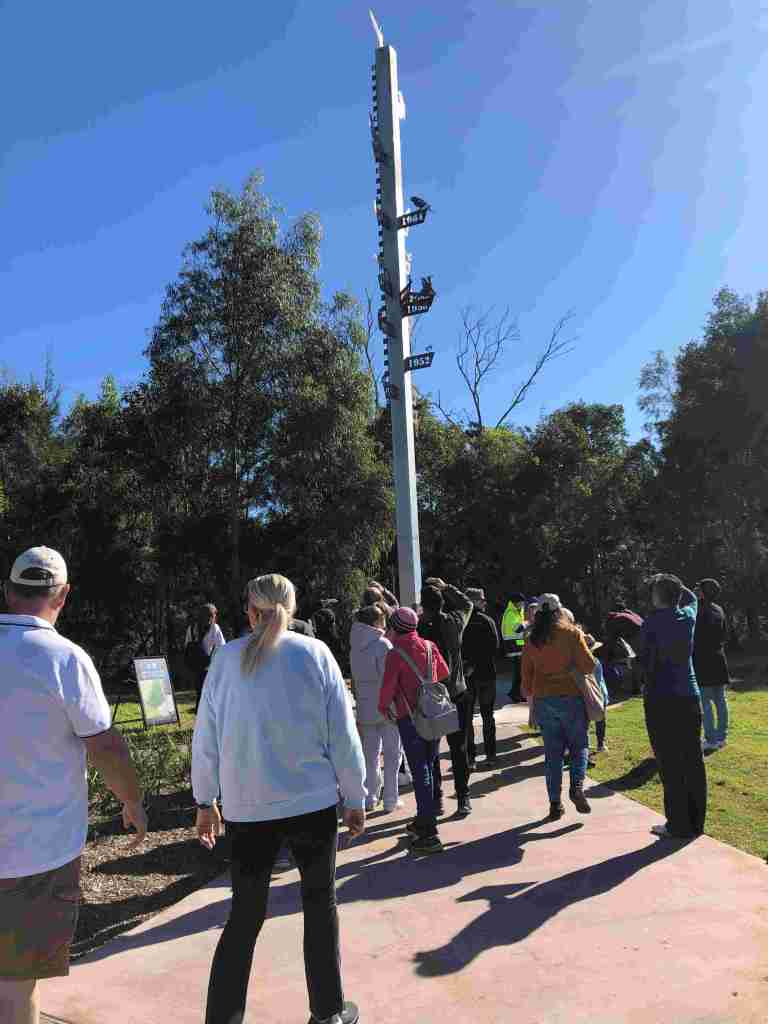
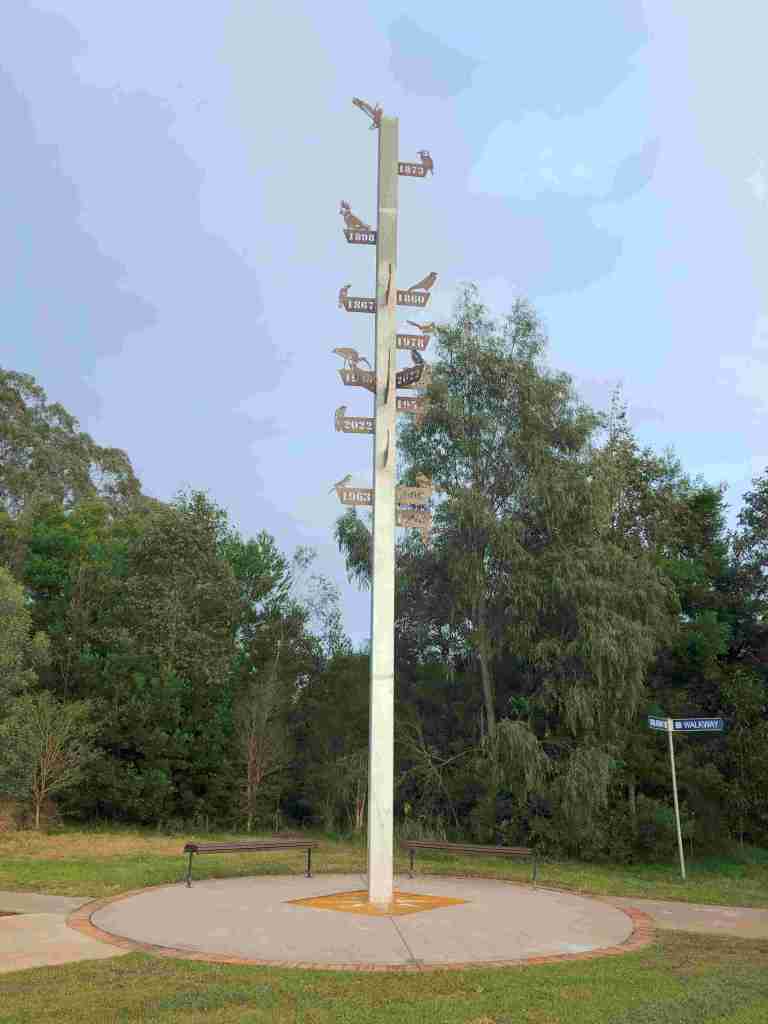
Artist and illustrator Roger Percy specialising in landscape and streetscape. He is currently the curator of the Alan Baker Art Gallery at Macaria.
Percy’s Birds Rest at High Water Mark records historic Nepean River flood levels. The artwork embodies the resilience and harmony of the local community and its environment. The installation is designed to endure the elements, like the community it represents. Native birds symbolise the link between the natural and built environments and enhance the aesthetic appeal of the region’s rich biodiversity. The flood gauge is in the central part of the design, with flood levels taken from the Camden Weir.
Sekt Compton, Golden Graze
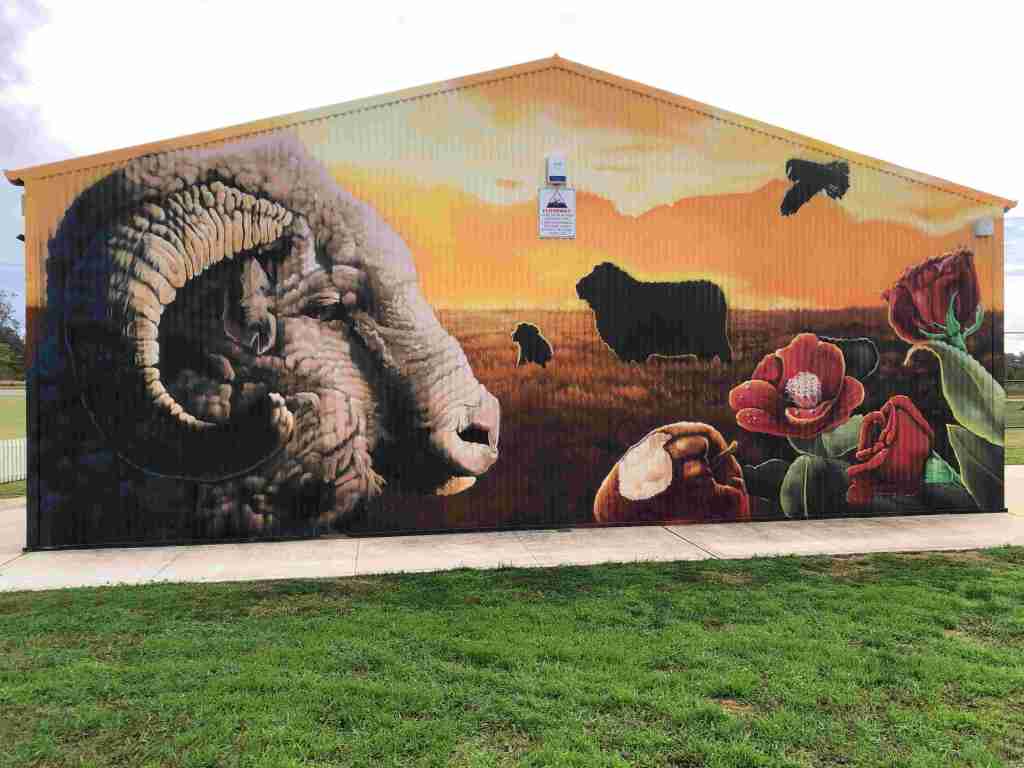
Mural artist Brode Compton of Blackbook Ink draws inspiration from nature and tales of resilience and harmony, beckoning us to reconnect with the Earth.
Compton’s Golden Graze captures the essence of Camden’s pastoral landscape in a vibrant tapestry of colours and forms, highlighting the area’s rich agricultural history and natural beauty. The mural aims to celebrate the timeless charm and rural tranquillity of Camden.
Michele Arentz, The Dairy Series
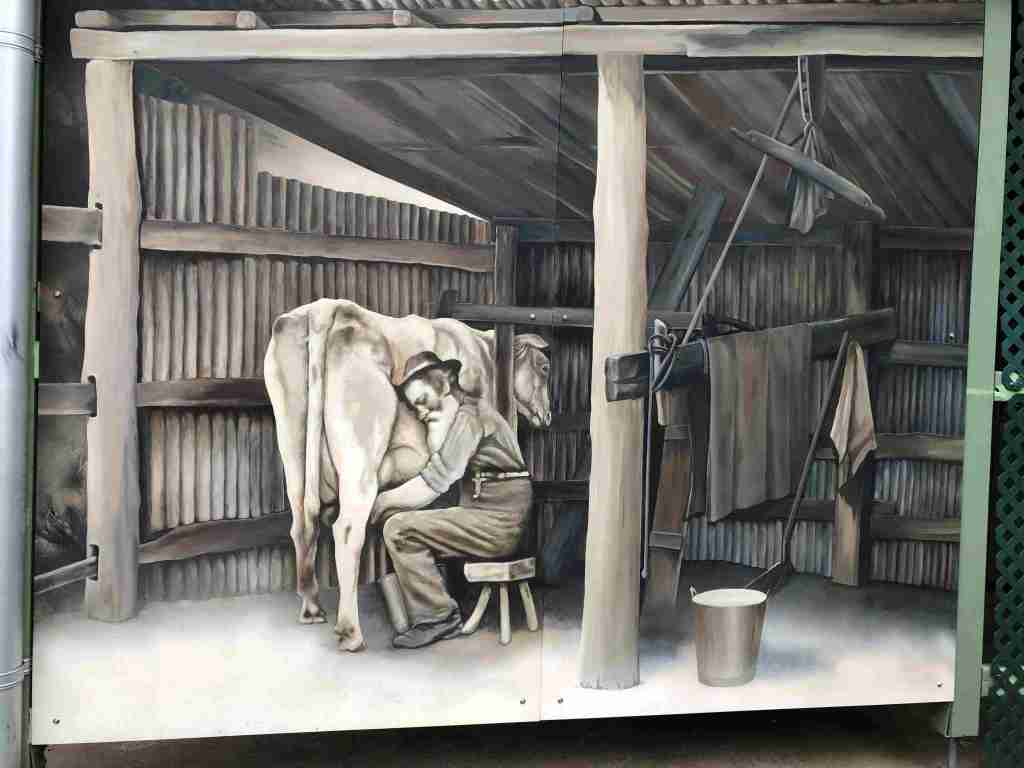
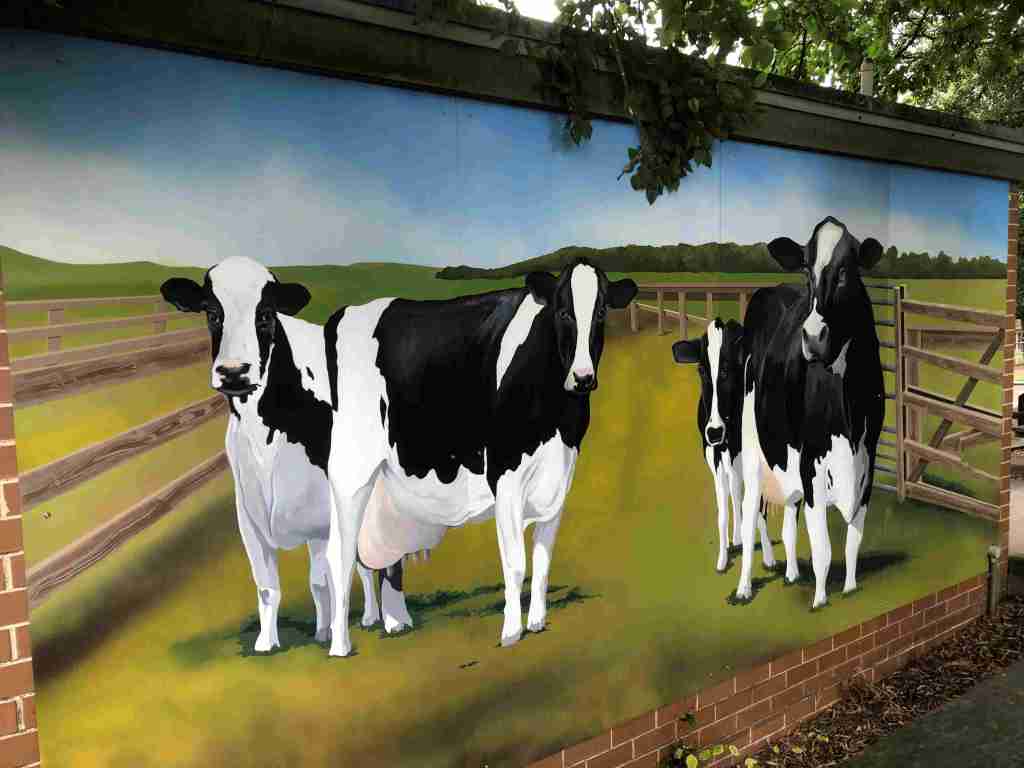
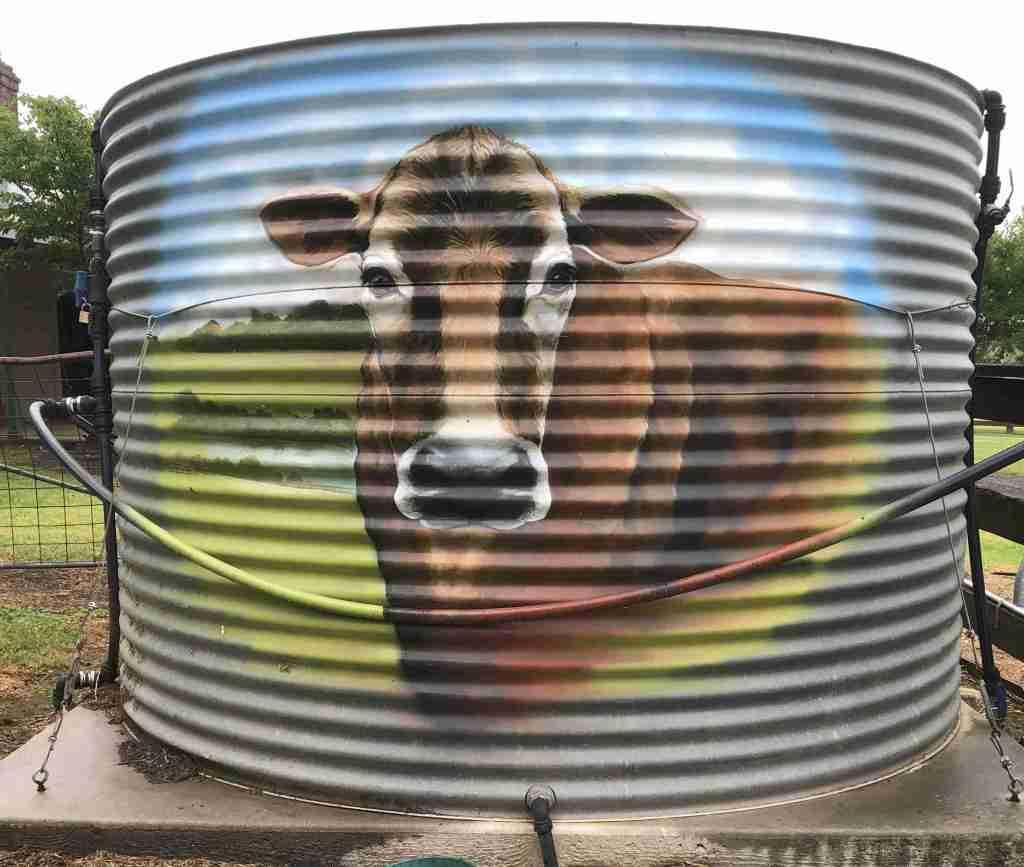
Artist Michele Arentz trained at the National Art School, specialising in graphic design and fine art. She composes works that feature Camden heritage and architecture, employing the effects of light and shadow to capture a moment in time. Died 2026.
Arentz’s The Dairy Days trio of murals pays tribute to the heritage and history of Camden Town Farm as a working farm. Established as a dairy in 1908, it ceased operation in 2002. The artwork depicts dairy farming from days gone by.
Illustrative Signage Artists on the Camden Art Trail
Miss Llewella Davies Collaborative Piece
Michele Arentz, Esther Bolz, Tom Melville, Belle Mitchell and Tracey Prioste, 2024
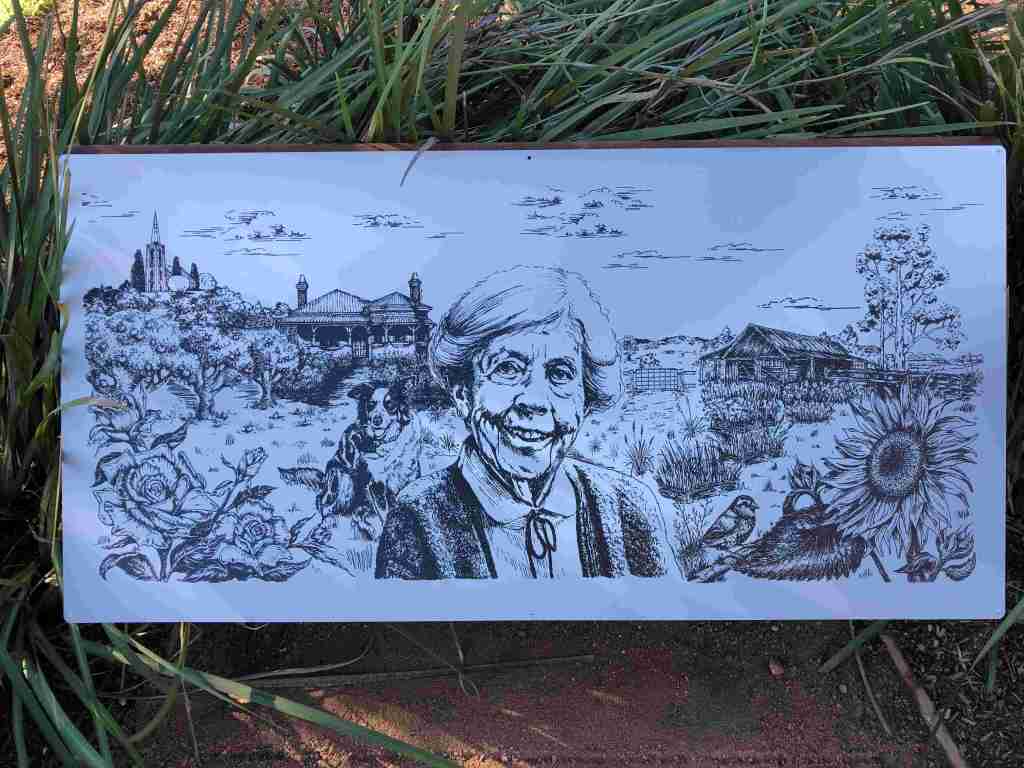
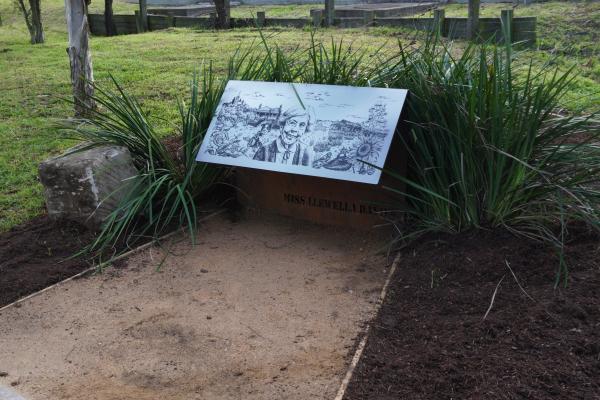
Known as Camden’s first lady, Miss Davies was awarded the Order of Australia Medal in 1981 for her continued leadership within the community. On her passing in 2000, Miss Davies bequeathed Camden Town Farm to the people of Camden. The collaborative artwork celebrates the significant elements of Miss Davies’ life, including her much-loved home, farm, and companion Tess
Jo Wong
Visual artist Jo Wong Hoyee was born in Hong Kong and specialises in drawing, painting, illustration, printmaking, and photography in freehand, pigment-based, and digital formats. Jo is trained in both traditional Chinese painting and Western art.
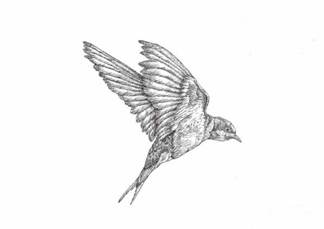
Belle Mitchell
Self-taught artist Belle Mitchell captures the intricacies of the botanical and wildlife subjects that draw inspiration for her.
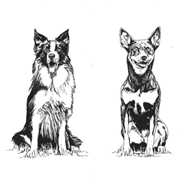
Tracey Prioste
Artist Tracey Prioste works exclusively with charcoal powder and brushes. Her background in black-and-white photography informs her drawing practice and her skill in creating photorealistic portraiture. Her subject matter is predominantly a personification of animals, and her works reflect on her youth growing up on a rural property in Queensland.
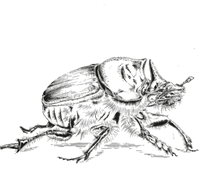
Esther Bolz
Natural history illustrator Esther Bolz uses traditional drawing and painting techniques to create highly detailed, meticulously rendered, scientifically accurate illustrations.
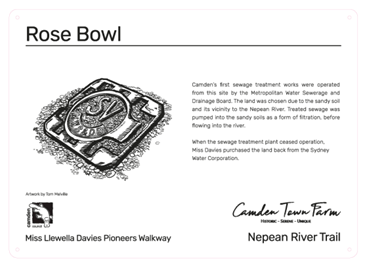
Tom Melville
Artist Thomas Melville has a rich background in graphic design, illustration, and animation. He draws inspiration from comics, people watching, and all things illustrative. His medium ranges from traditional pen-on-paper to digitally drawn illustrations, and he seeks to uncover the magic hidden in the mundane, transforming the ordinary into the extraordinary.
Reflection
Is the Camden Art Trail a good day out?
Yes, the Camden Art Trail is a good outing. It offers a straightforward 4.2 km walk on flat, well-formed paths across rolling meadows reminiscent of the original 18th-century Cowpastures.
The landscape illustrates the site’s multiple layers of history through living history, artworks, interpretative signage, storyboards, and more. Camden Town Farm raises cattle on site; Camden Markets represent the original market town; the murals tell the farming history; and more.
The walk is a blend of rustic rural scenery and landscape that retains a rich cultural heritage comprising Indigenous stories and Country, the European settler society, the natural ecology of the riverine ecosystem, and built heritage and murals that tell the story of the original dairy farm on the site.
The art trail comprises installations by 15 artists, featuring a host of themes, from domestic life to river ecology, Cumberland Woodland, farming history, and flooding.
The site is accessible to people of all fitness levels as well as those with specific needs. There is seating, concrete walkways, and free parking at the cricket ground on the western end of the walkway. Entry is free.
Come and have an enjoyable and memorable day, take in the country air and finish up by indulging in a coffee and cake at one of the many local cafes
Not good for dogs
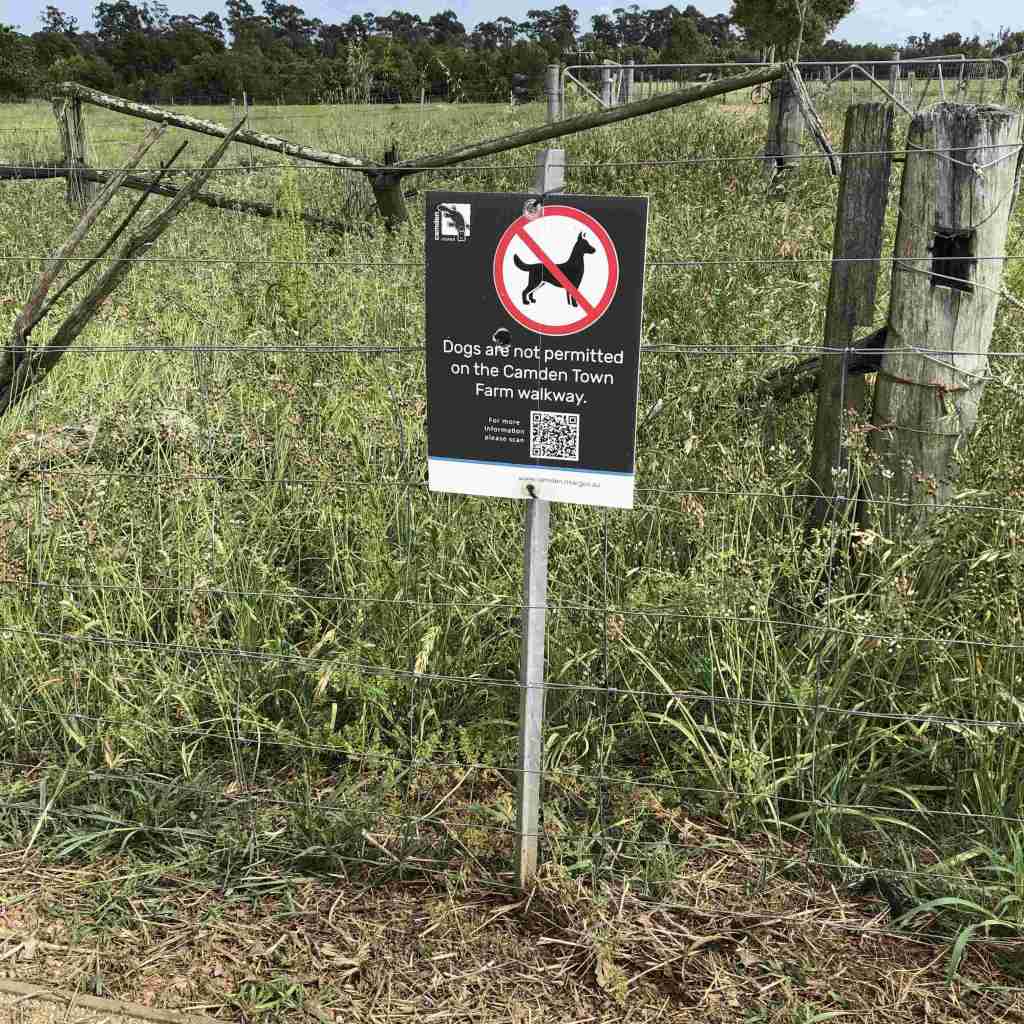
Please note that the Miss Llewella Davies Pioneer Walkway is designated dog-free.
Dogs aren’t allowed because it’s an operational farm. We have herds of cattle in the paddocks that adjoin the walkway, and if a non-cattle-savvy dog gets off-leash and harasses the cattle, the consequences for the cattle and/or the dog could be catastrophic.
Camden Town Farm is also home to many native wildlife species that are at risk from dogs that find their way onto the farm. Dogs are not permitted on or off leash at any time. Fines apply in accordance with section 632 Local Government Act 1993 and the Companion Animals Act 1998. (Camden Town Farm 2026.)

References
Camden Town Farm 2026. Miss Llewella Davies Pioneer Walkway. Camden Council, Oran Park. Online at https://www.camdentownfarm.com.au/community-access-and-visitation/miss-llewella-davies-pioneer-walkway/ Accessed 23/6/26
Gientzotis, Jill 2018. Guide Setting Up An Art Trail. National Association for the Visual Arts, Sydney. Online at https://visualarts.net.au/media/uploads/files/Art_Trails.pdf Accessed 23/6/26
Thompson, John and Day John, 2020. Understanding the impact and value of temporary public art sculpture trails. Local Economy. Vol. 35(3) 186–208. https://doi.org/10.1177/02690942209218
Trimby, Lou 2014. Bristol arts trails – making art accessible. Bristol24/7. Online at https://www.bristol247.com/culture/art/arts-trails-in-bristol-making-art-accessible-to-all/ Accessed 23/6/26
Acknowledgements
This post has extracts republished from https://www.camden.nsw.gov.au/parks-and-recreation/public-spaces-legacy-project-nepean-river-trail/camden-public-art-trail Accessed 23 June 2026.
A guide booklet to the Nepean River Trail can be found here https://www.camden.nsw.gov.au/assets/Public-Art-Catalogue-NRTC-A5-Booklet-Reference-SPREAD-FA.pdf Accessed 23 June 2026.
Discover more from Camden History Notes
Subscribe to get the latest posts sent to your email.

