

The sad side of mid-century modernism
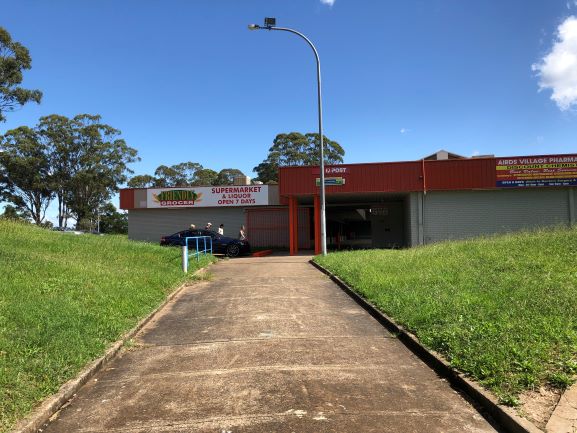
Recently, I came across an article in the Macarthur Chronicle about the future of the Airds shopping mall titled ‘Dilapidated centre set to be transformed’. It stated:
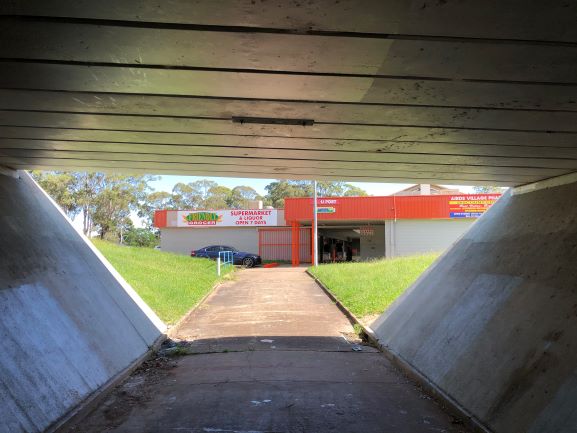
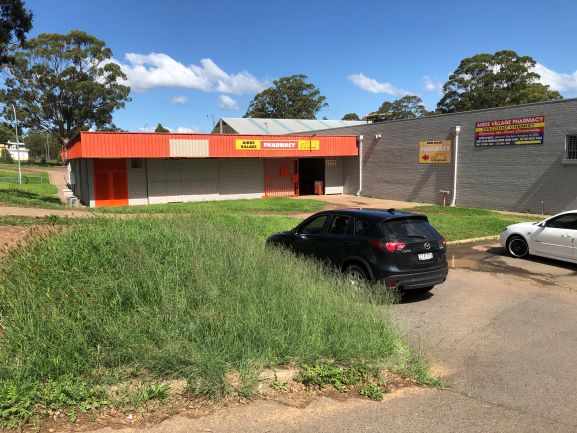
A wrecking ball could be swinging towards a dilapidated shopping village. The grand plans propose to demolish Airds Village shopping centre, on Riverside Drive, and replace it with a $21 million centre.

A story of decay and neglect
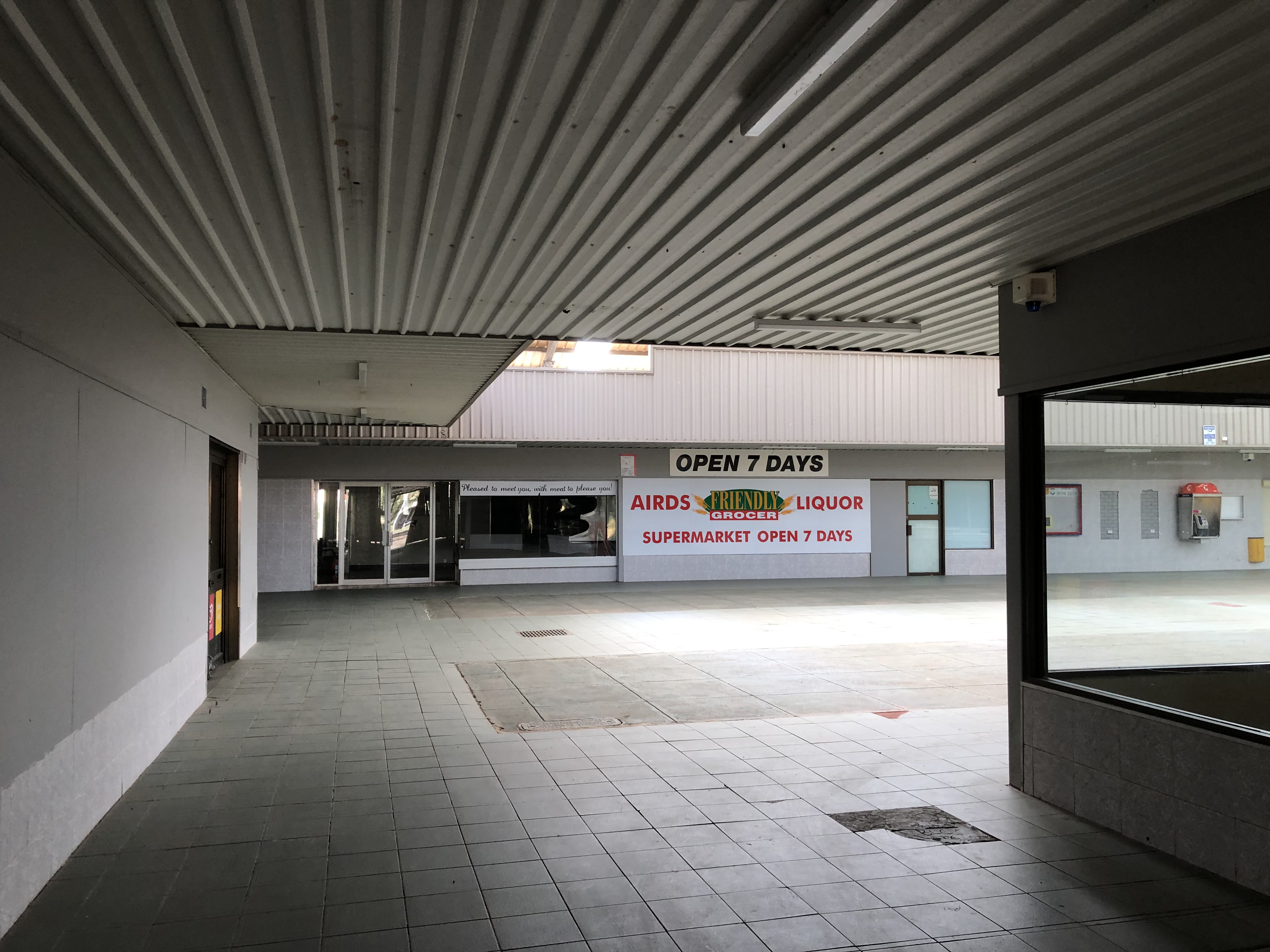
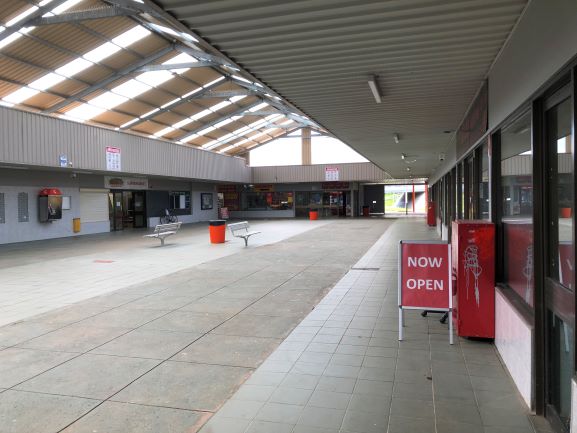
The imminent demolition of the decaying and neglected Airds shopping mall is a sad indictment of the dreams of many and the ultimate demise of the 1970s Macarthur Growth Centre.
The shopping mall is an example of urban decay in the middle of our local suburbia. It is a failure of modernism and the town-planning utopia of city-based decision-makers.
The decay at Airds is not unusual and is symbolic of more significant trends in global retail, where shopping malls are declining.
The current dismal state of affairs hides the issue that in the mid-20th century, Campbelltown’s civic leaders had great hope and optimism for the area’s development and progress.
Progress, development, and modernism
There were grand plans for Campbelltown as a satellite city within the New South Wales state government’s County of Cumberland Plan.
Local confidence saw the construction of the 1964 modernist council chambers and, in 1968, the declaration of city status, electrification of the railway and the announcement of the Sydney Region Outline Plan by the state government.
Influenced by the British New Town movement, the city was incorporated in the State Planning Authority of NSW’s 1973 New Cities of Campbelltown Camden Appin Structure Plan. This later became the Macarthur Growth Centre, administered by the Macarthur Development Board.
Radburn – a ‘foreign country’
Airds was one of several ‘corridor’ public housing suburbs following the American Radburn principles. The Airds shopping centre was built as part of the 1975 Housing Commission of New South Wales subdivision of ‘Kentlyn’, renamed Airds in 1976.
The Radburn principles were applied to five public housing estates developed by the Housing Commission of New South Wales in the Campbelltown area between 1972 and 1989. The other four estates were Macquarie Fields, Claymore, Minto and Ambervale.
The design concept originated from Radburn in New Jersey in 1928 and reflected the optimism of American modernism around the motor car and consumerism.
Houses were developed ‘back-to-front’ with a front-facing walkway or green open space and the back door facing the street. This meant a separation of pedestrians and cars, with a large communal open area centred on the walkways between the rows of houses. This resulted in a streetscape with rows of high blank fences enclosing backyards.
Travis Collins from the University of New South Wales argues that the Radburn principles were initially designed for aspirational upper-middle-class areas and their desire for a garden suburb where pedestrian walkways and common areas linked across the estate. These areas were expected to be the centre of neighbourhood life without needing a car.
Radburn watered down
The suburb of Airds, like other Campbelltown public housing estates, started off with grand plans that evaporated over time due to government changes, cost-cutting, the abolition of government instrumentalities, and neglect. This resulted in a ‘watered-down’ Radburn vision.
The public housing estates did have extensive open space, which was true to Radburn principles. Yet there were compromises, and the Housing Commission built townhouses that were counter to the Radburn concept.
The tracts of open space became wastelands of neglect and vandalism, poorly provisioned and maintained by the Housing Commission, with a lack of privacy and security. The back lanes and streets were isolated, lacked security and resident surveillance, and were sites characterised by dumped rubbish and graffiti.
The estates were populated with single-parent families who suffered from high levels of social exclusion, unemployment, and low incomes.
Radburn failures
Collins argues that the Radburn principles were a failure, and contributing factors included poor surveillance of the street by residents because of high rear fences fronting the street, anti-social behaviour along the walkways and open space areas, and the low socio-economic status of residents.
The authorities finally recognised the failure of the Radburn scheme in the early 2000s. They acknowledged that the design was unsuitable for concentrated public housing estates, that it created confusing neighbourhoods with unsafe walkways, poor car access, and poor surveillance of open space, that the poorly constructed housing stock became run down and dilapidated, and that it was infested with termites. These issues were reflected in Airds and the shopping mall from the mid-1970s.
Memories of hope
In the 1970s, I taught at Airds High School, adjacent to the shopping mall, and my memories are mixed. Young people came from dysfunctional backgrounds, yet their resilience allowed them to rise above it, grow, and mature into sensible young adults. This process is supported by the life experience of former Airds resident Fiona Woods (Facebook, April 2020), who grew up in Airds in the 1970s and 1980s. She says:
I have the best memories of Airds, especially that shopping centre. Riding our bikes to buy lollies. Growing up in Airds in the 70s was very communal. I loved it. I arrived at Airds in 1977 when I was 3 and lived there until 1984. I went to John Warby [Public School]. There was such a strong sense of community. My mum met her best friend when they moved into their new houses in Airds. They have been friends for over 40 years and still speak daily.
Fiona tells the story of her sister, who taught at Airds High School in the 1990s. She found the teaching experience challenging, as I did 20 years earlier, yet the youngsters were confident, grounded and without airs and graces.
Similarly, I found Airds’ schoolchildren to have a refreshing, unsophisticated innocence generated by difficult circumstances. They were unpretentious, and you quickly knew where you stood with them teaching in a classroom that was always full of unconfined energy. You always had classroom ‘war stories’, and this is where I did my ‘missionary work’.
Bogans galore and more
The Airds shopping mall is a metaphor for what happened to Campbelltown between the 1970s and the present. It represents the collision of modernism and neoliberalism in place. The optimism of the 1960s contrasted with the despair of the 1980s.
The shopping mall is a metaphor for the stereotypes linked with the geographical term ‘Western Sydney’ and the use of terms like ‘bogan’ and ‘westie’. These stereotypes are typified by Sydney’s latte line, where city-based decision-makers treat suburbs west of the latte line as a foreign country. In 2013, Campbelltown journalist Jeff McGill took exception to the ‘bogan’ characterisation of the Campbelltown area by the Sydney media.
Gabrielle Gwyther put it this way:
Derogatory labeling of residents of western Sydney was aided by the social problems and cheap aesthetic of large-scale, public housing estates developed in the 1950s at Seven Hills, followed by Green Valley and Mount Druitt in the 1960s, and the Radburn estates of Bonnyrigg, Villawood, Claymore, Minto, Airds and Macquarie Fields in the 1970s.

De-Radburnisation
These failures were acknowledged in 1995 with the state government’s public housing renewal projects and their de-Radburnisation through the Neighbourhood Improvement Program.
At Airds, this is partly responsible for the re-development of the shopping centre as outlined in the Macarthur Chronicle.
Hope springs eternal
Not all is lost at Airds. Those who grew up in the area have a different view of the suburb.
The view of former residents like Fiona is one of hope, with happy memories of their childhood.
The lives of former residents were not one of despair despite the hardships of the suburb and poor planning results by bureaucrats and government decision-makers.
References
Nathan Collins, Renewing Minto, An Analysis of the Minto Renewal Project. Undergraduate Thesis, Bachelor of Planning, UNSW, 2006. Online at https://www.be.unsw.edu.au/sites/default/files/upload/pdf/schools_and_engagement/resources/_notes/5A3_1.pdf
Kristian Ruming, MOSAIC urban renewal evaluation project: urban renewal policy, program and evaluation review. City Futures Research Centre UNSW, Research Paper No.4 May 2006. Online at https://cityfutures.ada.unsw.edu.au/documents/29/researchpaper4.pdf
Gwyther, Gabrielle, Western Sydney, Dictionary of Sydney, 2008, https://dictionaryofsydney.org/entry/western_sydney
Updated 14 February 2025. Originally posted on 11 April 2020 as ‘Airds Shopping Mall: The retail centre hope forgot’.
Discover more from Camden History Notes
Subscribe to get the latest posts sent to your email.


One thought on “Airds Shopping Mall demolition, the unmet expectations of mid-century modernism”
Comments are closed.