Aesthetics · Architecture · Art · Artists · Attachment to place · Belonging · Campbelltown · Community identity · Community work · Craft · Cultural Heritage · Design · Education · Entertainment · Fashion · Heritage · Landscape · Landscape aesthetics · Leisure · Living History · Local History · Local Studies · localism · Macarthur · Monuments · Moveable Heritage · Parks · Place making · Placemaking · Public art · Sculpture · Sense of place · Storytelling · Symbolism · Tourism · Urbanism · Western Sydney University · WSU Campbelltown

Public Art and Well-Being at Campbelltown Lakes

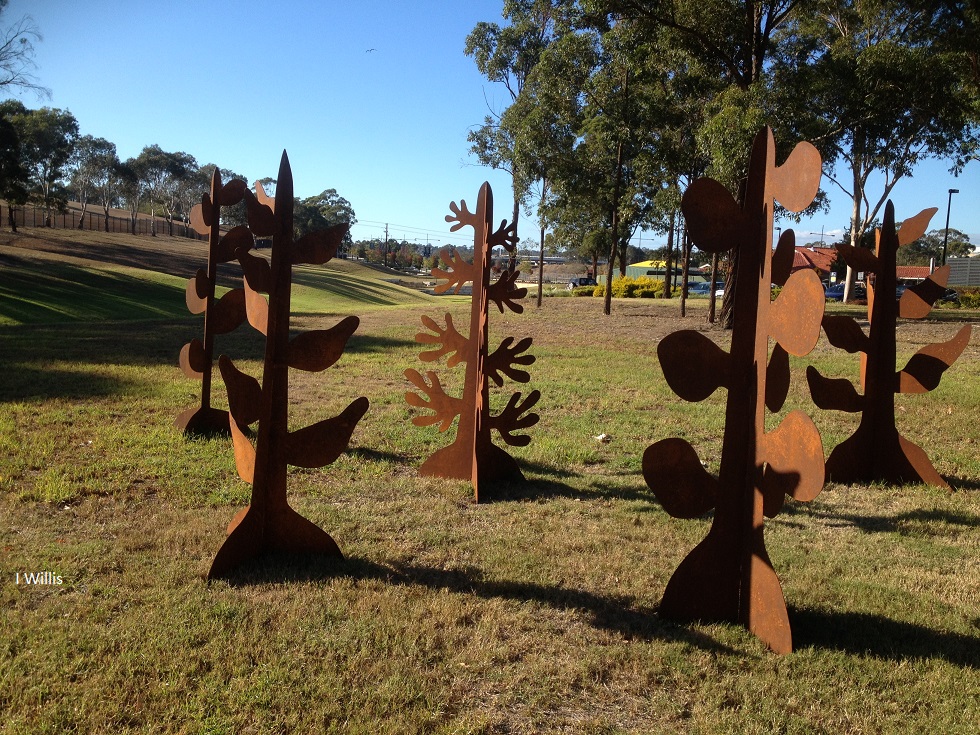
The 8th Western Sydney University Sculpture Award and Exhibition features 23 artworks globally, including Denese Oates' Xerophyte Forest, a steel representation of future plants. The beautiful lakeside setting enhances the sculptures' aesthetic, positively impacting community well-being. The exhibition runs from 4 May to 3 June 2018, attracting students and staff.

Architecture · Attachment to place · British Heritage · Colonialism · Conservation · Cricket · Cultural and Heritage Tourism · Cultural Heritage · Cultural icon · Cultural plantings · Design · Education · England · Entertainment · Environment · Farming · Fashion · Garden history · Gardening · Governor Macquarie · Heritage · Historical consciousness · Historical Research · Historical source · Historical thinking · History · Horticulture · Landscape · Landscape aesthetics · Leisure · Living History · Memorialisation · Memorials · Memory · Modernism · Place making · Placemaking · Plant Nursery · Plants · Retailing · Sculpture · Sense of place · Settler Society · Social History · Storytelling · Sydney · Uncategorized · Urban development · Urbanism · Victorian

Sydney’s Royal Botanic Gardens

The Royal Botanic Gardens in Sydney, Australia, cover 29 hectares of gardens and 51 hectares of surrounding parkland. Established in 1816, it is the oldest colonial botanic garden in Australia, attracting 4 million visitors annually. With historical significance dating back to 1788, the Gardens reflect changing landscape styles and serve as a popular public space.