
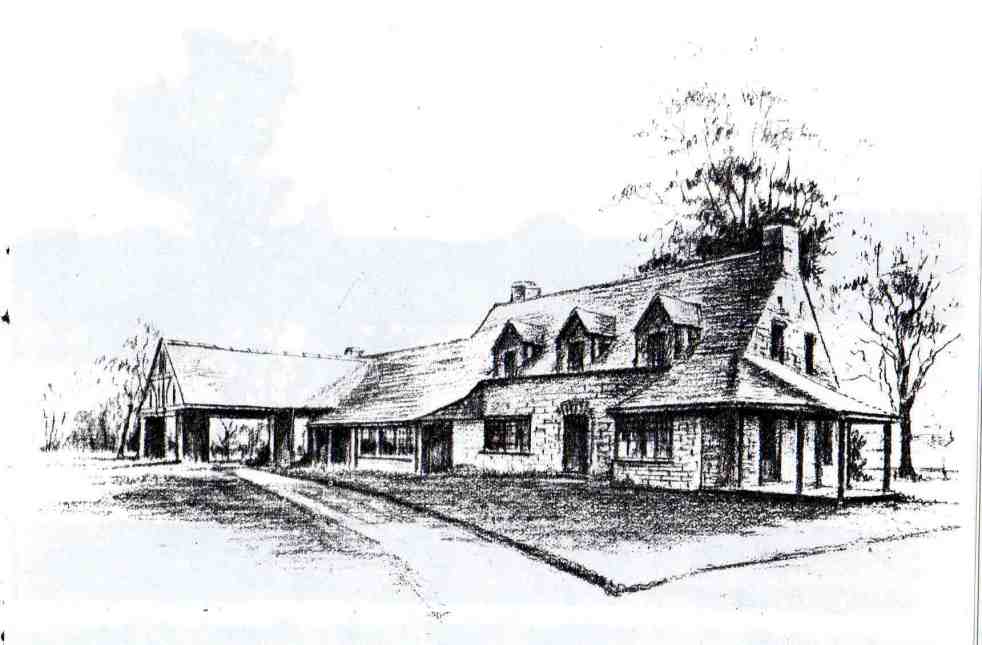
Camden Vale Inn Milk Bar
What is the old English pub on the southern outskirts of Camden? It was a milk bar built during the Interwar years, promoting disease-free milk at a time when milk was a vector for disease and pathogens.
The principals at Camden Park Estate Pty Ltd decided to promote Camden Vale special milk by constructing a milk bar on the Hume Highway south of the township of Camden, near the entry to the estate.
The Camden Vale Inn Milk Bar was opened in 1939, following its proposal in 1938, to promote the special milk produced on the Camden Park Estate Pty Ltd. (Walsh 2016).
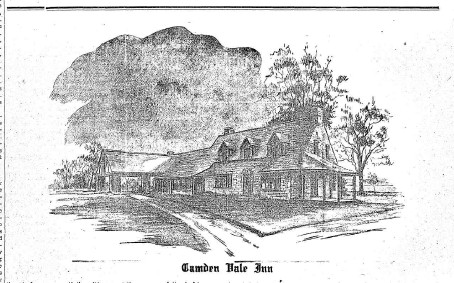
Milk promotions in the 1920s and 1930s were quite common. From 1929, authorities ran a campaign with the slogan ‘Drink More Milk’, which launched a week of activities in Sydney and surrounding suburbs (‘Milk Week: Campaign Opened’). The campaign was opened by Minister for Health, Dr Arthur. (Sydney Morning Herald, 16 April 1929)
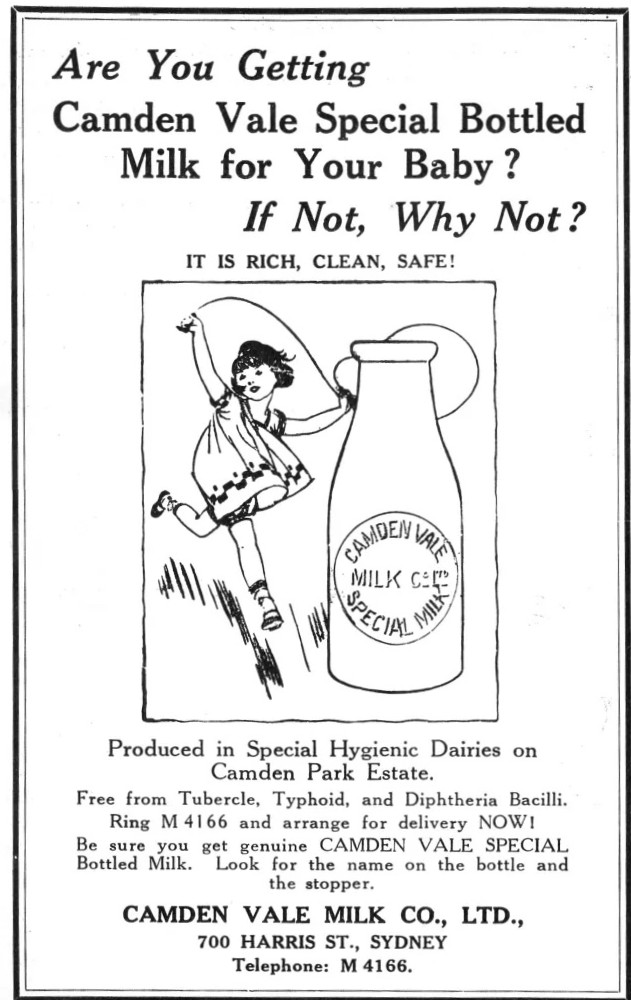
Camden Park Estate Pty Ltd launched their special milk in 1920 with the establishment of the Camden Vale Milk Company. The company was taken over in 1929 by Dairy Farmers’ Cooperative Pty Ltd.
The other major venture to promote sales of Camden Vale milk was the installation of the rotolactor at Menangle in 1952.
Sydney architect, a porte-cochère and an ‘old English’ style aesthetic
Designed by noted Sydney architect Cyril Christian Ruwald (1895 – 1959). He was born in Redfern, trained at Sydney Technical College, and was indentured to the architects Waterhouse and Lake, then served in the Field Artillery Brigade in France in 1918. Ruwald spent time in Europe in the early 1930s and, on his return, designed hotels for Tooth & Co and was instrumental in adapting the streamlined horizontal look of European modernism to hotel design. (Pickett 2026)
According to Annette Onslow, Ruwald was a friend of her parents, Edward and Winifred Macarthur Onslow, and they spent much time examining photographs of English country inns and how to achieve the same effect for the build. (The District Reporter, 29 April 2005)
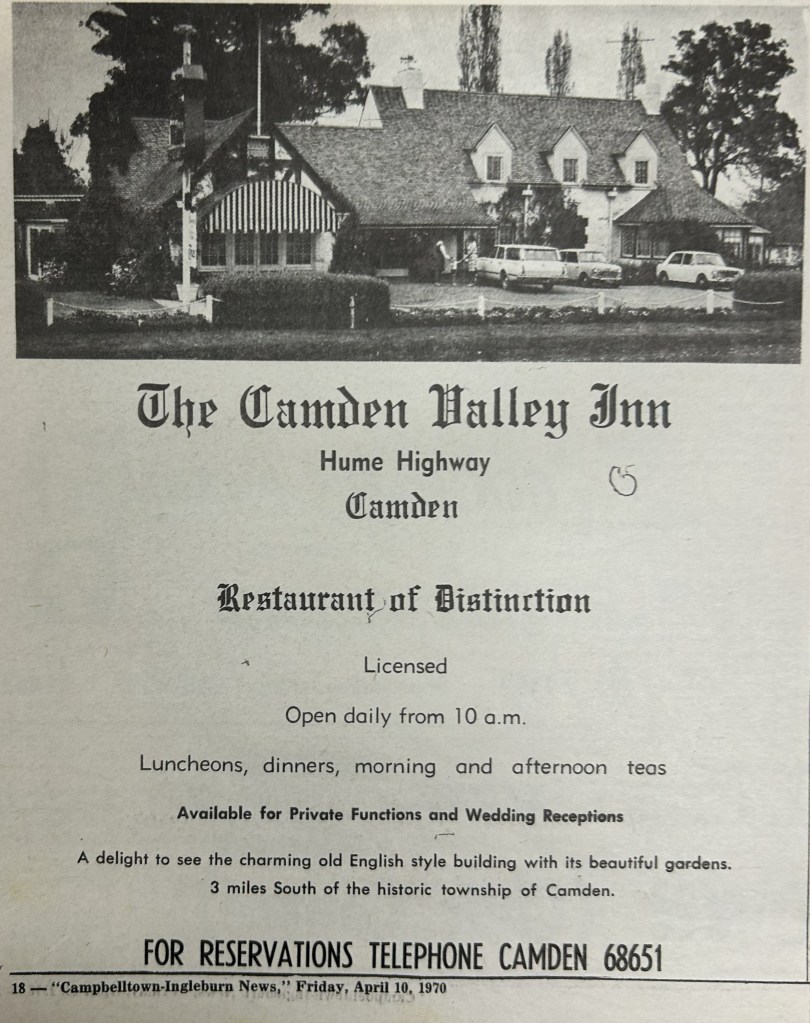
The milk bar was designed in an Interwar Tudor Revival style, popularly known as “Old English”. According to Melbourne architect Bryce Raworth, the style
developed from the English Arts and Crafts medievalism of the late 19th century, and shared that movement’s values in terms of dark natural colourings, a predominance of brickwork, the use of half timbering and a love of wrought iron and leadlight windows. (Raworth 1991_
According to Michael Bell Architects, the style resembles an old English cottage and reflects Australia’s ties to Britain. (Michael Bell Architects 2026)
The building entrance was under a porte-cochère, a covered roof structure extending from the building. It allowed cars to pass through or pull up directly to the door, providing passengers with shelter from inclement weather. (Wikipedia contributors 2026) This feature created Camden’s first drive-through.
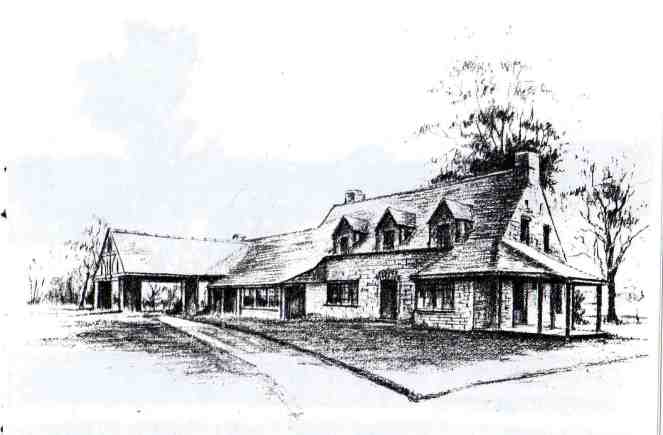
Warm and comfy on a cold day
According to a publicity brochure, the building would have
walls in attractively coloured brickwork suggesting a touch of modernity. The Lounge Room will be equipped with open grates, where log fires will add necessary warmth and comfort during cold days and evenings. Furnishings will be liberally provided with a view to offering the utmost in comfort and convenience. (Dairy Farmers Coop1938)
The construction of the milk bar was led by Camden builder Herb English and used blackbutt hardwood from the NSW North Coast for the beams. Ruwald wanted a rustic look for the beams created by using an adze on them.
Annette Macarthur Onslow stated that the building resembled an old coaching stage and an English country inn. Ruward attempted to create ‘the charming settled look of centuries-old buildings’. (The District Reporter, 29 April 2005)
According to promotional material for the milk bar, it would serve
Delicious milk drinks of all kinds made from Camden Vale special milk will be served. Camden Vale milk and cream will also be available for sale. A feature will be made delicious morning and afternoon teas.
Situated only thirty-five miles from Sydney, the Camden Vale Milk Bar will be a convenient spot to stop at and, amid delightful surroundings, partake of refreshments served in an appetising manner. (Dairy Farmers Co-operative Milk Co. Ltd. 1938)
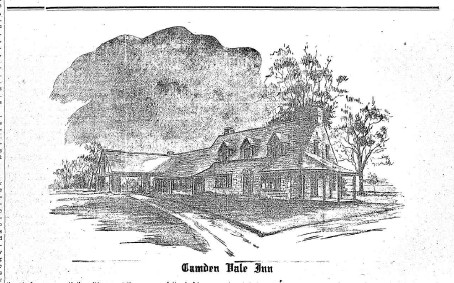
Official opening and the Red Cross
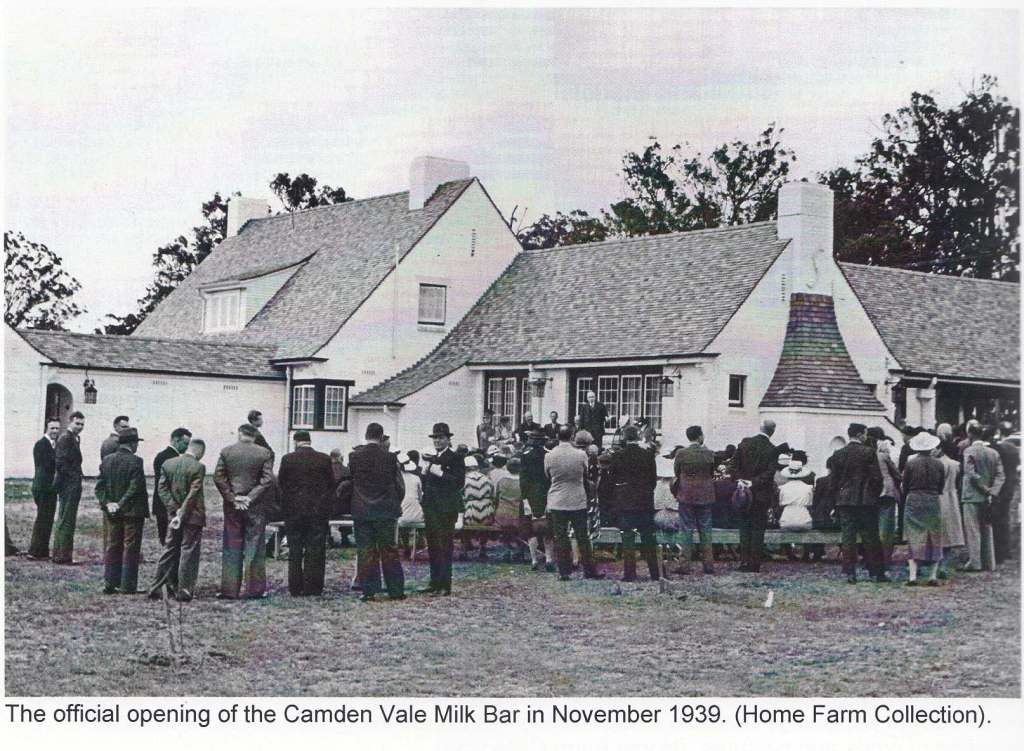
The milk bar opened to great fanfare nine weeks after the war was declared in late 1939, with a promise that all profits from the first six months would go to the Red Cross. Major-General JW Macarthur Onslow announced at the official opening that the profits would be a great benefit to the home front war effort. The Sun newspaper agreed and stated
This fine gesture should be of great value to the Red Cross, for the Inn is certain to prove a big attraction for visitors and all passing along the Hume Highway. (The Sun, 5 November 1939)
The Red Cross did not see the funds from the milk bar, as it ran a loss for the first six months. In the end, Camden Park Estate Pty Ltd donated £50, split between the Camden and Menangle Red Cross branches. (Camden News, 29 August 1940; Picton Post, 28 August 1940)
Health Week
The official opening ceremony of the milk bar on 4 November was attended by 200 people and featured speeches and tours of the estate, and was part of the 1939 Health Week celebrations. (The Sun, 5 November 1939)
Health Week originally began in NSW in 1921 and was modelled on the National Health Week of Great Britain, instituted by the Agenda Club to raise awareness of public health issues (The Spectator (London) 4 May 1912). The aim of the Agenda Club was to channel the energies of young men towards social good (Thorp 1910). In NSW, Health Week was started by Drs WG Armstrong, Harvey, Sutton, and JW Purdy to raise public awareness of preventable diseases and foster health in the community. (Daily Telegraph, 18 October 1921)
The Inn was officially opened by RH Nesbitt, chairman of the Milk Board, who was accompanied by George Skinning, another member of the Milk Board. The first NSW Milk Board was established in 1930 with a mandate to promote milk consumption in NSW. (Evans & Moore 2025)
Speeches stressed the progress of the dairy industry, the modern hygienic methods of production and distribution, with special mention of the ‘keen city demand for the special grade of fresh milk under the name of Camden Vale’.
Official guests
The official party at the opening of the Inn was made up of Major-General JW and Mrs Enid Macarthur Onslow, Miss Sibella Macarthur Onslow, from the Camden and Menangle Red Cross branches, Miss Faith Macarthur Onslow, Enid’s daughter, Professor Harvey Sutton, O.B.E., School of Public Health and Tropical Medicine at the University of Sydney and chief medical officer of the NSW Department of Education, (Evans & Moore 2025) Dr Petherbridge, and Dr Graham Drew, Metropolitan Medical Officer of Health. They were taken on a tour of the estate by the general manager, JS Haddin, and inspected the garden, the stud cattle, the model dairy, and haymaking. (The Sun, 5 November 1939)
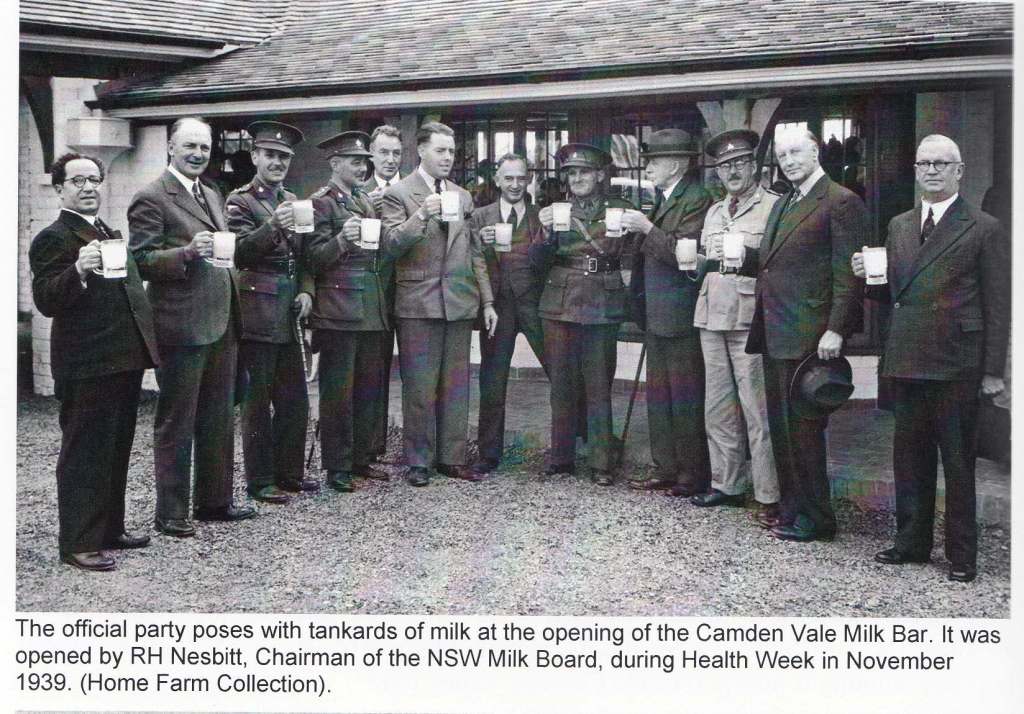
There were representatives from Health Week organisations, Mr. Francis, Chief Instructor Board of Health, the Red Cross, and women’s organisations, Miss Portia Geach, Housewives’ Progressive Association of N.S.W. which was a leader for the ‘good health movement’ (Gardiner, Thea. 2024), Ruby Duncan, Girls’ Progressive Club, part of Housewives Association, and architect Cyril Ruwald (The Sun, 5 November 1939).
Brisk trade
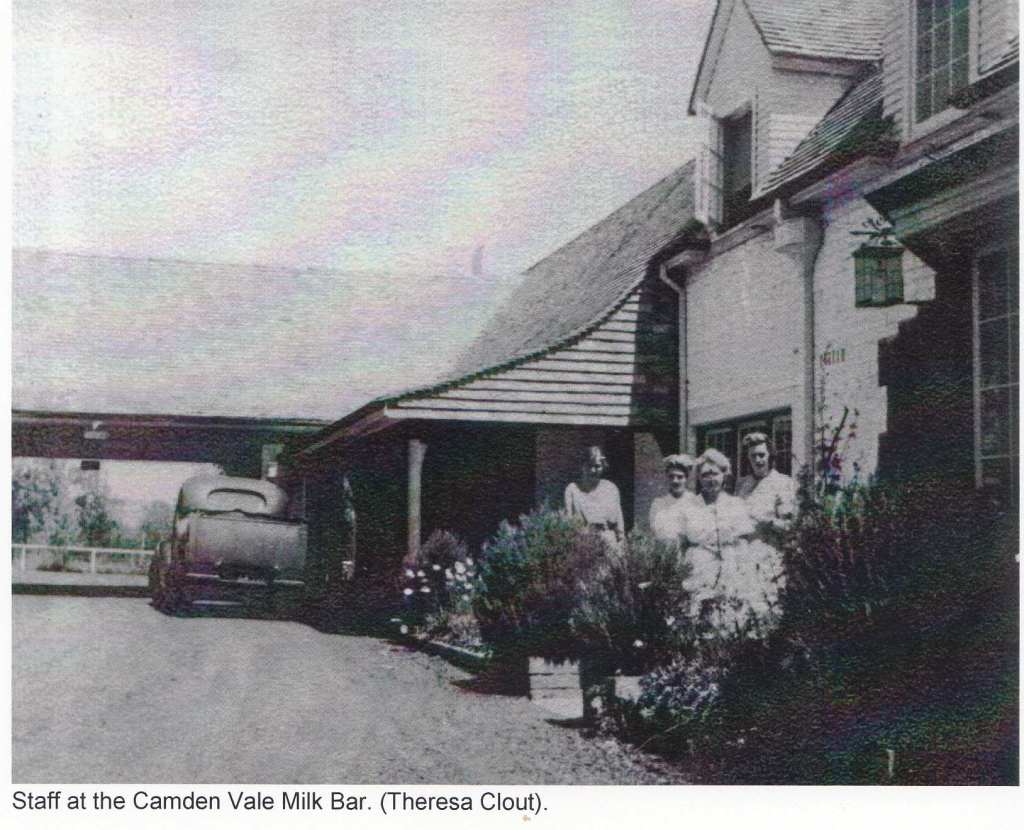
According to Annette Macarthur Onslow, trade in milkshakes was brisk, as the concept was relatively new to Australia, as was the concept of a drive-through ‘where one could remain seated in a car and buy takeaway milkshakes in waxed cartons’. (The District Reporter, 6 May 2005)
Gladys Mead ran the milk bar. Annette recalls: ‘To us children, it was a place of wonder with bottles of colourful essences and generous containers of creamy milk which, with a dollop of ice cream and quick whisk, could fill four glasses for 4d. Gladys was a wizard cook. Her Devonshire Teas with freshly baked scones, whipped cream and strawberry jam found plenty of customers.’ (The District Reporter, 6 May 2005)
Reflection
The Camden Vale Inn Milk Bar was primarily built to promote Camden Vale’s special milk at a time of intense public debate about preventable disease and public health. The Inn promoted the Camden Park Estate dairy herd’s disease-free status, which was regularly tested.
The Inn was a transnational reminder of ‘Old England’, stressing the close connection between the Macarthur family and their English linkages within the British Empire, and Camden’s Englishness.
The Inn’s opening celebrated Health Week and the general promotion of milk sales, and, just after the declaration of war, supported the Red Cross, with strong support for public health, the wartime home front, and the Macarthur family.
By the late 1950s, the most important site for promoting milk sales for Camden Park Estate was the Menangle Rotolactor, which, by the early 1960s, had thousands of visitors a week. The milk bar was renamed the Camden Valley Inn, with a restaurant serving wine.
Legacy
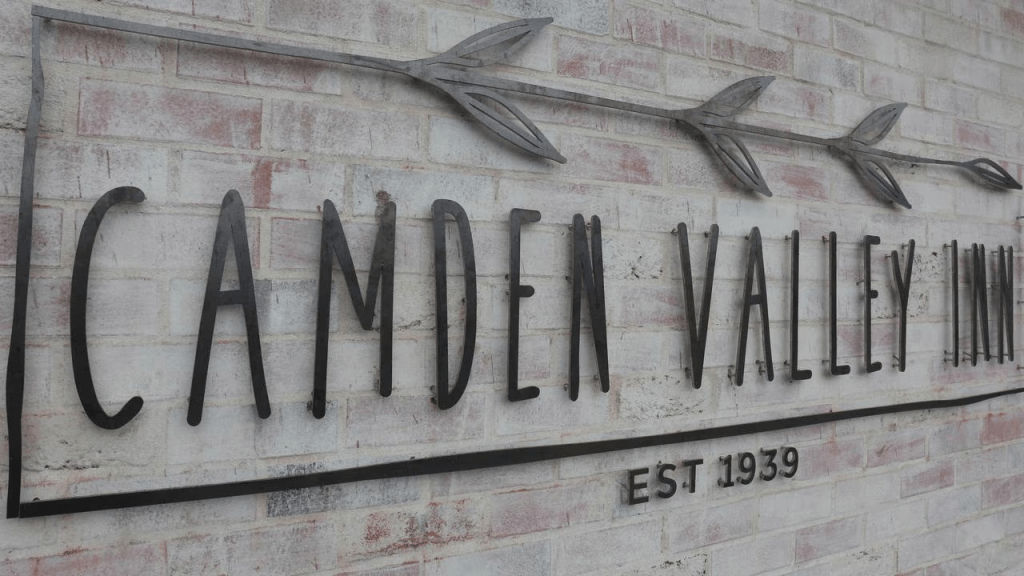
The ‘Old English’ legacy is still evident today, with one website lyrically waxing on about its Englishness and aesthetics this way
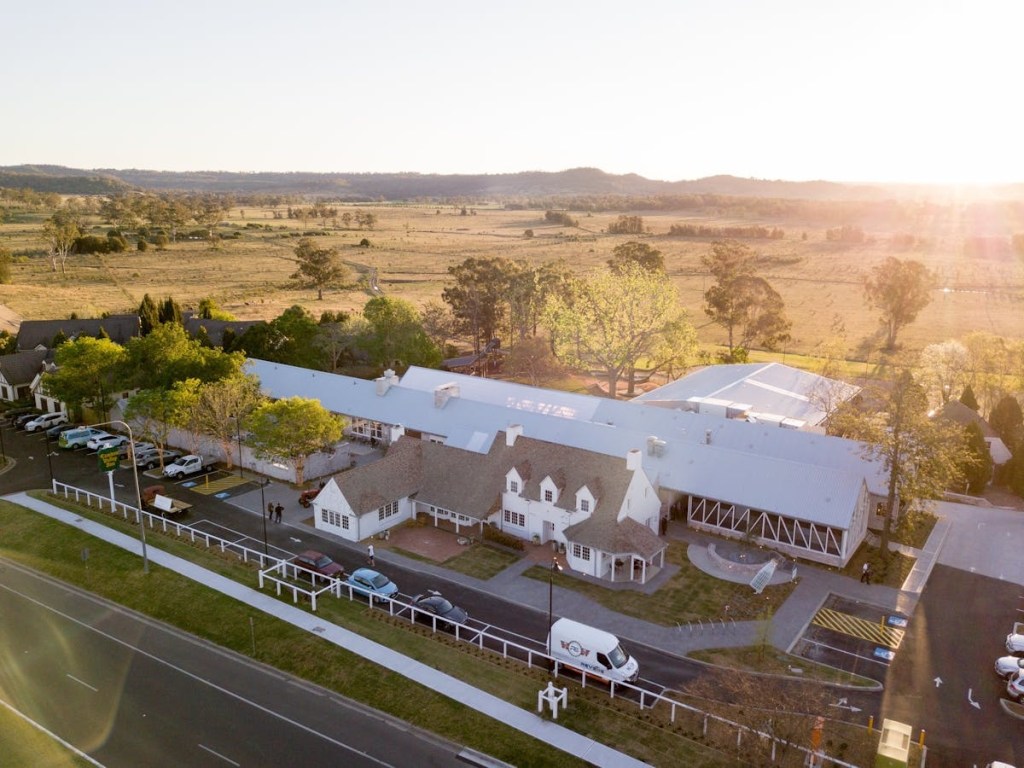
The Tudor-style, heritage-listed Camden Valley Inn is an idyllic boutique destination hotel and event venue set on five stunning acres in the Camden Valley. Camden Valley Inn still retains its quaint charm and country friendliness in an atmosphere reminiscent of old England. (Sydney.com 2026)
And finally
Today the Inn has changed from a milk bar to a restaurant and a luxury hotel inn, after being granted its tavern licence in 1989. (Sydney.com 2026)
Camden Valley Inn is a little bit of England at Camden, where the village’s Englishness has been noted for over a century. Visitors can imagine themselves back in the past, when milk was the favoured product rather than beer, wine, and spirits.
References
Dairy Farmers Cooperative Ltd 1938. Camden Vale Special Pasteurised Milk Production and Distribution. Sydney.
Evans, Nicola & Alison Moore 2025. Milk, Magic and the Disappearing Cow: Advertising Cow’s Milk in Australia during the Interwar Period. University of Wollongong. Journal contribution. https://doi.org/10.71747/uow-r3gk326m.29498525.v1 Accessed 17/6/26
Gardiner, Thea. 2024. ‘The Nation’s Health Is the Nation’s Wealth’: Portia Geach (1873–1959) and the Good Health Movement in Interwar Australia. Australian Historical Studies, 55(1), 90–114. https://doi.org/10.1080/1031461X.2023.2208590 Accessed 17/6/26
Health Week Executive 1931, Health and Baby Welfare Week, Health Week Executive, Sydney,
Michael Bell Architects 2026. What Is Inter-War Architecture in NSW? A Complete Guide. Sydney. Online at https://www.michaelbellarchitects.com/blog/inter-war-architecture Accessed 16/6/26
Pickett, Charles 2026. Architectural plans and drawings by Cyril Ruwald and others. Powerhouse Museum, Sydney. Online https://collection.powerhouse.com.au/object/103614 Accessed 16/6/26
Raworth, Bryce 1991. Our Inter-war houses. How to recognise, restore and extend houses of the 1920s and 1930s. National Trust of Australia (Vic), Melbourne. Online at https://www.nationaltrust.org.au/wp-content/uploads/2016/07/Our-Inter-war-Housing.pdf Accessed 16/6/26
Sydney.com 2026. Camden Valley Inn. Destination NSW, Sydney. Online at https://www.sydney.com/destinations/sydney/sydney-west/accommodation/camden-valley-inn Accessed 17/6/26
Thorp, Joseph 1910. The Agenda Club. Williams & Norgate 1910-1913, London (Abebooks, 2026, Online https://www.abebooks.co.uk/first-edition/Agenda-Club-Joseph-Thorp-Print-Collector%C2%92s/32162540291/bd) Accessed 17/6/26
Walsh, Brian 2016. Milk and the Macarthurs, the dairy history of Camden Park. Belgenny Farm Trust, Camden. Wikipedia contributors 2026. Porte-cochère. 22 May. In Wikipedia, The Free Encyclopedia. Retrieved 05:53, June 16, 2026, from https://en.wikipedia.org/w/index.php?title=Porte-coch%C3%A8re&oldid=1355530939
Discover more from Camden History Notes
Subscribe to get the latest posts sent to your email.

