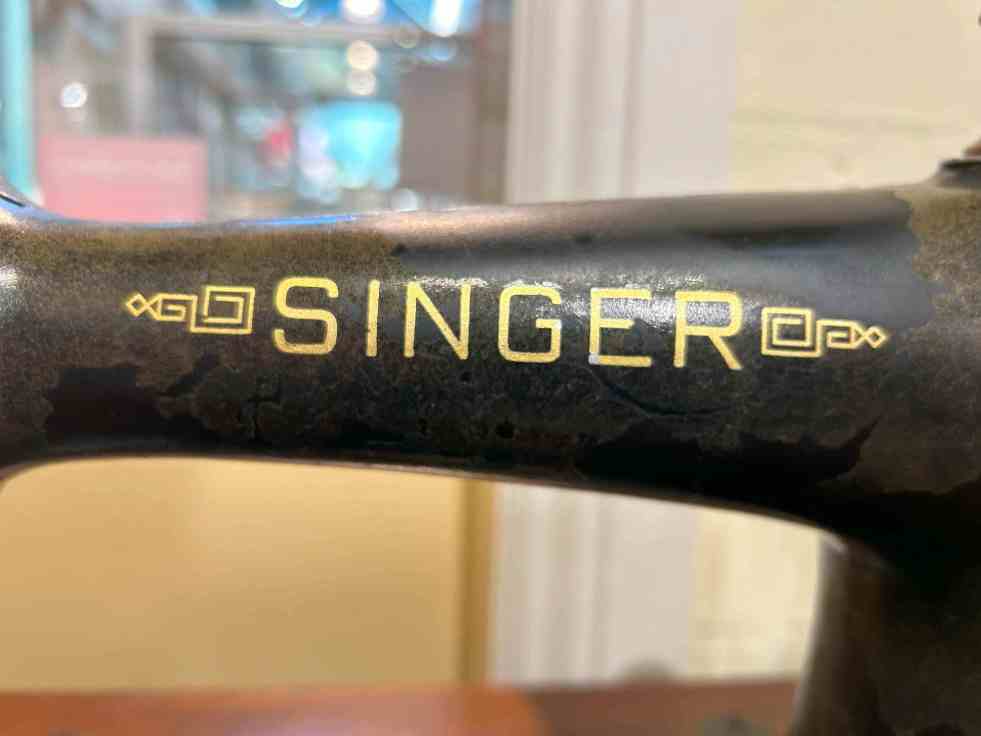
The Camden Museum's treadle sewing machine symbolizes the significant role of sewing in women's lives from the 19th century onwards. Sewing machines democratized work, enhancing women’s agency by saving time and allowing for business opportunities. Women contributed immensely to the war efforts through Red Cross circles, producing thousands of items during both World Wars.
Tag: World War One

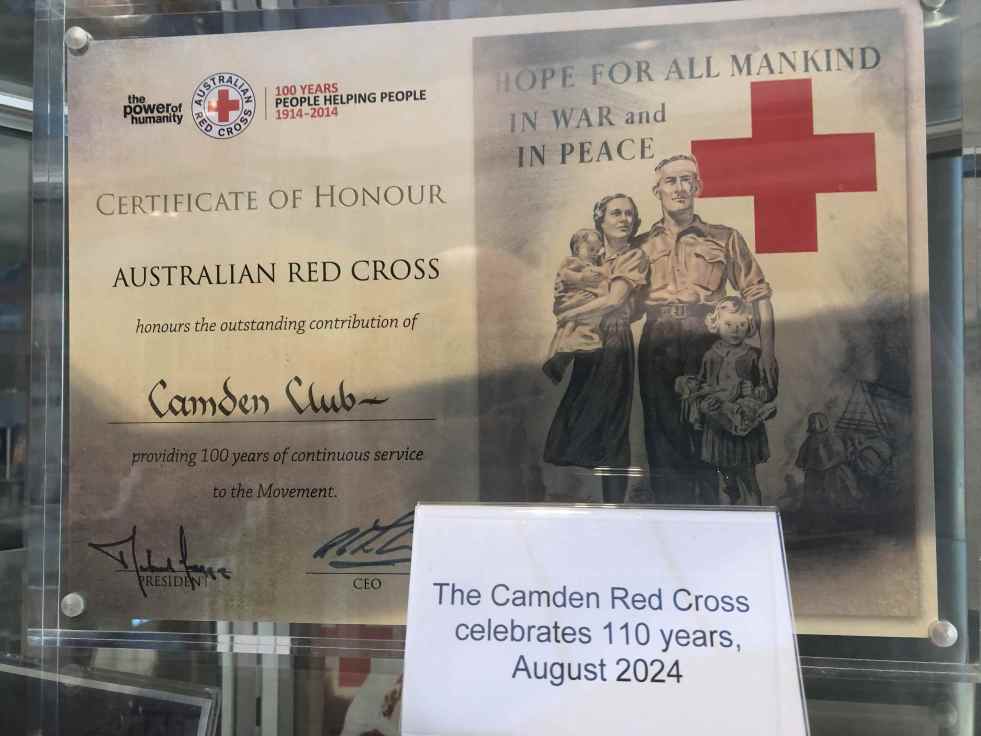
Camden Red Cross 110 Years Display: Objects and Ephemera Exhibition 2024
The Camden Red Cross exhibition at Camden Library in August 2024 showcased the historical contributions of local women to the Red Cross during World Wars I and II. Women from the Camden district played a pivotal role in supporting soldiers and shaping the narrative of the Australian Red Cross, creating over 20,300 articles in 40,000 volunteer hours during WWI.
Share this:

Share this:
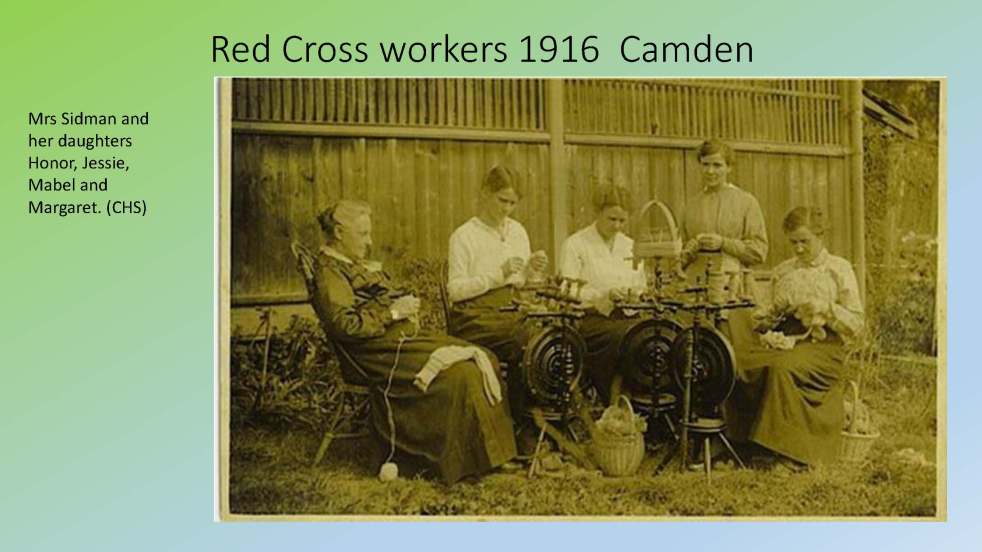
Ministering Angels, Myth and the Red Cross on the Australian Wartime Homefront
The paper presented at the 33rd Annual Conference of the Australian Historical Association at the University of Queensland in 2014 explored the role of Australian country women in supporting the Red Cross during the First World War. The paper focused on the Camden District Red Cross, emphasizing the conservative women’s empowerment in embracing the Red Cross, serving as ministering angels, and upholding patriotic values. Total words: 78
Share this:

Share this:
Local historian talks at an international conference in Adelaide
Dr Ian Willis OAM challenges myths of WWI in his talk at the 2024 Australian Historical Association conference. He examines the Australian military's response to sick and wounded soldiers and the role of the British Red Cross. The conference aims to uncover home truths and dispel historical myths. Dr Willis's research focuses on the Red Cross's role in soldier recovery.
Share this:

Share this:
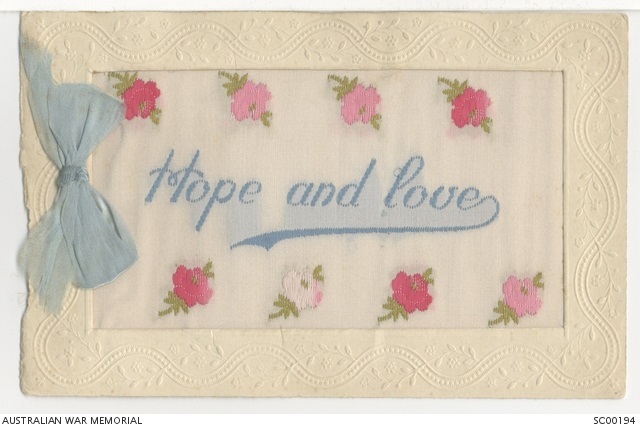
An embroidered silk postcard for Millie at Christmas 1916
A postcard from Frederick for sister Millie During the First World War, local soldier Frederick Kelloway sent his sister, Millie, an embroidered silk postcard to celebrate Christmas and New Year at home in 1916. The front of the embroidered silk postcard that Frederick Kelloway sent his sister Millie in 1916. (KCordina 2023) Millie’s great-granddaughter Kellee… Continue reading An embroidered silk postcard for Millie at Christmas 1916
Share this:

Share this:
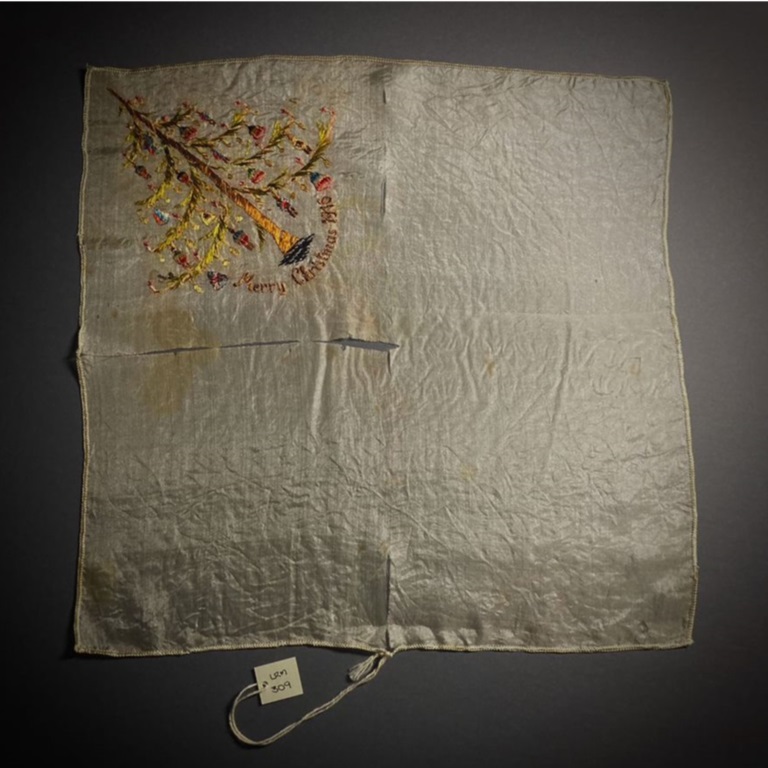
Embroided handkerchief, memories of home at Christmas on the frontline in 1916
Christmas during wartime is a period of hope and memories of home. This embroidered silk handkerchief is full of meaning and memories for an Australian soldier at the front in 1916.
Share this:

Share this:

Red Flanders poppies, a field of memories
The red poppy carries a lot of symbolism in cultural mythologies from remembrance to sacrifices. The simple flower triggers outpouring of emotion, memories and commemorations on Anzac Day and Remembrance Day every year.
Share this:

Share this:

Blue Plaque recognises Camden Red Cross sewing circle in wartime
The wartime efforts of Camden women have been recognised by the successful nomination for a New South Wales Blue Plaque with Heritage NSW. The women volunteered thousands of hours of their effort and skills to supply hospital requisites for soldiers at military hospitals.
Share this:

Share this:

Camden, a Macarthur family venture
The establishment of Camden, New South Wales, the town in 1840, was a private venture of James and William Macarthur, sons of colonial patriarch John Macarthur, at the Nepean River crossing on the northern edge of the family’s pastoral property of Camden Park. The town’s site was enclosed on three sides by a sweeping bend in the Nepean River and has regularly flooded the surrounding farmland and lower parts of the town.
Share this:

Share this:

Waley Convalescent Home at Mowbray Park
In 1919 Mowbray Park, five kilometres west of Picton, was handed over to the Commonwealth Government to be converted to a convalescent home for invalided soldiers from the First World War. The home was called Waley after its philanthropic benefactors.

